Encyclopedia of Life · EOL (see source)
Lingulata
Sign in to saveLingulata is a class of brachiopods, among the oldest of all brachiopods having existed since the Cambrian period (). They are also among the most morphologically conservative of the brachiopods, having lasted from their earliest appearance to the present with very little change in shape. Shells of living specimens found today in the waters around Japan are almost identical to ancient Cambrian fossils.
Species
舌殻綱
CLASS
- KingdomAnimalia
- PhylumBrachiopoda
- ClassLingulata
Los lingulados (Lingulata) son una clase de braquiópodos, siendo los braquiópodos más antiguos que existen desde el inicio del período Cámbrico Inferior (hace 541 millones de años) hasta la actualidad. También se encuentran entre los braquiópodos más conservadores desde el punto de vista morfológico, habiendo durado desde su aparición más temprana hasta el presente con muy poco cambio de forma. Las conchas de especímenes vivos que se encuentran hoy en las aguas alrededor de Japón son casi idénticas a los antiguos fósiles del Cámbrico.[1] Los lingulados tienen conchas en forma de lengua (de ahí el nombre Lingulata, de la palabra latina lingua) con un largo pedúnculo carnoso, o pedículo, con el cual el animal excava en sedimentos arenosos o fangosos. Habitan madrigueras verticales en estos sedimentos blandos con el extremo anterior hacia arriba y ligeramente expuesto en la superficie del sedimento. Los cilios del lofóforo generan una corriente de alimentación y respiratoria a través del lofóforo y la cavidad del manto. El intestino es completo y tiene forma de U. Las conchas de los lingulados están compuestas de una combinación de fosfato de calcio, proteínas y quitina. Esto es dife
via GBIF
Museum specimens
- Specimen records
- 71
- With media
- 5
- Collections
- UCMP, NHMUK, YPM
- Recorded in
- United States, United Kingdom, Sweden
Wikidata facts
- Instance of
- taxon
- Parent taxon
- Linguliformea
- Image
- LingulaanatinaAA.JPG
Show 4 more facts
- taxon name
- Lingulata
- taxon rank
- class
- Commons category
- Lingulata
- topic's main category
- Category:Lingulata
Sources (1)
via Wikidata · CC0
~2 min read
Encyclopedic overview
1 sectionsContents
- References
Lingulata is a class of brachiopods, among the oldest of all brachiopods having existed since the Cambrian period (). They are also among the most morphologically conservative of the brachiopods, having lasted from their earliest appearance to the present with very little change in shape. Shells of living specimens found today in the waters around Japan are almost identical to ancient Cambrian fossils.
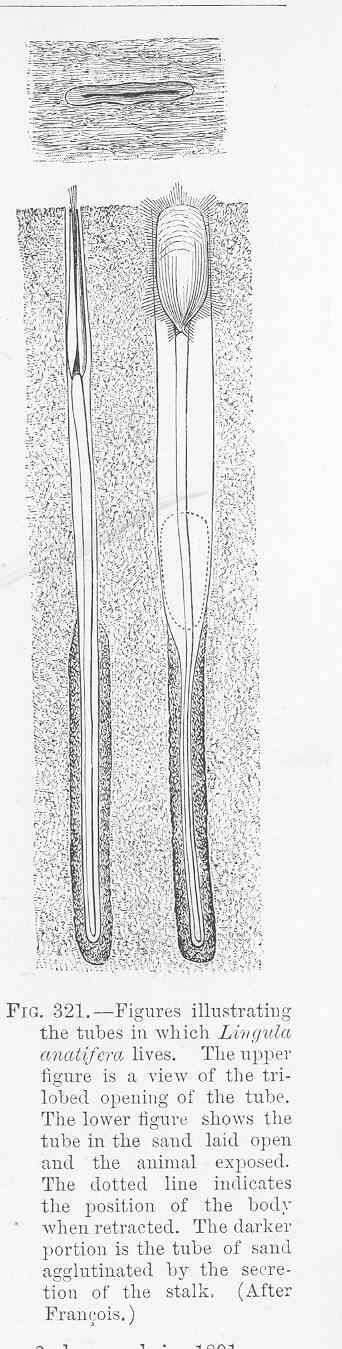
The Lingulata have tongue-shaped shells (hence the name Lingulata, from the Latin word for "tongue") with a long fleshy stalk, or pedicle, with which the animal burrows into sandy or muddy sediments. They inhabit vertical burrows in these soft sediments with the anterior end facing up and slightly exposed at the sediment surface. The cilia of the lophophore generate a feeding and respiratory current through the lophophore and mantle cavity. The gut is complete and J-shaped.
Excerpted from Wikipedia’s “Lingulata” article, available under the CC BY-SA 4.0 licence.