Category
page 1Psychedelic-assisted therapy

lysergic acid diethylamide
Lysergic acid diethylamide, commonly known as LSD (from German ) and by the nicknames acid and lucy, is a semisynthetic hallucinogenic drug derived from ergot, known for its powerful psychological effects and serotonergic activity. It was historically used in psychiatry and 1960s counterculture; it is currently legally restricted but receiving renewed scientific interest and increasing use.

MDMA
3,4-Methylenedioxymethamphetamine (MDMA), commonly known as ecstasy (tablet form), and molly (crystal form), is an entactogen with stimulant and minor psychedelic properties.

psilocybin
Psilocybin, also known as '4-phosphoryloxy-N,N-dimethyltryptamine (4-PO-DMT'), is a naturally occurring tryptamine alkaloid and investigational drug found in more than 200 species of mushrooms, with hallucinogenic and serotonergic effects. Effects include euphoria, changes in perception, a distorted sense of time, and perceived spiritual experiences. It can also cause adverse reactions such as nausea and panic attacks.

mescaline
Mescaline, also known as mescalin or mezcalin, and in chemical terms 3,4,5-trimethoxyphenethylamine, is a naturally occurring classical psychedelic protoalkaloid of the substituted phenethylamine class, found in cacti like peyote (Lophophora williamsii) and San Pedro (certain species of the genus Echinopsis).
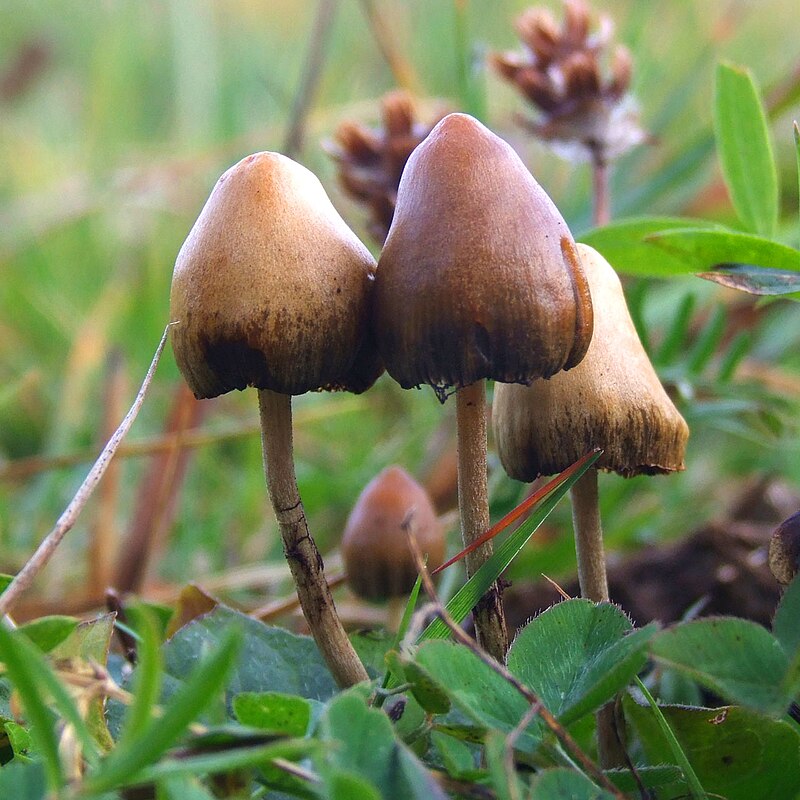
psilocybin mushroom
mushrooms containing psychoactive indole alkaloids

Stanislav Grof
Czech pychiatrist

ibogaine
Ibogaine is a psychoactive indole alkaloid derived from plants such as Tabernanthe iboga, characterized by hallucinogenic and oneirogenic effects. Traditionally used by Central African foragers, it has undergone controversial research for the treatment of substance use disorders. Ibogaine exhibits complex pharmacology by interacting with multiple neurotransmitter systems, notably affecting opioid, serotonin, sigma, and NMDA receptors, while its metabolite noribogaine primarily acts as a serotonin reuptake inhibitor and κ-opioid receptor agonist.

2C-B
2C-B, also known as 4-bromo-2,5-dimethoxyphenethylamine or by names such as Nexus or Erox, is a psychedelic drug of the phenethylamine and 2C families. The drug is used as a recreational drug and is usually taken orally. 2C-B produces hallucinogenic, mild stimulant, and mild entactogenic-like effects. Its hallucinogenic effects at typical doses are milder than those of other psychedelics like LSD or psilocybin.

3,4-methylenedioxyamphetamine
3,4-Methylenedioxyamphetamine (MDA) is an entactogen, stimulant, and psychedelic drug of the amphetamine and MDxx families that is encountered mainly as a recreational drug. It is usually taken orally.
harmaline
Harmaline, also known as 7-methoxyharmalan or as 3,4-dihydro-7-methoxy-1-methyl-β-carboline, is a harmala alkaloid and β-carboline which has hallucinogenic effects and monoamine oxidase inhibitor (MAOI) activity. It is the partly hydrogenated form of harmine.

Ann Shulgin
American author and the widow of chemist Alexander Shulgin (1931–2022)
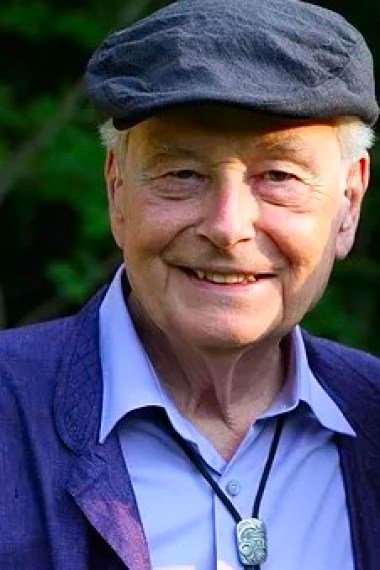
Ralph Metzner
German psychologist (1936–2019)
Claudio Naranjo
Chilean psychiatrist and author (1932-2019)

dipropyltryptamine
Dipropyltryptamine (DPT), also known as '''N,N-dipropyltryptamine or as "The Light'''", is a psychedelic drug of the tryptamine family related to dimethyltryptamine (DMT). It is taken orally or by other routes.
2C-D
2C-D, also known as 4-methyl-2,5-dimethoxyphenethylamine, is a psychedelic drug of the phenethylamine and 2C families. It has an unusually wide and gradual dose range and at low doses produces claimed cognitive enhancer-like effects, mild stimulant effects, and mild perceptual effects, whereas at high doses, it produces robust psychedelic effects. The drug is taken orally.
(RS)-5-methoxy-3,4-methylenedioxyamphetamine
group of stereoisomers
Multidisciplinary Association for Psychedelic Studies
American organization working to raise awareness and understanding of psychedelic substances
Rick Doblin
American drug researcher
Andrew Feldmár
Hungarian psychologist
4-phosphoryloxy N,N-diethyltryptamine
Ethocybin also known as '4-phosphoryloxy-N,N-diethyltryptamine (4-PO-DET) or as CEY-19', is a psychedelic drug of the tryptamine and 4-hydroxytryptamine families related to the psilocybin-containing mushroom alkaloid psilocybin. It is assumed to act as a prodrug of 4-HO-DET (CZ-74) analogously to how psilocybin (4-PO-DMT) acts as a prodrug of psilocin (4-HO-DMT). The drug was first described in the literature by Albert Hofmann and colleagues at Sandoz by 1963.
4-hydroxy-N,N diethyltryptamine
4-HO-DET, also known as '4-hydroxy-N,N-diethyltryptamine as well as ethocin or CZ-74', is a psychedelic drug of the tryptamine and 4-hydroxytryptamine families related to psilocin (4-HO-DMT). It is taken orally.
Concord Prison Experiment
Psychological experiment including prison inmates and the effects of psychedelics
metaescaline
Metaescaline (ME), also known as 3-ethoxy-4,5-dimethoxyphenethylamine, is a psychedelic drug of the phenethylamine and scaline families related to mescaline. It is the analogue of mescaline in which the methoxy group at the 3 position has been replaced with an ethoxy group. The drug is also the positional isomer of escaline in which the methoxy group at the 3 (meta) position and the ethoxy group at the 4 position have been interchanged.