Category
page 1Punctuation

question mark
punctuation sign marking a question

full stop
punctuation to signal the end of a sentence

comma
The comma '''''' is a punctuation mark that appears in several variants in different languages. Some typefaces render it as a small line, slightly curved or straight, but inclined from the vertical; others give it the appearance of a miniature filled-in figure placed on the baseline. In many typefaces it is the same shape as an apostrophe or single closing quotation mark .
.svg)
punctuation
Punctuation marks are marks indicating how a piece of written text should be read (silently or aloud) and, consequently, understood. The oldest known examples of punctuation marks were found in the Mesha Stele from the 9th century BC, consisting of points between the words and horizontal strokes between sections. The alphabet-based writing began with no spaces, no capitalization, no vowels (see abjad), and with only a few punctuation marks, as it was mostly aimed at recording business transactions. Only with the Greek playwrights (such as Euripides and Aristophanes) did the ends of sentences b

exclamation mark
punctuation mark (!) to show strong feelings

quotation mark
punctuation mark intended to distinguish citations, including notably high commas and guillemets, with variable usage depending on languages or typographical conventions

apostrophe

colon
punctuation mark consisting of two equally sized dots centered on the same vertical line

diacritic
thumb|class=skin-invert-image|Latin letter A with multiple diacritics

brackets
A bracket is either of two tall fore- or back-facing punctuation marks commonly used to isolate a segment of text or data from its surroundings. They come in four main pairs of shapes, as given in the box to the right, which also gives their names, that vary between British and American English. Brackets, without further qualification, in British English refers to the ... marks and in American English the ... marks.

semicolon
The semicolon ' (or semi-colon') is a symbol commonly used as orthographic punctuation. In the English language, a semicolon is most commonly used to link (in a single sentence) two independent clauses that are closely related in thought, such as when restating the preceding idea with a different expression. When a semicolon joins two or more ideas in one sentence, those ideas are then given equal rank. Semicolons can also be used in place of commas to separate items in a list, particularly when the elements of the list themselves have embedded commas.
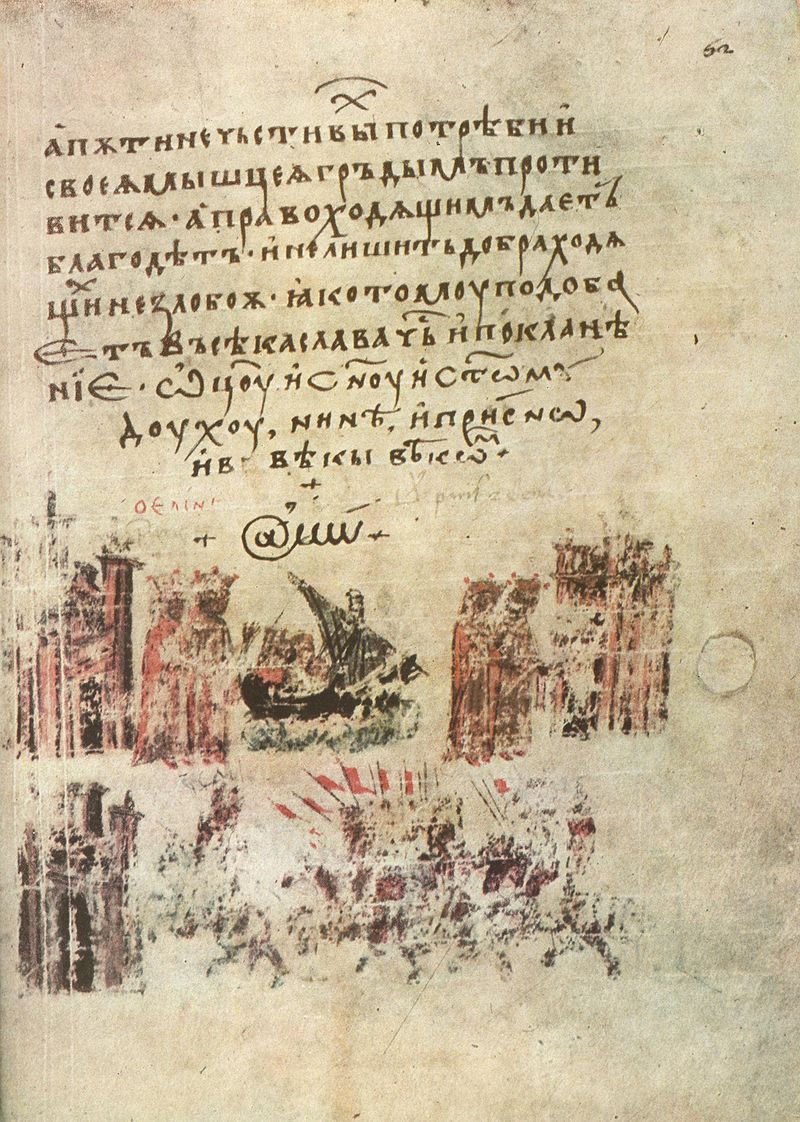
@
at sign, typographic symbol used as an abbreviation, traditionally in commerce for an old measurement unit or for unitary prices, or more recently in email addresses or to indicate a location
%20example.PNG)
ellipsis
The ellipsis (, plural ellipses; from , , ), rendered , also known as suspension points, dots, points, periods of ellipsis, or ellipsis points, or, colloquially, dot-dot-dot, is a punctuation mark consisting of a series of three dots. An ellipsis can be used in many ways, such as for intentional omission of text or numbers, to imply a concept without using words, or to mark a pause in speech. Style guides differ on how to render an ellipsis both digitally and in print. In some cases, an ellipsis may have four or more dots, spaced dots, or some incorporation with other punctuation.

dash
The dash is a punctuation mark consisting of a long horizontal line. It is similar in appearance to the hyphen but is longer and sometimes higher from the baseline. The most common versions are the endash , generally longer than the hyphen but shorter than the minus sign; the emdash , longer than either the en dash or the minus sign; and the horizontalbar , whose length varies across typefaces but tends to be between those of the en and em dashes.

hyphen
The hyphen ' is a punctuation mark used to join words and to separate syllables of a single word. The use of hyphens is called hyphenation'.

tilde
The tilde (, also ) is a grapheme or with a number of uses. The name of the character came into English from Spanish , which, in turn, came from the Latin , meaning 'title' or 'superscription'. Its primary use is as a diacritic in combination with a base letter. Its freestanding form is used in modern texts mainly to indicate approximation.

asterisk
The asterisk (), , is a typographical symbol that is a stylised image of a star. An asterisk is usually five- or six-pointed in print and six- or eight-pointed when handwritten, though more complex forms exist. Its most common use is to call out a footnote. It is also often used to censor words considered offensive. It is often vocalized as star, especially by computer scientists and mathematicians (as, for example, in the A* search algorithm or C*-algebra).

slash
slanted-line punctuation mark (/)

&
The ampersand, also known as the and sign, is the logogram , representing the conjunction "and". It originated as a ligature of the word (Latin for ).

backslash
The backslash is a typographical mark used mainly in computing and mathematics. It is the mirror image of the common slash ('solidus'), . It is a relatively recent mark, first documented in the 1930s. It is sometimes called a hack, whack, escape (from C/UNIX), reverse slash, slosh, backslant, backwhack, bash, reverse slant, reverse solidus, and reversed virgule.
decimal separator
symbol used to separate the integer part from the fractional part in the positional notation of a decimal number
†
dagger, obelisk, obelus, long cross, oblong cross (U+2020), typographic mark used to indicate a note call

interrobang
The interrobang (), also known as the interabang (often rendered as ?!, !?, ?!?, ?!!, !??, or !?!), is an unconventional punctuation mark intended to combine the functions of the question mark (also known as the interrogative point) and the exclamation mark (also known in the jargon of printers and programmers as a "bang"). The glyph is a ligature of these two marks and was first proposed in 1962 by Martin K. Speckter.
vertical bar
a glyph with various uses in mathematics, computing, and typography
section sign
character; ligature of two S’s

underscore
thumb|right|Underlining was developed for mechanical machines like this Underwood Typewriter Company|Underwood typewriter which had no bold or [[italic type. The only way to emphasize text that was typewritten was to back up the carriage and type underscores beneath the text. Underlining was a workaround for shortcomings in typewriter technology.]]
thumb|right|Underscored or underlined text.
An underscore or underline is a line drawn under a segment of text. In proofreading, underscoring is a convention that says "set this text in italic type", traditionally used on manuscript or typescript as
•
typographical symbol or glyph

pilcrow
thumb |upright=1.5|Pilcrow in typefaces: Neue Helvetica, [[Arial, Consolas, Adobe Garamond Pro, Baskerville Old Face, Palatino Linotype, and Gentium|class=skin-invert-image]]

interpunct
An interpunct ', also known as an interpoint, middle dot, middot, or centered dot', is a punctuation mark consisting of a vertically centered dot used for interword separation in Classical Latin. (Word-separating spaces did not appear until some time between 600 and 800CE.) It appears in a variety of uses in some modern languages.
irony mark
proposed form of notation used to denote irony or sarcasm in text
asterism
typographic symbol
hyphen-minus
The symbol ', known in Unicode as hyphen-minus', is the form of hyphen most commonly used in digital documents. On most keyboards, it is the only character that resembles a minus sign or a dash, so it is also used for these. The name hyphen-minus derives from the original ASCII standard, where it was called hyphen (minus). The character is referred to as a hyphen, a minus sign, or a dash according to the context where it is being used.
German orthography reform of 1996
reform of spelling and punctuation of the German language
air quotes
finger gesture indicating quotation marks
CJK Symbols and Punctuation
Unicode block (U+3000-303F)

guillemet
Guillemets (, also , , ) are a pair of punctuation marks in the form of sideways double chevrons, and , sometimes used as quotation marks or ditto marks. When used as quotation marks, single guillemets, and , are used for nested quotations. Guillemets are not conventionally used in English.
iteration mark
character denoting the repetition of the previous syllable or more within a word, possibly with a implicit or explicit phonologic modification
inverted question and exclamation marks
punctuation marks used to begin interrogative and exclamatory sentences (or clauses)
trademark symbol
trade mark sign (U+2122) “™”, abbreviation symbol in English
serial comma
punctuation style
Parenthesis (rhetoric)
grammatically optional part inserted into a passage
triple parentheses
anti-semitic symbol
danda
In Indic scripts, the daṇḍa (Sanskrit: दण्ड '''' "stick") is a punctuation mark. The grapheme consists of a single vertical stroke.
soft hyphen
soft hyphen (U+00AD): format control character normally invisible, which indicates a break position within a word; if the word break is applied, the character is displayed as a hyphen at end of line before the break
scare quotes
quotation marks used to indicate non-standard usage
overline
{| class="wikitable" style="float:right"
|-
! Description || Sample || Unicode || CSS/HTML
|-
| Overline(markup)
| ||
| style="font-size:75%" | text-decoration: overline;
|-
| rowspan="2" | Overline(character)
| ‾ || U+203E || ‾, ‾
|-
| X̅x̅ (combining) || U+0305 || X̅
|-
| Double overline(markup)
| Xx ||
| style="font-size:75%" | text-decoration: overline; text-decoration-style: double;
|-
| Double overline(character)
| X̿x̿ (combining) || U+033F || X̿
|-
| rowspan="3" | Macron(character)
| ¯ || U+00AF || ¯, ¯
ϗ
ligature for και/ⲕⲁⲓ (“and”), used in Greek and Coptic; analogous to the ampersand (&) in English
Leiden Conventions
Textual conventions for representing characters in manuscripts and inscriptions
word divider
glyph that separates written words
inverted nun
glyph used in Hebrew to enclose portions of text; found 9 times in the Masoretic Text of the Bible: twice in Num. 10:35–36; 7 times in Psalm 107
coronis
textual symbol
gershayim
{|class=wikitable style="float: right; margin: 3px; width: 20em;"
!colspan=3|Gershayim
|-style='line-height:310%; text-align:center;'
|punctuation mark||״||
|-style='line-height:310%; text-align:center;'
|cantillation mark||֞||
|-
!colspan=3|compare with quotation marks
|-
|align=center colspan=3 |
|}
sentence spacing
horizontal space between sentences in typeset text
diple
symbol used in margins of Greek manuscripts to draw attention to something in text
double hyphen
character

ʻ
modifier letter turned comma (U+02BB): typographical alternate for U+02BD ‹ʽ› or U+02BF ‹ʿ›; used for glottal stop in some Polynesian orthographies ("ʻokina" in Hawaiʻian, "fakauʻa" in Tongan)
dinkus
thumb|alt=Asterisms in use|Three asterisks as a dinkus in the James Huneker novel Painted Veils. This dinkus accentuates the end of a particularly racy chapter, priming the reader for the change in tone.
〜
wave dash (U+301C): punctuation used in Japanese to indicate ranges (e.g. 5時〜6時 “from 5 to 6 o’clock”, where English would use an en dash) or subtitles (題目〜副題〜 “Title: Subtitle”, where English would use a colon)