Category
page 1Radio modulation modes

modulation
process of encoding information by varying properties of a periodic carrier waveform
frequency modulation
encoding of information in a carrier wave by varying the instantaneous frequency of the wave
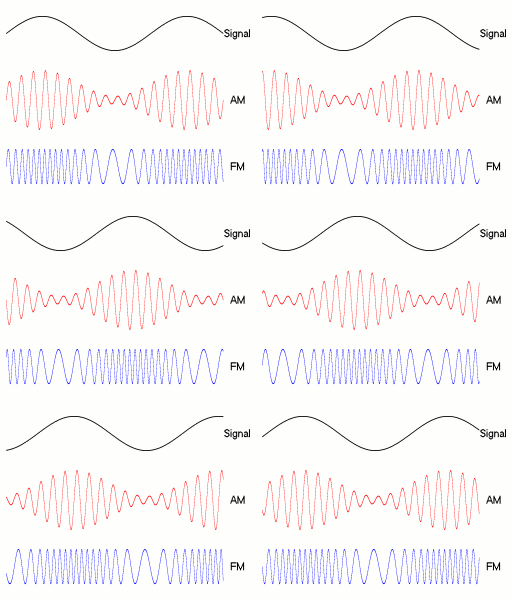
amplitude modulation
in amplitude modulation, the amplitude (signal strength) of the carrier wave is varied in proportion to the waveform being transmitted
phase modulation
modulation pattern for conditioning communication signals for transmission
quadrature amplitude modulation
family of digital modulaton methods
single-sideband modulation
refinement of amplitude modulation
spread spectrum
spreading the frequency domain of a signal
slow-scan television
picture transmission method used mainly by amateur radio operators
continuous wave
method of radio transmission, in which a sinusoidal carrier wave is switched on and off. Information is carried in the varying duration of the on and off periods of the signal, e.g. by Morse code
ring modulation
frequency mixing function in signal processing
types of radio emissions
classification of a radio signal
envelope
function describing the extremes of an oscillating signal
frequency deviation
used in FM radio to describe the maximum difference between an FM modulated frequency and the nominal carrier frequency;sometimes mistakenly used as synonymous with frequency drift
Damped wave
Type of spark gap modulation
angle modulation
class of carrier modulation that is used in telecommunications transmission systems
carrierless amplitude phase modulation
type of amplitude modulation lacking a carrier
phase fired controllers
term in physics
double-sideband suppressed-carrier transmission
transmission in which frequencies produced by amplitude modulation are symmetrically spaced above and below the carrier frequency and the carrier level is reduced to the lowest practical level