Category
page 1Ramalinaceae

Ramalinaceae
The Ramalinaceae are a family of lichen-forming fungi in the order Lecanorales. First proposed by Carl Adolph Agardh in 1821, the family now comprises 71 genera and more than 1200 species. Ramalinaceae lichens exhibit diverse growth forms, including crustose, fruticose, squamulose, leprose, and byssoid thalli, and form symbiotic relationships primarily with green algae of the genus Trebouxia. The family is characterised by pale-coloured thalli, apothecia (fruiting bodies) that are typically pale but may darken with age, and ascospores that vary in shape and septation.
.jpg)
Bacidia
Bacidia is a genus of lichen-forming fungi in the family Ramalinaceae. These lichens are characterised by their crustose growth form, distinctive club-shaped reproductive structures called apothecia that contain long, needle-like spores, and their symbiotic partnership with green algae. Bacidia species typically grow on various substrates including tree bark, rock surfaces, and occasionally soil, and are distinguished from related genera by their specific spore characteristics and internal structures.
.jpg)
Toninia
Toninia is a genus of lichen-forming fungi in the family Ramalinaceae. The genus contains about 70 recognised species that are distributed worldwide, with many found in arctic and alpine environments as well as arid regions. These lichens are characterised by their often reduced or scale-like thalli and distinctive black apothecia (fruiting bodies) that typically become convex with age and contain needle-shaped ascospores. Toninia species primarily grow on soil, rocks, and other mineral substrates, and are distinguished from related genera by their spore-producing structures and chemical react

Lecania
Lecania is a genus of lichen-forming fungi in the family Ramalinaceae. Lecania is widely distributed, especially in temperate regions, and contains about 65 species. These lichens form thin, crusty growths on various surfaces and produce small disc-shaped fruiting bodies that are typically brown to black in colour. Most species reproduce both sexually through spores and asexually through tiny reproductive structures, allowing them to spread effectively in their environments.
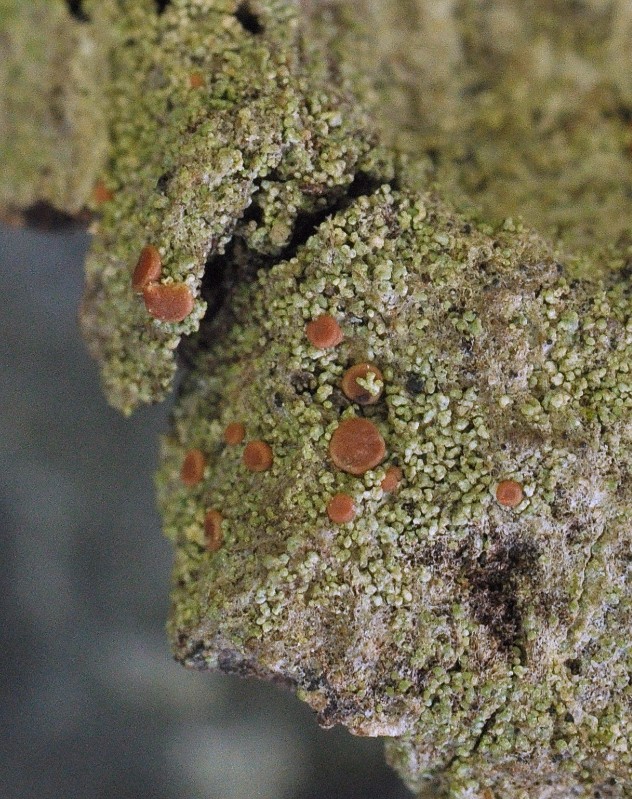
Bacidia rubella
species of fungus

Cliostomum
Cliostomum is a genus of lichen-forming fungi in the family Ramalinaceae. It has about 20 species. The genus was established in 1825 by Elias Magnus Fries, who characterized it by its rounded fruiting bodies that are integrated into the lichen's crust with distinctive folded or corrugated openings. These lichens form tight crusts on various surfaces, ranging in colour from whitish to pale grey or yellowish, and reproduce primarily through conspicuous flask-shaped structures that release spores rather than through sexual fruiting bodies.

Herteliana
Herteliana is a genus of lichen-forming fungi. It contains four species of crustose lichens.

Scutula
Scutula is a genus of lichenicolous fungi in the family Ramalinaceae.

Schadonia
Schadonia is a genus of lichen-forming fungi. Established by German lichenologist Gustav Wilhelm Körber in 1859, this genus of crustose lichens is characterised by its black, sessile apothecia (fruiting bodies), ascospores, and growth on mosses, plant debris, and rocks in montane habitats. While traditionally placed in the family Ramalinaceae, recent studies have suggested its classification may be uncertain within the order Lecanorales, with some researchers proposing its placement in the Ectolechiaceae or the resurrection of the family Schadoniaceae. The genus currently comprises three recog
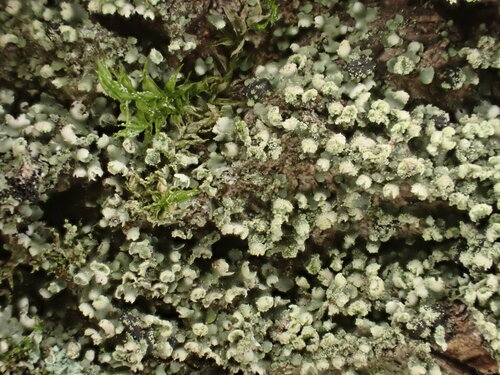
Waynea
Waynea is a genus of lichen-forming fungi in the family Ramalinaceae. The genus was established in 1990 by the Swedish lichenologist Roland Moberg and named after the Wayne family who helped organize his collecting trip to California, where he collected the type species. The tiny lichens in Waynea form patches made up of scale-like lobes less than half a millimetre across, with powdery cushions that help them spread without sexual reproduction. The genus contains six species. Most records are from southern and western Europe, particularly around the Mediterranean region, but it has also been r

Catinaria
Catinaria is a genus of lichen-forming fungi in the family Ramalinaceae. These lichens form very thin, often barely visible crusts on bark, rock, or moss, and are recognizable by their small, round, reddish-brown to black fruiting bodies that sit flush with the surface. The genus includes eight known species, some of which grow specifically on liverworts and can behave almost like decomposer fungi.

Waynea californica
species of fungus

Eschatogonia
Eschatogonia is a genus of lichen-forming fungi in the family Ramalinaceae. It has seven species. The genus was circumscribed by the Italian lichenologist Vittore Benedetto Antonio Trevisan de Saint-Léon in 1853.
Toniniopsis
Toniniopsis is a genus of crustose and squamulose lichens in the family Ramalinaceae. The genus was circumscribed by Swiss lichenologist Eduard Frey in 1926, with Toniniopsis obscura designated the type and only species. The genus name of Toniniopsis is in honour of Carlo Tonini (1803–1877), who was an Italian chemist and botanist (Lichenology), who worked in Verona and was a member and President of the Academy of Agriculture.
As a result of molecular phylogenetic studies, several species, formerly classified in genus Bacidia, have been transferred to Toniniopsis.

Bilimbia
Bilimbia is a genus of lichen-forming fungi in the family Ramalinaceae. The genus forms crustose (crust-like) lichens that appear as whitish-grey to grey patches on calcium-rich soils or mosses growing over alkaline surfaces. The genus is distinguished by its sessile apothecia (fruiting bodies) that range from light ochre to black, eight-spored asci, and colourless spores with multiple cross-walls. Molecular phylogenetics studies have confirmed that Bilimbia forms a well-supported monophyletic group within the Ramalinaceae, and as of 2025, it contains 24 accepted species.

Toninia squalida
species of fungus

Badimia
Badimia is a genus of foliicolous (leaf-inhabiting) lichens in the family Ramalinaceae.
Myelorrhiza
Myelorrhiza is a genus of two Australian species of lichen-forming fungi in the family Ramalinaceae. These lichens form leaf-like growths with narrow, overlapping lobes that attach to their substrate using root-like strands called rhizines. They are found in tropical rainforests of northern Queensland, where they grow on tree bark and rocks. The genus was initially thought to belong to the family Cladoniaceae, but molecular studies placed it outside Cladoniaceae and aligned it with ramalinoid lineages; it is now treated in Ramalinaceae.

Lecania madida
species of fungus
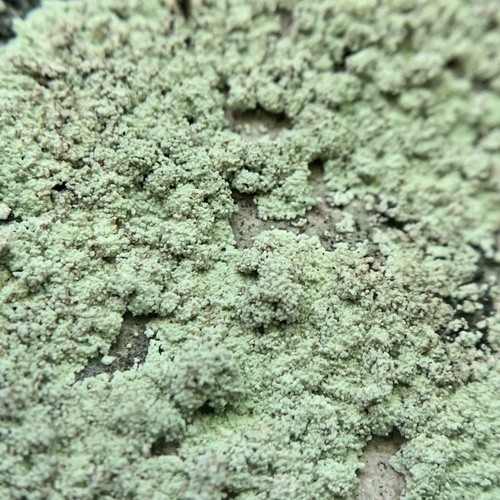
Crocynia
Crocynia is a genus of lichen-forming fungi in the family Ramalinaceae. It has five species. The genus is currently in taxonomic limbo because molecular studies have shown that Crocynia, which has nomenclatural priority over Phyllopsora, is phylogenetically nested within Phyllopsora. This has led to a proposal to conserve the name Phyllopsora over Crocynia to ensure nomenclatural stability and avoid taxonomic disarray.
Waynea giraltiae
species of fungus

Mycobilimbia
Mycobilimbia is a genus of lichen-forming fungi in the family Ramalinaceae. These lichens are characterized by their crust-like growth form that appears as a thin layer on various surfaces, ranging in colour from creamy white to greenish-grey. The genus was proposed by the German lichenologist Heinrich Rehm in 1890. Mycobilimbia species can be identified by their distinctive reproductive structures (apothecia) that start as flat discs and later become convex bumps, typically in beige to reddish-brown colours.

Bacidia biatorina
species of fungus
Badimia vezdana
species of fungus
Jarmania
Jarmania is a small genus of lichen-forming fungi in the family Ramalinaceae. The genus was established in 1996 and contains two species that are both found only in Tasmania. These lichens grow as cottony mats on the bark of trees in cool rainforests, where they favour the sheltered undersides of trunks and branches.
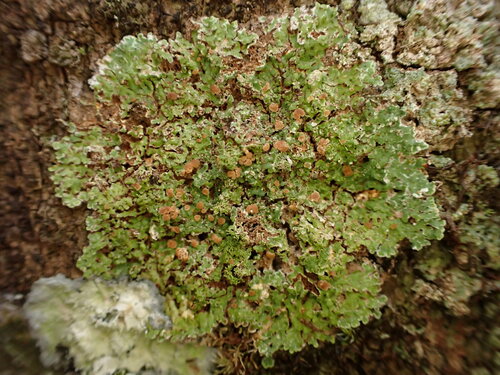
Physcidia
Physcidia is a genus of lichen-forming fungi in the family Ramalinaceae. The genus was circumscribed in 1862 by American lichenologist Edward Tuckerman.

Thamnolecania
Thamnolecania is a genus of lichenized fungi in the family Ramalinaceae.

Aciculopsora
Aciculopsora is a small genus of lichen-forming fungi in the family Ramalinaceae. The genus was established in 2006 and as of 2025 contains three recognised species, all found growing on tree bark in tropical regions. These lichens are distributed across Central and South America, East Africa, and Sri Lanka, though they appear to be rare or simply under-collected.
Lecania leprosa
species of fungus
Badimia multiseptata
species of fungus
Heppsora
Heppsora is a genus of lichenized fungi in the family Ramalinaceae.