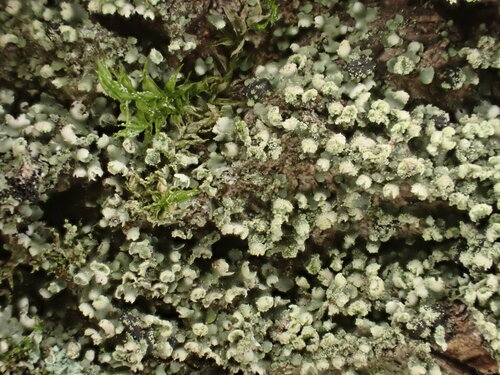
(c) Sadie Hickey, some rights reserved (CC BY-NC), uploaded by Sadie Hickey · cc-by-nc
Waynea
Sign in to saveWaynea is a genus of lichen-forming fungi in the family Ramalinaceae. The genus was established in 1990 by the Swedish lichenologist Roland Moberg and named after the Wayne family who helped organize his collecting trip to California, where he collected the type species. The tiny lichens in Waynea form patches made up of scale-like lobes less than half a millimetre across, with powdery cushions that help them spread without sexual reproduction. The genus contains six species. Most records are from southern and western Europe, particularly around the Mediterranean region, but it has also been r
In the Vinony graph
Within Vinony's link graph, Waynea is referenced by 9 other articles, and connects out to fungi, Quercus and Index Fungorum.
Vinony files it under Lecanorales genera, Lichen genera and Ramalinaceae.
Its subject is documented across 6 Wikipedia language editions.
Species
GENUS
- KingdomFungi
- PhylumAscomycota
- ClassLecanoromycetes
- OrderLecanorales
- FamilyRamalinaceae
via GBIF
Museum specimens
- Specimen records
- 16
- With media
- 17
- Family
- Ramalinaceae
- Collections
- F, KU, DUKE, UPS
- Recorded in
- Russia, United States
Wikidata facts
- Instance of
- taxon
- Parent taxon
- Ramalinaceae
Show 4 more facts
- taxon name
- Waynea
- taxon rank
- genus
- taxonomic type
- Waynea californica
- taxon common name
- Waynea lichens
Sources (1)
via Wikidata · CC0
~6 min read
Encyclopedic overview
5 sectionsContents
- Taxonomy
- Description
- Habitat and distribution
- Species
- References
Waynea is a genus of lichen-forming fungi in the family Ramalinaceae. The genus was established in 1990 by the Swedish lichenologist Roland Moberg and named after the Wayne family who helped organize his collecting trip to California, where he collected the type species. The tiny lichens in Waynea form patches made up of scale-like lobes less than half a millimetre across, with powdery cushions that help them spread without sexual reproduction. The genus contains six species. Most records are from southern and western Europe, particularly around the Mediterranean region, but it has also been reported from Russia (including Siberia) and western North America. Species of Waynea are corticolous, growing on the bark of trees and other woody plants (often oaks) in small patches that can coalesce into mats only a few millimetres wide.
==Taxonomy==
Excerpted from Wikipedia’s “Waynea” article, available under the CC BY-SA 4.0 licence.