Category
page 1Rare infectious diseases

diphtheria
Diphtheria is an infection caused by the bacterium Corynebacterium diphtheriae. Most infections are asymptomatic or have a mild clinical course, but in some outbreaks, the mortality rate approaches 10%. Signs and symptoms may vary from mild to severe, and usually start two to five days after exposure. Symptoms often develop gradually, beginning with a sore throat and fever. In severe cases, a grey or white patch develops in the throat called a pseudomembrane. This tough, leathery membrane slowly blocks the airway. Starting with a barking cough similar to what is observed in croup, the neck may

scarlet fever
human disease

cysticercosis
Cysticercosis is a tissue infection caused by the young form of the pork tapeworm. People may have few or no symptoms for years. In some cases, particularly in Asia, solid lumps of between one and two centimeters may develop under the skin. After months or years, these lumps can become painful and swollen and then resolve. A specific form called neurocysticercosis, which affects the brain, can cause neurological symptoms. In developing countries, this is one of the most common causes of seizures.

Creutzfeldt-Jakob disease
degenerative neurological disorder

dracunculiasis

Kuru
human disease

tularemia

Q fever
disease caused by infection with Coxiella burnetii

Schizophyllum commune
species of fungus

mucormycosis
Mucormycosis, also known as black fungus, is a severe fungal infection that may cause fulminant fungal sinusitis, usually in people who are immunocompromised. It is mostly curable when diagnosed early. Symptoms depend on where in the body the infection occurs. It most commonly infects the nose, sinuses, eyes and brain resulting in a runny nose, one-sided facial swelling and pain, headache, fever, blurred vision, bulging or displacement of the eye (proptosis), and tissue death. Other sites of infection may include the lungs, stomach and intestines, and skin. It tends to progress rapidly and is
Whipple disease
Human disease
progressive multifocal leukoencephalopathy
viral disease affecting human brains
primary amebic meningoencephalitis
extremely rare type of amoebiasis that infects the brain
subacute sclerosing panencephalitis
rare insidious sequela from measles infection
auto-brewery syndrome
medical condition in which intoxicating quantities of ethanol are produced within the digestive system
nocardiosis
Nocardiosis is an infectious disease affecting either the lungs (pulmonary nocardiosis) or the whole body (systemic nocardiosis). It is due to infection by a bacterium of the genus Nocardia, most commonly Nocardia asteroides or Nocardia brasiliensis.
Lemierre's syndrome
Human disease: infectious thrombophlebitis of the internal jugular vein
Balamuthia mandrillaris
species of Tubulinea
rat-bite fever
human disease

Dioctophyme renale
species of worm
Fitz-Hugh–Curtis syndrome
medical condition
Acanthamoeba keratitis
Human disease
human granulocytic anaplasmosis
human disease
human monocytic ehrlichiosis
human disease
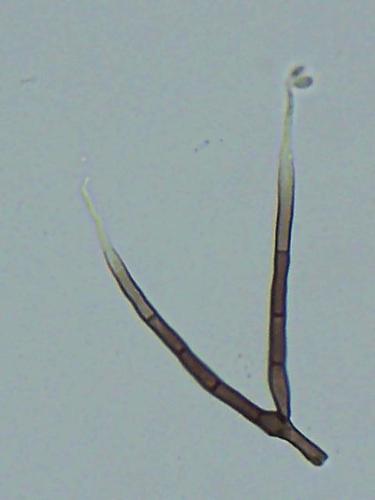
Pseudallescheria boydii
species of fungus

Gongylonema pulchrum
species of worm
malakoplakia
Malakoplakia (from Greek Malako "soft" + Plako "plaque") is a rare inflammatory condition which makes its presence known as a papule, plaque or ulceration that usually affects the genitourinary tract. However, it may also be associated with other bodily organs. It was initially described in the early 20th century as soft yellowish plaques found on the mucosa of the urinary bladder. Microscopically it is characterized by the presence of foamy histiocytes (called von Hansemann cells) with basophilic inclusions called Michaelis–Gutmann bodies.
laryngeal papillomatosis
medical condition
granulomatous amebic encephalitis
Human disease
Baylisascaris
Baylisascaris is a genus of roundworms that infect more than fifty animal species.
Garre's sclerosing osteomyelitis
rare infectious disease
Parechovirus B
species of virus
postvaccinal encephalitis
human disease