Category
page 1Reading (process)

literacy
thumb|upright=1.35|Adult literacy rates, 2023
Literacy is the ability to read and write, and illiteracy is the inability to read and write. Some researchers suggest that the study of literacy as a concept can be divided into two periods: the period before 1950, when literacy was understood solely as alphabetical literacy (understanding the meanings of words without necessarily being able to use words); and the period after 1950, when literacy slowly began to be considered as a wider concept and process, including the social and cultural aspects of reading, writing, and functional literacy.

phoneme
A phoneme () is a set of similar speech sounds that are perceptually regarded by the speakers of a language as a single basic sound—a smallest possible phonetic unit—that helps distinguish one word from another. All languages contain phonemes (or the spatial–gestural equivalent in sign languages), and all spoken languages include both consonant and vowel phonemes. Phonemes are studied under phonology, a branch of linguistics (a discipline encompassing language, writing, speech and related matters).
.jpg)
reading
Reading is the process of taking in the sense or meaning of symbols, often specifically those of a written language, by means of sight or touch.

morpheme
A morpheme is any of the smallest meaningful constituents within a linguistic expression and particularly within a word. Many words are themselves standalone morphemes, while other words contain multiple morphemes; in linguistic terminology, this is the distinction, respectively, between free and bound morphemes. The field of linguistic study dedicated to morphemes is called morphology.

dyslexia

World Book Day and Copyright Day
annual event to promote reading, publishing, and copyright

bibliophilia
thumb|The Bookworm (painting)|The Bookworm, 1850, by [[Carl Spitzweg]]
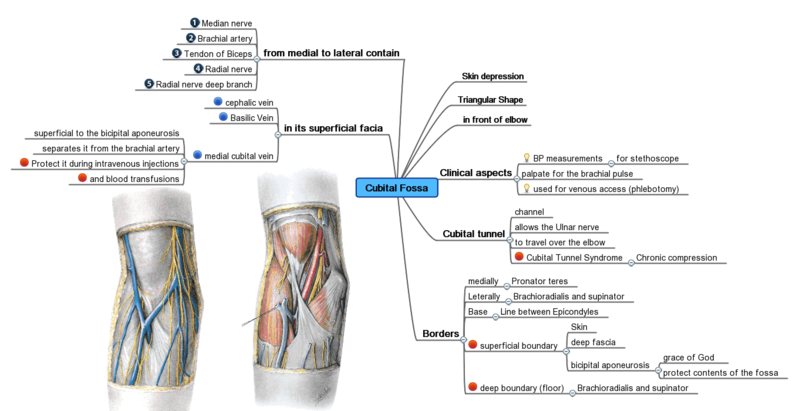
mind map
diagram to visually organize information
speed reading
reading technique supposed to increase the ability to read quickly
functional illiteracy
reading and writing skills that are inadequate "to manage daily living and employment tasks that require reading skills beyond a basic level."

sight-singing
thumb|Caravaggio's Rest on the Flight into Egypt (1594–96)
In music, sight-reading, also called a prima vista (Italian meaning, "at first sight"), is the practice of reading and performing of a piece in a music notation that the performer has not seen or learned before. Sight-singing is used to describe a singer who is sight-reading. Both activities require the musician to play or sing the notated rhythms and pitches.
World Book Capital
UNESCO award for cities promoting books
close reading
careful, sustained interpretation of a brief passage of a text
readability
Readability is the ease with which a reader can understand a written text. The concept exists in both natural language and programming languages, though in different forms. In natural language, the readability of text depends on its content (the complexity of its vocabulary and syntax) and its presentation (such as typographic aspects that affect legibility, like font size, line height, character spacing, and line length). In programming, things such as programmer comments, choice of loop structure, and choice of names can determine the ease with which humans can read computer program code.
reading comprehension
ability to read single words, sentences and whole texts fluently and to understand them in context
book club
group of people who meet to discuss a book or books that they have read and express their opinions
%20-%20The%20Difficult%20Lesson%20(1884).jpg)
hyperlexia
thumb|right|240px|William-Adolphe Bouguereau, The Difficult Lesson (1884)

Progress in International Reading Literacy Study
international study of reading comprehension
SQ3R
SQRRR or SQ3R is a reading comprehension method named for its five steps: survey, question, read, recite, and review. The method was introduced by Francis P. Robinson in his 1941 book Effective Study.
words per minute
measure of words processed in a minute, e.g. speed of typing, reading or Morse code sending and receiving

bookwheel
thumb|right|Bookwheel, from Agostino Ramelli's Le diverse et artificiose machine, 1588
The bookwheel (also written book wheel and sometimes called a reading wheel) is a type of rotating bookcase that allows one person to read multiple books in one location with ease. The books are rotated vertically similar to the motion of a water wheel, as opposed to rotating on a flat table surface. The design for the bookwheel originally appeared in a 16th-century illustration by Agostino Ramelli at a time when large books posed practical problems for readers. Ramelli's design influenced other engineers an
English Phonotypic Alphabet
phonetic alphabet developed by Isaac Pitman and Alexander John Ellis
Slow reading
Intentional reduction of reading speed
media consumption
usage of media

Subvocalization
Subvocalization, or silent speech, is the internal speech typically made when reading; it provides the sound of the word as it is read. This is a natural process when reading, and it helps the mind to access meanings to comprehend and remember what is read, potentially reducing cognitive load.
Critical literacy
ability to find embedded discrimination in media
distant reading
study of literary data
Time Enough at Last
8th episode of the first season of The Twilight Zone
whole language
reading learning method
Emergent literacies
early knowledge of reading and writing skills
reading disorder and écrites disorder
range of neurological conditions, developmental or acquired
Rudolf Flesch
American author (1911-1986)
set text
required reading assignment in an educational system
Dual-route hypothesis to reading aloud
theory of two separate mental mechanisms
ergodic literature
literary genre
Initial Teaching Alphabet
aid for teaching English reading
phonological awareness
awareness of the phonological (sound) structure of words
aliteracy
Aliteracy (sometimes spelled alliteracy) is the state of being able to read but having a low motivation to do so. This phenomenon has been reported on as a problem occurring separately from illiteracy, which is more common in the developing world, while aliteracy is primarily a problem in the developed world. However, aliteracy is related to reading ability and comprehension, as reading motivation is an important factor in these skills. In 2002, John Ramsey defined aliteracy as a loss of a reading habit usually since reading is slow and frustrating for the reader.
eye movements in reading

synthetic phonics
method of teaching English reading and writing
KWL table
graphical organizer to help in learning
alphabetic principle
The predictable and systematic relationship between letters and spoken sounds.
The New England Primer
series of children's early reading books
Sight word
reading education method
word superiority effect
better recognition of letters if in words
reciprocal teaching
instructional activity that takes the form of a dialogue between teachers and students regarding segments of text for the purpose of constructing the meaning of text
extensive reading
reading large amount of text in order to encounter and learn new vocabulary and language patern.
guided reading
method of developing reading coimprehension
Incremental reading
software-assisted learning technique
Reading for special needs
area of special education
Reading Recovery
discredited remedial literacy education approach
Dolch word list
list of frequently used English words
Simple view of reading
scientific theory of Reading Comprehension
Subvocal recognition
the art of taking subvocalization and converting the detected results to a digital text-based output
family literacy
form of literacy education
phonemic awareness
teaching strategy in linguistics