Category
page 1Recessions

recession
In economics, a recession is a business cycle contraction that occurs when there is a period of broad decline in economic activity. Recessions generally occur when there is a widespread drop in spending (an adverse demand shock). This may be triggered by various events, such as a financial crisis, an external trade shock, an adverse supply shock, the bursting of an economic bubble, or a large-scale anthropogenic or natural disaster (e.g. a pandemic). There is no official definition of a recession, according to the International Monetary Fund.
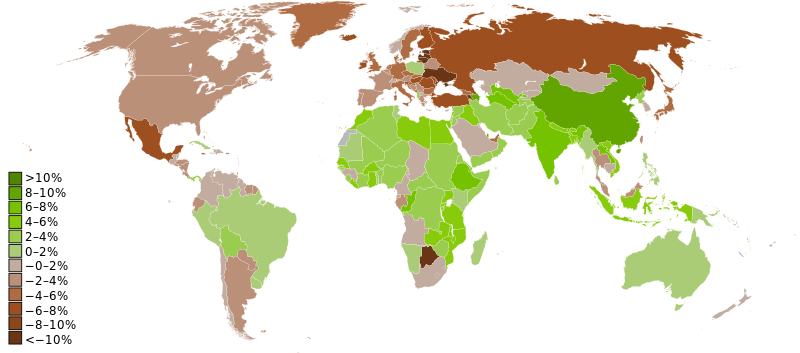
Great Recession
2007–2009 international economic decline
depression
sustained, long-term downturn in economic activity in one or more economies
COVID-19 recession
2020 economic downturn
Long Depression
worldwide economic recession from 1873 to 1879
Argentine economic crisis
economic disaster
zombie company
company that has difficulties meeting its interest payments
2014 Brazilian economic crisis
crisis that began during the presidency of Dilma Rousseff
Recession shapes
used by economists to describe different types of recessions
Baring crisis
international recession in 1890
Global recession
a recession that affects many countries around the world
balance sheet recession
type of economic recession
Early 1980s recession
global economic recession
German economic crisis
downturn of Germany's economy since 2022
2008–2009 Russian financial crisis
overview of the impact of the Great Recession in Russia