Category
page 1Rediscovered literature

Epic of Gilgamesh
epic poem from Mesopotamia, is amongst the earliest surviving works of literature
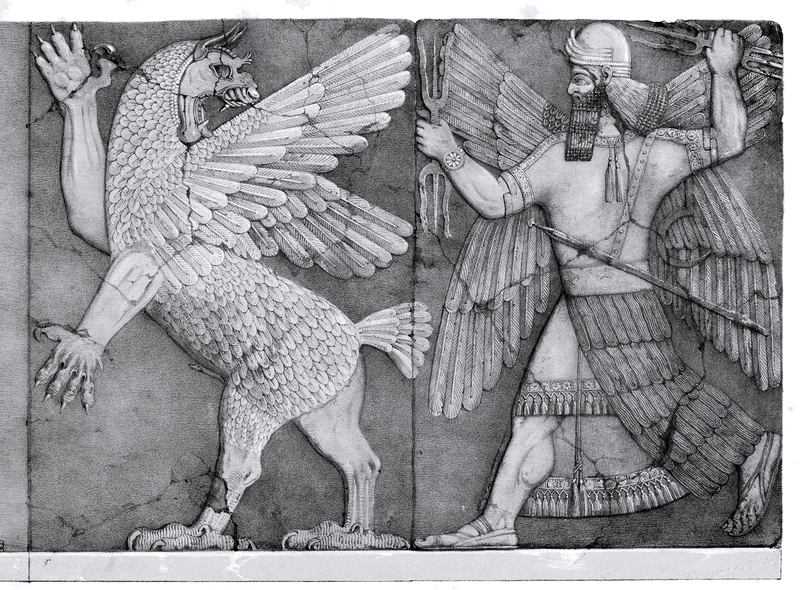
Enûma Eliš
Babylonian creation myth

Gospel of Judas
Gnostic gospel

Carmina Burana
collection of medieval Latin poetry

De rerum natura
didactic poem by Lucretius

The 120 Days of Sodom
1785 novel by Marquis de Sade

Constitution of the Athenians
320s BCE work by Aristotle

Darkness at Noon
1940 novel by Arthur Koestler
De re publica
essay by Cicero

Dyskolos
Dyskolos (, , translated as The Grouch, The Misanthrope, The Curmudgeon, The Bad-tempered Man or Old Cantankerous) is an Ancient Greek comedy by Menander, the only one of his plays, and of the whole New Comedy, that has survived in nearly complete form. It was first presented at the Lenaian festival in Athens in 316 BCE, where it won Menander the first prize.
Institutes
introductory textbook of legal institutions (161 AD)

Go Set a Watchman
novel by Harper Lee
The Method of Mechanical Theorems
work by Archimedes, in the form of a letter from Archimedes to Eratosthenes, about the use of infinitesimals and mechanical analogies to levers to solve geometric problems
Ichneutae
The Ichneutae (), also known as the Searchers, Trackers or Tracking Satyrs, is a fragmentary satyr play by the fifth-century BC Athenian dramatist Sophocles. Three undistinguished quotations in ancient authors were all that was known of the play until 1912, when the extensive remains of a second-century CE papyrus roll of the Ichneutae were published among the Oxyrhynchus Papyri. With more than four hundred lines surviving in their entirety or in part, the Ichneutae is now the best preserved ancient satyr play after Euripides' Cyclops, the only fully extant example of the genre. The manuscript
Dream of the Rood
Old English poem from the Vercelli Book
Epitrepontes
Epitrepontes (, translated as The Arbitration or The Litigants) is an Ancient Greek comedy, written c. 300 BCE by Menander. Only fragments of the play have been found, primarily on papyrus, yet it is one of Menander's best-preserved plays.
Samia
ancient Greek comedy by Menander
Vercelli Book
manuscript Old English poetic codex
Perikeiromene
Perikeiromene (), translated as The Girl with her Hair Cut Short, is an Ancient Greek comedy by Menander (342/41 – 292/91 BC) that is only partially preserved on papyrus. Of an estimated total of between 1030 and 1091 lines, about 450 lines (between 40 and 45%) survive. No act has been preserved in its entirety, but there are still individual passages from each of the five acts. Most acts lack their beginning and end, except that the transition between act I and II is still extant. The play may have been first performed in 314/13 BC or not much later.
Aspis
ancient Greek comedy by Menander
Of Plymouth Plantation
Account by William Bradford
The Brothers Poem
poem written by Sappho
Sikyonioi
thumb|Papyrus of the Sikyonioi found at Medinet-el-Ghoran, 3rd Century BC. Institute of Papyrology of Sorbonne University.
thumb|right|The ancient theatre of Sikyon
Hypsipyle
tragedy by Euripides
The Knight of Sainte-Hermine
1869 novel by Alexandre Dumas
CIL 4.5296
graffiti poem found at Pompeii

Journey Through the Impossible
play by Jules Verne and Adolphe d'Ennery
Misoumenos
Misoumenos (), translated as The Hated Man, is an Ancient Greek comedy by Menander (342/41 – 292/91 BC). Once considered lost, fragments of more than 400 verses of the play have been found. However, most of these are seriously damaged, making it difficult to reconstruct the plot of the play. Separate lines from the prologue also survived by being quoted by later writers.