Category
page 1Reduviidae

Reduviidae
The Reduviidae is a large cosmopolitan family of the suborder Heteroptera of the order Hemiptera (true bugs). Among the Hemiptera and together with the Nabidae almost all species are terrestrial ambush predators; most other predatory Hemiptera are aquatic. The main examples of non-predatory Reduviidae are some blood-sucking ectoparasites in the subfamily Triatominae, with a few species from South America noted for their ability to transmit Chagas disease. Though spectacular exceptions are known, most members of the family are fairly easily recognizable: they have a relatively narrow neck, stur

Triatominae
The members of the Triatominae , a subfamily of the Reduviidae, are also known as conenose bugs, kissing bugs (so-called from their habit of feeding from around the mouths of people), or vampire bugs. Other local names for them, used in Latin America and by Latinos generally, include barbeiros, vinchucas, pitos, chipos and chinches. Most of the 130 or more species of this subfamily feed on vertebrate blood; a very small portion of species feed on invertebrates. They are mainly found and widespread in the Americas, with a few species present in Asia and Africa. These bugs usually share shelter

Masked hunter
species of insect

Triatoma
Triatoma is a genus of assassin bug in the subfamily Triatominae (kissing bugs). The members of Triatoma (like all members of Triatominae) are blood-sucking insects that can transmit serious diseases, such as Chagas disease. Their saliva may also trigger allergic reactions in sensitive individuals, up to and including severe anaphylactic shock.
thumb|Triatoma infestans
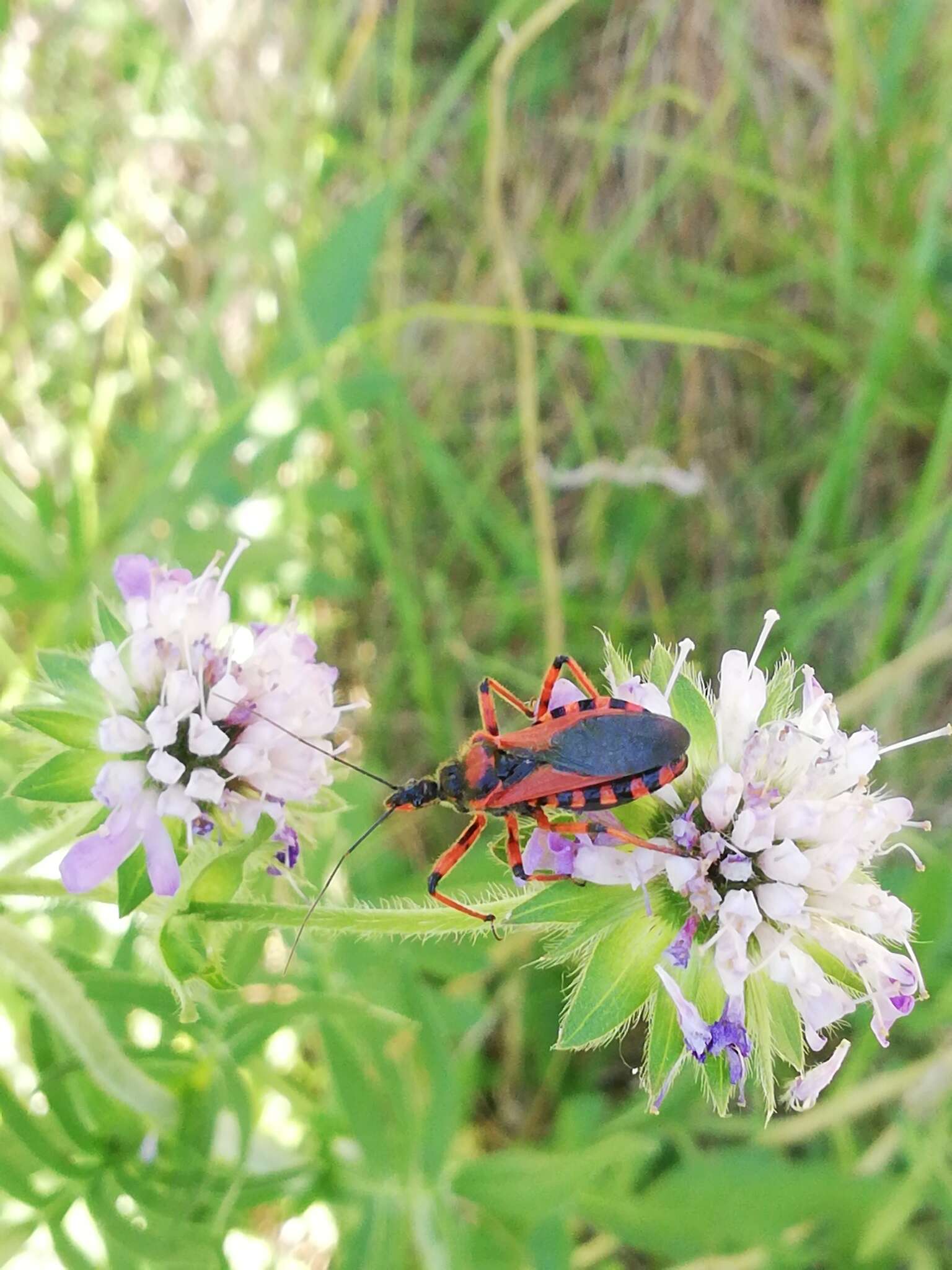
Rhynocoris iracundus
species of insect

Triatoma infestans
species of insect
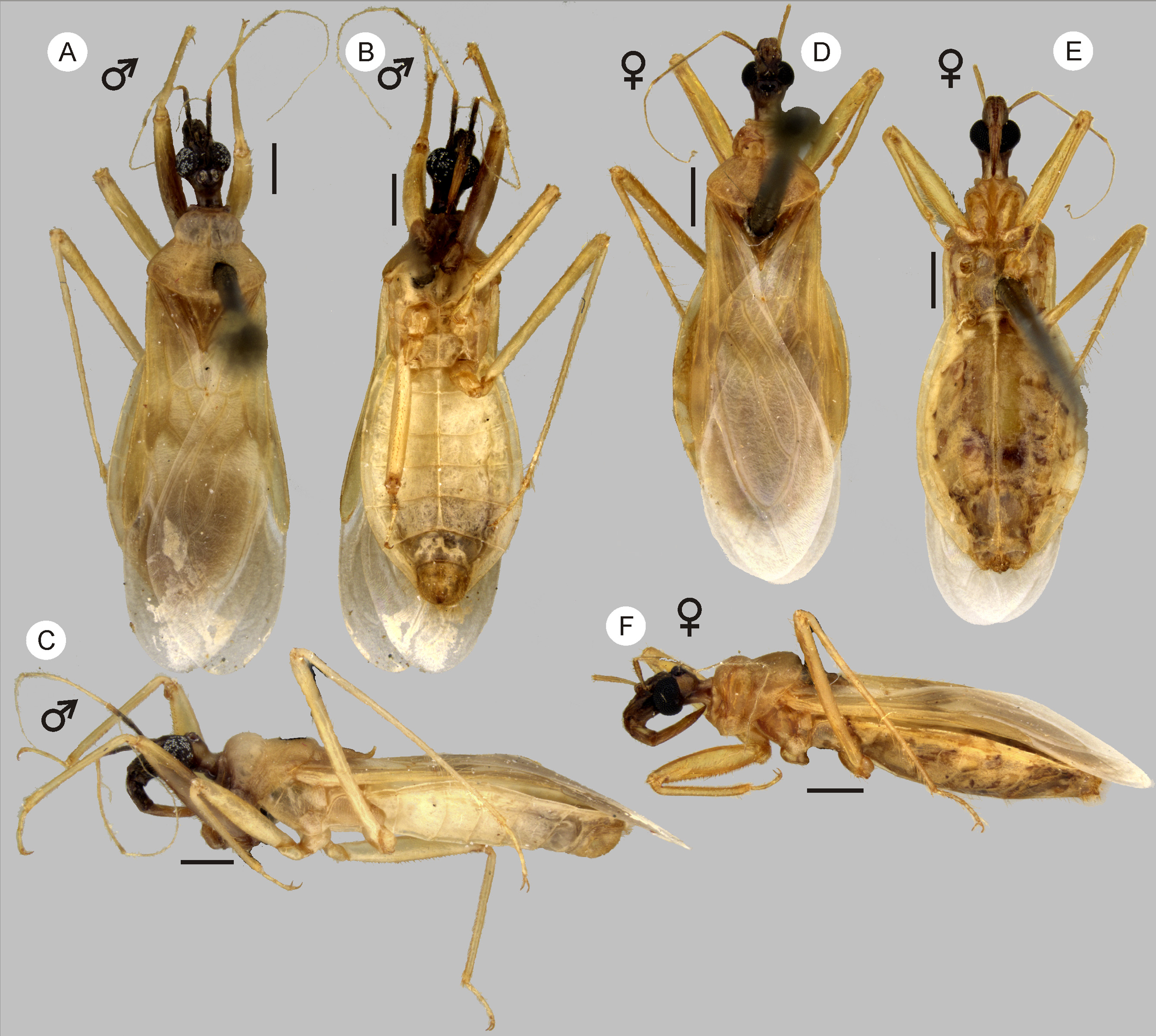
Reduvius
Reduvius is a large genus of reduviids. The masked hunter, Reduvius personatus, is an example of this genus.

Phymatinae
alt=Ambush Bug (Phymata sp.)|thumb|Ambush bug (Phymata sp.)
Insects in the subfamily Phymatinae are commonly called ambush bugs after their habit of lying in wait for prey, relying on their superb camouflage. Armed with raptorial forelegs, ambush bugs routinely capture prey ten or more times their own size. They form a subgroup within the assassin bugs.

Rhodnius
thumb|Rhodnius prolixus
Rhodnius is a genus of assassin bugs in the subfamily Triatominae (the kissing bugs), and is an important vector in the spread of Chagas disease. The Rhodnius species were important models for Sir Vincent Wigglesworth's studies of insect physiology, specifically growth and development.
Reduviinae
The Reduviinae are a subfamily of the reduviid assassin bugs. Many members of the subfamily are nocturnal and their lifecycles are generally poorly known. This subfamily is suspected not to be monophyletic.

Zelus
genus of insects

Rhodnius prolixus
species of insect

Phymata crassipes
species of insect
Wheel bug
species of insect
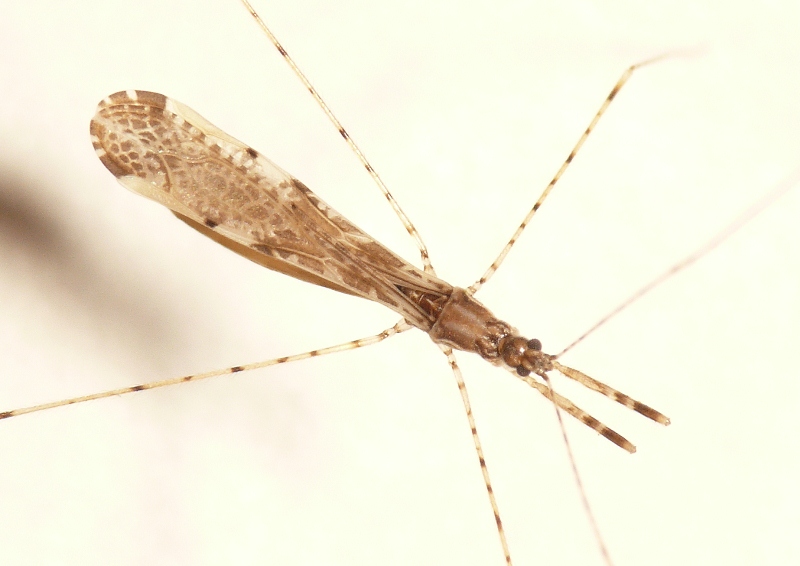
Empicoris vagabundus
species of insect
Rhynocoris
thumb|thumbtime=42|Rhynocoris annulatus looking for prey
Rhynocoris (historically often misspelled as "Rhinocoris") is a genus of assassin bug, family (Reduviidae), in the subfamily Harpactorinae. Species are recorded from Asia, mainland Europe, Africa and North America.
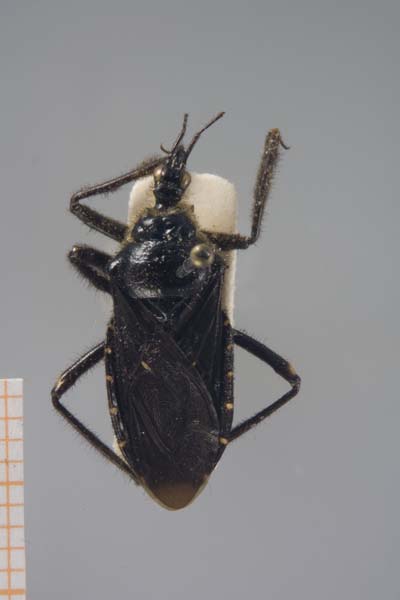
Apiomerus
Apiomerus is a genus of conspicuous, brightly colored assassin bugs belonging to the family Reduviidae. The common name bee assassins originates from their foraging habits as ambush predators around flowers targeting a variety of bees. The bright colors function as aposematic signals, warning larger predators for its potential to deliver a painful bite if disturbed.
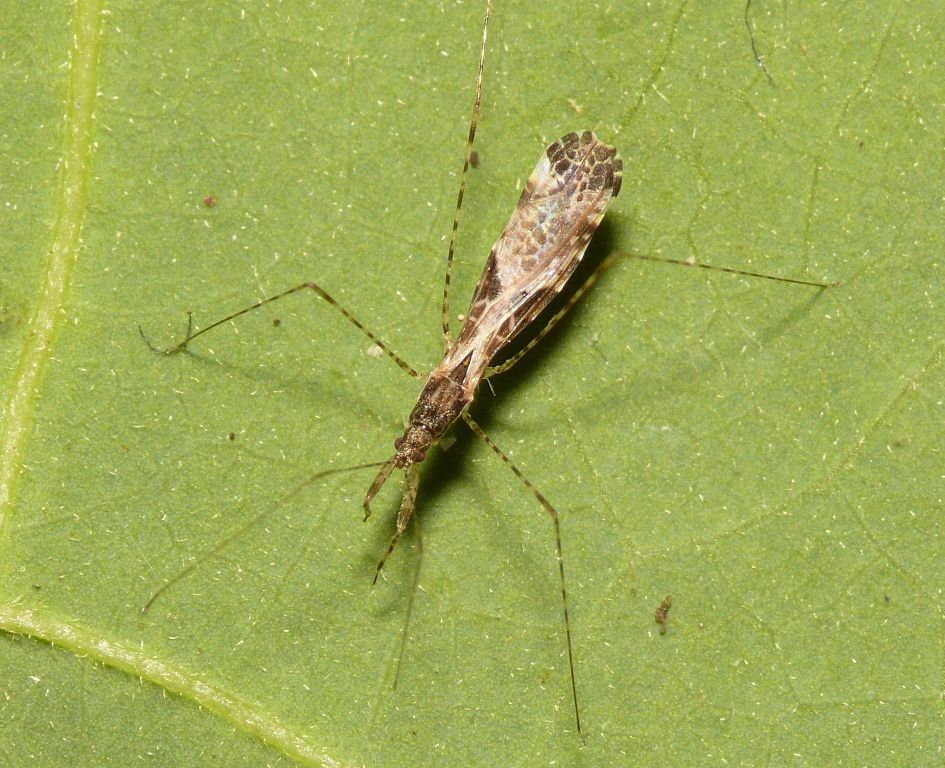
Empicoris culiciformis
species of insect
Acanthaspis
Acanthaspis Amyot & Serville, 1843, is a genus of assassin bugs. Members of the genus are known to disguise themselves by attaching bits of debris to aid in camouflage.
Harpactorinae
The Harpactorinae are a large subfamily of the Reduviidae (assassin bugs). About 300 genera and 2,000 species worldwide have been described. Some of the species of the genera Zelus, Pselliopus, Sinea, and Apiomerus are of interest as biological pest control agents.

Zelus renardii
species of insect
Melanolestes
Melanolestes (meaning "black robber") is a Nearctic and Neotropical genus of assassin bugs (Reduviidae). Nine species are known :

Ploiaria
Ploiaria is a cosmopolitan genus of thread-legged bugs (Emesinae). There are presently about 130 described species.

Pygolampis
thumb|Pygolampis pectoralis
Pygolampis is a genus of assassin bugs in the family Reduviidae. More than 90 species have been described worldwide

Acanthaspis petax
species of insect

Phymata
Phymata is a genus of assassin bugs belonging to the family Reduviidae, subfamily Phymatinae, commonly called jagged ambush bugs. Their coloration is variable, often helping to camouflage them on the plants where they live. They are predators, found in the Americas and Palaearctic realm.

Pselliopus
Pselliopus is a common genus of assassin bugs (Reduviidae), in the subfamily Harpactorinae. The genus is restricted to the New World, with 27 species described. Some species, such as Pselliopus barberi, are conspicuous because of their bright coloring and relatively large size. Some species of the genus are of interest as potential biological pest control agents.
Emesinae
The Emesinae, or thread-legged bugs, are a subfamily of the Reduviidae (i.e., assassin bugs). They are conspicuously different from the other reduviids by their very slender body form. They are stalking, predatory insects that can be collected on palm fronds, cliffs, spider webbing, or near lights at night (many can be collected by blacklight). They walk on their mid and hind legs; the front pair is raptorial. Some groups specialize on spiders. Very little is known about emesines except that many species are found in the tropics. Pedro Wygodzinsky wrote the most recent revision of this group.
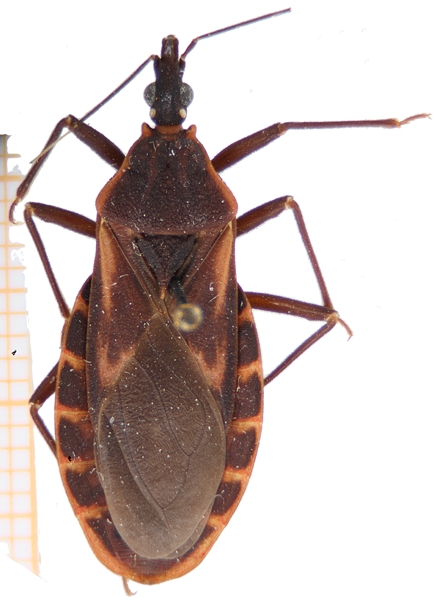
Triatoma sanguisuga
species of insect
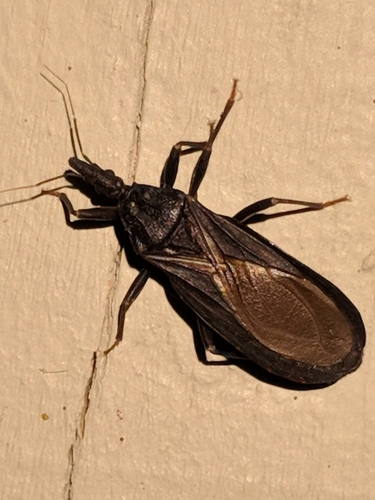
Triatoma protracta
species of insect
Platymeris
Platymeris is a genus of assassin bug (Reduviidae). Platymeris species are often used in laboratories and as pets.

Coranus
Coranus is a genus of assassin bugs in the tribe Harpactorini.
Sinea diadema
species of insect
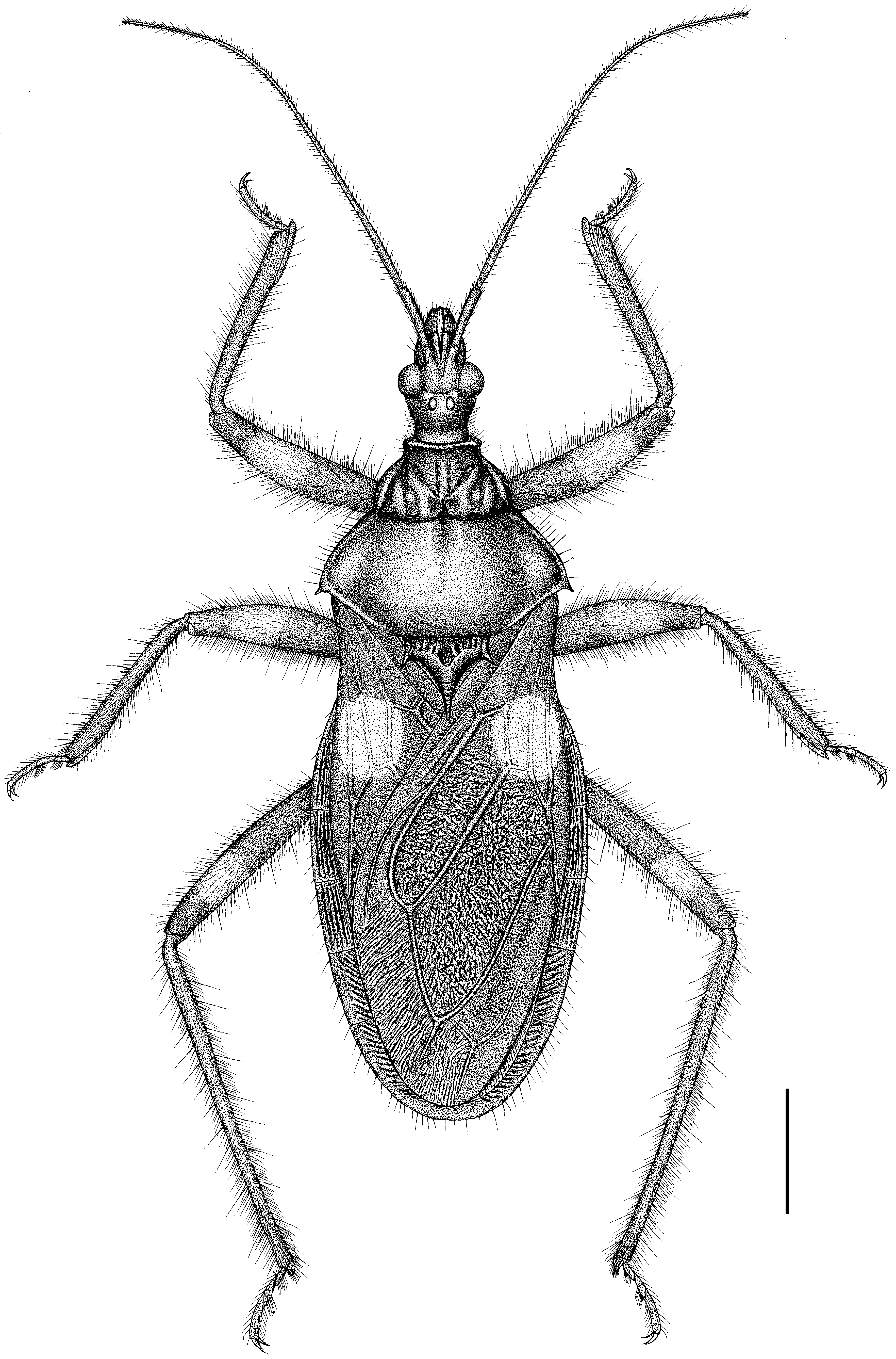
Platymeris biguttatus
species of insect

Empicoris rubromaculatus
species of insect
Rasahus
Rasahus is a Neotropical genus of assassin bugs (Reduviidae); 26 species have been described.
Oncocephalus
Oncocephalus is a genus of assassin bugs in the family Reduviidae. There are at least 210 described species in Oncocephalus.
thumb
Stenopodainae
thumb|Stenopoda spinulosa
thumb|Oncocephalus
The Stenopodainae are a subfamily of Reduviidae (assassin bugs). Often cryptically coloured, with prominent mandibular plates, antennal segment 1 generally strongly developed, remaining segments slender and often folded back under the first; hemelytron typically with large pentagonal or hexagonal cell in the corium. Approximately 113 genera are described, with most species found in the tropics. Many species are associated with soil or sand, and many are apterous.

Oncerotrachelus
Oncerotrachelus is a genus of assassin bugs in the family Reduviidae. There are about 14 described species in Oncerotrachelus.
thumb|Oncerotrachelus acuminatus

Triatoma gerstaeckeri
species of insect
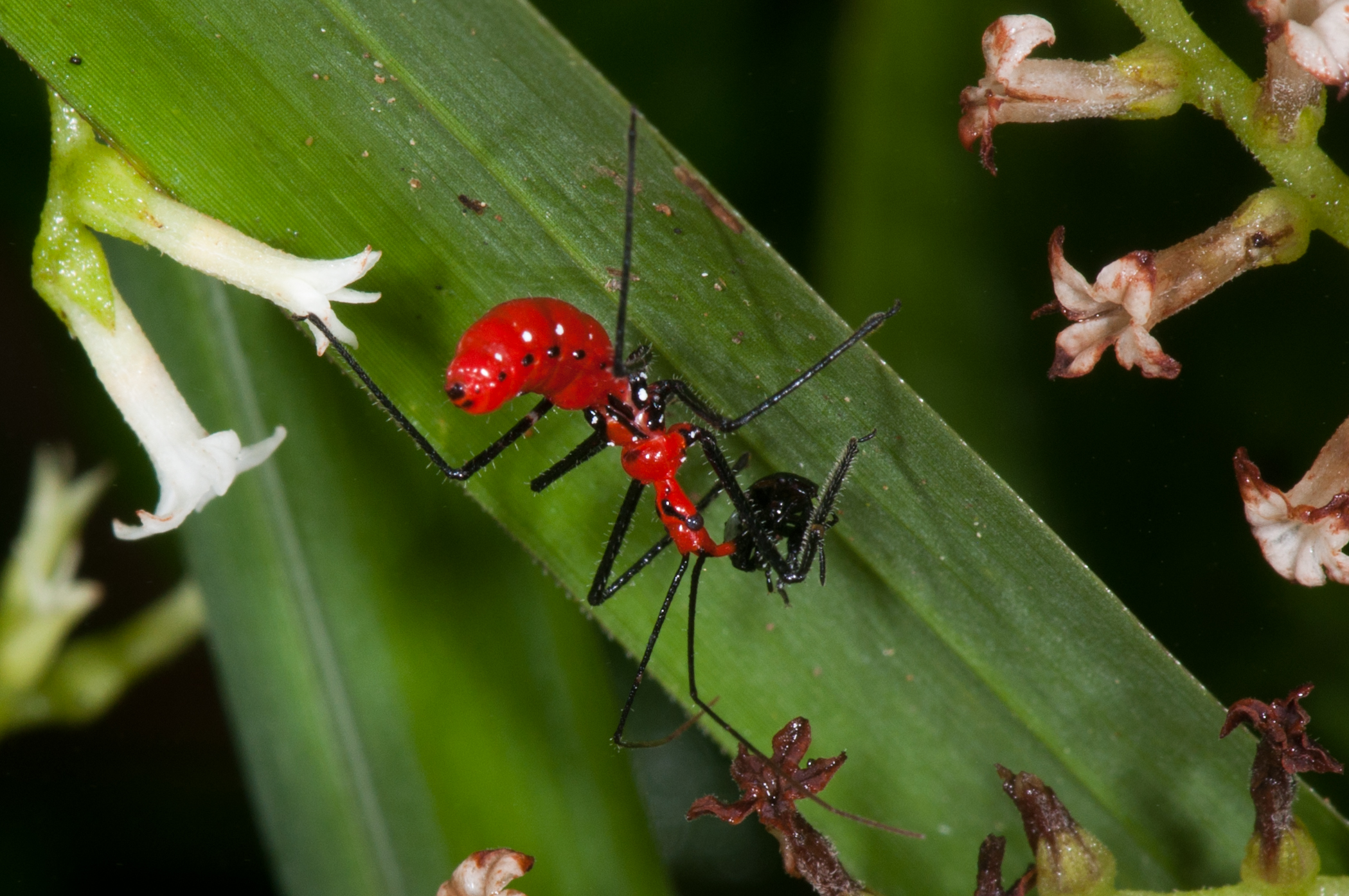
Zelus longipes
species of insect

Zelus luridus
species of insect
Triatoma nigromaculata
species of insect
Panstrongylus
Panstrongylus is a genus of insects that belongs to the subfamily Triatominae. Its members are found from Mexico into South America.
Zeluroides
Zeluroides is a genus of assassin bugs in the family Reduviidae. There are at least two described species in Zeluroides.
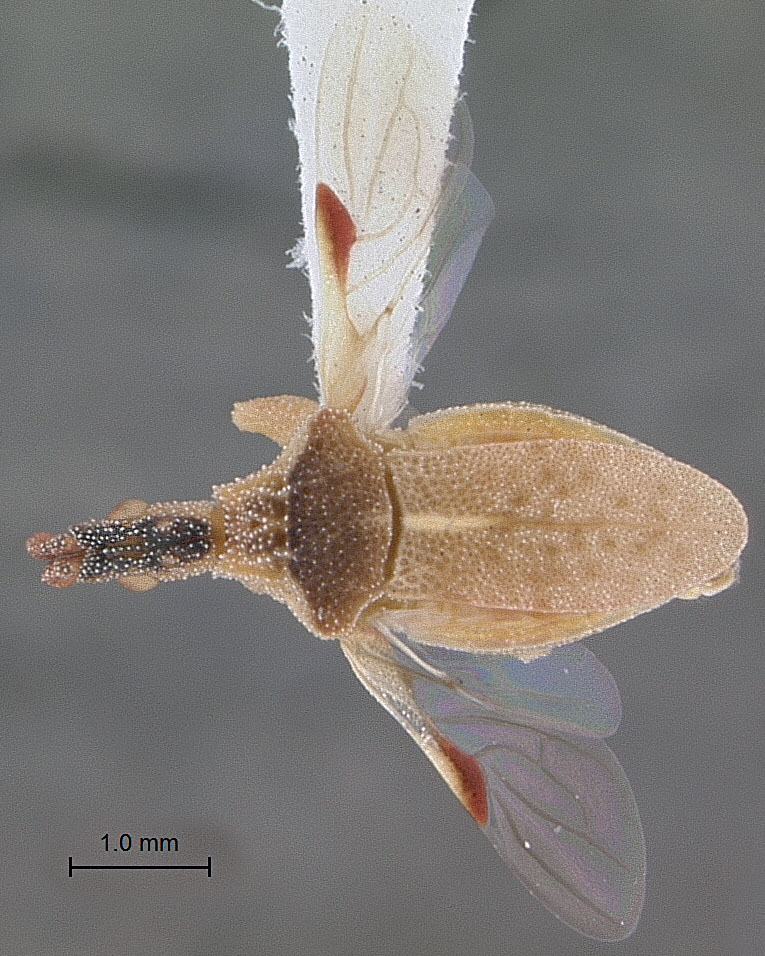
Lophoscutus
Lophoscutus is a genus of ambush bugs in the family Reduviidae. There are more than 60 described species in Lophoscutus.
Diaditus
Diaditus is a genus of assassin bugs in the family Reduviidae. There are about six described species in Diaditus.

Zelus tetracanthus
species of insect

Empicoris
thumb|Empicoris vagabundus

Polididus armatissimus
species of insect
Macrocephalus
Macrocephalus (meaning "large head") is a genus of ambush bugs in the family Reduviidae. There are more than 30 described species in Macrocephalus.
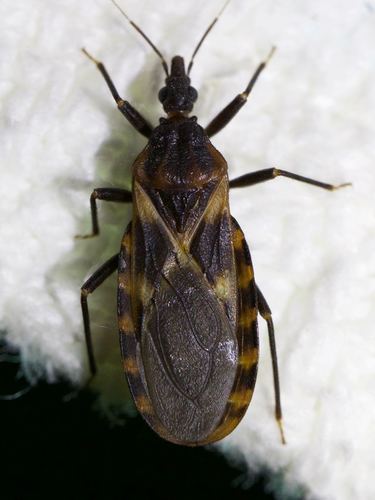
Triatoma neotomae
species of insect
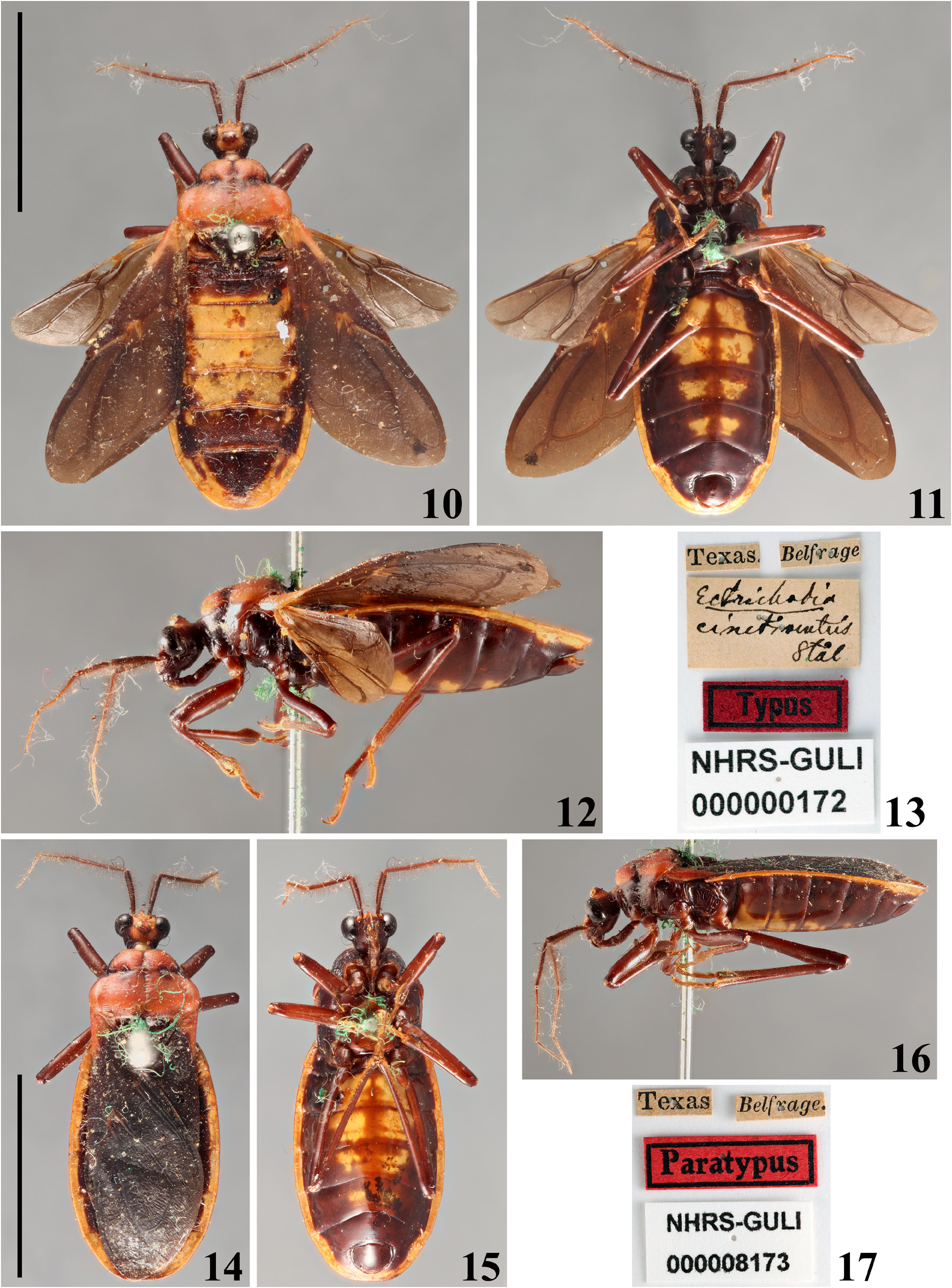
Rhiginia cinctiventris
species of insect
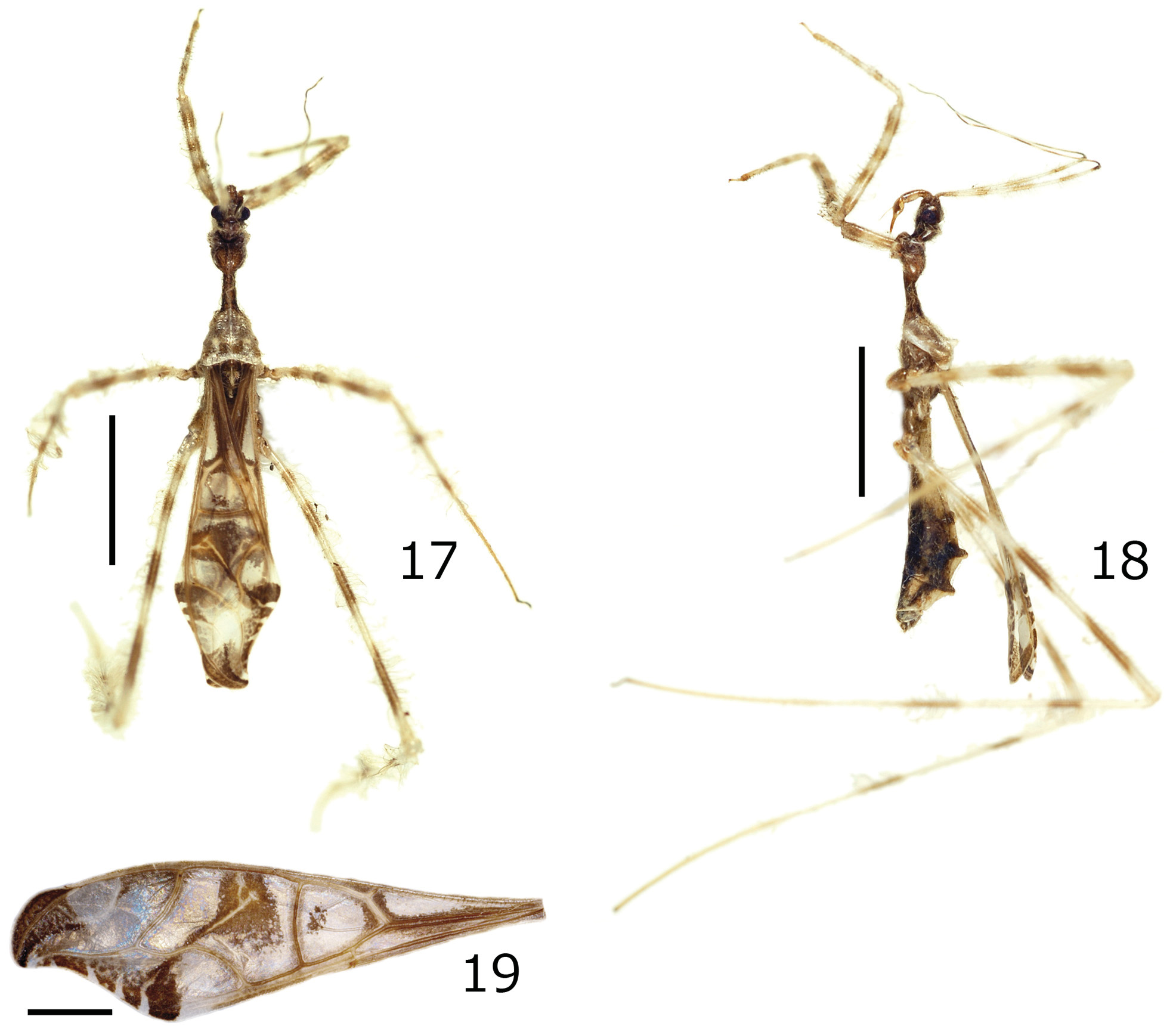
Stenolemus
Stenolemus is a genus of thread-legged bug (Emesinae). Species of this genus are noted for preying on spiders.

Pselliopus cinctus
species of insect

Triatoma dimidiata
species of insect

Sinea
Sinea is a New World genus of assassin bugs, in the subfamily Harpactorinae. 13 species have been described, mostly from the Southwestern United States and Central America.
Ectrichodiinae
The Ectrichodiinae are a subfamily of assassin bugs (Reduviidae) known for specializing on millipedes as prey. The group comprises more than 600 species in about 115 genera, making it a fairly large subfamily. The bugs are also known for their aposematic coloration, often brightly colored metallic blue, red, or yellow.

Saicella
Saicella is a genus of assassin bugs endemic to Hawaii. There are currently six species in the genus. ''Saicella's'' taxonomic position is uncertain, with characters similar to both the Saicinae and Emesinae subfamilies.

Gnathobleda
Gnathobleda is a genus of assassin bugs in the family Reduviidae. There are at least four described species in Gnathobleda.