Category
page 1Religious terminology

priest
A priest is a certain male religious leader authorized to perform the sacred rituals of a religion, especially as a mediatory agent between humans and one or more deities. They also have the authority or power to administer religious rites; in particular, rites of sacrifice to, and propitiation of, a deity or deities. Their office or position is the "priesthood", a term which also may apply to such persons collectively. A priest may have the duty to hear confessions periodically, give marriage counseling, provide prenuptial counseling, give spiritual direction, teach catechism, or visit those

sin
thumb|Depiction of the sin of Adam and Eve ([[The Garden of Eden with the Fall of Man by Jan Brueghel the Elder and Pieter Paul Rubens)]]

cross
thumb|A Greece|Greek cross (all arms of equal length) above a [[saltire, a cross whose limbs are slanted]]

saint
thumb|upright=1.2|John the Baptist pictured with a halo. In [[Christian iconography, saints may also be depicted with wreaths, palm branches, white lilies and other attributes.]]
In Christian belief, a saint, also known as a hallow, is a person who is recognized as having an exceptional degree of holiness, likeness, or closeness to God. However, the use of the term saint depends on the context and denomination. Official ecclesiastical recognition, and veneration, is conferred on some denominational saints through the process of canonization in the Catholic Church or glorification in the Easter

miracle
A miracle is an event that cannot be explained by natural or scientific laws and accordingly gets attributed to some supernatural or preternatural cause. Various religions often attribute a phenomenon characterized as miraculous to the actions of a supernatural being, (especially) a deity, a miracle worker, a saint, or a religious leader.
.jpg)
martyr
thumb|330x330px|Miniature from the Menologion of Basil II depicting the [[20,000 Martyrs of Nicomedia, who were martyred when Roman soldiers set their church on fire on Christmas Day, AD 302]]
A martyr (, mártys, 'witness' stem , martyr-) is someone who suffers persecution and death for advocating, renouncing, or refusing to renounce or advocate, a religious belief or other cause as demanded by an external party. In colloquial usage, the term can also refer to any person who suffers a significant consequence in protest or support of a cause.

demon
thumb|Bronze statue of the Assyro-Babylonian demon king [[Pazuzu, , Louvre]]
A demon is an evil or malevolent supernatural entity. Historically, belief in demons, or stories about demons, occurs in folklore, mythology, religion, occultism, and literature; these beliefs are reflected in media including
fiction, comics, film, television, and video games. Belief in demons probably goes back to the Paleolithic age, stemming from humanity's fear of the unknown, the strange and the horrific. In ancient Near Eastern religions and in the Abrahamic religions, including early Judaism and ancient-medieva

Messiah
alt=|thumb|Samuel (Bible)|Samuel anoints [[David, Dura Europos, Syria, 3rd century CE.]]

heresy
thumb|Saint Nicholas with [[Arius at the Council of Nicaea, at which he is said to have hit him; Arius was known for preaching that Jesus was created by God and has a lower status, a heresy in Trinitarian Christianity]]Heresy is any belief or theory that is strongly at variance with established beliefs or customs, particularly the accepted beliefs or religious law of a religious organization. A heretic is a proponent of heresy.

Holy Land
Abrahamic term for Israel and Palestine

abbot
right|thumb|Arms of a Catholic abbot are distinguished by a gold crozier with a veil attached and a black [[galero with twelve tassels (the galero of a territorial abbot would be green).]]

asceticism
Asceticism is a lifestyle characterized by abstinence from worldly pleasures through poverty, and simple living, often for the purpose of pursuing spiritual goals. Ascetics may withdraw from the world or continue to be part of their society, but typically adopt a frugal lifestyle, characterized by the renunciation of material possessions and physical pleasures, and also spend time fasting while concentrating on religion, prayer, or meditation. Some individuals have also attempted an ascetic lifestyle to free themselves from addictions to things such as alcohol, smoking, drugs, sex, porn, lavis

clergy
thumb|upright=1.15|
Roman Catholic Church|Catholic clergy at the consecration of the [[Sacred Heart Cathedral, Sarajevo (1889). ]]

blasphemy
Blasphemy is an insult that shows contempt, disrespect or lack of reverence concerning a deity, an object considered sacred, or something that is considered inviolable. Some religions, especially Abrahamic ones, regard blasphemy as a crime, including insulting the Islamic prophet Muhammad in Islam, speaking the sacred name in Judaism, and blasphemy of God's Holy Spirit is an eternal sin in Christianity. It was also a crime under English common law, and it is still a crime under Italian law (Art. 724 del Codice Penale).

hermeneutics
Hermeneutics () is the theory and methodology of interpretation, especially the interpretation of biblical texts, wisdom literature, and philosophical texts. As necessary, hermeneutics may include the art of understanding and communication.

amen
thumb|upright=0.9|A man in Jewish hat says "Amen" to ' in the margin of ' f. 86v. Abraham, c. 1300.
Amen is an Abrahamic declaration of affirmation which is first found in the Hebrew Bible, and subsequently found in the New Testament. It is used in Jewish, Christian, and Islamic practices as a concluding word, or as a response to a prayer. Common English translations of the word amen include "verily", "truly", "it is true", and "let it be so". It is also used colloquially to express strong agreement.

moksha
Moksha (, ; , '), also called vimoksha, vimukti, and mukti', is a term in Jainism, Buddhism, Hinduism, and Sikhism for various forms of emancipation, liberation, nirvana, or release. In its soteriological and eschatological senses, it refers to freedom from saṃsāra, the cycle of death and rebirth. In its epistemological and psychological senses, moksha'' is freedom from ignorance: self-realization, self-actualization and self-knowledge.

tithe
thumb|The Tithe Pig, group in Derby Porcelain, c. 1770
thumb|Porcelain figure of a priest collecting the tithe ([[Austria)]]
A tithe (; from Old English: teogoþa "tenth") is a one-tenth part of something, paid as a contribution to a religious organization or compulsory tax to government. Modern tithes are normally voluntary and paid in cash, cheques or via online giving, whereas historically tithes were required and paid in kind, such as agricultural produce. Church tax linked to the tax system are used in many countries to support their national church. Donations to the church beyond what is

orthodoxy
Orthodoxy () is adherence to a purported "correct" or otherwise mainstream- or classically accepted creed, especially in religion.

salvation
Salvation (from Latin: salvatio, from salva, 'safe, saved') is the state of being saved or protected from harm or a dire situation. In religion and theology, salvation generally refers to the deliverance of the soul from sin and its consequences. The academic study of salvation is called soteriology.

revelation
thumb|Illumination from Scivias|Liber Scivias, showing [[Hildegard of Bingen receiving a vision, dictating to her scribe and sketching on a wax tablet]]
charisma
Charisma () is a personal quality of magnetic charm, persuasion, or appeal.

hubris
thumb|Illustration for John Milton's [[Paradise Lost by Gustave Doré (1866). The spiritual descent of Lucifer into Satan is one of the most famous examples of hubris.]]
repentance
Repentance is reviewing one's actions and feeling contrition or regret for past or present wrongdoings, which is accompanied by commitment to and actual actions that show and prove a change for the better.

chalice
thumb|Late medieval chalice in silver-gilt with enamels of Saints and Scenes from the Life of Christ
thumb|Diagram showing the parts of a liturgical chalice.

midrash
thumb|250px|Title page, Midrash Tehillim
Midrash (; ; or midrashot) is an expansive Jewish Biblical exegesis using a rabbinic mode of interpretation prominent in the Talmud. The word itself means "textual interpretation", "study", or "exegesis", derived from the root verb (), which means "resort to, seek, seek with care, enquire, require".

exegesis
thumb|An English-language Bible open to the [[Book of Isaiah]]
Exegesis ( ; from the Greek , from , "to lead out") is a critical explanation or interpretation of a text. The term is traditionally applied to the interpretation of Biblical works. In modern usage, exegesis can involve critical interpretations of virtually any text, including not just religious texts but also philosophy, literature, or virtually any other genre of writing. The phrase Biblical exegesis can be used to distinguish studies of the Bible from other critical textual explanations.
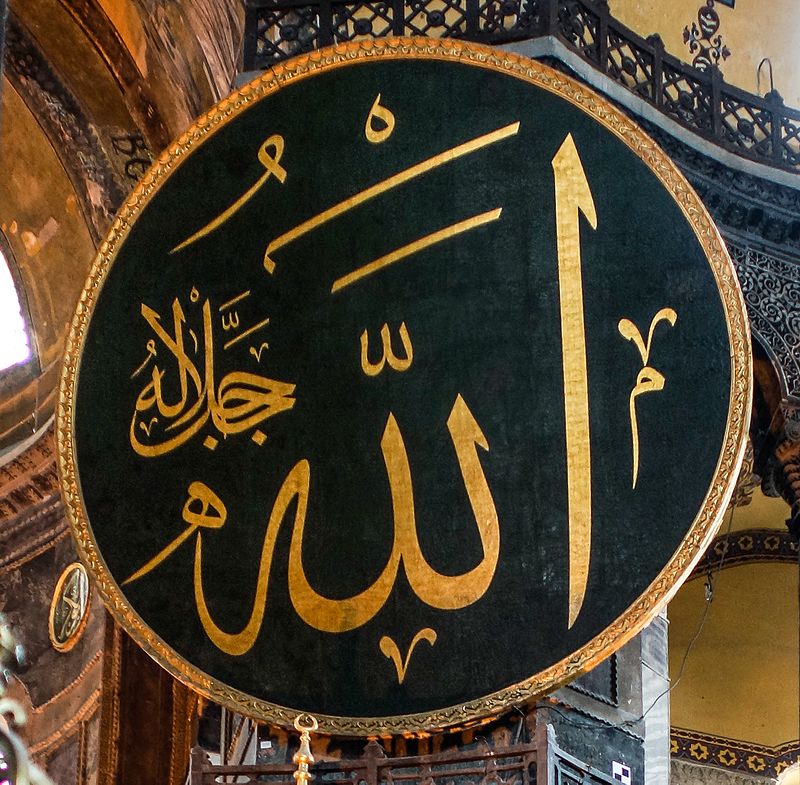
Inshallah
Inshallah, usually called the , is an Arabic-language expression meaning or . It is mentioned in the Quran, surah Al-Kahf (23-24), which requires its use when mentioning intended actions. It signifies that nothing, neither action nor thought, happens without God's permission.
divine providence
God's intervention in the Universe
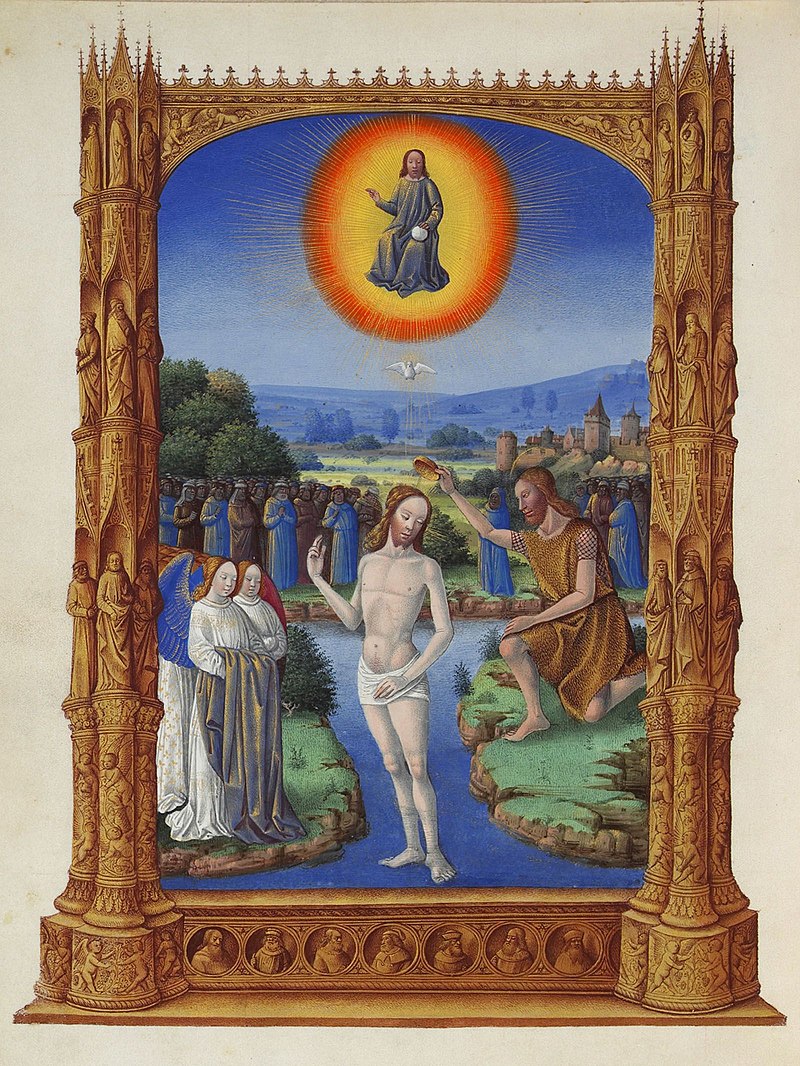
Son of God
religious title, designating a monarch, messiah, demigod, or deity

theophany
thumb|right|upright=1.3|Peter Paul Rubens' Death of [[Semele, caused by the Theophany of Zeus without a mortal disguise]]
.jpg)
laity
In religious organizations, the laity () — individually a layperson, layman or laywoman — consists of all members who are not part of the clergy, usually including any non-ordained members of religious orders, e.g., a nun or a lay brother.

universalism
Universalism is the philosophical and theological concept that some ideas have universal application or applicability.
law of Moses
the Torah or the first five books of the Hebrew Bible

ordination
thumb|upright=1.5|Ordination of a Catholic deacon, 1520 AD: the [[bishop bestows vestments.]]

messianism
Messianism is the belief in the advent of a messiah who acts as the savior of a group of people. Some religions also have messianism-related concepts. Religions with a messiah concept include Christianity (Jesus), Hinduism (Kalki), Judaism (Mashiach), Islam (Mahdi and Isa), Druze faith (Hamza ibn Ali), Zoroastrianism (Saoshyant), Buddhism (Maitreya),
Taoism (Li Hong), and Bábism (He whom God shall make manifest).
apophatic theology
way of describing the divine by explaining what God is not

preacher
thumb|Jesus of Nazareth was an itinerant apocalyptic preacher in 1st-century Judea.
A preacher is a person who delivers sermons or homilies on religious topics to an assembly of people. Less common are preachers who preach on the street, or those whose message is not necessarily religious, but who preach components such as a moral or social worldview or philosophy.

laicism
Laicism (also laicity, from the Ancient Greek "λαϊκός" "laïkós", meaning "layperson" or "non-cleric") refers to a legal and political model based on the strict separation of religion and state. The French term laïcité was coined in 1871 by French educator and future Nobel Peace Prize laureate Ferdinand Buisson, who advocated for secular education. In some countries, laicism is constitutionally enshrined, while others—primarily Western states—do not explicitly define themselves as Laicist but implement varying degrees of separation between religion and government.
redemption
religious concept referring to forgiveness or absolution for past sins

righteousness
Righteousness is the quality or state of being morally right or justifiable. The concept is rooted in religious or divine law and broadly encompasses moral correctness, justice, and virtuous living as dictated by a higher authority or set of spiritual beliefs. It is found in many religions and traditions, including Buddhism, Christianity, Confucianism, Hinduism, Islam, Jainism, Judaism, Taoism, and Zoroastrianism. It is an attribute that implies that a person's actions are justified and can have the connotation that the person has been "judged" as living a moral life, relative to religious doc
sanctification
act or process of acquiring sanctity
faith healing
prayer and gestures that are perceived to bring divine intervention in physical healing

infidel
alt=|thumb|379x379px|Gustave Doré, The Baptism of Infidels
An infidel (literally "unfaithful") is a person who is accused of disbelief in the central tenets of one's own religion, such as members of another religion, or irreligious people.

Salawat
thumb|Calligraphic Arabic text of the "Salawat": , meaning "Blessings and peace be upon Muhammad and his family", in the handwriting of Shamsuddin Asaf Jahi
thumb|Arabic text of another shape of "Salawat": , meaning "May God send his mercy and blessings upon him"
Salawat (; ) or Durud (, ) is an Islamic complimentary Arabic phrase which contains veneration for Muhammad. This phrase is usually expressed by Muslims as part of their five daily prayers (usually during the ) and also when Muhammad's name is mentioned. is a plural form of () and from the triliteral root of ṣ-l-w (the letters , ) whi

apocalypticism
thumb|right|Four Horsemen of the Apocalypse, woodcut print from the Apocalypse of [[Albrecht Dürer (1497–1498), Staatliche Kunsthalle Karlsruhe]]
chosen people
religious term
confession of faith
statement of the shared beliefs of a religious community
Sons of God
a phrase used in the Hebrew Bible and apocrypha
abomination of desolation
Apocalyptic biblical phrase
creed
thumb|Icon depicting Emperor Constantine (center) and the Fathers of the [[First Council of Nicaea (325) as holding the Niceno-Constantinopolitan Creed of 381]]A creed, also known as a confession of faith, a symbol, or a statement of faith, is a statement of the shared beliefs of a community (often a religious community) which summarizes its core tenets.
sacred mystery
inexplicable or secret religious phenomenon

supplication
right|thumb|250 px|The Supplication by Théodore Ralli|Théodore Jacques Ralli, 1905-1909
Supplication (also known as petitioning) is a form of prayer, wherein one party humbly or earnestly asks another party to provide something, either for the party who is doing the supplicating (e.g., "Please spare my life.") or on behalf of someone else.
numinous
Numinous () means "arousing spiritual or religious emotion; mysterious or awe-inspiring"; also "supernatural" or "appealing to the aesthetic sensibility." The term was given its present sense by the German theologian and philosopher Rudolf Otto in his influential 1917 German book The Idea of the Holy. He also used the phrase mysterium tremendum as another description for the phenomenon. Otto's concept of the numinous influenced thinkers including Carl Jung, Mircea Eliade, and C. S. Lewis. It has been applied to theology, psychology, religious studies, literary analysis, and descriptions of psy
cataphatic theology
theology that uses "positive" terminology

convocation
thumb|300px|right|Student receiving an academic degree during convocation.
prayer for the dead
funerary prayers for deceased people
Ancient of Days
name for God in the Book of Daniel
Islamic honorifics
laudatory religious phrases in Islam
propitiation
Propitiation is the act of appeasing or making well-disposed a deity, thus incurring divine favor or avoiding divine retribution. It is related to the idea of atonement and sometimes mistakenly conflated with expiation. The discussion here encompasses usage only in the Christian tradition.