Category
page 1Respiratory system anatomy

lung
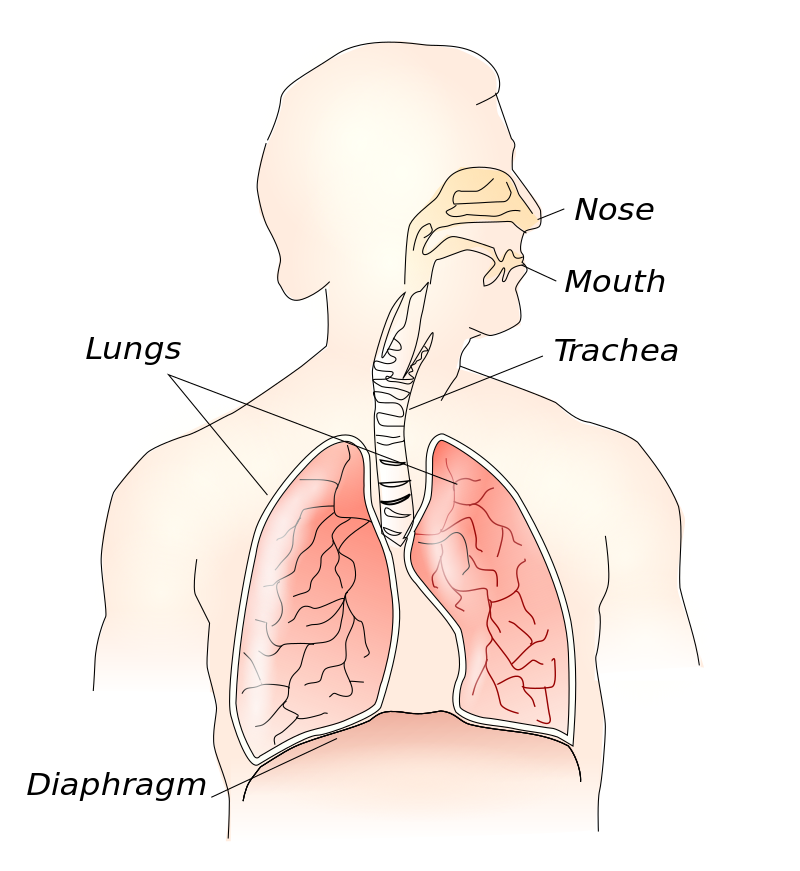
The lungs are the primary organs of the respiratory system in many animals, including humans. In mammals and most other tetrapods, two lungs are located near the backbone on either side of the heart. Their function in the respiratory system is to extract oxygen from the atmosphere and transfer it into the bloodstream, and to release carbon dioxide from the bloodstream into the atmosphere, in a process of gas exchange. Respiration is driven by different muscular systems in different species. Mammals, reptiles and birds use their musculoskeletal systems to support and foster breathing. In early

trachea
The trachea (: tracheae or tracheas), also known as the windpipe, is a cartilaginous tube that connects the larynx to the bronchi of the lungs, allowing the passage of air, and so is present in almost all land vertebrate animals' lungs. The trachea extends from the larynx and branches into the two primary bronchi. At the top of the trachea, the cricoid cartilage attaches it to the larynx. The trachea is formed by a number of horseshoe-shaped rings, joined together vertically by overlying ligaments, and by the trachealis muscle at their ends. The epiglottis closes the opening to the larynx duri
thoracic diaphragm
sheet of internal skeletal muscle

bronchus
A bronchus ( ; : bronchi, ) is a passage or airway in the lower respiratory tract that conducts air into the lungs. The first or primary bronchi to branch from the trachea at the carina are the right main bronchus and the left main bronchus. These are the widest bronchi, and enter the right lung, and the left lung at each hilum. The main bronchi branch into narrower secondary bronchi or lobar bronchi, and these branch into narrower tertiary bronchi or segmental bronchi. Further divisions of the segmental bronchi are known as 4th order, 5th order, and 6th order segmental bronchi, or grouped tog

pulmonary alveolus
hollow cavity found in the lungs

rib cage
arrangement of bones

pulmonary artery
artery in the pulmonary circulation that carries deoxygenated blood from the heart to the lungs

nostril
A nostril (or naris , : nares ) is either of the two orifices of the nose. They enable the entry and exit of air and other gasses through the nasal cavities. In birds and mammals, they contain branched bones or cartilages called turbinates, whose function is to warm air on inhalation and remove moisture on exhalation. Fish do not breathe through noses, but they do have two small holes used for smelling, which can also be referred to as nostrils (with the exception of Cyclostomi, which have just one nostril).
%20CRUK%20306.svg)
pleura
The pleurae (: pleura) are the two flattened pleural sacs filled with pleural fluid that surround each lung, and lines their surrounding tissues. They are formed of two opposing layers of serous membrane that separate the lungs from the mediastinum, the inside surfaces of the surrounding chest walls and the diaphragm. Although wrapped onto itself resulting in a double layer, each lung is surrounded by a single, continuous pleural membrane.
pulmonary vein
veins that transfer oxygenated blood from the lungs to the heart
vocal tract
anatomical cavity that filters vocalizations
respiratory tract
the part of the anatomy involved with the process of respiration
cricoid cartilage
complete ring of cartilage around the trachea
laryngopharynx
REDIRECT Pharynx#Laryngopharynx
alveolar macrophage
macrophage found in the pulmonary alveolus
carina of trachea
point at which the trachea branches to form the two main stem bronchi
corniculate cartilages
laryngeal cartilages
lower respiratory tract
derived from the developing foregut and consists of the trachea, bronchi (primary, secondary and tertiary), bronchioles (including terminal and respiratory), and lungs (including alveoli). It also sometimes includes the larynx