Category
page 1Rhizocarpaceae

Map lichen
species of fungus

Rhizocarpaceae
Rhizocarpaceae is a family of lichen-forming fungi; together with the family Sporastatiaceae it constitutes the order Rhizocarpales in the Ascomycota, class Lecanoromycetes. These lichens are primarily rock-dwellers that form thin, paint-like crusts tightly attached to stone surfaces, though some species grow as small scales or radiating rosettes. The family includes five genera found mainly in cool to cold regions around the world, where they colonize exposed siliceous and basic rocks in sunny locations. Most species reproduce through small black disc-shaped fruiting bodies that sit flush wit

Rhizocarpon
Rhizocarpon is a genus of crustose, saxicolous (or sometimes lichenicolous), lichens in the family Rhizocarpaceae. The genus is common in arctic-alpine environments, but also occurs throughout temperate, subtropical, and even tropical regions. They are commonly known as map lichens because of the prothallus forming border-like bands between colonies in some species, like the common map lichen (Rhizocarpon geographicum).

Rhizocarpon macrosporum
species of fungus
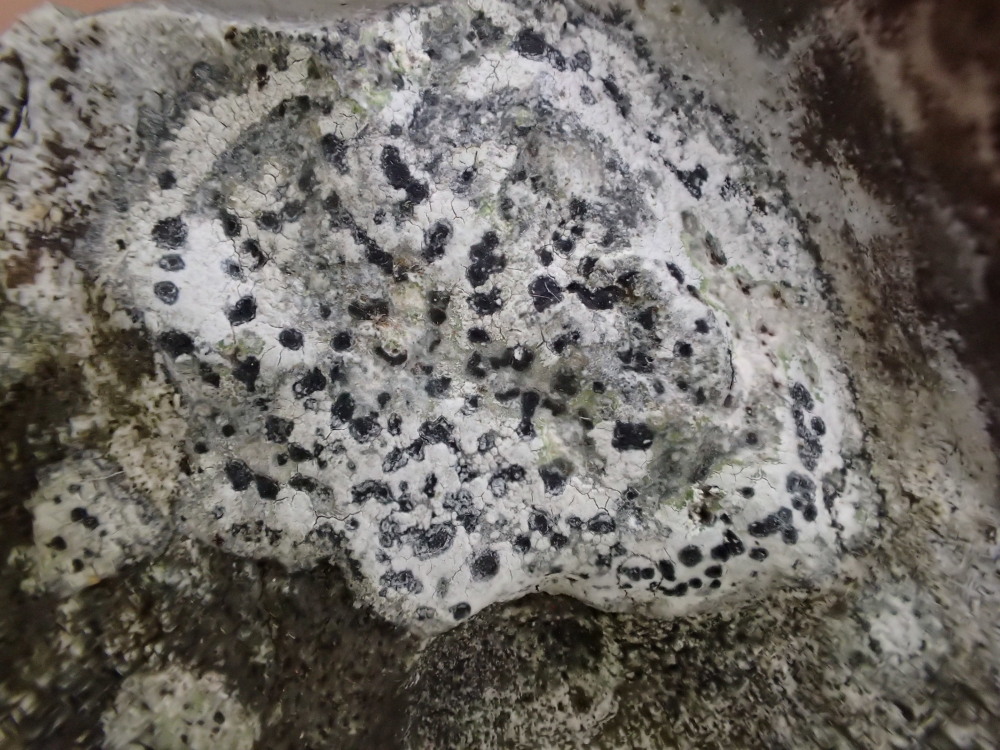
Rhizocarpon petraeum
species of fungus
Catolechia
Catolechia is a genus of lichen-forming fungi in the family Rhizocarpaceae. It is a monotypic genus, containing the single species Catolechia wahlenbergii. The genus was circumscribed by the German botanist Julius von Flotow in 1850. He did not assign a type species for the genus; Catolechia pulchella was designated as the type by Gustav Wilhelm Körber in 1855. This species is synonymous with Catolechia wahlenbergii.

Rhizocarpon viridiatrum
species of fungus
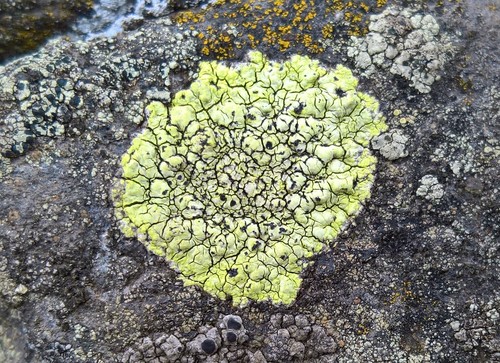
Rhizocarpon alpicola
species of fungus

Epilichen
Epilichen is a small genus of lichen-forming fungi in the family Rhizocarpaceae. These parasitic lichens live on other lichens, beginning as thin, crust-like patches that may break into small islands or scales, and in some cases produce no visible body at all except for their reproductive structures. They reproduce through black, disc-shaped fruiting bodies that contain distinctive brown spores with a "doughnut ring" appearance, and can eventually take over the space occupied by their host lichen once it dies.

Rhizocarpon cinereovirens
species of fungus
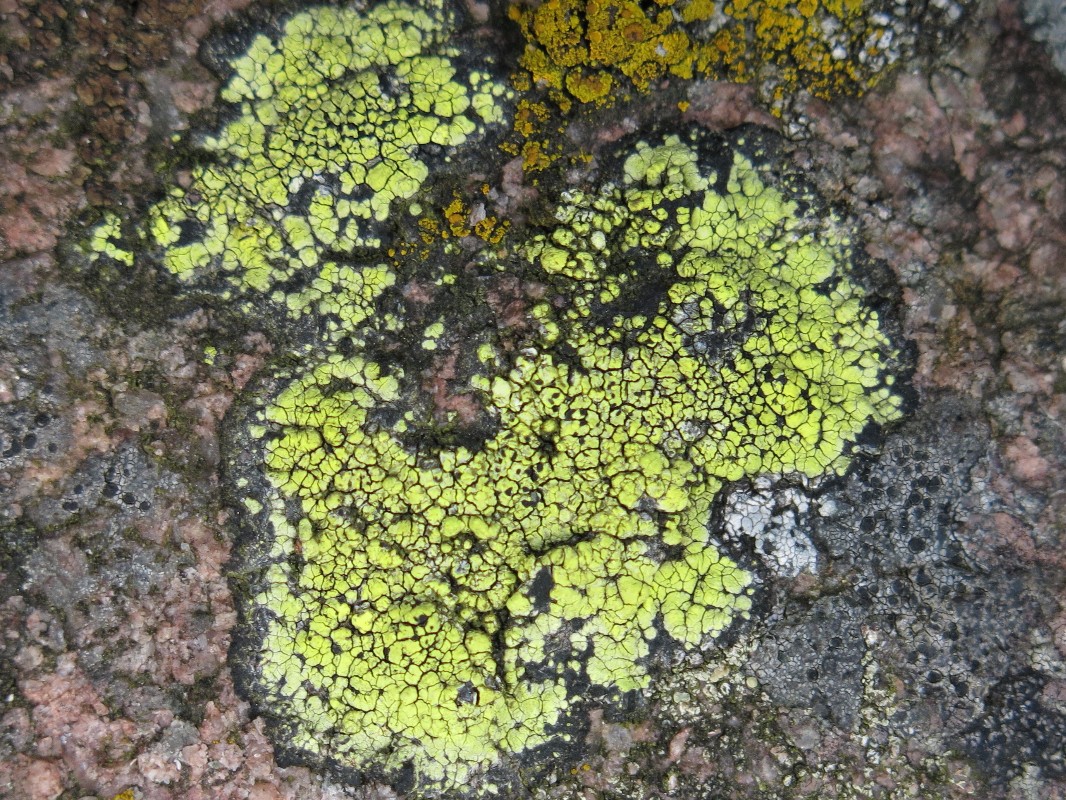
Rhizocarpon lecanorinum
species of fungus

Rhizocarpon superficiale
species of fungus
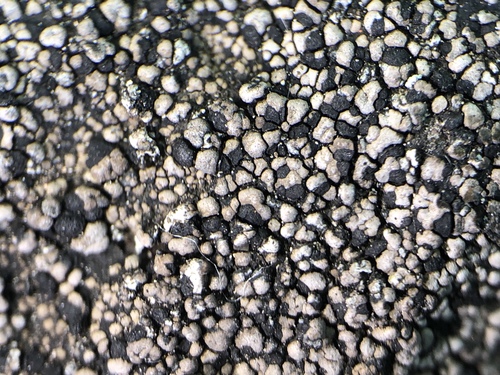
Rhizocarpon badioatrum
species of fungus
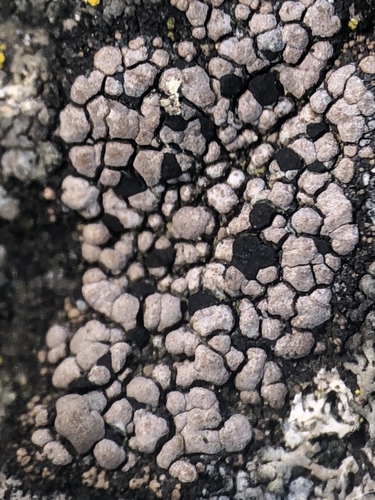
Rhizocarpon grande
species of fungus

Rhizocarpon eupetraeum
species of fungus

Rhizocarpon timdalii
species of fungus
Poeltinula
Poeltinula is a small genus of lichen-forming fungi in the family Rhizocarpaceae. It comprises three species of crustose lichens that grow on limestone. The genus was established in 1984 by the lichenologist Josef Hafellner and is characterized by its inconspicuous, paint-like growth that often goes unnoticed until the distinctive black fruiting bodies appear. These lichens are recognized by their dark spores that turn bright red when treated with ammonia solution and their fruiting bodies that turn crimson when tested with potassium hydroxide solution.
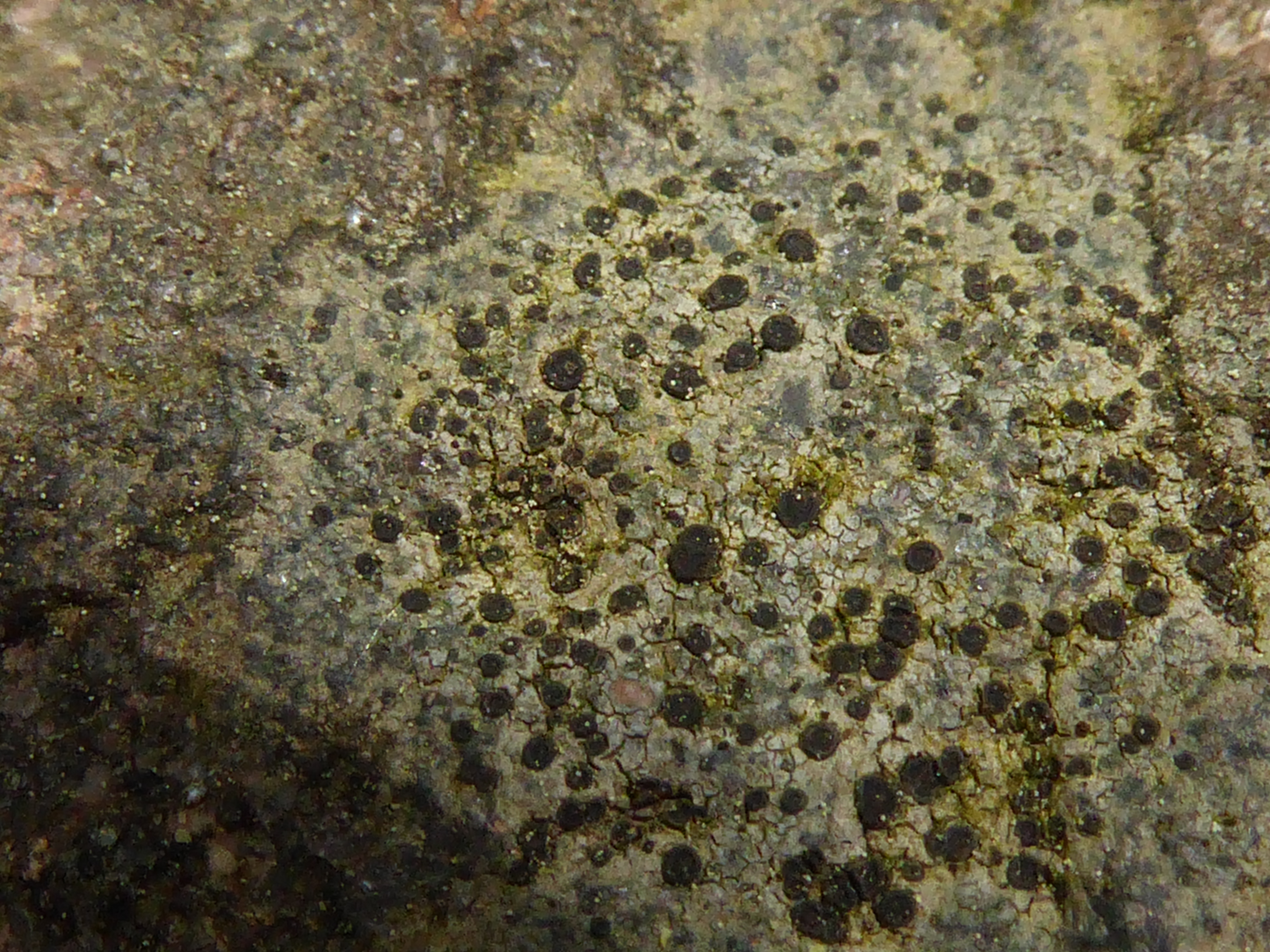
Rhizocarpon reductum
species of fungus

Rhizocarpon pusillum
species of fungus
Rhizocarpon furax
species of fungus