Category
page 1Rosales

Rosaceae
Rosaceae (), the rose family, is a family of flowering plants that includes 4,828 known species in 91 genera.

Rosales
Rosales (, ) are an order of flowering plants. Well-known members of Rosales include: roses, strawberries, blackberries and raspberries, apples, cherries, pears, plums, peaches and apricots, almonds, rowan and hawthorn, jujube, elms, banyans, figs, mulberries, breadfruit, nettles, hops, and cannabis.

Moraceae
Moraceae is a family of flowering plants comprising about 48 genera and over 1100 species, and is commonly known as the mulberry or fig family. Most are widespread in tropical and subtropical regions, less so in temperate climates; however, their distribution is cosmopolitan overall. The only common characteristics within the family are the presence of latex-producing glands in the leaves and stems, and milky sap in the soft tissues; but generally useful field characters include two carpels sometimes with one reduced, compound inconspicuous flowers, and compound fruits. The family includes wel

Ulmaceae
The Ulmaceae () are a family of flowering plants that includes the elms (genus Ulmus), and the zelkovas (genus Zelkova). Members of the family are widely distributed throughout the north temperate zone, and have a scattered distribution elsewhere except for Australasia.

Elaeagnaceae
The Elaeagnaceae are a plant family, the oleaster family, of the order Rosales comprising small trees and shrubs, native to temperate regions of the Northern Hemisphere, south into tropical Asia and Australia. The family has about 60 species in three genera.
Dirachmaceae
redirect Dirachma
Barbeyaceae
REDIRECT Barbeya
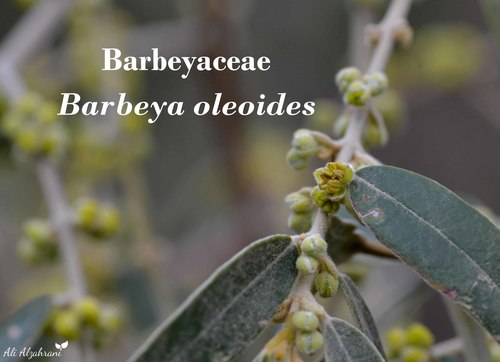
Barbeya oleoides
species of plant
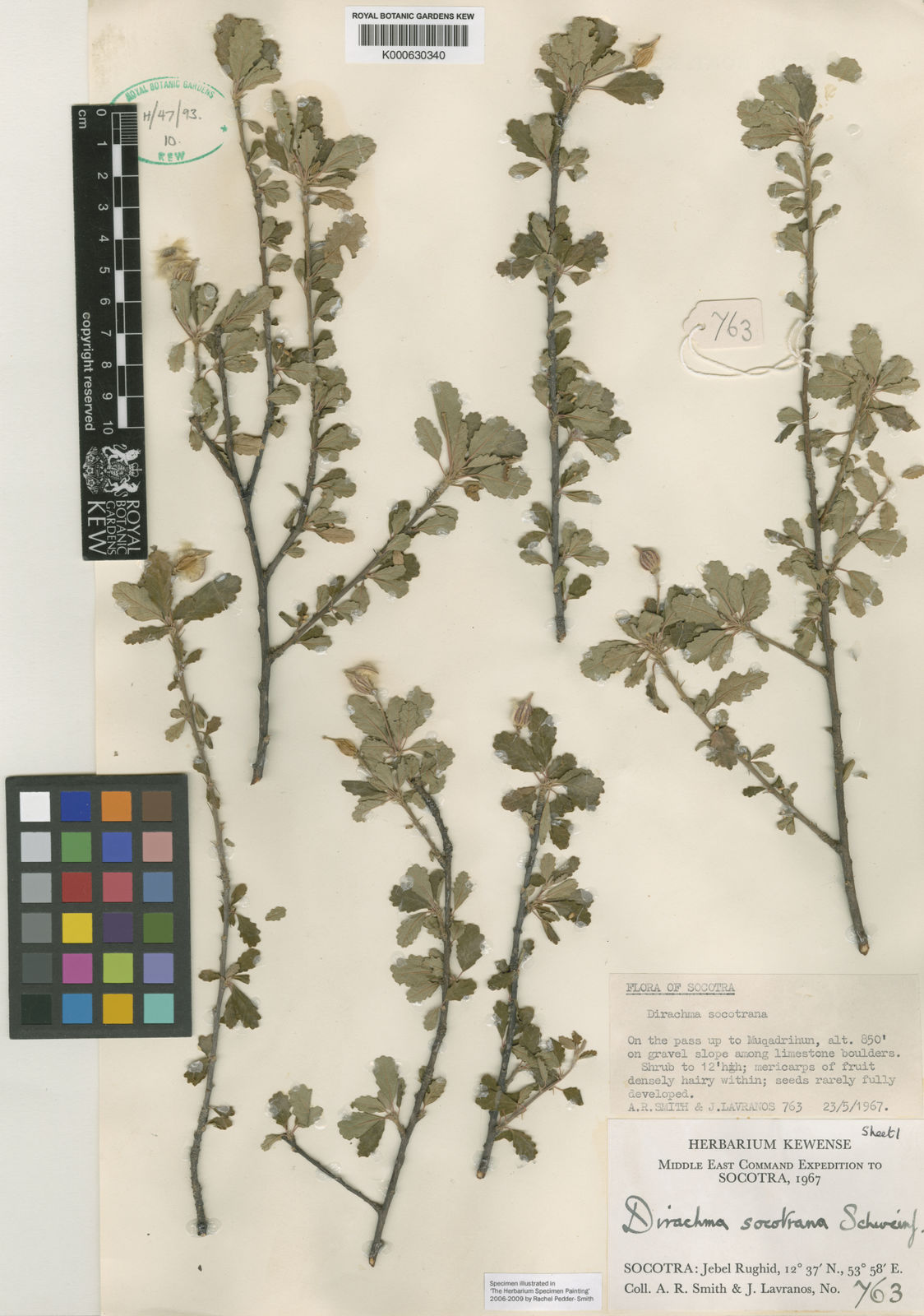
Dirachma
Dirachma is the sole genus of the family Dirachmaceae. The genus had been monotypic, its sole species being the woody plant Dirachma socotrana, until a second, herbaceous, species, Dirachma somalensis, was discovered in Somalia and described in 1991.
Barbeya
Barbeya is the only genus in the family Barbeyaceae, and has only one species, Barbeya oleoides. It is a small tree native to the mountains of Somalia, Ethiopia, and the Arabian Peninsula. It can be found locally abundant in the transition zone between the dry, evergreen, Afromontane forests and lower-elevation evergreen bushlands.