Category
page 1Salamandroidea
Ambystomatidae
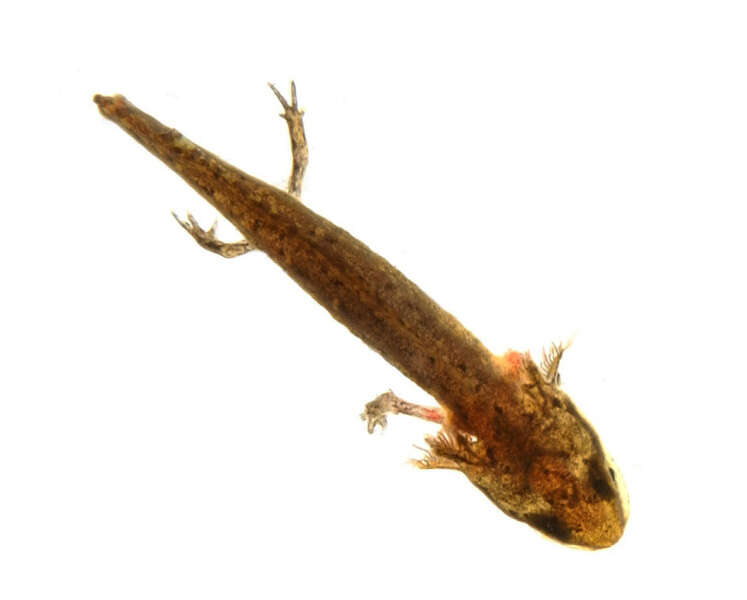
Ambystomatidae is a family of salamanders belonging to the Suborder Salamandroidea in the class Amphibia. It contains two genera, Ambystoma (the mole salamanders) and Dicamptodon (the Pacific giant salamanders). Ambystoma contains 32 species and are distributed widely across North America, while Dicamptodon contains four species restricted to the Pacific Northwest. These salamanders are mostly terrestrial and eat invertebrates, although some species are known to eat smaller salamanders. They can be found throughout the US and some areas of Canada in damp forests or plains. This family contains
Amphiuma
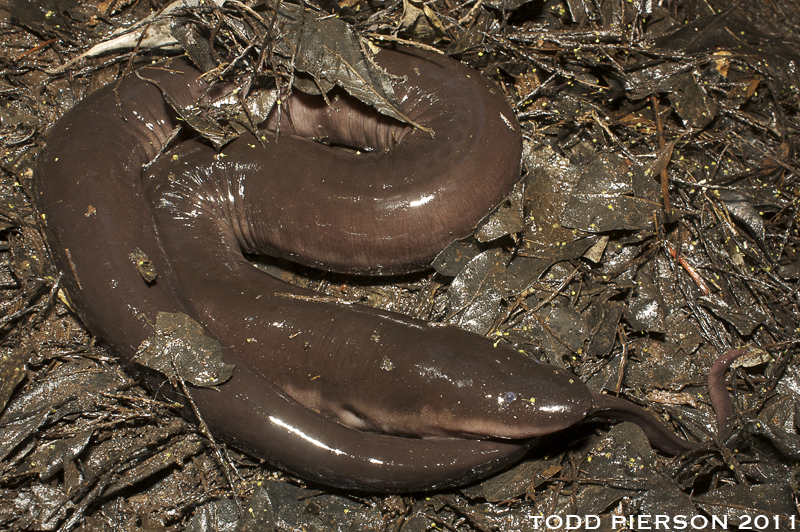
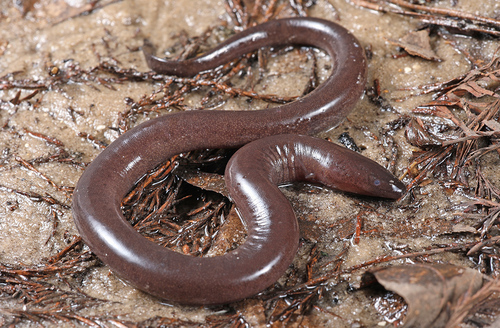
Amphiuma is a genus of aquatic salamanders from the southeastern United States, the only extant genus within the family Amphiumidae . They are colloquially known as amphiumas. They are also known to fishermen as "conger eels" or "Congo snakes", which are zoologically incorrect designations or misnomers, since amphiumas are actually salamanders (and thus amphibians), and not eels (fish), nor reptiles and are not from Congo. Amphiuma exhibits one of the largest complements of DNA in the living world, around 25 times more than a mere human.
Salamandroidea
The Salamandroidea are a suborder of salamanders, referred to as advanced salamanders. The members of the suborder are found worldwide except for Antarctica, sub-Saharan Africa, and Oceania. They differ from suborder Cryptobranchoidea as the angular and prearticular bones in their lower jaws are fused, their trunk ribs are bicapitate, and all members use internal fertilization. The female is fertilized by means of a spermatophore, a sperm-containing cap placed by the male in her cloaca. The sperm is stored in spermathecae on the roof of the cloaca until it is needed at the time of oviposition.

two-toed amphiuma
species of amphibian

three-toed amphiuma
species of amphibian
Amphiuma pholeter
species of amphibian