Category
page 1Sanskrit writers

Ādi Shankara
8th-century Hindu philosopher and theologian- Restorer of “Dashanami Sampradaya”.

Bhāskara II
Indian mathematician and astronomer (c.1114–1185)

Madhvacharya
Madhvacharya (; ; 1199–1278 CE or 1238–1317 CE), also known as Purna Prajna () and Ānanda Tīrtha, was an Indian philosopher, theologian and the chief proponent of the Dvaita (dualism) school of Vedanta. Madhva called his philosophy Tattvavāda meaning "arguments from a realist viewpoint".
Madhvacharya was born at Pajaka near Udupi on the west coast of Karnataka state in 13th-century India. As a teenager, he became a Sanyasi (monk) joining Brahma-sampradaya guru Achyutapreksha, of the Ekadandi order. Madhva studied the classics of Hindu philosophy, and wrote commentaries on the Principal Upanish

Aśvaghoṣa
', also transliterated Ashvaghosha' (, ; lit. "Horse-Cry"; ; ) ( CE), was a Buddhist philosopher, dramatist, poet, musician, and orator from India. He was born in Saketa, today known as Ayodhya.

Vātsyāyana
Vātsyāyana (Sanskrit : वात्स्यायन) was an ancient Indian philosopher, known for authoring the Kama Sutra. He lived in India during the second or third century CE, probably in Pataliputra (modern day Patna in Bihar).
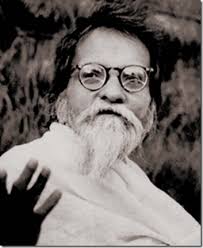
Vinoba Bhave
Indian advocate of nonviolence and human rights (1895-1982)

Varāhamihira
Varāhamihira ( 20/21 March 505 – 587), also called Varāha or Mihira, was an ancient Indian mathematician, astrologer-astronomer who lived in or around Ujjain in present-day Madhya Pradesh, India.
Bāṇabhaṭṭa
Bāṇabhaṭṭa () was a 7th-century Sanskrit prose writer and poet from India. He was the court poet of Emperor Harsha, during his reign at Kanyakubja. Bāna's principal works include a biography of Harsha, the Harshacharita and the novel Kadambari. Bāṇa died before finishing the novel and it was completed by his son Bhūṣaṇabhaṭṭa. Both these works are noted texts of Sanskrit literature. The other works attributed to him are the Caṇḍikāśataka and a drama, the Pārvatīpariṇaya. Banabhatta gets an applause as "Banochhistam Jagatsarvam" meaning Bana has described everything in this world and nothing is

Gaudapada
Gauḍapāda (Sanskrit: गौडपाद; ), also referred as Gauḍapādācārya (Sanskrit: गौडपादाचार्य; "Gauḍapāda the Teacher"), was an early medieval era Hindu philosopher and scholar of the Advaita Vedanta school of Hindu philosophy. While details of his biography are uncertain, his ideas inspired others such as Adi Shankara who called him a Paramaguru (highest teacher).
Bharata Muni
Classical Sanskrit musicologist and drama theorist

Bhoja
Bhoja ( 1010–1055 CE) was the Paramara king of Malwa region in central India. He ruled from Dhara (modern Dhar), and fought wars with nearly all his neighbours in attempts to extend his kingdom, with varying degrees of success. At its zenith, his empire extended from Chittor in the north to upper Konkan in the south, and from the Sabarmati River in the west to Vidisha in the east.
Kshemendra
Kshemendra (; ) was an 11th-century Sanskrit polymath poet, satirist, philosopher, historian, dramatist, translator and art critic from Kashmir.

Amarsingha
thumb|A 19th-century Amarakosha manuscript with Newar language commentary from [[Nepal.]]
Amarasimha (IAST: '''''', ) was a Sanskrit grammarian and poet from ancient India, of whose personal history hardly anything is known. He is said to have been "one of the nine gems that adorned the throne of Vikramaditya," and according to the evidence of Xuanzang, this is the Chandragupta Vikramaditya (Chandragupta II) who flourished about CE 375. Other sources describe him as belonging to the period of Vikramaditya of 7th century. Most of Amarasiṃha's works were lost, with the exception of the celebrate
Vagbhata
Vāgbhaṭa (वाग्भट) was one of the most influential authors in the classical Ayurvedic tradition. Several works are associated with his name, principally the Aṣṭāṅgasaṅgraha (अष्टाङ्गसंग्रह) and the Aṣṭāṅgahṛdayasaṃhitā (अष्टाङ्गहृदयसंहिता). Modern philological research, however, argues that these two texts are unlikely to be the work of a single author. The relationship between the two treatises, as well as their authorship, remains a subject of ongoing scholarly debate and has not been conclusively resolved.

Leela Devi
Indian writer

Lakulish
thumb|Lakulisha at Sangameshvara Temple at Mahakuta, Karnataka (Chalukya dynasty|Chalukya, 7th century CE). His 5th–10th century ithyphallic statues are also found in seated yogi position in [[Rajasthan, Uttar Pradesh and elsewhere.]]
Lakulisha ( ) (Etymology: लगुड (staff) or लकुट (mace) + ईश (lord) = meaning, the lord with a staff or mace or club or stick) was a prominent Shaivite revivalist, reformist and preceptor of the doctrine of the Pashupatas, one of the oldest sects of Shaivism.
Sahajanand Saraswati
Indian academic
Garga
sage in Hinduism
Shatavadhani Ganesh
Indian writer
B. N. Krishnamurti Sharma
Sanskrit writer

Ananda Ram Baruah
Sanskrit scholar
Achyuta Pisharati
Indian academic
Durvinita
Durvinita () is seen as the most successful ruler of the Western Ganga dynasty. He is remembered for his military prowess, literary achievements, and strong patronage of Jainism. He was a son of the preceding king Avinita.
Jayasri Chattopadhyay
Rama Kant Shukla
Indian writer, scholar
Trilochan Shastri
Indian writer and poet
Akalanka
Akalaṅka [IAST: Akalaṅka] (also known as Akalaṅkadeva and Bhatta Akalaṅka) was a Jain logician whose Sanskrit-language works are seen as landmarks in Indian logic. He lived from 720 to 780 C. E. and belonged to the Digambara sect of Jainism. His work Aṣṭaśatī, a commentary on Āptamīmaṃsa of Ācārya Samantabhadra deals mainly with Jaina logic. He was a contemporary of Rāṣṭrakūta king Krishna I. He is the author of Tattvārtharājavārtika, a commentary on major Jaina text Tattvārtha Sutra. He greatly contributed to the development of the philosophy of Anekāntavāda and is therefore called the "Maste
Vishnu Raj Atreya
Nepalese writer
Puttaraj Gawai
Indian singer (1914–2010)
Jaygopal Tarkalankar
Bengali writer
Ramyatna Shukla
Indian scholar and linguist (1932−2022)
Vikram Dev Varma
ruler in the state of Jeypore and patron of arts
Bidhu Shekhar Bhattacharya
Bengali scholars (1878-1959)

Narayan Pandit
writer
Kokkonda Venkata Ratnam Pantulu
Indian writer and journalist
TS Venkannaiah
Indian writer (1941–2012)
Satya Narayana Shastri
Indian physician of Ayurveda and a Sanskrit scholar
Utpala
10th-century Indian commentator on astronomical treatises
Nandikeshvara
Nandikeshvara (; 5th century – 4th century BC) was a major theatrologist of ancient India. He was the author of the .
Ram Karan Sharma
Indian poet (1927–2018)

I. C. Chacko
Indian geologist and philologist