Category
page 1Santalaceae genera

Viscum
Viscum is a genus of over 100 species of mistletoes, native to temperate and tropical regions of Europe, Africa, Asia and Australasia. Traditionally, the genus has been placed in its own family Viscaceae, but recent genetic research by the Angiosperm Phylogeny Group shows this family to be correctly placed within a larger circumscription of the sandalwood family, Santalaceae. Its name is the origin of the English word viscous, after the Latin viscum, a sticky bird lime made from the plants' berries.

Santalum
Santalum is a genus of woody flowering plants in the Santalaceae family, the best known and most commercially valuable of which is the Indian sandalwood tree, S. album. Members of the genus are trees or shrubs. Most are root parasites which photosynthesize their own food, but tap the roots of other species for water and inorganic nutrients. Several species, most notably S. album, produce highly aromatic wood, used for scents and perfumes and for herbal medicine. It has about 25 known species which are native to Island Southeast Asia (Indonesia, Timor-Leste, and the Philippines), Mela

Thesium
Thesium is a genus of flowering plants in the family Santalaceae. It is particularly well represented in South Africa.

Arceuthobium
The genus Arceuthobium, commonly called dwarf mistletoes, is a genus of 42 species of parasitic plants that parasitize members of Pinaceae and Cupressaceae in North America, Central America, Asia, Europe, and Africa. Of the 42 species that have been recognized, 39 and 21 of these are endemic to North America and the United States, respectively. They all have very reduced shoots and leaves (mostly reduced to scales) with the bulk of the plant living under the host's bark. Recently the number of species within the genus has been reduced to 26 as a result of more detailed genetic analysis.

Osyris
Osyris is a genus of plants in the family Santalaceae, one of the many genera known as sandalwoods, but not one of the true sandalwood. The species of this genus are mostly hemiparasitic, meaning although they can survive and grow by themselves, they also opportunistically tap into the root systems of nearby plants and parasitize them.

Scleropyrum
Scleropyrum is a genus of flowering plants in the family Santalaceae. It includes five species of evergreen small trees or shrubs native to tropical and subtropical Asia and New Guinea.
Scleropyrum aurantiacum
Scleropyrum brevistachyum
Scleropyrum leptostachyum
Scleropyrum maingayi
Scleropyrum pentandrum
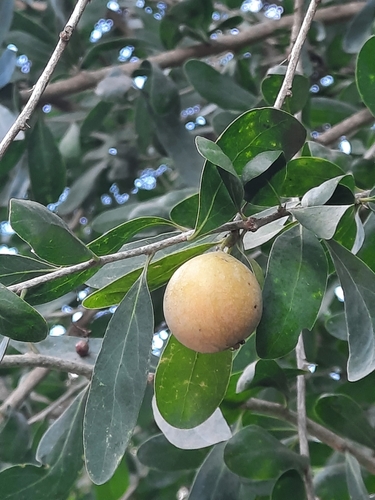
Acanthosyris
Acanthosyris is a genus of plants in the family Santalaceae. It contains the following species:
Acanthosyris annonagustata C.Ulloa & P.M.Jørg.
Acanthosyris asipapote M.Nee
Acanthosyris falcata Griseb.
Acanthosyris glabrata (Stapf) Stauffer ex Govaerts
Acanthosyris paulo-alvinii G.M.Barroso – mata cacau
Acanthosyris spinescens (Mart. & Eichler) Griseb.
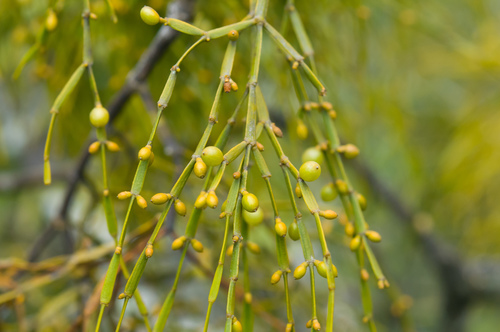
Korthalsella
Korthalsella (korthal mistletoe) is a genus of flowering plants in the sandalwood family, Santalaceae (sometimes/formerly considered to be in Viscaceae). It contains about 25 species distributed in Asia, Africa, Australia, New Zealand, and some Pacific Islands.
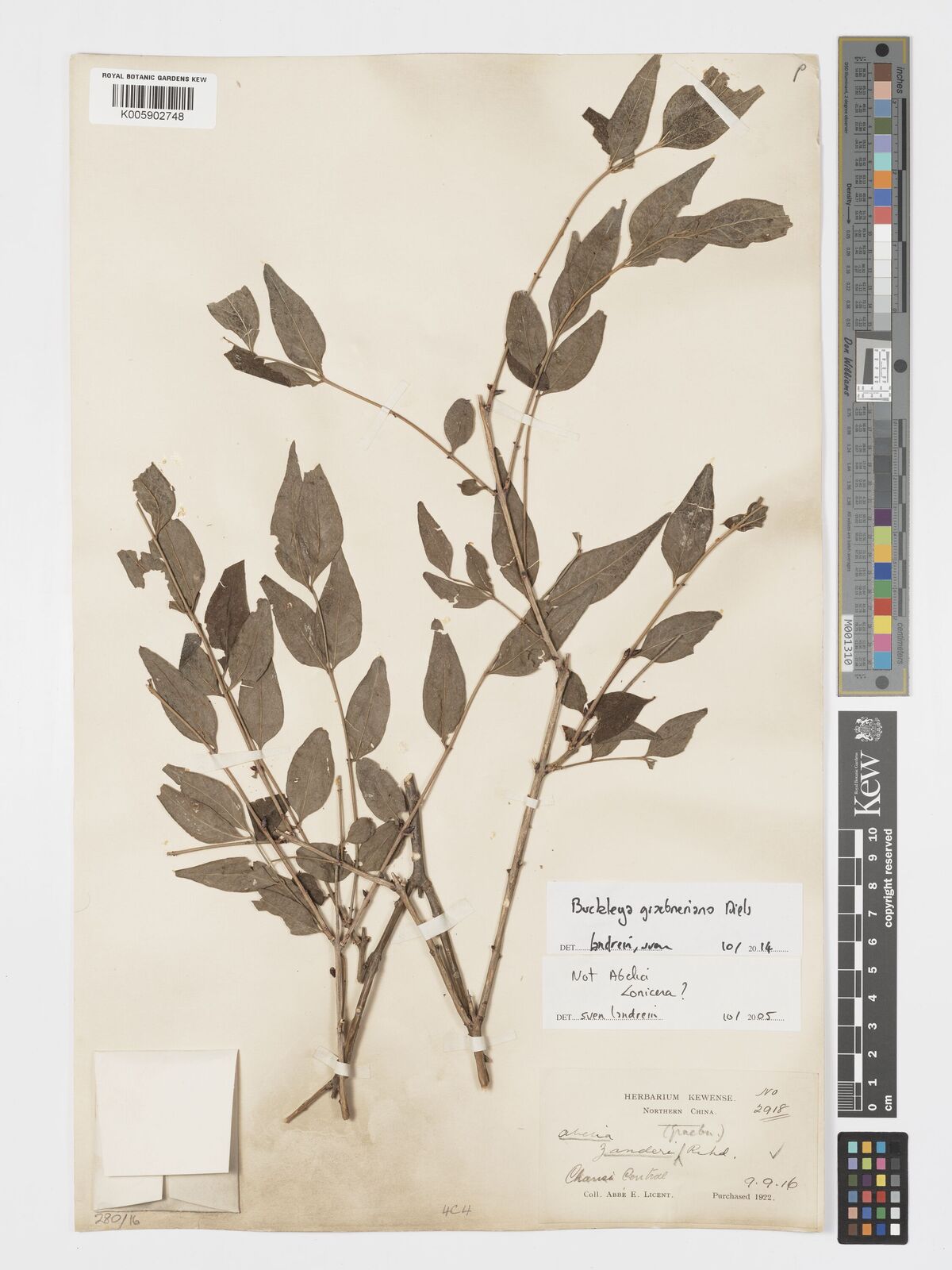
Buckleya
Buckleya is an Asian and American genus of hemiparasitic shrubs in the sandalwood family.
It is named for Samuel Botsford Buckley. Buckleya is also known as piratebush. Plants of this species are dioecious, meaning that male and female flowers are on separate plants.
.jpg)
Phoradendron
thumb|Phoradendron strongyloclados showing leathery leaves and an inflorescence resulting from one apical meristem.
thumb|right|Phoradendron macrophylla in Arizona sycamorethumb|Multiple Phoradendron individuals parasitizing an oak tree. While lower branches show new leaf growth, the mistletoe appears to be negatively affecting the tree's budding in the upper branches.
thumb|Phoradendron californicum (Desert Mistletoe), Granite Mountains, [[Mojave Desert, California]]
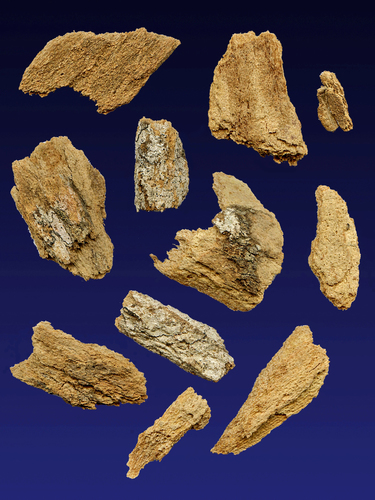
Okoubaka
Okoubaka is a genus of tall forest tree native to west and central tropical Africa. It consists of two species, plus a third species or variety. Its name is from the Anyin language meaning a tree with allelopathic properties, or a tree that causes the death of surrounding vegetation. The tree was once common throughout West Africa and parts of Central Africa, with O. aubrevillei being the primary West African species, and O. michelsonii found in Central Africa.
Exocarpos
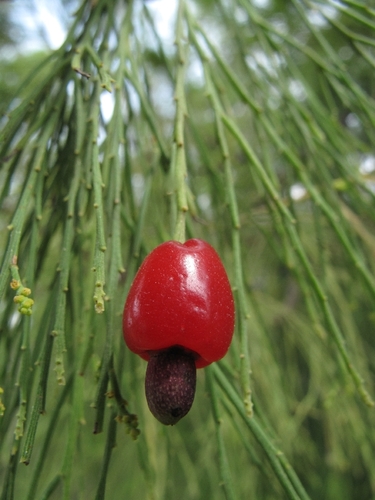
Exocarpos (from Ancient Greek ἔξω (éxō), meaning "outside", and καρπός (karpós), meaning "fruit", and thus, "outside fruit"), also known as ballart, is a genus of flowering shrubs and small trees in the sandalwood family, Santalaceae. They range from Vietnam through Malesia, New Guinea, and Australia to New Zealand and the Pacific Islands.

Leptomeria
Leptomeria is a genus of flowering plants, endemic to Australia.
Species include:
Phacellaria
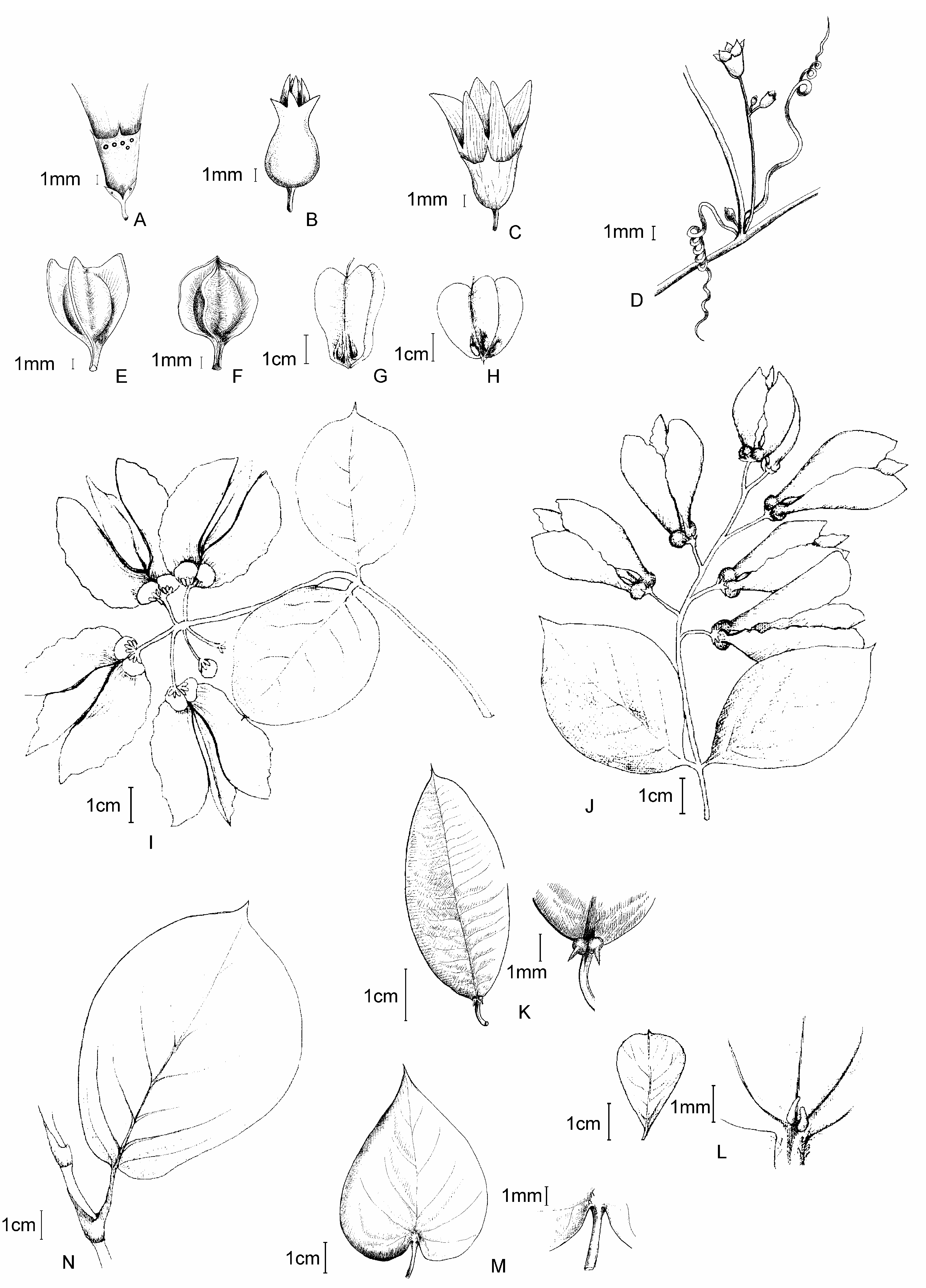
Phacellaria is a genus of flowering plants belonging to the family Santalaceae.
Cervantesia
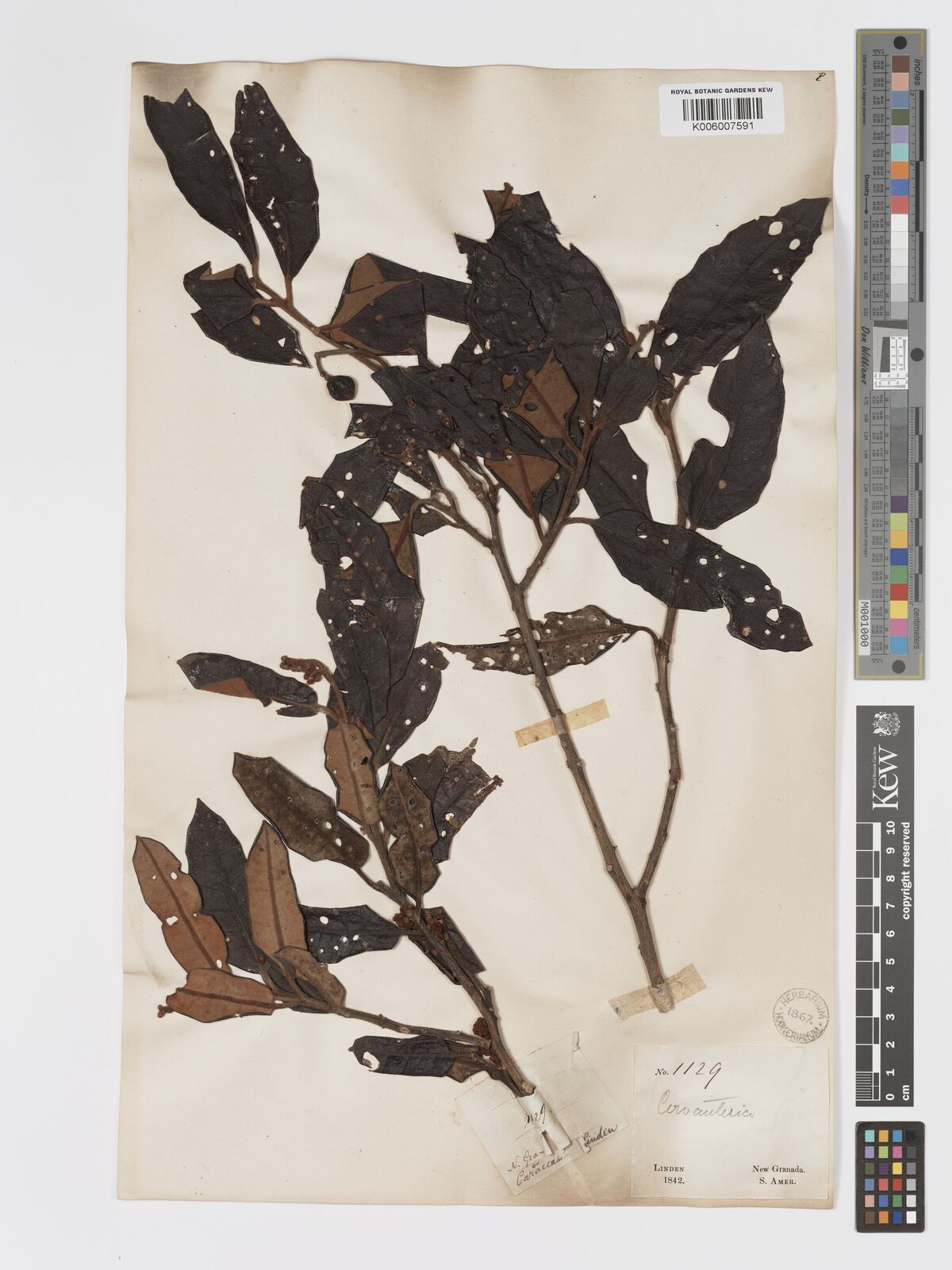
Cervantesia is a genus of plants in the family Santalaceae. It contains two species native to the Andes, ranging from Colombia to Bolivia.
Pyrularia
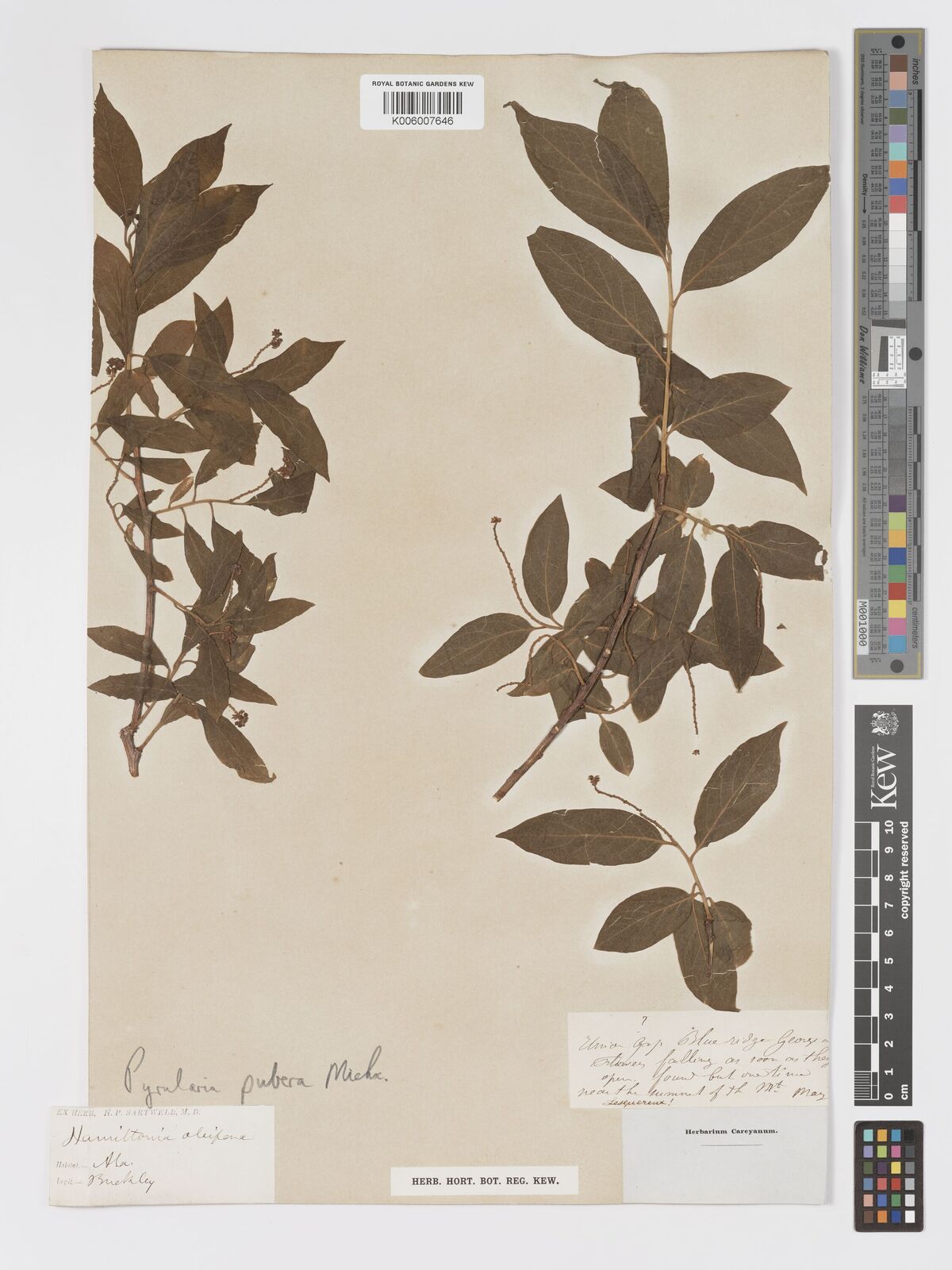
Pyrularia is a small genus of shrubs or small trees in the sandalwood family (Santalaceae) which contains two species, Pyrularia pubera and Pyrularia edulis. P. pubera grows in the eastern United States and P. edulis grows in Bhutan, China, India, Myanmar, and Nepal. Both species are parasitic plants, specifically hemiparasites, which while still photosynthetic, will also parasitize the roots of other plants around them.
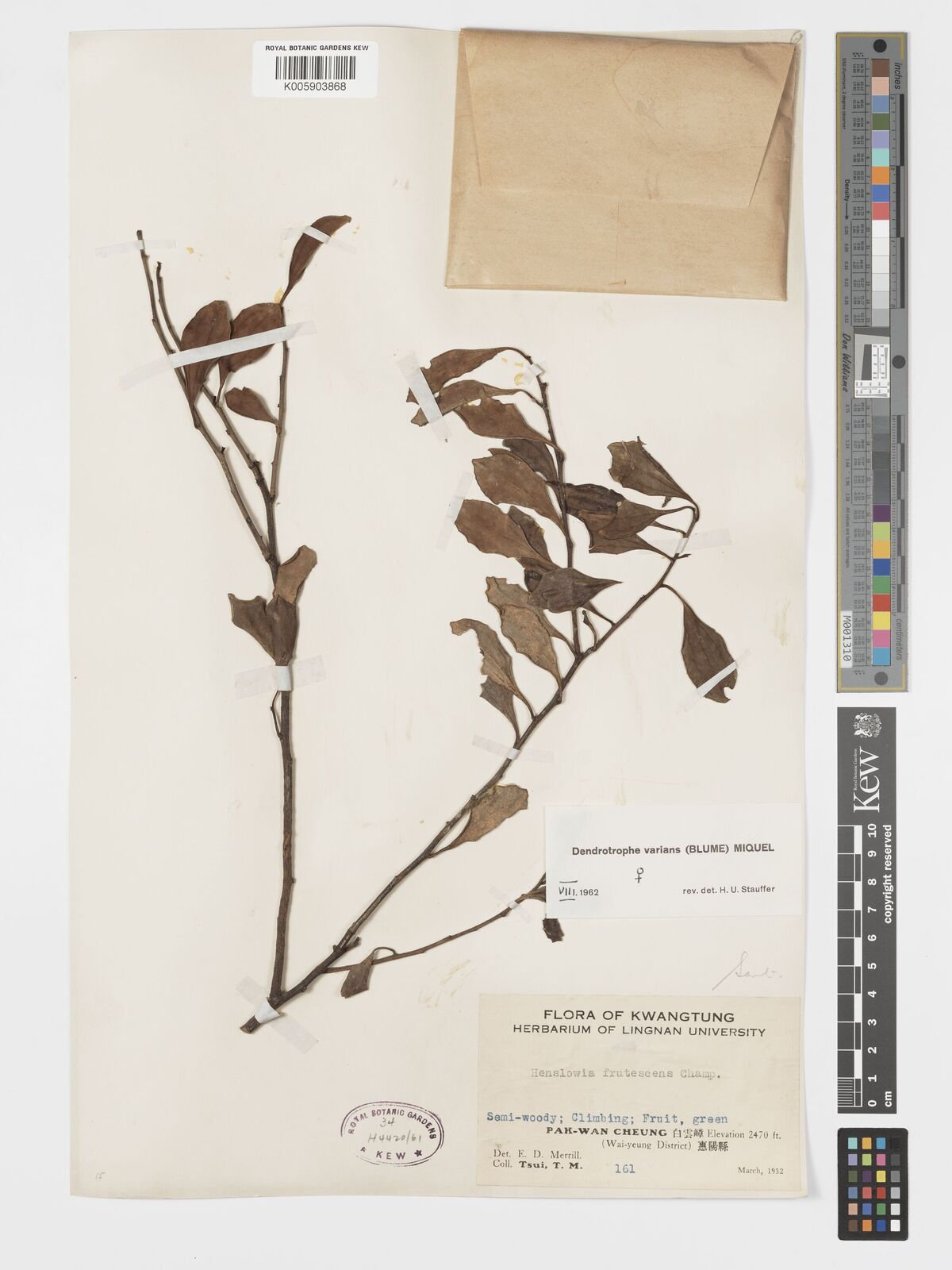
Dendrotrophe
Dendrotrophe is a genus of flowering plants belonging to the family Santalaceae.
Its native range is Southern China, Indochina, Malesia, New Guinea, and Northern Queensland.
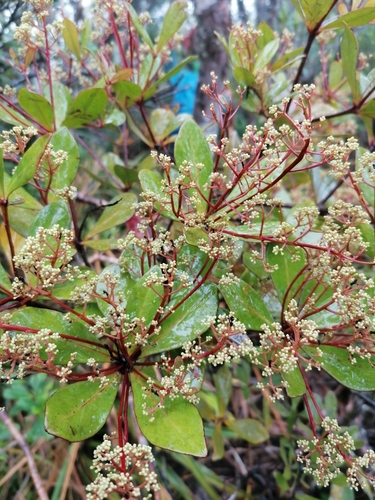
Amphorogyne
Amphorogyne is a genus of hemiparasitic trees and shrubs in the family Santalaceae. The genus is endemic to New Caledonia in the Pacific and contains three species. Its closest relative is Daenikera, also endemic to New Caledonia.
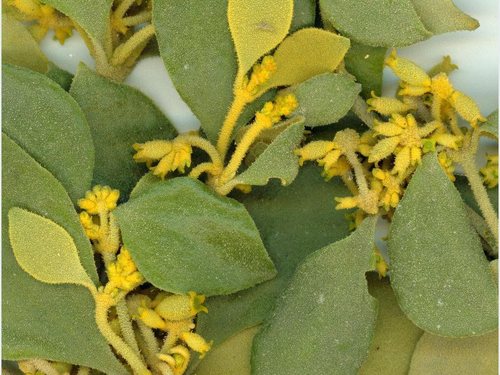
Notothixos
Notothixos is a genus of mistletoe plant in the family Santalaceae.

Dendromyza
Dendromyza is a genus of flowering plants belonging to the family Santalaceae. They are dioecious stem-parasitic shrubs.

Eubrachion
Eubrachion is a genus of flowering plants belonging to the family Santalaceae.
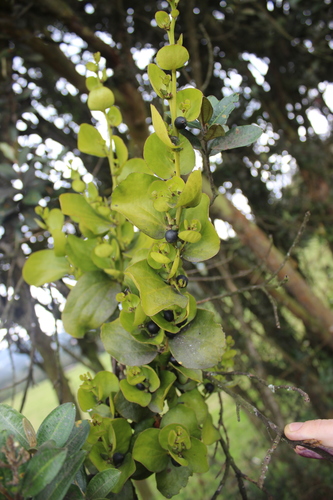
Antidaphne
Antidaphne is a genus of flowering plants belonging to the family Santalaceae.
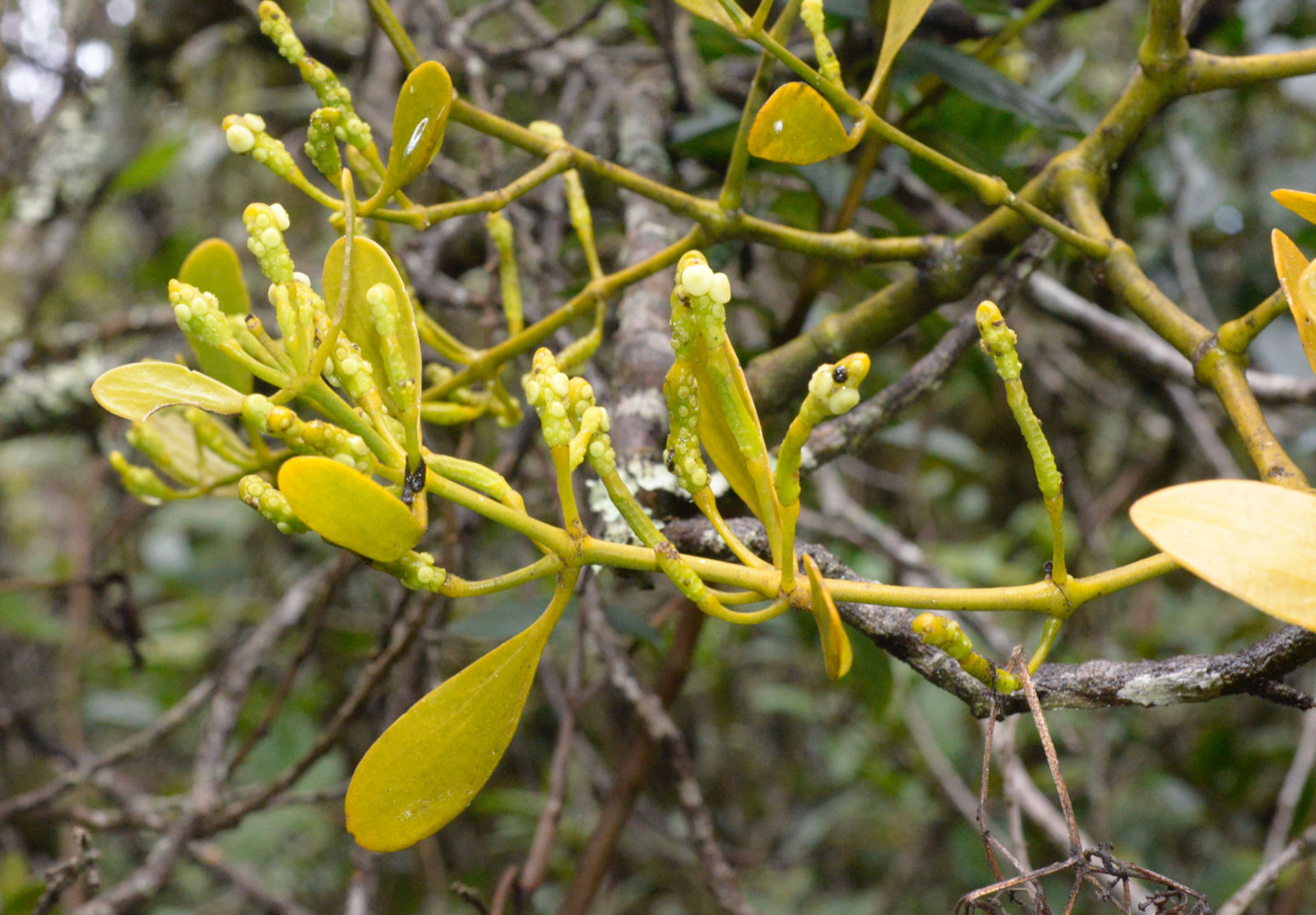
Dendrophthora
Dendrophthora, the tree destroyers, is a genus of flowering plants in the sandalwood family Santalaceae, native to tropical and subtropical Latin America and the Caribbean. They are hemiparasitic mistletoes that grow on a wide variety of host plants.

Dufrenoya
Dufrenoya is a genus of flowering plants in the family Santalaceae. It includes 13 species which range from the Himalayas to south-central China, Indochina, and western Malesia.
Dufrenoya aurantiaca
Dufrenoya collettii
Dufrenoya euryphylla
Dufrenoya granulata
Dufrenoya longicuneata
Dufrenoya oresitropha
Dufrenoya papillosa
Dufrenoya platyphylla
Dufrenoya poilanei
Dufrenoya pruinosa
Dufrenoya robusta
Dufrenoya sessilis
Dufrenoya sphaerocarpa

Ginalloa
Ginalloa is a genus of parasitic mistletoes found in southern and south-eastern Asia. The various species are found in the Andaman Islands and Sri Lanka, the Philippines, Malaysia, the island of Borneo, the island of Java and Papua province in Indonesia, Papua New Guinea, including the Bismarck Archipelago, Myanmar, Laos and Thailand. The genus belongs to the family Santalaceae (as this includes Viscaceae). Ginalloa arnottiana, described by Pieter Willem Korthals in 1839, is the type-species.
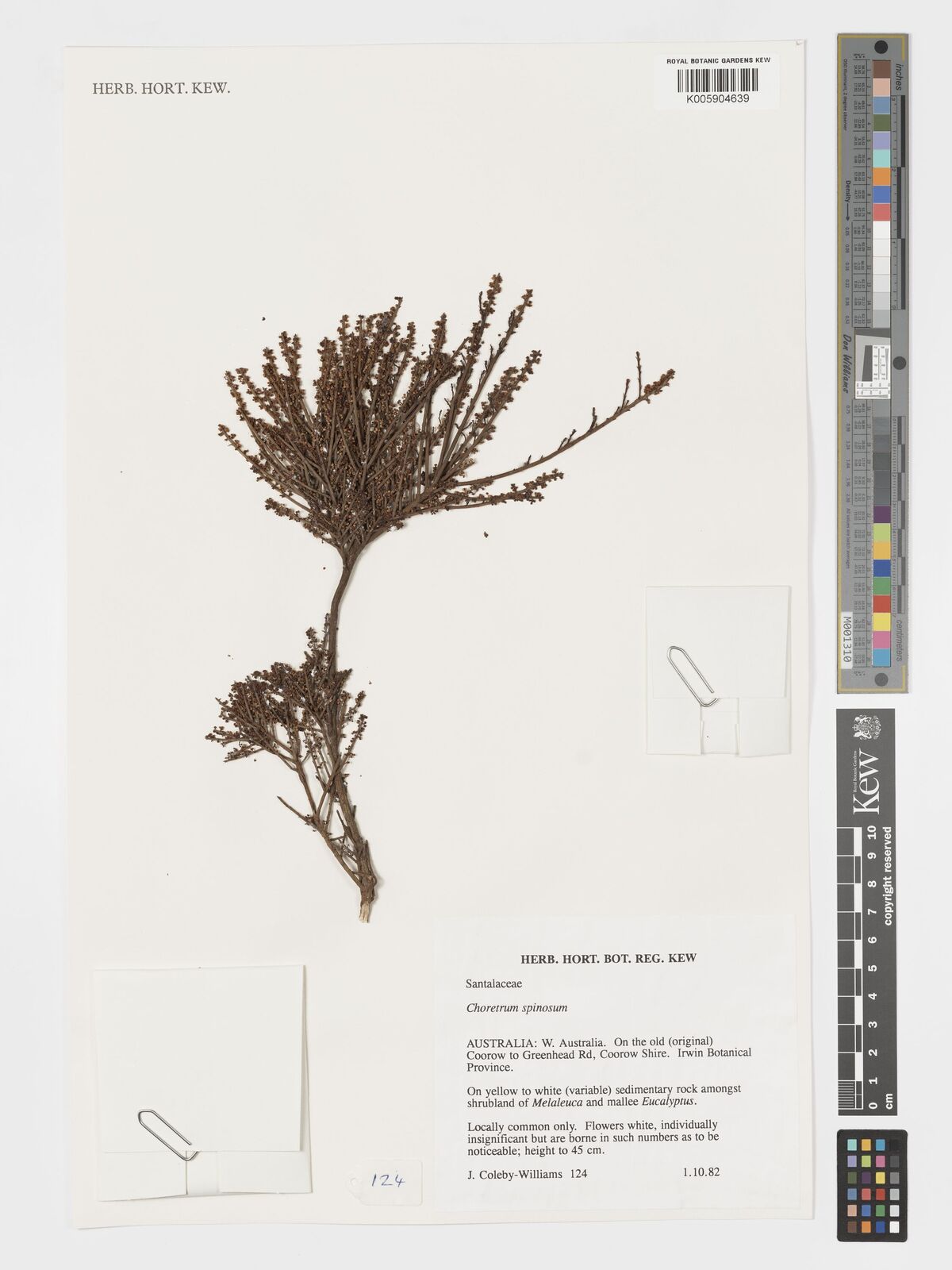
Choretrum
Choretrum is a genus of shrubs and small trees in the sandalwood family, Santalaceae. The genus is endemic to Australia.
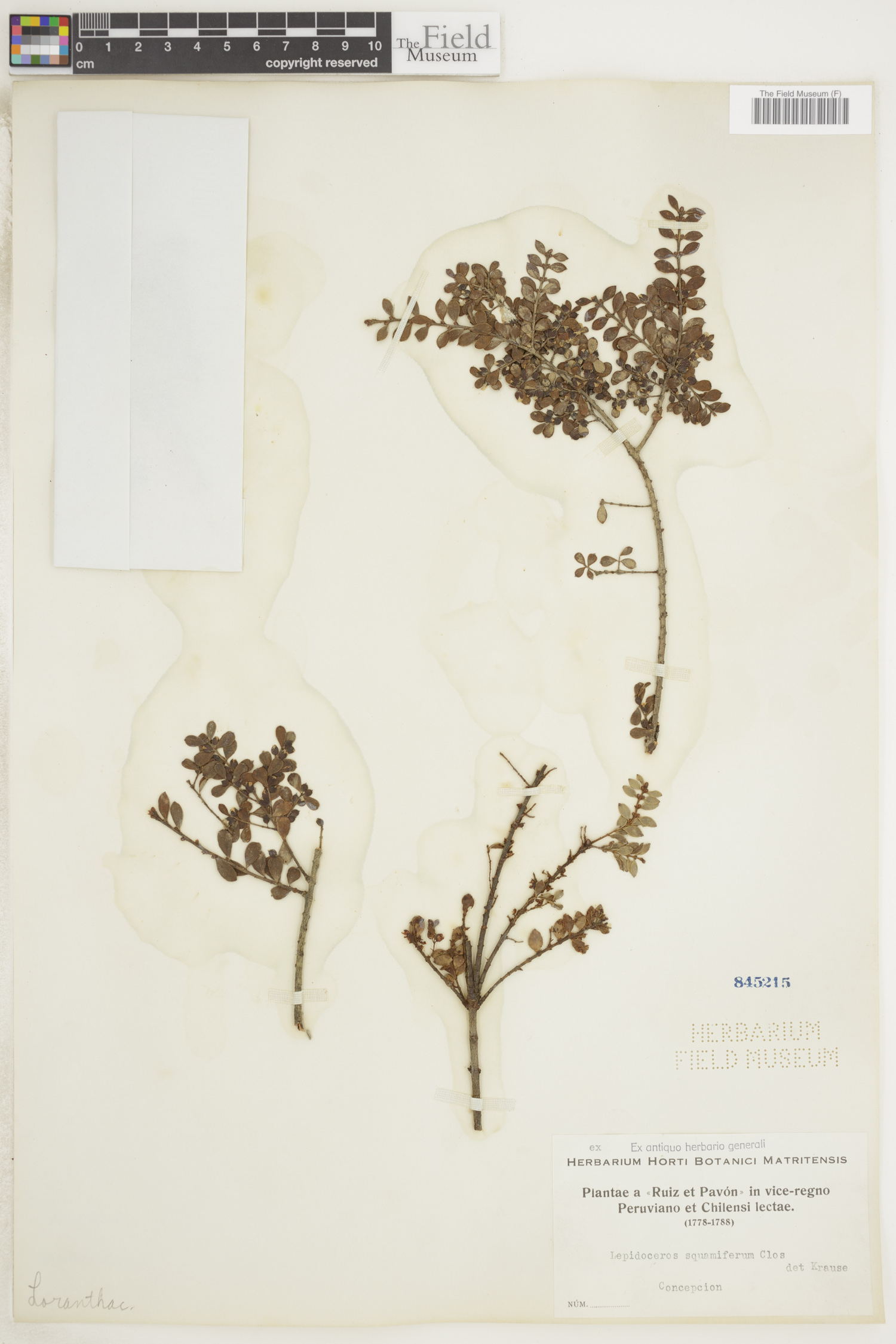
Lepidoceras
Lepidoceras is a genus of hemiparasitic flowering plants belonging to the family Santalaceae. The genus has two species; Lepidoceras chilense is endemic to Chile and Lepidoceras peruvianum is endemic to Peru.

Myoschilos
Myoschilos is a genus of flowering plants in the family Santalaceae. It is monotypic, being represented by the single species Myoschilos oblongus which is native to southern South America.
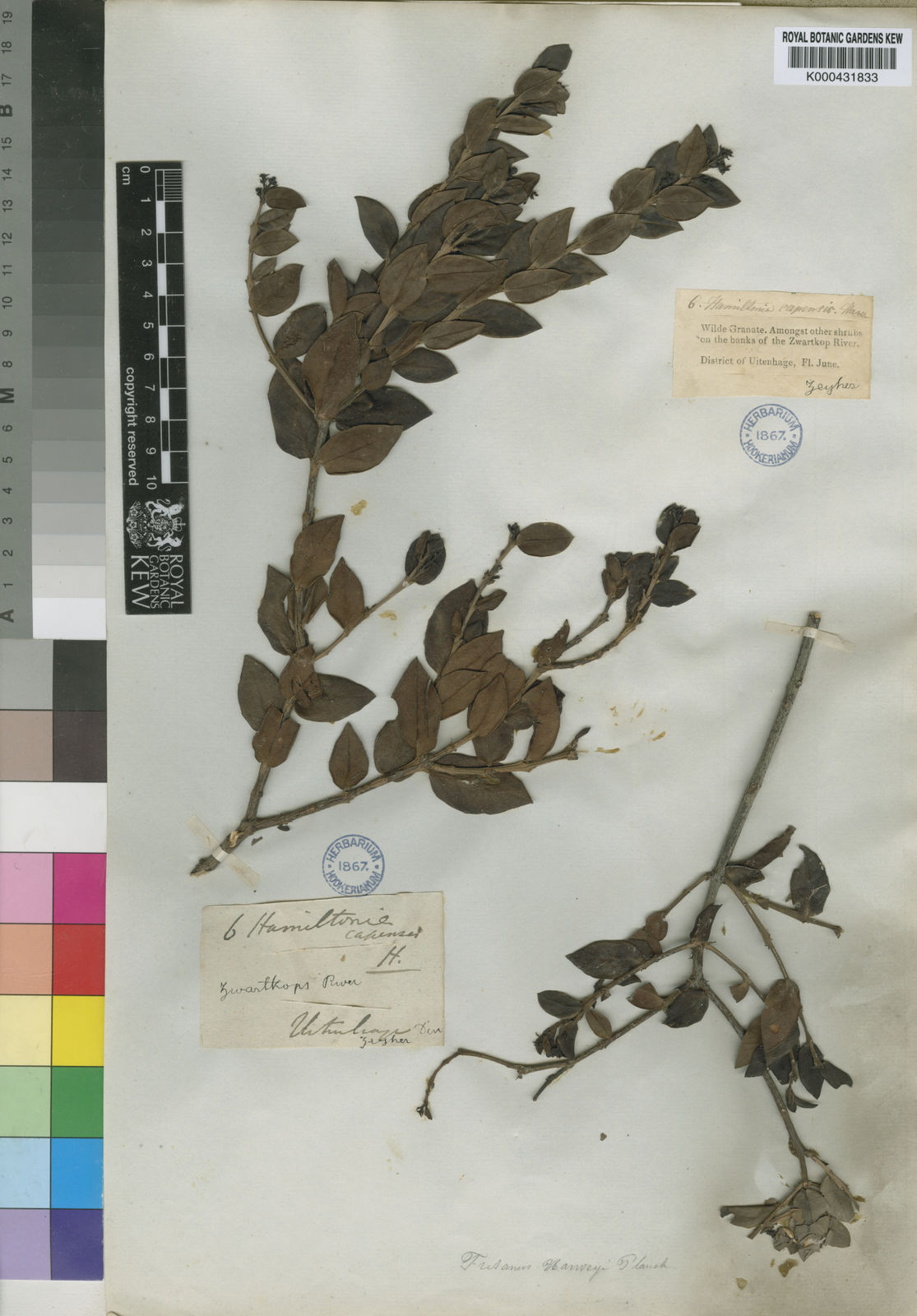
Rhoiacarpos
Rhoiacarpos is a genus of flowering plants belonging to the family Santalaceae. It contains a single species, Rhoiacarpos capensis, a subshrub or shrub native to the Cape Provinces and KwaZulu-Natal in South Africa.
Osyridocarpos
Osyridicarpos is a monotypic genus of flowering plants belonging to the family Santalaceae. The only species is Osyridicarpos schimperianus.

Comandra
Comandra is a monotypic genus containing the single species Comandra umbellata. Its common names include bastard toadflax, umbellate bastard toadflax, and common comandra. The plant has a disjunct distribution; its four subspecies occur in North America and the Mediterranean.

Geocaulon
Geocaulon is a monotypic genus of flowering plants in the family Santalaceae containing the single species Geocaulon lividum, which is known by the common names northern comandra and false toadflax. It is native to northern North America, where it is common and widespread from Alaska to Newfoundland and into the northernmost contiguous United States.
Nanodea
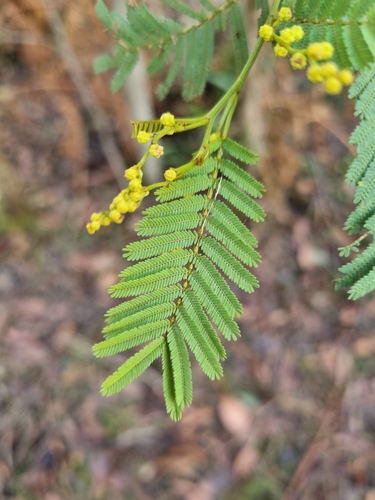
Nanodea is a monotypic genus of flowering plants belonging to the family Santalaceae. The only species is Nanodea muscosa.
Jodina
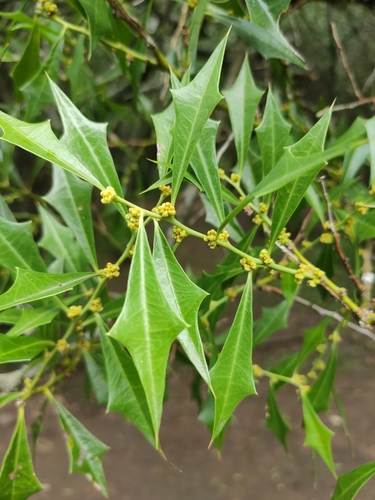
Jodina is a genus of flowering plants belonging to the family Santalaceae.