Category
page 1Satellite launch failures
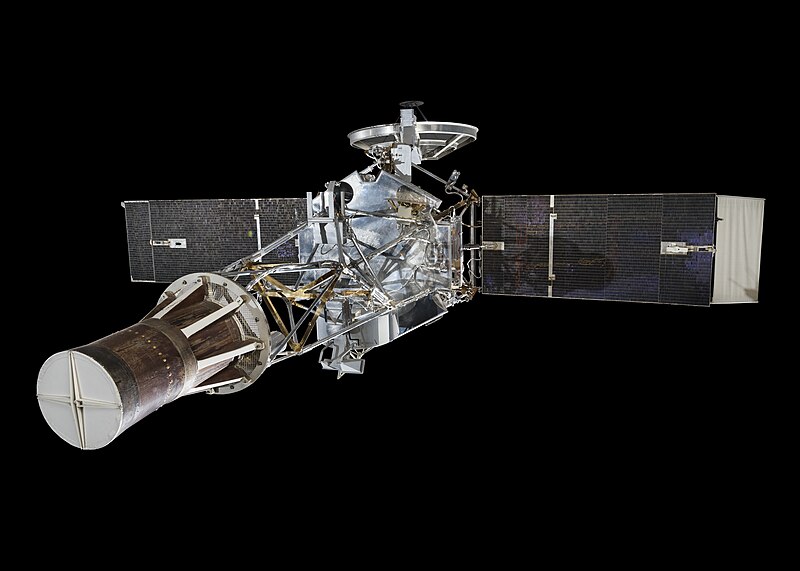
Mariner 1
First US attempt to fly by Venus
Mariner 8
1971 Mars spacecraft
Mars 96
failed Russian Mars mission
Soyuz MS-10
spaceflight aborted shortly after launch on 11 October 2018
Soyuz 7K-T No.39
unsuccessful crewed launch of the Soyuz programme
Explorer 2
American research satellite, lost during a launch vehicle failure
Vanguard 1A
U.S. satellite, damaged in a launch failure in 1957 and now on display at the National Air and Space Museum

CONTOUR
The Comet Nucleus Tour (CONTOUR) was a NASA Discovery-class space probe that failed shortly after its July 2002 launch. It was the only Discovery mission to fail.
Kosmos 96
failed Soviet space probe
SpaceX CRS-7
failed cargo resupply mission to the International Space Station
Cosmos 1
solar sail project
Orbiting Carbon Observatory
NASA climate satellite destroyed during a 2009 launch failure

Kwangmyŏngsŏng-2
thumb|right|Satellite launches of North Korea. ①: Kwangmyŏngsŏng-1 ②: Kwangmyŏngsŏng-2 ③: [[Kwangmyŏngsŏng-3 ④: Kwangmyŏngsŏng-4]]
Cygnus CRS Orb-3
failed ISS resupply mission
Kwangmyŏngsŏng-3
thumb|right|Satellite launches of North Korea. ①: Kwangmyŏngsŏng-1 ②: [[Kwangmyŏngsŏng-2 ③: Kwangmyŏngsŏng-3 ④: Kwangmyŏngsŏng-4]]
Mars 1M No.1
soviet Union Mars spacecraft
Kosmos 167
soviet spacecraft
Polyus
space weapon prototype

BelKA
BelKA or BKA (an acronym from Belarusian: Беларускі Касмічны Апарат, Belarusian Cosmic Apparatus) is the first satellite of independent Belarus.
Mars 1M No.2
soviet Mars spacecraft
Progress M-27M
unsuccessful attempt to resupply the International Space Station
Explorer 5
United States satellite launched in 1958
Explorer 33
American scientific satellite from Explorer programme, forth in the Interplanetary Monitoring Platform series
DOS-2
DOS-2 was a space station, launched as part of the Salyut programme, which was lost in a launch failure on 29 July 1972, when the failure of the second stage of its Proton-K launch vehicle prevented the station from achieving orbit. It instead fell into the Pacific Ocean. The station, which would have been given the designation Salyut 2 had it reached orbit, was structurally identical to Salyut 1, as it had been assembled as a backup unit for that station. Four teams of cosmonauts were formed to crew the station, of which two would have flown:
Alexei Leonov and Valeri Kubasov
Vasily Lazarev an
Glory
NASA Earth observation satellite, lost in a launch failure
Kwangmyŏngsŏng-1
thumb|right|Satellite launches of North Korea. ①: Kwangmyŏngsŏng-1 ②: Kwangmyŏngsŏng-2 ③: [[Kwangmyŏngsŏng-3 ④: Kwangmyŏngsŏng-4]]

AMOS-6
Israeli commercial communications satellite destroyed in a launch vehicle explosion
Landsat 6
Earth imaging satellite which failed to achieve orbit
Progress M-12M
resupply mission or crew escape test
AngoSat 1
communications satellite operated by Angosat
Progress MS-04
Failed resupply mission to the International Space Station
Telkom-3
Telkom-3 is an Indonesian communications satellite which failed to reach its target orbit due to a launch failure on 6 August 2012. It was built by ISS Reshetnev for Indonesian telecommunications provider PT Telekomunikasi Indonesia. It was based on the Ekspress-1000H bus and had 32 C band transponders and 16 Ku-band transponders. It was due to be located in geosynchronous orbit at 118° East above the equator. The satellite reentered the atmosphere and was destroyed on 5 February 2021.
Chŏllima-1
Chollima-1 () is a North Korean launch vehicle. It will be used by North Korea to launch satellites into orbit. The rocket is launched from a coastal launch platform in the Sohae Satellite Launching Station. The rocket has been developed to compete with the South Korean Nuri rocket.
SEOSat-Ingenio
SEOSat-Ingenio (short for Spanish Earth Observation Satellite-Ingenio), was a Spanish project to produce a satellite capable of providing wide-field imagery (230 frames a day, 60 km × 60 km) ensuring a repeat cycle of 38 days at 2.5 metre panchromatic resolution and 10 metre colour resolution, from a Sun-synchronous polar orbit; it was Spain's first optical imaging satellite. The satellite was part of the Spanish Earth Observation Satellite program. The mission was funded by Spain's Centre for the Development of Industrial Technology (CDTI). SEOSat-Ingenio information was to be used
Intelsat 27
American communications satellite
Malligyong-1
Malligyong-1 () is a type of North Korean reconnaissance satellite. Designed for imaging surveillance capability of several countries, Malligyong-1 has been launched three times onboard Chollima-1 launch vehicle, the last of which, occurred on 21 November 2023, was successful.
==Description==
Malligyong-1 is North Korea's first spy satellite. It is in a sun-synchronous orbit at about altitude, and will provide a global optical imaging surveillance capability of several countries. Malligyong-1 is estimated to be long and have a mass of about .
GSAT-4
GSAT-4, also known as HealthSat, was an experimental communication and navigation satellite launched in April 2010 by the Indian Space Research Organisation on the maiden flight of the Geosynchronous Satellite Launch Vehicle Mk.II rocket. It failed to reach orbit after the rocket's third stage malfunctioned. The third stage was the first Indian-built cryogenic-fuelled upper stage, and was making its first flight. The ISRO suspects that the failure was caused by the third stage not igniting.
Intelsat 708
United States failed satellite launch
nCube
series of two Norwegian pico-satellites
NanoSail-D
NanoSail-D was a small satellite which was to have been used by NASA's Ames Research Center to study the deployment of a solar sail in space. It was a three-unit CubeSat measuring , with a mass of . The satellite was lost shortly after launch due to a problem with the launch vehicle carrying it; however, a replacement, NanoSail-D2, was launched in 2010 to complete its mission.
STSAT-2A
STSat-2A (Science and Technology Satellite-2A) was a satellite launched by the Korea Aerospace Research Institute (KARI), the national space agency of South Korea, from the Naro Space Center in Goheung County, South Jeolla using the Naro-1 (KSLV-1) launch vehicle.

Ekspress-AM4
Ekspress-AM4 was a Russian communications satellite placed into the wrong orbit from a faulty Briz-M rocket stage. This satellite was to be part of the Ekspress series of geostationary communications satellites owned by Russian Satellite Communications Company (RSCC). Proposals were made to reposition the satellite to provide broadband services to Antarctica, but ultimately the decision was made to de-orbit the satellite. On 28 March 2012, the satellite splashed into the Pacific Ocean.
2003 Alcântara VLS accident
Brazilian space launch disaster
Ariane flight V88
failed maiden flight of Ariane 5, 1996
Explorer S-46
NASA satellite of the Explorer program
GSAT-5P
GSAT-5P, or GSAT-5 Prime, was an Indian communications satellite which was lost in a launch failure in December 2010. Part of the Indian National Satellite System, it was intended to operate in geosynchronous orbit as a replacement for INSAT-3E.
Türksat 1A
Turkish communications satellite, lost during a launch failure
Discoverer 16
American military reconnaissance satellite
Vanguard 1B
second flight of the American Vanguard rocket
Kosmos 2470
Russian geodesy satellite which was placed into an incorrect orbit due to a launch failure
CryoSat-1
CryoSat-1, also known as just CryoSat, was a European Space Agency satellite which was lost in a launch failure in 2005. The satellite was launched as part of the European Space Agency's CryoSat mission, which aims to monitor ice in the high latitudes. The second mission satellite, CryoSat-2, was successfully launched in April 2010.
GSAT-1
GSAT-1 was an experimental communications satellite launched aboard the maiden flight of the GSLV rocket. The spacecraft was equipped with instrumentation to test Pulse-code modulation (PCM) transmitting on S-band frequencies and transponders operating in the C-band. The spacecraft was unable to complete its mission after a launch failure left it in a lower than planned orbit and propulsion issues prevented the satellite from correcting this via its own maneuvering system.
Ekspress AM4R
Ekspress-AM4R ( meaning Express-AM4R) was a Russian communications satellite intended for operation by the Russian Satellite Communications Company (RSCC). Constructed as a replacement for Ekspress-AM4, which was left unusable after the upper stage of the launch vehicle carrying it malfunctioned, Ekspress-AM4R was also lost due to a launch failure.
Kosmos 1164
Russian military early warning satellite

Explorer S-1
geoscience satellite in the Explorers program; lost during a launch vehicle failure
CBERS-3
China–Brazil Earth Resources Satellite 3 (CBERS-3), also known as Ziyuan I-03 or Ziyuan 1D, was a remote sensing satellite intended for operation as part of the China–Brazil Earth Resources Satellite program between the Chinese Center for Resources Satellite Data and Application and Brazilian National Institute for Space Research. The fourth CBERS satellite to fly, it was lost in a launch failure in December 2013.

IRNSS-1H
IRNSS-1H was the eighth in the Indian Regional Navigational Satellite System (IRNSS) series of satellites, after IRNSS-1A, IRNSS-1B, IRNSS-1C, IRNSS-1D, IRNSS-1E, IRNSS-1F and IRNSS-1G. It was lost in the launch failure of PSLV-C39 on August 31, 2017.
Astra 1K
SES communications satellite incorrectly orbited due to a launch failure
Discoverer 28
Reconnaissance satellite
GOES-G
GOES-G was a weather satellite to be operated by the National Oceanic and Atmospheric Administration. The satellite was designed to sense and monitor meteorological conditions from a geostationary orbit, intended to replace GOES-5 and provide continuous vertical profiles of atmospheric temperature and moisture. It was lost due to the launch failure of a Delta 3914 rocket on 3 May 1986.