Category
page 1Scales in meteorology

kelvin

degree Celsius
The degree Celsius is the unit of temperature on the Celsius temperature scale (originally known as the centigrade scale in English), one of two temperature scales used in the International System of Units (SI), the other being the closely related Kelvin scale. The degree Celsius (symbol: °C) can refer to a specific point on the Celsius temperature scale or to a difference or range between two temperatures. It is named after the Swedish astronomer Anders Celsius (1701–1744), who proposed the first version of it in 1742. The unit was called centigrade in several languages (from the Latin centum

degree Fahrenheit
The Fahrenheit scale () is a temperature scale based on one proposed in 1724 by the physicist Daniel Gabriel Fahrenheit (1686–1736). It uses the degree Fahrenheit (symbol: °F) as the unit. Several accounts of how he originally defined his scale exist, but the original paper suggests the lower defining point, 0 °F, was established as the freezing temperature of a solution of brine made from a mixture of water, ice, and ammonium chloride (a salt). The other limit established was his best estimate of the average human body temperature, originally set at 90 °F, then 96 °F (about 2.6

Beaufort Scale
empirical measure describing wind speed based on observed conditions

Saffir–Simpson hurricane wind scale
System of classifying tropical cyclones into five categories based on measured wind speed and used to estimate potential damage
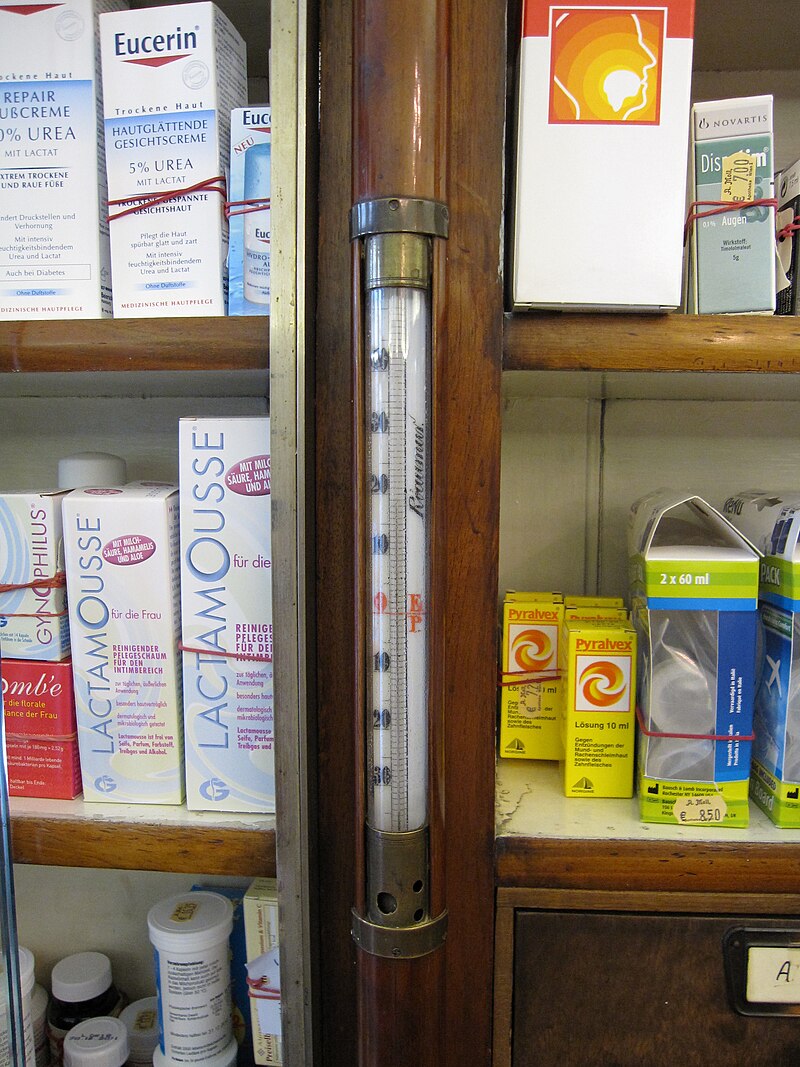
Réaumur scale
temperature scale in which water freezes and boils at 0 and 80 degrees, respectively
Fujita scale
scale for rating tornado intensity
Enhanced Fujita Scale
Scale for assessing the intensity of tornadoes used in North America
tropical cyclone scale
scales of the intensity of tropical cyclones
TORRO scale
Scale for rating tornado intensity
International Fujita scale
Tornado rating system