Category
page 1Science fiction themes

future
300px|thumb|upright=1.5|The Zeitpyramide in 2023
.jpg)
utopia
thumb|This is the woodcut for Utopia's map as it appears in Thomas More's Utopia printed by Dirk Martens in December 1516 (the first edition).
%20Building%201989-94%20by%20Terry%20Farrell.jpg)
Postmodernism
alt=Terry Farrell "SIS Building" (1994)|thumb|360x360px|SIS Building (1994) by Terry Farrell: Detail view of the British intelligence service ([[MI6) headquarters in London, a "hulking, postmodern fortress" influenced by 1930s industrial modernist design and Mayan and Aztec temples.]]

dystopia
thumb|upright=1.3|Life in Kowloon Walled City in [[British Hong Kong has often inspired the dystopian identity in modern media works.]]

multiverse
The multiverse is the hypothetical set of all universes. Together, these universes are presumed to comprise everything that exists: the entirety of space, time, matter, energy, information, and the physical laws and constants that describe them. The different universes within the multiverse are called "parallel universes", "flat universes", "other universes", "alternate universes", "multiple universes", "plane universes", "parent and child universes", "many universes", or "many worlds". One common assumption is that the multiverse is a "patchwork quilt of separate universes all bound by the sa

telepathy
thumb|right|The Ganzfeld experiments that aimed to demonstrate telepathy have been criticized for lack of replication and poor controls.

steampunk
thumb|upright|Original illustration of Jules Verne's Nautilus engine room

cyberpunk
Cyberpunk is a subgenre of science fiction set in a dystopian future. It is characterized by its focus on a combination of "low-life and high tech". It features a range of futuristic technological and scientific achievements, including artificial intelligence and cyberware, which are juxtaposed with societal collapse, dystopia or decay. A significant portion of cyberpunk can be traced back to the New Wave science fiction movement of the 1960s and 1970s. During this period, prominent writers such as Philip K. Dick, Michael Moorcock, Roger Zelazny, John Brunner, J. G. Ballard, Philip José Farmer

android
robot resembling a human, or in other uses specifically a human

transhumanism
Transhumanism is a philosophical movement that advocates the enhancement of the human condition by developing and making widely available new and future technologies to enhance longevity, cognition, and well-being. Influenced by seminal works of science fiction, the transhumanist vision of a transformed future humanity has many supporters and detractors from a wide range of perspectives, including philosophy and religion. Some critics argue that transhumanism amounts to little more than a "rebranding" of eugenics.

contemporary art
art produced from the 1940s to the present

cyborg
thumb|Artist's illustration of a cyborg

technological singularity
hypothetic future event in which artificial intelligence iteratively redesigns itself to rapidly become more intelligent, causing technological and social change beyond prediction

3D computer graphics
graphics that use a three-dimensional representation of geometric data

Dyson sphere
hypothetical megastructure, originally described by Freeman Dyson

metaverse
thumb|upright=1.4|Avatar (computing)|Avatars socialising in the virtual world [[Second Life|alt=A screenshot of Second Life with people-like models sitting outside on couches around a coffee table. The person second from the right is in a red character suit. In the background in the distance, behind matchstick-shaped trees, are four towers. One tower is glowing with energy, and the tower on the far right is actually a giant space suit. Being a video game from the 2000s, the graphical fidelity is low, lacking shadows, ambient occlusion, and complex materials.]]

terraforming
thumb|An artist's conception shows a terraformed Mars in four stages of development.
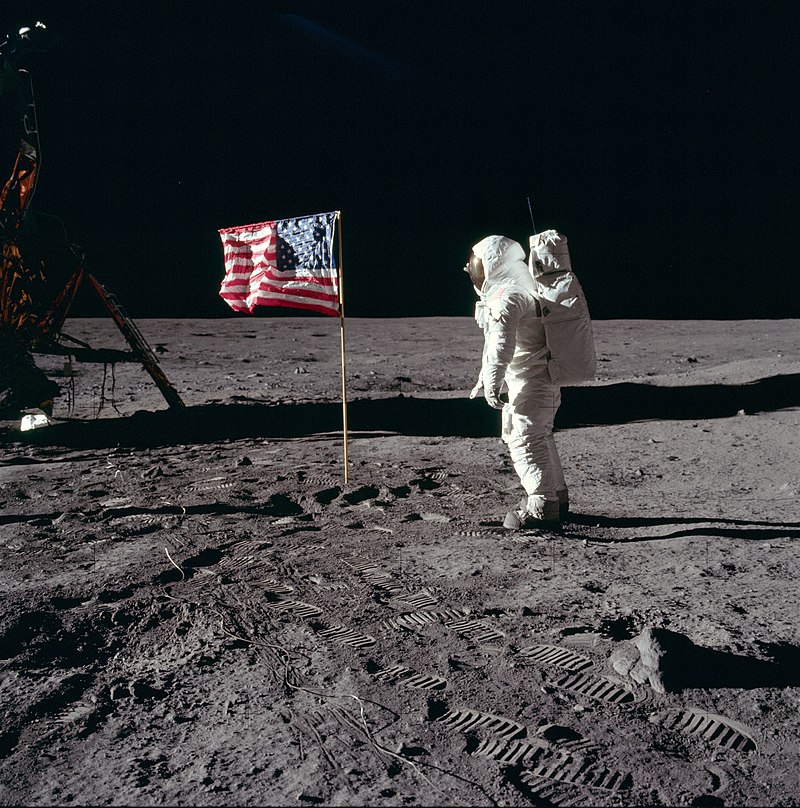
space colonization
concept of permanent colonies outside of the astronomical body of origin – especially human settlements outside Earth

space opera
subgenre of science fiction
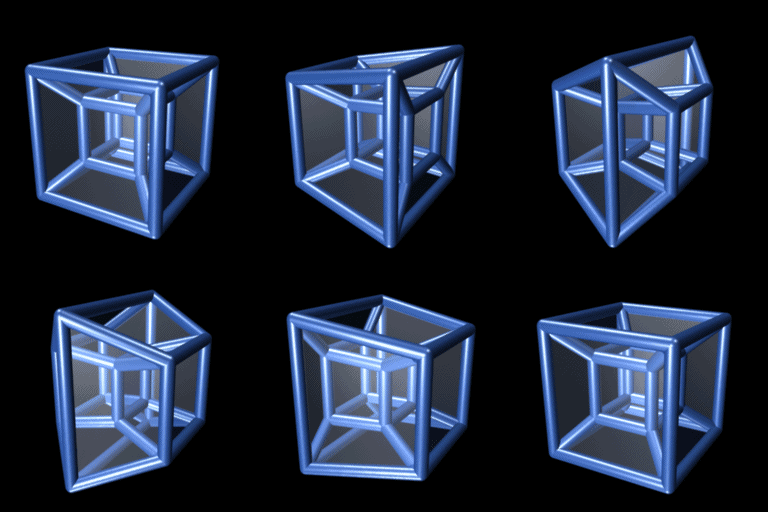
four-dimensional space
geometric space with four dimensions
mythical creature
supernatural animal, generally a hybrid, sometimes part human, whose existence cannot be proven, described in legends, myths, fables, folklore

humanoid
thumb|The Dwarf (folklore)|dwarves of [[Germanic mythology are an example of humanoid beings.]]
A humanoid (; from English human and -oid "resembling") is a non-human entity with human form or characteristics. By the 20th century, the term came to describe fossils which were morphologically similar, but not identical, to those of the human skeleton.
warp drive
theoretical superluminal propulsion system in many science fiction works, most notably Star Trek
post-apocalyptic fiction
genre of fiction
.jpg)
mecha
thumb| Kuratas, a mecha made by [[Suidobashi Heavy Industry at the Maker Faire Tokyo (2012)]]
In science fiction, or mechs are giant robots or machines, either depicted as piloted or sentient and are typically humanoid walking vehicles. The term was first used in Japanese after shortening the English loanword or , but the meaning in Japanese is more inclusive, meaning any mechanism in general, and or 'giant robot' is the narrower term referring to robots.
virtual world
computer-based simulated environment populated by many users who can create a personal avatar, and simultaneously and independently explore the virtual world, participate in its activities and communicate with others
brain in a vat
thought experiment
metafiction
Metafiction is a form of fiction that emphasizes its own narrative structure in a way that inherently reminds the audience that they are reading or viewing a fictional work. Metafiction is self-conscious about language, literary form, and storytelling, and works of metafiction directly or indirectly draw attention to their status as artifacts. Metafiction is frequently used as a form of parody or a tool to undermine literary conventions and explore the relationship between literature and reality, life and art.

anti-gravity
thumb|Artistic depiction of a fictional anti-gravity vehicle

videotelephony
thumb|250px|A telepresence system in 2007
global catastrophic risk
risks of hypothetical future events that have the potential to harm humans and humanity on a global scale
jet pack
device worn on the back which uses jets of gas or liquid to propel the wearer through the air

faster-than-light
thumb|330x330px|Because the sphere travels faster than light, the observer sees nothing until it has already passed. Then, two images appear: one of the sphere arriving (on the right) and one of it departing (on the left).
Faster-than-light (superluminal or supercausal) travel and communication are the conjectural propagation of matter or information faster than the speed of light in vacuum (). The special theory of relativity implies that only particles with zero rest mass (i.e., photons) may travel at the speed of light, and that nothing may travel faster.
technological change
process of invention, innovation and diffusion of technology or processes
Alcubierre drive
hypothetical mode of transportation by warping space
Hollow Earth
historical concept proposing that the planet Earth is entirely hollow or contains a substantial interior space

retrofuturism
thumb|upright=1|Retrofuturistic depiction of a flying locomotive, visually based on the Nebraska Zephyr, in a [[dieselpunk style reminiscent of the early 1940s]]
thumb|Proposed high-speed ocean express ("Ozeanreise im Jahre 2.000") as in the year 2000, 1931 (Hamburg - New York in 40 hours)
thumb|Hotel on tracks ("Reisehotel") as in the year 2000, work of 1898
thumb|An Art Deco [[flying wing circa the jet age ]]
simulation hypothesis
hypothesis that reality could be a computer simulation

shapeshifting
thumb|Zeus turning Lycaon into a wolf, engraving by Hendrik Goltzius|upright=1.2
In mythology, folklore and speculative fiction, shapeshifting is the ability to physically transform oneself through unnatural means. The idea of shapeshifting is found in the oldest forms of totemism and shamanism, as well as the oldest existent literature and epic poems such as the Epic of Gilgamesh and the Iliad. The concept remains a common literary device in modern fantasy, children's literature and popular culture. Examples of shape-shifters include changelings, jinns, kitsune, vampires, and werewolves, alon
Nazi UFOs
conspiracy theories alleging connections between UFOs and Nazi Germany
postmodern art
art movement
zombie apocalyptic fiction
subgenre of apocalyptic fiction

hyperspace
thumb|upright=1.3|Hyperspace travel is sometimes depicted as a starfield that streaks toward the viewer. A visual effect like this was first used in the 1974 film Dark Star (film)|Dark Star, and it became a popular cinematic depiction, with a similar effect being used in the Star Wars franchise.
alien invasion
common theme in science fiction stories and film
imaginary friend
phenomenon where a friendship or other interpersonal relationship takes place in imagination

de-extinction
thumb|right|The Pyrenean ibex, also known as the bouquetin (French) and bucardo (Spanish), is the only animal to have survived de-extinction past birth through cloning.
De-extinction (also known as resurrection biology, or species revivalism) is the process of human intervention to generate an organism that either resembles or is an extinct organism. There are several ways to carry out the process of de-extinction. Cloning is the most widely proposed method, although genome editing and selective breeding have also been considered. Similar techniques have been applied to certain endangered spec
post-scarcity economy
Post-scarcity is a theoretical economic situation in which most goods can be produced in great abundance with minimal human labor, so that they become available to all very cheaply or even freely.

starship
thumb|upright=1.3|An updated version (NASA, 1999) of the Project Orion by the [[United States government (1958–1965). It was the earliest scaled project developing a concept for a spaceship with a propulsion, of fission pulses, that was to be capable to transport humans light years within hundreds of years instead of thousands.]]
generation ship
interstellar spacecraft able to accommodate multiple generations of passengers
time loop
plot device in science fiction
desert planet
rocky planet with very little water
AI takeover
hypothetical scenario in which AI becomes the dominant form of intelligence on Earth
artificial womb
device that would allow for extracorporeal pregnancy

cosmicism
thumb|upright|H. P. Lovecraft, writer and creator of cosmicism.|alt=A June 1934 photograph of H. P. Lovecraft, facing left
climate fiction
fiction in a setting defined in part by climate crisis
hypothetical types of biochemistry
possible alternative biochemicals used by life forms
Encyclopedia Galactica
fictional encyclopædia in several science-fiction universes
%2C%20ISRO.jpg)
gynoid
thumb|Vyommitra ([[Indian Space Research Organisation, 2020)]]

gremlin
thumb|upright|A World War II gremlin-themed industrial safety poster
A gremlin is a mischievous fictional creature invented at the beginning of the 20th century originally to explain malfunctions in aircraft, and later in other machinery, processes and their operators. Depictions of these creatures vary widely. Stories about them and references to them as the causes of especially inexplicable technical and mental problems of pilots were especially popular during and after World War II.
extended reality
term referring to all real-and-virtual combined environments