Category
page 1Search for extraterrestrial intelligence

Carl Sagan
American astrophysicist, cosmologist and author (1934–1996)
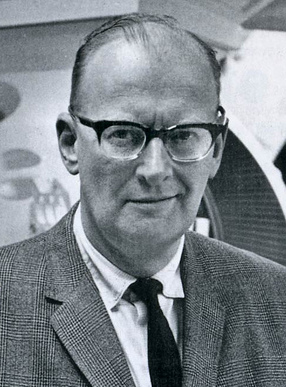
Arthur C. Clarke
British science fiction writer, inventor, and futurist (1917–2008)

exoplanet
alt=Timelapse of exoplanets orbit motion|thumb|upright=1.5|Four exoplanets of the HR 8799 system imaged by the [[W. M. Keck Observatory over the course of seven years. Motion is interpolated from annual observations.]]
thumb|295x295px|Comparison of the size of exoplanets orbiting Kepler-37 to Mercury, Mars and Earth
An exoplanet or extrasolar planet is a planet outside of the Solar System. The first confirmed detection of an exoplanet was in 1992 around a pulsar, and the first detection around a main-sequence star was in 1995. A different planet, first detected in 1988, was confirmed in 2003.

extraterrestrial life
life that does not originate from Earth

Fermi paradox
apparent contradiction between the lack of evidence and high probability estimates for the existence of extraterrestrial civilizations

circumstellar habitable zone
zone around the star with strong possibilities for stable liquid water and evolution of life
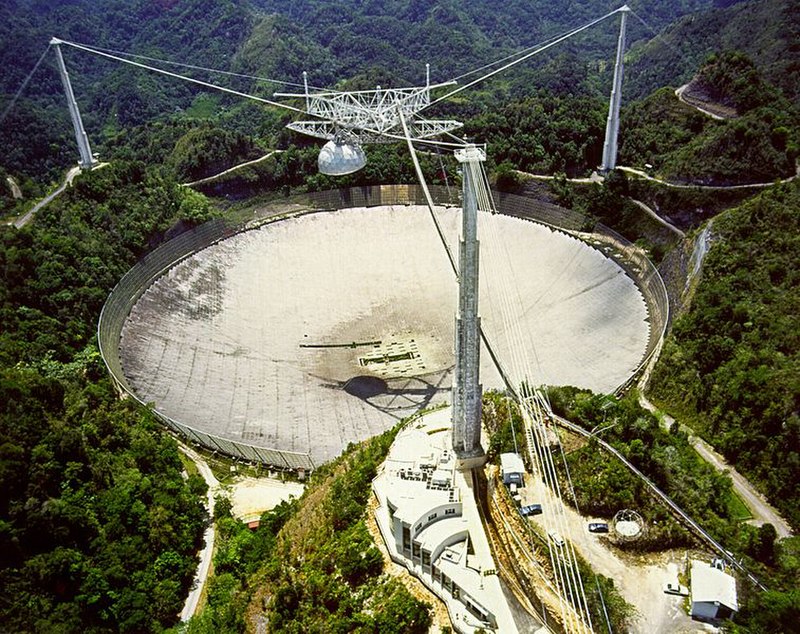
search for extra-terrestrial intelligence
effort to find civilizations not from Earth

Drake equation
probabilistic argument to estimate the number of alien civilizations in our galaxy

Dyson sphere
hypothetical megastructure, originally described by Freeman Dyson

Voyager Golden Record
two phonograph records included on both Voyager spaceprobes launched in August and September 1977

Frank Drake
American astronomer and astrophysicist (1930–2022)

Arecibo message
1974 message into space
Wow! signal
1977 narrowband radio signal from SETI

Kardashev scale
Proposed scale by which the scope of a civilisation might be measured
Arecibo Observatory
observatory located in the municipality of Arecibo, Puerto Rico

Pioneer plaque
plaque attached to the Pioneer 10 and Pioneer 11 spacecraft in case extraterrestrial life finds them

Tabby’s Star
binary system in the constellation Cygnus

Five-hundred-meter Aperture Spherical Telescope
radio telescope located in Pingtang County, Guizhou Province, China

Nikolai Kardashev
Soviet and Russian astronomer
Iosif Shklovsky
Soviet astronomer (1916–1985)

SETI@home
SETI@home ("SETI at home") is a project of the Berkeley SETI Research Center to analyze radio signals with the aim of searching for signs of extraterrestrial intelligence. Until March 2020, it was run as an Internet-based public volunteer computing project that employed the BOINC software platform. It is hosted by the Space Sciences Laboratory at the University of California, Berkeley, and is one of many activities undertaken as part of the worldwide SETI effort.
Jill Tarter
American astronomer
fast radio burst
high-energy astrophysical phenomenon manifested as a transient radio pulse lasting only a few milliseconds

biosignature
A biosignature is a phenomenon that can be explained by biological processes where all possible abiotic causes of this phenomenon have been eliminated. This term is mainly used in the field of astrobiology in the search for past or present extraterrestrial life, from planets and moons in the Solar System to exoplanets. Candidate biosignatures strongly indicate some of the earliest known life forms, aid studies of the origin of life on Earth as well as the possibility of life on Mars, Venus and elsewhere in the universe.
Avi Loeb
Israeli astrophysicist (1962-)
PSR B1919+21
pulsar in the constellation Vulpecula
Lincos
constructed language
dark forest hypothesis
hypothesis that alien life has not been discovered because alien civilizations are silent and very cautious
zoo hypothesis
theory regarding lack of alien contact
Arecibo Radio Telescope
former radio telescope in the municipality of Arecibo, Puerto Rico
Philip Morrison
American astrophysicist (1915–2005)

Contact
novel by Carl Sagan
Project Ozma
1960 SETI experiment
Richard Bryan
American attorney and politician
mediocrity principle
philosophical concept

SETI Institute
U.S.-based not-for-profit research organization for astrobiology and outreach (1984–)

Allen Telescope Array
radio telescope
Breakthrough Initiatives
set of programs to search for and communicate with extraterrestrial intelligence
Breakthrough Listen
initiative to search for intelligent extraterrestrial life
Ohio State University Radio Observatory
radio telescope that received the "Wow!" signal
Radio source SHGb02+14a
SHGb02+14a is an astronomical radio source and a candidate in the Search for Extra-Terrestrial Intelligence (SETI), discovered in March 2003 by SETI@home and announced in New Scientist on September 1, 2004.
active SETI
attempt to send messages to intelligent extraterrestrials

technosignature
thumb|400px|Illustration of various types of technosignatures
Technosignature or technomarker is any measurable property or effect that provides scientific evidence of past or present technology. Technosignatures are analogous to biosignatures, which signal the presence of life, whether intelligent or not. Some authors prefer to exclude radio transmissions from the definition, but such restrictive usage is not widespread. Jill Tarter has proposed that the search for extraterrestrial intelligence (SETI) be renamed "the search for technosignatures". Various types of technosignatures, such as rad

BLC1
thumb|upright|Parkes Observatory that detected BLC-1

Seth Shostak
astronomer
San Marino Scale
proposed SETI measurement

HD 164595
g-type star located in the constellation of Hercules
Alexander Zaitsev
Russian astronomer
interstellar communication
communication between planetary systems
Project Phoenix
SETI project
Berserker hypothesis
idea that any intelligent life is destroyed by aliens
Paul Horowitz
American physicist
CTA-102
CTA 102, also known by its B1950 coordinates as 2230+114 (QSR B2230+114) and its J2000 coordinates as J2232+1143 (QSO J2232+1143), is a blazar-type quasar discovered in the early 1960s by a radio survey carried out by the California Institute of Technology. It has been observed by a large range of instruments since its discovery, including WMAP, EGRET, GALEX, VSOP and Parkes, and has been regularly imaged by the Very Long Baseline Array since 1995. It has also been detected in gamma rays, and a gamma-ray flare has been detected from it.
Ronald N. Bracewell
Australian scientist (1921–2007)
Lucianne M. Walkowicz
American stellar astronomer
SERENDIP
SERENDIP (Search for Extraterrestrial Radio Emissions from Nearby Developed Intelligent Populations) is a Search for Extra-Terrestrial Intelligence (SETI) program originated by the Berkeley SETI Research Center at the University of California, Berkeley.

Sebastian von Hoerner
German astrophysicist and radio astronomer (1919–2003)
The Galileo Project
international scientific research project to search for extraterrestrial intelligence or extraterrestrial technology
list of extrasolar planets
Wikimedia list article
Bracewell probe
hypothetical autonomous artificially intelligent robotic interstellar probe seeking technological civilizations and communicate over short distances once it discovers one