Category
page 1Selandian first appearances
Proboscidea
Proboscidea (; , ) is a taxonomic order of Afrotheria paenungulate mammals described by J. Illiger in 1811. It encompasses the elephants (family Elephantidae) and their extinct relatives. Three living species of elephant are currently recognised: the African bush elephant, the African forest elephant, and the Asian elephant.

Iridaceae
Iridaceae () is a family of plants in order Asparagales, taking its name from the irises. It has a nearly global distribution, with 69 accepted genera with a total of about 2500 species. It includes a number of economically important cultivated plants, such as species of Freesia, Gladiolus, and Crocus, as well as the crop saffron.

motorcycle
thumb|right|Spectacled caiman (Caiman crocodilus)
thumb|right|Yacare caiman (Caiman yacare)
thumb|right|Black caiman (Melanosuchus niger)
thumb|right|Cuvier's dwarf caiman (Paleosuchus palpebrosus)
thumb|right|Smooth-fronted caiman (Paleosuchus trigonatus)
.jpg)
Selandian
The Selandian is a stage in the Paleocene. It spans the time between . It is preceded by the Danian and followed by the Thanetian. Sometimes the Paleocene is subdivided in subepochs, in which the Selandian forms the "middle Paleocene".

Cypselomorphae
Strisores ( ), sometimes called nightbirds, is a clade of birds that includes the living families and orders Caprimulgidae (nightjars, nighthawks and allies), Nyctibiidae (potoos), Steatornithidae (oilbirds), Podargidae (frogmouths), Apodiformes (swifts and hummingbirds), as well as the Aegotheliformes (owlet-nightjars) whose distinctness was only recently realized. The Apodiformes (which include the "Trochiliformes" of the Sibley–Ahlquist taxonomy) and the Aegotheliformes form the Daedalornithes.
Alligatorinae
Alligatorinae is a subfamily within the family Alligatoridae that contains the alligators and their closest extinct relatives, and is the sister taxon to Caimaninae (the caimans). Many genera in Alligatorinae are described, but only the genus Alligator is extant, with the remaining being extinct.
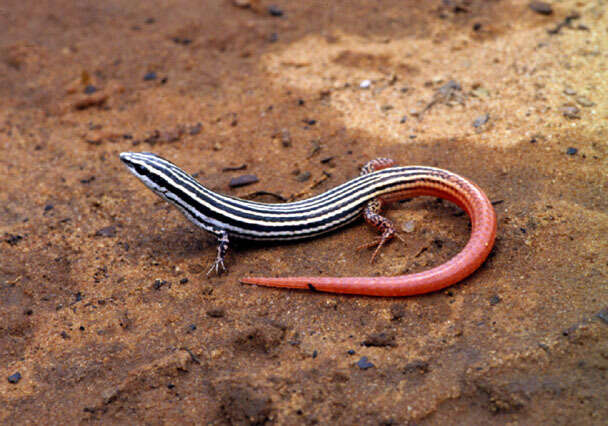
Lacertoidea
The Lacertoidea is a group of squamate reptiles that includes the Lacertidae, Teiidae, Gymnophthalmidae, and Amphisbaenia. The finding from molecular phylogenetic studies that the burrowing Amphisbaenia were nested in a clade with the lizard forms led Vidal & Hedges (2005) to propose a new name for the group based on shared morphogical characters, Laterata, "referring to the presence of tile-like (squarish or quadrangular, and sometimes raised) scales that form the rings in Amphisbaenia, and are also present ventrally in Lacertiformata and Teiformata".