Category
page 1Simple living
.JPG)
gift
thumb|Small gift boxes

asceticism
Asceticism is a lifestyle characterized by abstinence from worldly pleasures through poverty, and simple living, often for the purpose of pursuing spiritual goals. Ascetics may withdraw from the world or continue to be part of their society, but typically adopt a frugal lifestyle, characterized by the renunciation of material possessions and physical pleasures, and also spend time fasting while concentrating on religion, prayer, or meditation. Some individuals have also attempted an ascetic lifestyle to free themselves from addictions to things such as alcohol, smoking, drugs, sex, porn, lavis

Amish

barter
thumb|1874 newspaper illustration from ''Harper's Weekly'' showing a man engaging in barter by offering various farm produce in exchange for his yearly newspaper subscription.

Minimalism

Mennonites
Mennonites are a group of Anabaptist Christian communities tracing their roots to the epoch of the Radical Reformation. The name Mennonites is derived from the Frisian cleric Menno Simons (1496–1561). Simons became a prominent leader within the wider Anabaptist movement and was a contemporary of Martin Luther (1483–1546) and Philip Melanchthon (1497–1560). Through his writings about the Reformation, Simons articulated and formalized the teachings of earlier Swiss Anabaptist founders as well as early teachings of the Mennonites founded on the belief in both the mission and ministry of Jesus. Fo

quality of life
term for the quality of the various domains in human life and general well-being of individuals and societies

do it yourself
building, modifying, or repairing something without the aid of experts or professionals
%20in%20Eastern%20Bengal%20in%20the%201860s.jpg)
Fakir
thumb|A Sufism|Sufi Muslim ascetic (fakir) in [[Bengal during the 1860s]]
simple living
practices that promote simplicity in one's lifestyle; common practices of simple living include reducing the number of possessions one owns, depending less on technology and services, and spending less money

degrowth
Degrowth is an academic and social movement aimed at the planned and democratic reduction of production and consumption as a solution to social-ecological crises. Commonly cited policy goals of degrowth include reducing the environmental impact of human activities, redistributing income and wealth within and between countries, and encouraging a shift from materialistic values to a convivial and participatory society. According to degrowth theorists, degrowth is a multi-layered concept that combines critiques of capitalism, colonialism, productivism, and utilitarianism, while envisioning more c
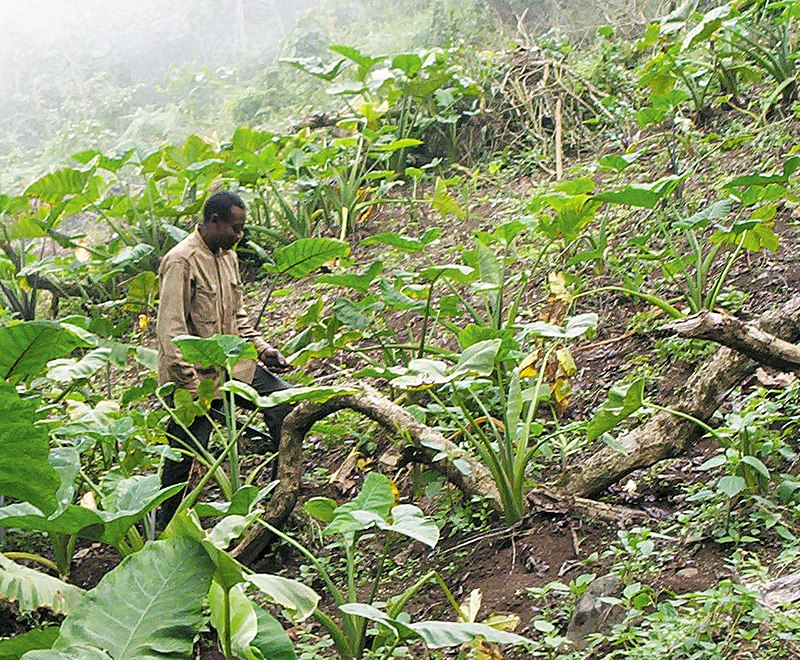
subsistence agriculture
farming which meets the basic needs of the farmer and family
.jpg)
anarcho-primitivism
Anarcho-primitivism is an anarchist critique of civilization and a branch of green anarchism that advocates a return to non-civilized ways of life through deindustrialization, abolition of the division of labor or specialization, abandonment of large-scale organization and all technology other than prehistoric technology, and the dissolution of agriculture. Anarcho-primitivists critique the origins and alleged progress of the Industrial Revolution and industrial society. Most anarcho-primitivists advocate for a tribal-like way of life while some see an even simpler lifestyle as beneficial. Acc

frugality
thumb|James Gillray's satirical print Temperance Enjoying a Frugal Meal. [[George III is depicted with patched breeches and a chair covered with protective fabric, eating a simple boiled egg and using the tablecloth as his napkin. Winter flowers fill the unlit fireplace.]]
Hutterite
Hutterites (; ), also called Hutterian Brethren (German: ), are a communal ethnoreligious branch of Anabaptists, who, like the Amish and Mennonites, trace their roots to the Radical Reformation of the early 16th century and have formed intentional communities.

ecovillage
thumb|Sieben Linden Ecovillage
thumb|right|An Green building|eco-house at [[Findhorn Ecovillage with a turf roof and solar panels]]
thumb|Tallebudgera Mountain and a vegetable garden at the Currumbin Ecovillage in Queensland, 2015
KISS
acronym for "Keep it simple, stupid"; design principle

Gandhism
thumb|300px|Khan Abdul Ghaffar Khan (left) of the [[Khudai Khidmatgars and Mohandas 'Mahatma' Gandhi (right) of the Indian National Congress]]
Gandhism, also referred to as Gandhianism, is a body of ideas that describes the inspiration, vision, and the life work of Mohandas K. Gandhi. It is particularly associated with his contributions to the idea of nonviolent resistance, sometimes also called civil resistance.
simplicity
Simplicity is the state or quality of being simple. Something easy to understand or explain seems simple, in contrast to something complicated. Alternatively, as Herbert A. Simon suggests, something is simple or complex depending on the way we choose to describe it. In some uses, the label "simplicity" can imply beauty, purity, or clarity. In other cases, the term may suggest a lack of nuance or complexity relative to what is required.
green anarchism
form of anarchism which puts a particular emphasis on environmental issues
spiritual retreat
period of reflection, prayer, or meditation, practiced communally or in solitude
gift economy
mode of exchange where valuables are given without rewards
commodity money
money with value derived from composition from a commodity (such as silver or gold coins)
Parable of the Rich Fool
parable Lk 12:16–21
Tolstoyan movement
social movement based on the views of Leo Tolstoy

Shakers
The '''United Society of Believers in Christ's Second Appearing, more commonly known as the Shakers''', are a millenarian restorationist Christian sect founded in England and then organized in the United States in the 1780s. They were initially known as "Shaking Quakers" because of their ecstatic behavior during worship services.
tiny house movement
architectural and social movement to live in small homes
appropriate technology
technology that is suitable to the social and economic conditions of the geographic area in which it is to be applied, is environmentally sound, and promotes self-sufficiency on the part of those using it

WWOOF
thumb|Japanese "wwoofer" in Guinea (2014)
thumb|A WWOOF participant farm in Australia. The raspberry bushes pictured require regular weeding.
Slow Movement
social movement advocates a cultural shift toward slowing down life's pace

transition town
grassroot community projects that aim to increase self-sufficiency
downshifting
trend in social behavior
mountain man
men living remotely in the Rocky Mountains of North America

Small Is Beautiful
non-fiction work by E. F. Schumacher
clotheshorse
clothes drying rack
.jpg)
cottagecore
alt=Photograph of Anne Hathaway's cottage, Stratford-upon-Avon.|thumb|Anne Hathaway (wife of Shakespeare)|Anne Hathaway's cottage in [[Stratford-upon-Avon exemplifies the traditional style cottagecore prioritises. The garden designed by Ellen Willmott contains many herbs and flowers mentioned in Shakespeare's plays.]]
Cottagecore is an internet aesthetic and subculture concerned with an idealised rural lifestyle. The aesthetic centres on traditional and vernacular architecture, clothing, interior design and crafts. Based primarily on the visual and material culture of rural Europe, cottagecore
sustainable living
lifestyle based on minimizing environmental impact and promoting sustainability
low technology
simple technology, often of a traditional or non-mechanical kind, such as crafts and tools that pre-date the Industrial Revolution
Deep Green Resistance
organization

off-the-grid
thumb|upright=1.3|A house using solar panels and [[rainwater harvesting]]Off-the-grid or off-grid is a characteristic of buildings and a lifestyle designed in an independent manner without reliance on one or more public utilities. The term "off-the-grid" traditionally refers to not being connected to the electrical grid, but can also include other utilities like water, gas, and sewer systems, and can scale from residential homes to small communities. Off-the-grid living allows for buildings and people to be self-sufficient, which is advantageous in isolated locations where normal utilities can

haybox
German haybox from the end of the 19th century|thumb
A haybox, straw box, fireless cooker, insulation cooker, wonder oven, self-cooking apparatus, norwegian cooker or retained-heat cooker is a cooker that utilizes the heat of the food being cooked to complete the cooking process. Food items to be cooked are heated to boiling point, and then insulated. Over a period of time, the food items cook by the heat captured in the insulated container. Generally, it takes three times the normal cooking time to cook food in a haybox.

The Life-Changing Magic of Tidying Up
book by Marie Kondo
prairie skirt
skirt with one or more deep flounces, loosely inspired by 1830s styles
Silent barter
Nonverbal communication used by traders
capsule wardrobe
Foldscope
thumb|A foldscope
thumb|thumbtime=55|Assembling a Foldscope
no frills
product or service with non-essential features removed to minimize cost
seasonal food
produce that is in season

conviviality
The English word "conviviality" means "the enjoyment of festive society, festivity", or, as applied to people, "convivial spirit or disposition".
starving artist
artist who focuses on their art above even their own well-being
Anecdote concerning the Lowering of Productivity
literary work
food rescue
practice of gleaning edible food that would otherwise go to waste, and distributing it to local emergency food programs
Back to nature
lifestyle of being close to nature
woodcraft
thumb|upright=1.4|Campfire instructions from ''The American Boys' Handybook of Camp-lore and Woodcraft'' (1920)
Woodcraft or woodlore is skill and experience in living and thriving in the woods, either on a short- or long-term basis. It includes skills as hunting, fishing, and camping. Traditionally, woodcraft was associated with subsistence lifestyles and hunting-gathering. In modern developed countries it is more commonly associated with outdoor recreation or survivalism. Woodcraft is one form of bushcraft.
batoning
thumb|Batoning a piece of wood
Batoning is the technique of cutting or splitting wood by using a baton-sized stick or mallet to repeatedly strike the spine of a sturdy knife, chisel or blade in order to drive it through wood, similar to how a froe is used. The batoning method can be used to make kindling or desired forms such as boards, slats or notches. The practice is most useful for obtaining dry wood from the inside of logs for the purpose of fire making.
non-possession
Non-possession (, '''''') is a religious tenet followed in Buddhist, Hindu, and Jain traditions in South Asia. In Jainism, is the virtue of non-possessiveness, non-grasping, or non-greediness.
Global nomad
person living a mobile and international lifestyle
homesteading
<!--
plain dress
clothing of traditional modest design worn by some religious groups
plain people
Christian groups characterized by separation from the world and by simple living, including plain dressing with clothing that clearly identifies the wearer's gender