Category
page 1Snake subfamilies

Viperinae
Viperinae, or viperines, are a subfamily of vipers endemic to Europe, Asia and Africa. They are distinguished by their lack of the heat-sensing pit organs that characterize their sister group, the subfamily Crotalinae. Currently, 13 genera are recognized. Most are tropical and subtropical, although one species, Vipera berus, even occurs within the Arctic Circle. Like all vipers, they are venomous.
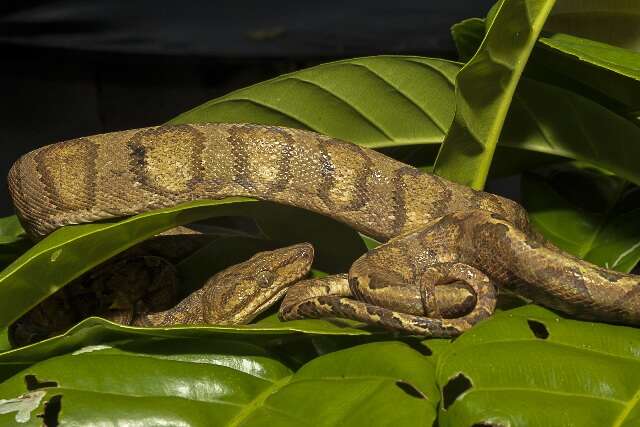
Boinae
The Boinae are a purported subfamily of boas found in Central and South America, as well as the West Indies. In the Integrated Taxonomic Information System (ITIS), Boinae is considered an invalid synonym of Boidae.

Colubrinae
The Colubrinae are a subfamily of snakes within the family Colubridae. It includes numerous genera, and although taxonomic sources often disagree on the exact number, the Reptile Database lists 717 species in 92 genera as of September 2019. It is the second largest subfamily of colubrids, after Dipsadinae. Many of the most commonly known snakes are members of this subfamily, including rat snakes, king snakes, milk snakes, vine snakes, and indigo snakes.
Atractaspididae
The Atractaspididae (atractaspidids) are a family of venomous snakes found in Africa and the Middle East, commonly called mole vipers, stiletto snakes, or burrowing asps. Currently, 12 genera are recognized.

Erycinae
The Erycinae, also known as the Old World sand boas, are a subfamily of nonvenomous snakes in the family Boidae. Species of the subfamily Erycinae are found in Europe, Asia Minor, Africa, Arabia, central and southwestern Asia, India, Sri Lanka, and western North America. Four genera comprising 18 species are currently recognized as being valid.
Pseudoxenodontinae
Pseudoxenodontinae is a small subfamily of colubroid snakes, sometimes referred to as a family (Pseudoxenodontidae). They are found in southern and southeastern Asia, from northeast India to southern China (including Taiwan) and south into Indonesia as far east as Wallace's Line. There are 10 species in 2 genera. Most are very poorly known, such that Pseudoxenodontinae is one of the most poorly known groups of snakes.
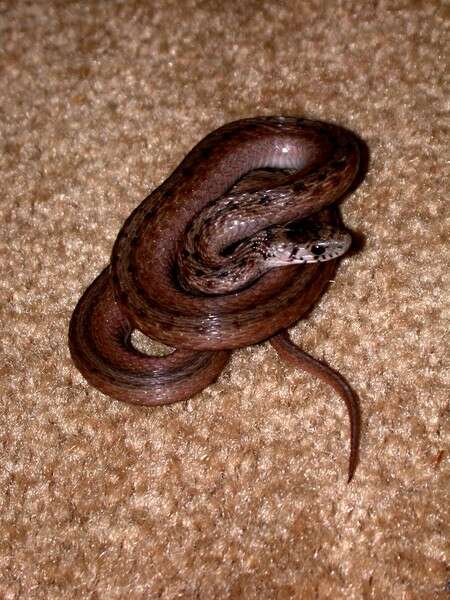
Natricinae
The Natricinae are a subfamily of colubroid snakes, sometimes referred to as a family (Natricidae). The subfamily comprises 36 genera. Members include many very common snake species, such as the European grass snakes, and the North American water snakes and garter snakes. Some Old World members of the subfamily are known as keelbacks, because their dorsal scales exhibit strong keeling.
Sanziniinae
The Sanziniinae are a subfamily of boid snakes containing four species endemic to the island of Madagascar. Common names include Madagascar boas and Malagasy boas.
Calamariinae
The Calamariinae are a subfamily of colubrid snakes, commonly known as reed snakes, that are found in southern and southeastern Asia. They are most diverse in Indonesia, especially Sumatra and Borneo. The subfamily contains 90 species in seven genera. Very few specimens of most species have been collected.
Sibynophiinae
Sibynophiinae is a small subfamily of colubroid snakes, sometimes referred to as a family (Sibynophiidae). This group has also been called Scaphiodontophiinae but since the name Sibynophiinae is older, it has priority. They are commonly called hinged-teeth snakes.
Lamprophiinae
Lamprophiinae is a subfamily of lamprophiid snakes, a large group of mostly African snakes, most of which were formerly classified as colubrids but which we now know are actually more closely related to elapids.
Boodontinae
Boodontinae is a subfamily of colubrid snakes.
Xenodontinae
Xenodontinae is a subfamily of snakes in the family Colubridae.