Encyclopedia of Life · EOL (see source)
Natricinae
Sign in to saveAlso known as Natricine, Natricines
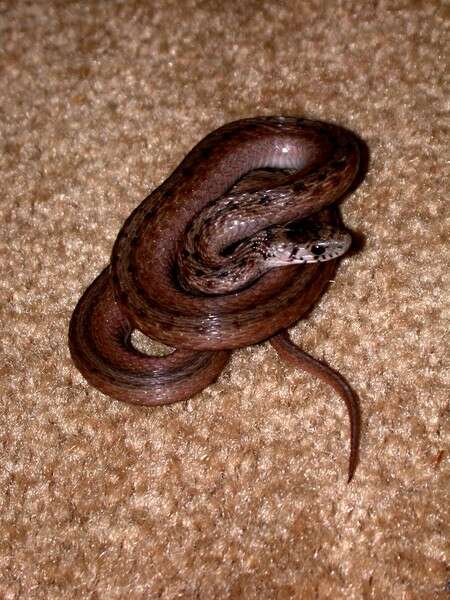
The Natricinae are a subfamily of colubroid snakes, sometimes referred to as a family (Natricidae). The subfamily comprises 36 genera. Members include many very common snake species, such as the European grass snakes, and the North American water snakes and garter snakes. Some Old World members of the subfamily are known as keelbacks, because their dorsal scales exhibit strong keeling.
Species
Subfamily
- PhylumChordata
- OrderSquamata
- FamilyColubridae
屬 詳見內文 游蛇亞科(學名:Natricinae)是蛇亞目游蛇科下的一個亞科,其下目前共有28個屬。 主要種屬 Adelophis Afronatrix 腹鏈蛇屬(Amphiesma) 白眶蛇屬(Amphiesmoides) Anoplohydrus Aspidura 滇西蛇屬(Atretium) 頭蛇屬(Balanophis) Clonophis Hologerrhum 婆蛇屬(Hydrablabes) Hydraethiops 蜥顎蛇屬(Iguanognathus) 頸棱蛇屬(Macropisthodon) 水游蛇屬(Natrix) Nerodia 後棱蛇屬(Opisthotropis) Parahelicops 異紋蛇屬(Pararhabdophis) 女王蛇屬(Regina) 頸槽蛇屬(Rhabdophis) 華游蛇屬(Seminatrix) Sinonatrix 斯氏蛇屬(Storeria) 束帶蛇屬(Thamnophis) 線蛇屬(Tropidoclonion) Tropidonophis Virginia 備註 (英文)TIGR爬蟲類資料庫:游蛇亞科 这是一篇與蛇類相關的小作品。你可以通过编辑或修订扩充其内容。 查 论 编 取自“https://zh.wikipedia.org/w/index.php?title=游蛇亞科&oldid=25494850” 分类: 游蛇亞科 游蛇科 隐藏分类: 本地相关图片与维基数据不同 全部小作品 蛇類小作品
via
Wikidata facts
- Instance of
- taxon
- Parent taxon
- Colubridae
- Image
- Schlange.jpg
Show 8 more facts
- taxon name
- Natricinae
- taxon rank
- subfamily
- Commons category
- Natricidae
- topic's main category
- Category:Natricinae
- Commons gallery
- Natricinae
- taxon common name
- 游蛇亞科
- taxon synonym
- Natricidae
- taxon synonym of
- Natricidae
Sources (1)
via Wikidata · CC0
~2 min read
Encyclopedic overview
4 sectionsContents
- Classification
- Genera
- References
- Further reading
The Natricinae are a subfamily of colubroid snakes, sometimes referred to as a family (Natricidae). The subfamily comprises 36 genera. Members include many very common snake species, such as the European grass snakes, and the North American water snakes and garter snakes. Some Old World members of the subfamily are known as keelbacks, because their dorsal scales exhibit strong keeling.
Natricine snakes are found in Africa, Asia, Europe, North America, and Central America as far south as Costa Rica. A single species, Tropidonophis mairii, reaches Australia. Although the highest diversity is in North America, the oldest members are in Asia and Africa, suggesting an Old World origin for the group. Most species are semiaquatic and feed on fish and amphibians, although a few are semifossorial or leaf-litter snakes that feed on invertebrates. Most species are harmless to humans, but a few (e.g., Thamnophis sirtalis, Thamnophis elegans) are capable of inflicting bites that can result in local, non-life-threatening symptoms, and at least two members of the genus Rhabdophis (R. tigrinus and R. subminiatus) are capable of inflicting life-threatening bites to humans, though they have only enlarged, ungrooved fangs in the back of the mouth.
Excerpted from Wikipedia’s “Natricinae” article, available under the CC BY-SA 4.0 licence.
Available in 14 languages
- Español
- 日本語
- Português
- Bahasa Indonesia
- Egyptian Arabic
- Estonian
- Georgian
- Hebrew
- Hungarian
- Svenska
- Tiếng Việt
- Türkçe
- فارسی
via Wikidata sitelinks · CC0