Category
page 1Software programmed in assembly language

MS-DOS
MS-DOS ( ; acronym for Microsoft Disk Operating System, also known as Microsoft DOS) is an operating system for x86-based personal computers mostly developed by Microsoft. Collectively, MS-DOS, its alternate branding as IBM PC DOS, and a few operating systems attempting to be compatible with MS-DOS, are sometimes referred to as "DOS" (which is also the generic acronym for disk operating system). MS-DOS was the main operating system for IBM PC compatibles during the 1980s, from which point it was gradually superseded by operating systems offering a graphical user interface (GUI), in variou
AmigaOS
AmigaOS is a family of proprietary native operating systems of the Amiga and AmigaOne personal computers. It was developed first by Commodore International and introduced with the launch of the first Amiga, the Amiga 1000, in 1985. Early versions of AmigaOS required the Motorola 68000 series of 16-bit and 32-bit microprocessors. Later versions, after Commodore's demise, were developed by Haage & Partner (AmigaOS 3.5 and 3.9) and then Hyperion Entertainment (AmigaOS 4.0-4.1). A PowerPC microprocessor is required for the most recent AmigaOS 4-release. Version 4.1 added 64-bit file system support
Turbo Pascal
programming language
Lotus 1-2-3
software

dBase
<!-- This template uses not applicable field such "Products" and "employees"
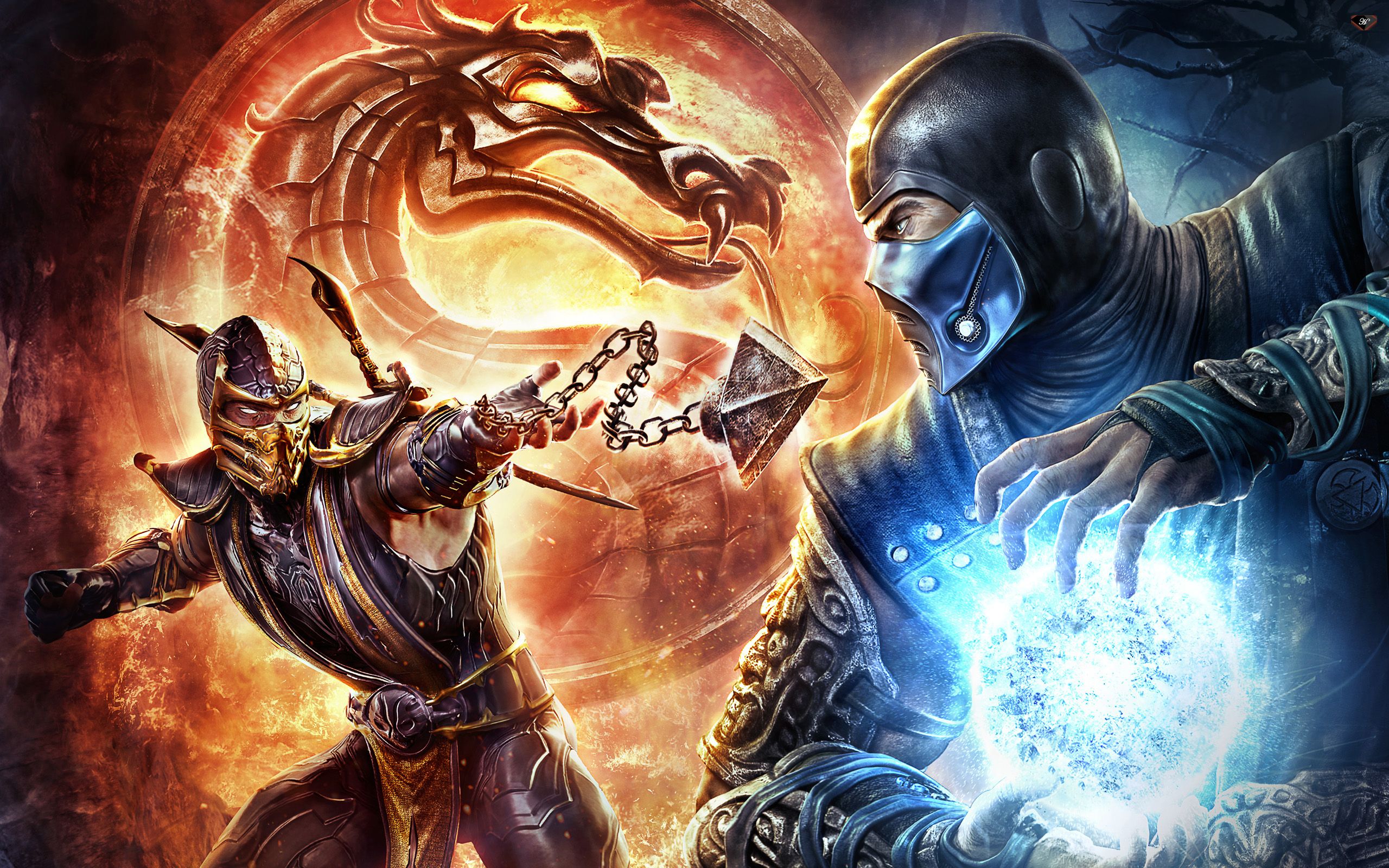
Mortal Kombat
1992 video game

FFmpeg
FFmpeg is a free and open-source software project consisting of a suite of libraries and programs for handling video, audio, and other multimedia files and streams. At its core is the command-line ffmpeg tool itself, designed for processing video and audio files. It is widely used for format transcoding, basic editing (trimming and concatenation), video scaling, video post-production effects, and standards compliance (SMPTE, ITU).
Mortal Kombat II
1993 competitive fighting game

KolibriOS
KolibriOS is an open-source operating system for x86 computers, written completely in FASM assembly language. It has been developed since 2004, forked from MenuetOS, and supports i586 CPUs or newer. KolibriOS is small sized and fits on a single 3.5" floppy disk; despite this, it features a full graphical user interface, preemptive multitasking, networking capabilities, and many pieces of bundled software.

MenuetOS
MenuetOS is an operating system with a monolithic preemptive, real-time kernel written in FASM assembly language. The system also includes video drivers. It runs on 64-bit and 32-bit x86 architecture computers. Its author is Ville M. Turjanmaa. It has a graphical desktop, games, and networking abilities (TCP/IP stack). One distinctive feature is that it fits on one floppy disk.
IBM PC DOS
discontinued computer operating system

Another World
action-adventure video game by Eric Chahi
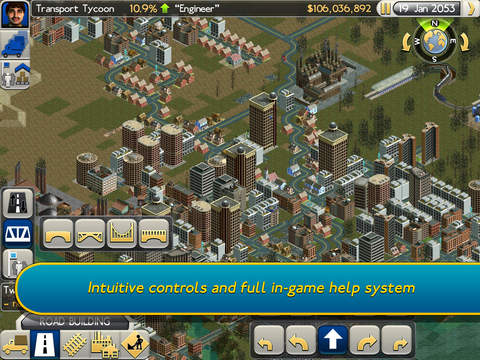
Transport Tycoon
1994 video game

TrueCrypt
TrueCrypt is a discontinued source-available freeware utility used for on-the-fly encryption (OTFE). It can create a virtual encrypted disk within a file, encrypt a partition, or encrypt the whole storage device (pre-boot authentication).
86-DOS
86-DOS (known internally as QDOS, for Quick and Dirty Operating System) is a discontinued operating system developed and marketed by Seattle Computer Products (SCP) for its Intel 8086-based computer kit.
RollerCoaster Tycoon
1999 theme park simulation video game
SNOBOL
SNOBOL (StriNg Oriented and symBOlic Language) is a series of programming languages developed between 1962 and 1967 at AT&T Bell Laboratories by David J. Farber, Ralph Griswold and Ivan P. Polonsky, culminating in SNOBOL4. It was one of a number of text-string-oriented languages developed during the 1950s and 1960s; others included COMIT and TRAC. Despite the similar name, it is entirely unlike COBOL.

DR-DOS
DR-DOS is a disk operating system for IBM PC compatibles, originally developed by Gary A. Kildall's Digital Research, Inc. and derived from Concurrent PC DOS 6.0, which was an advanced successor of CP/M-86. Upon its introduction in 1988, it was the first DOS that attempted to be compatible with IBM PC DOS and MS-DOS.
High Performance File System
filesystem created for OS/2 operating system
Apollo Guidance Computer
computer

GW-BASIC
GW-BASIC is a dialect of the BASIC programming language developed by Microsoft from IBM BASICA. Functionally identical to BASICA, its BASIC interpreter is a fully self-contained executable and does not need the Cassette BASIC ROM found in the original. It was bundled with MS-DOS operating systems on IBM PC–compatibles by Microsoft.
Sibelius
WYSIWYG scorewriter program
Adventure
1980 action-adventure video game
Mesa
free and open-source library for 3D graphics rendering
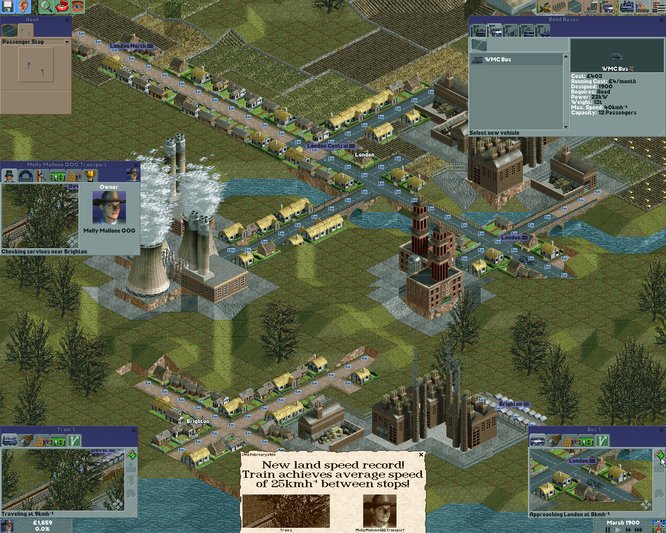
Chris Sawyer's Locomotion
2004 computer game
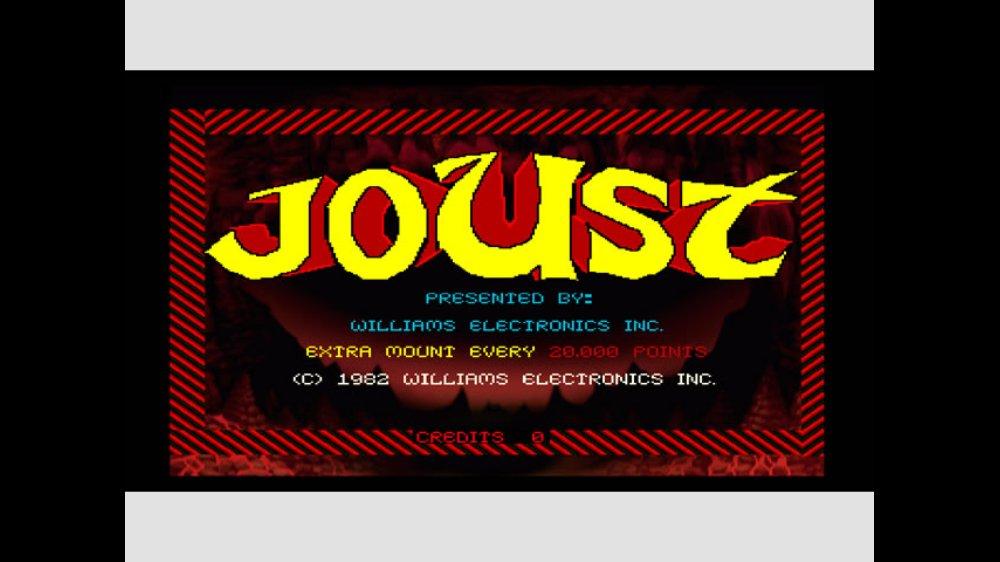
Joust
1982 video game
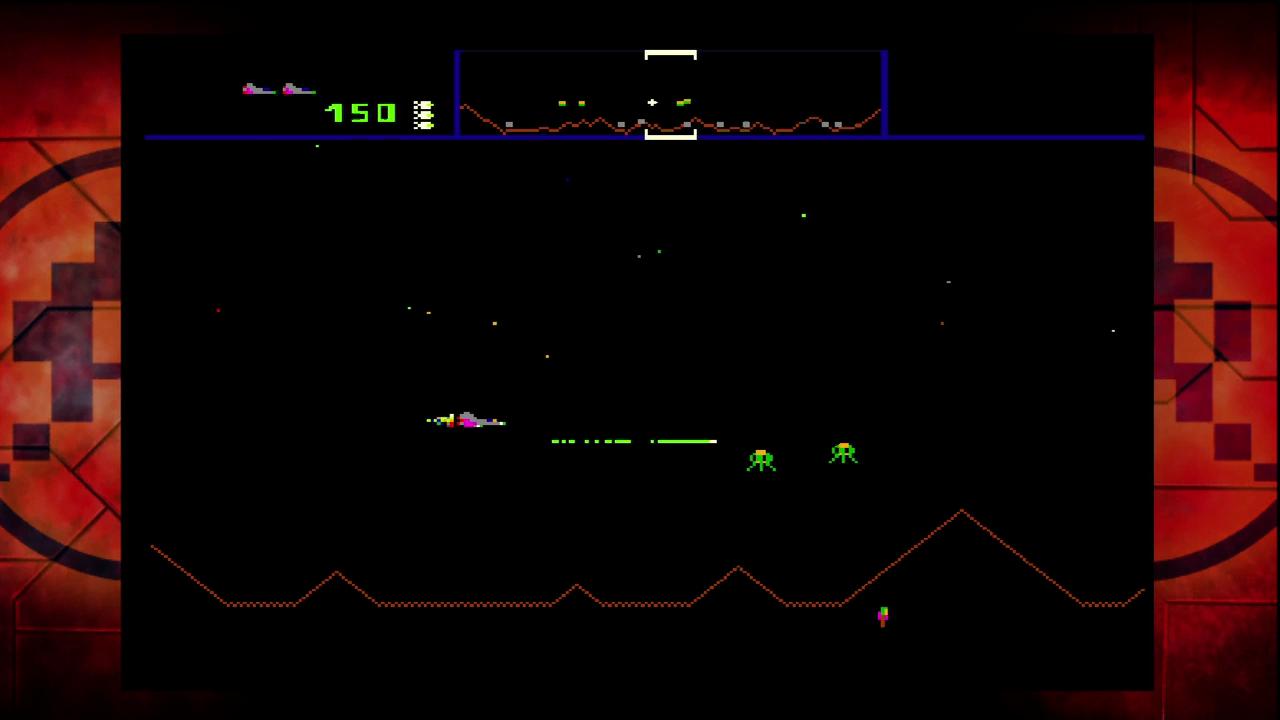
Defender
1981 video game
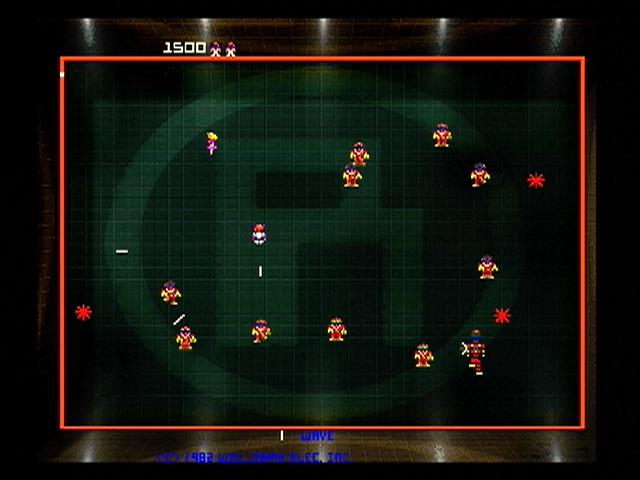
Robotron: 2084
1982 video game
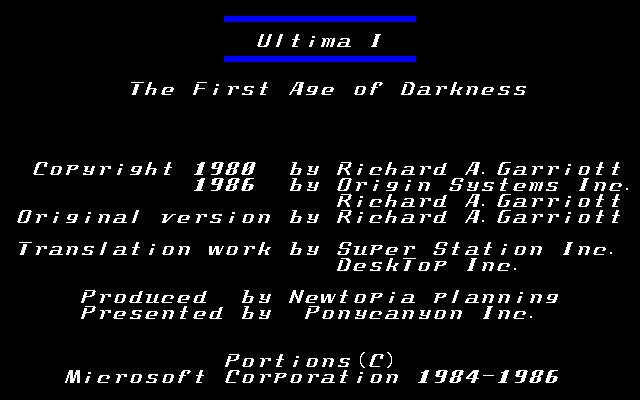
Ultima I: The First Age of Darkness
1981 computer game
HotSpot
HotSpot, released as Java HotSpot Performance Engine, is a Java virtual machine for desktop and server computers, developed by Sun Microsystems which was purchased by and became a division of Oracle Corporation in 2010. Its features include improved performance via methods such as just-in-time compilation and adaptive optimization. It is the de facto reference Java Virtual Machine.

MemTest86
MemTest86 and Memtest86+ are memory test software programs designed to test and stress test an x86 architecture computer's random-access memory (RAM) for errors, by writing test patterns to most memory addresses, reading back the data, and comparing for errors. Each tries to verify that the RAM will accept and correctly retain arbitrary patterns of data written to it, that there are no errors where different bits of memory interact, and that there are no conflicts between memory addresses.
Ultima II: The Revenge of the Enchantress
1982 video game

AppleWorks
AppleWorks was an integrated office suite containing a word processor, database, and spreadsheet. It was developed by Rupert Lissner for Apple Computer, originally for the Apple II and launched in 1984. Many enhancements for AppleWorks were created, the most popular being the TimeOut series from Beagle Bros which extended the life of the Apple II version of AppleWorks. Appleworks was later reworked for the Macintosh platform.

MacPaint
MacPaint is a raster graphics editor developed by Apple Computer and released alongside the original Macintosh personal computer on January 24, 1984. It was sold bundled with its word processing counterpart, MacWrite, for US$195. MacPaint was notable because it could generate graphics that could be used by other applications. It taught consumers what a graphics-based system could do by using the mouse, the clipboard, and QuickDraw picture language. Pictures could be cut from MacPaint and pasted into MacWrite documents.

ZSNES
ZSNES is an emulator for the Super Nintendo Entertainment System released as free software. There are official ports for Linux, MS-DOS, Windows, and unofficial ports for Xbox, and macOS.
PearPC
PearPC is a PowerPC platform emulator capable of running many PowerPC operating systems, including pre-Intel versions of Mac OS X, Darwin, and Linux on x86 hardware. It is released under the GNU General Public License (GPL). It can be used on Windows, Linux, FreeBSD and other systems based on POSIX-X11. The first official release was made on May 10, 2004. The software was often used to run early versions of OS X on Windows XP computers.
GNU Multiple Precision Arithmetic Library
library for arbitrary precision arithmetic, operating on signed integers, rational numbers and floating point numbers
L4 microkernel family
family of second-generation microkernels
TOPS-20
The TOPS-20 operating system by Digital Equipment Corporation (DEC) is a proprietary OS used on some of DEC's 36-bit mainframe computers. The Hardware Reference Manual was described as for "DECsystem-10/DECSYSTEM-20 Processor" (meaning the DEC PDP-10 and the DECSYSTEM-20).

CICS
IBM CICS (Customer Information Control System) is a family of mixed-language application servers that provide online transaction management and connectivity for applications on IBM mainframe systems under z/OS and z/VSE.
Tiny C Compiler
fast, small and free C compiler
Quattro Pro
software
DOS/360
IBM mainframe operating system designed for use with smaller machines
Integer BASIC
BASIC interpreter of the Apple I and original Apple II computers
THE multiprogramming system
Operating system
Sabre
global distribution system (GDS)

PTS-DOS
thumb|Paragon Technology Systems PTS/DOS 6.51CD & S/DOS 1.0

UPX
UPX (Ultimate Packer for eXecutables) is a free and open source executable packer supporting a number of file formats from different operating systems.
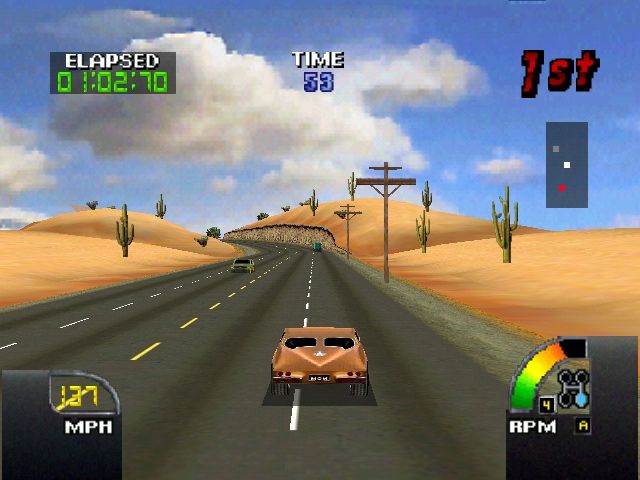
Cruis'n USA
1994 racing video game
SoftICE
SoftICE is a kernel mode debugger for DOS and Windows up to Windows XP. It is designed to run underneath Windows, so that the operating system is unaware of its presence. Unlike an application debugger, SoftICE is capable of suspending all operations in Windows when instructed. Due to its low-level capabilities, SoftICE is also popular as a software cracking tool.

TOPS-10
TOPS-10 System (Timesharing / Total Operating System-10) is a discontinued operating system from Digital Equipment Corporation (DEC) for the PDP-10 (or DECsystem-10) mainframe computer family. Launched in 1967, TOPS-10 evolved from the earlier "Monitor" software for the PDP-6 and PDP-10 computers; this was renamed to TOPS-10 in 1970.
Impulse Tracker
audio tracker for DOS
Incompatible Timesharing System
time-sharing operating system developed by MIT
GEOS
graphical operating system (16-bit)

RT-11
RT-11 (Real-time 11) is a discontinued small, low-end, single-user real-time operating system for the full line of Digital Equipment Corporation PDP-11 16-bit computers. RT-11 was first implemented in 1970 and released in June 1973. It was widely used for real-time computing systems, process control, and data acquisition across all PDP-11s. It was also used for low-cost general-use computing.
Staog
Staog was the first computer virus written for the Linux operating system. It was discovered in the autumn, October 20, of 1996, and the vulnerabilities that it exploited were fixed soon after. It has not been detected in the wild since its initial outbreak. The vulnerabilities exploited by Staog have been patched in all major Linux distributions, making the virus no longer a threat.
Cruis'n World
1996 video game
ARexx
ARexx is a Rexx interpreter for Amiga, written in 1987 by William S. Hawes, with a number of Amiga-specific features beyond standard Rexx. An ARexx script can communicate with software that implements an ARexx port. An Amiga application can define a set of commands and functions for ARexx to address, thus making the capabilities of the software available to an ARexx script. Several applications support running an ARexx script as a macro.
Bleem!
Bleem! (styled as bleem!) is a commercial PlayStation emulator released by the Bleem! Company in 1999 for Windows and Dreamcast. It is one of the few commercial software emulators to be aggressively marketed during the emulated console's lifetime, and was the center of multiple lawsuits.
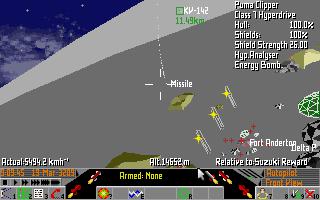
Frontier: Elite II
1993 video game