Category
page 1Sorghum

Sorghum
genus of plants

Sorghum bicolor
Sorghum bicolor, commonly called sorghum () and also known as broomcorn, great millet, Indian millet, Guinea corn, jowar, or milo, is a species in the grass genus Sorghum. It is typically an annual, but some cultivars are perennial. It grows in clumps that may reach over high. The grain is in diameter.
Sorghum halepense
species of plant

Red Sorghum
1988 film by Zhang Yimou

Sorghum ×drummondii
nothospecies of plant, Sudan grass

Red Sorghum
1986 novel by Mo Yan
Kaoliang wine
strong distilled liquor of Chinese origin made from fermented sorghum

Sorghum arundinaceum
species of plant

Sorghum × almum
species of plant
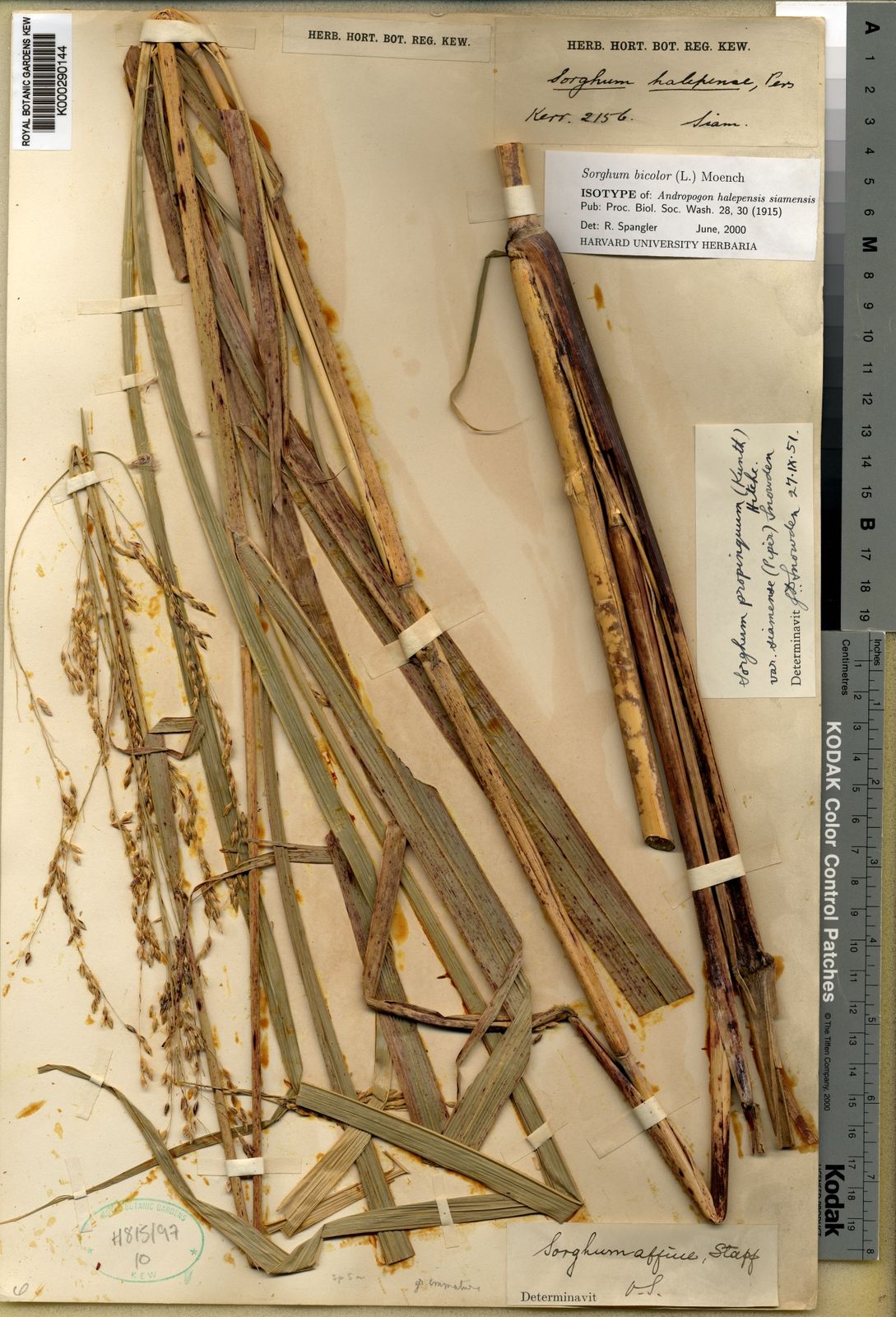
Sorghum propinquum
species of plant

Sorghum leiocladum
species of plant endemic to Australia
luteolinidin cation
Luteolinidin is a member of the 3-deoxyanthocyanidins. It is an orange pigment, found e.g. in Sorghum bicolor.
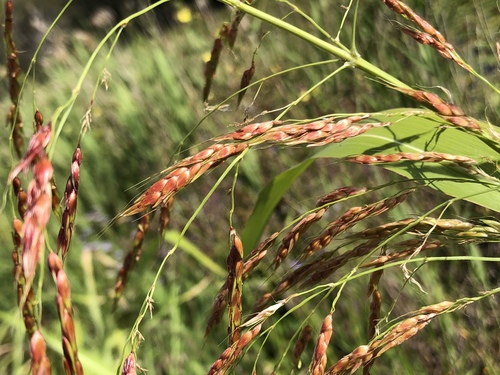
Sorghum timorense
species of plant

Sorghum intrans
species of plant

Sorghum macrospermum
species of plant
Gebisa Ejeta
Ethiopian American scientist
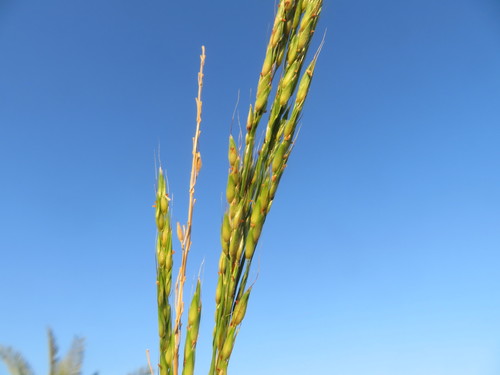
Sorghum virgatum
species of plant

Sorghum purpureosericeum
species of plant
apigeninidin chloride
Apigeninidin (Also, apigenidin, or Gesneridin) is a chemical compound belonging to the 3-deoxyanthocyanidins and that can be found in the Patagonian plant Ephedra frustillata and in the soybean. Apigeninidin is one of the principal pigments found in sorghum. Extremely high level of apigeninidin (49 mg/g) has been documented in sorghum leaf sheath. Like all anthocyanidins it exists in a variety of tautomers depending on pH and hydration, several of these bare the distinctive pyrylium core.
sweet sorghum
any of the varieties of the sorghum plant with a high sugar content
Jolada Rotti
Bread for the most of the North Karnataka
lakh
millet porridge