Category
page 1Space launch vehicles

rocket
alt=|thumb|upright|A Soyuz-FG rocket launches from "[[Gagarin's Start" (Site 1/5), Baikonur Cosmodrome ]]
A rocket (from , and so named for its shape) is an elongated flying vehicle that uses a rocket engine to accelerate without using any surrounding air. A rocket engine produces thrust by reaction to exhaust expelled at high speed. Unlike jet engines, rockets are fuelled entirely by propellant which they carry, without the need for oxygen from air; consequently a rocket can fly in the vacuum of space, indeed rocket engines operate more efficiently outside the atmosphere.
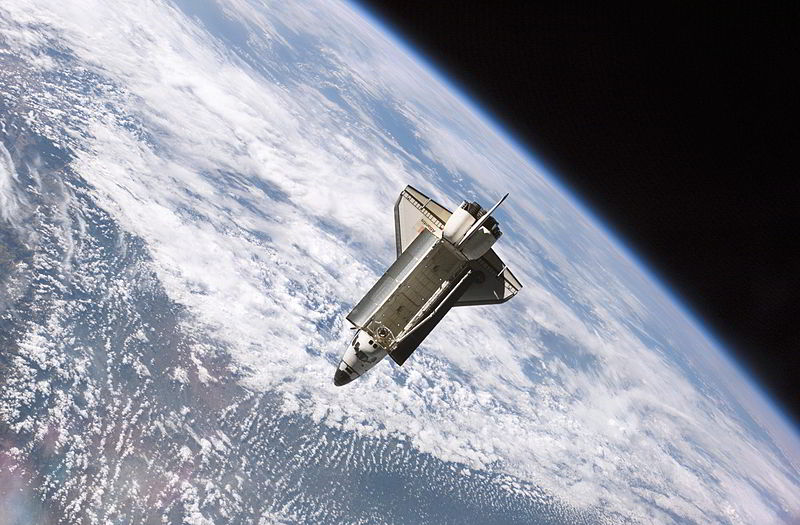
launch vehicle
rocket used to carry payload into outer space
multistage rocket
rocket that uses two or more stages in series
reusable launch vehicle
space launch vehicle designed to be partially or fully reused
payload fairing
nose cone of a rocket used to protect spacecraft during launch
list of orbital launch systems
Wikimedia list article

single-stage-to-orbit
thumb|upright=1.2|The VentureStar was a proposed SSTO [[spaceplane.]]
heavy-lift launch vehicle
orbital launch vehicle capable of lifting heavy payloads to low-Earth orbit
super heavy-lift launch vehicle
orbital launch vehicle capable of lifting very heavy payloads to low-Earth orbit
small-lift launch vehicle
orbital launch vehicle capable of lifting small payloads to low-Earth orbit
medium-lift launch vehicle
orbital launch vehicle capable of lifting moderate payloads to low-Earth orbit
Comparison of orbital launch systems
Wikimedia list article
two-stage-to-orbit
A two-stage-to-orbit (TSTO) or two-stage rocket is a launch vehicle in which two distinct stages provide propulsion consecutively in order to achieve orbital velocity. It is intermediate between a three-stage-to-orbit launcher and a hypothetical single-stage-to-orbit (SSTO) launcher.
Comparison of orbital launchers families
Wikimedia list article