Category
page 1Spacecraft that impacted the Moon

Luna 2
first spacecraft to reach the surface of the Moon

Chandrayaan-2
Chandrayaan-2 (; from Sanskrit: , "Moon" and , "craft, vehicle") is the second lunar exploration mission developed by ISRO after Chandrayaan-1. It consists of a lunar orbiter, the Vikram lunar lander, and the Pragyan rover, all of which were developed in India. The main scientific objective is to map and study the variations in lunar surface composition, as well as the location and abundance of lunar water.

SELENE
SELENE (; Selenological and Engineering Explorer), better known in Japan by its nickname , was the second Japanese lunar orbiter spacecraft following the Hiten probe. Produced by the Institute of Space and Astronautical Science (ISAS) and the National Space Development Agency (NASDA), the spacecraft was launched on September 14, 2007. After orbiting the Moon for a year and eight months, the main orbiter was instructed to impact on the lunar surface near the crater Gill on June 10, 2009.
Luna 25
Russian lunar lander, lost after an engine overburn and resulting crash on the lunar surface
Chang'e 1
Chinese lunar orbiter

SMART-1
SMART-1 was a European Space Agency satellite that orbited the Moon. It was launched on 27 September 2003 at 23:14 UTC from the Guiana Space Centre in Kourou, French Guiana. "SMART-1" stands for Small Missions for Advanced Research in Technology-1, part of the Small Missions for Advanced Research in Technology programme. On 3 September 2006 (05:42 UTC), SMART-1 was deliberately crashed into the Moon's surface, ending its mission.
Lunar Orbiter 1
first American robotic spacecraft to orbit the Moon
Luna 15
space probe
Luna 5
space probe

Lunar Atmosphere and Dust Environment Explorer
The Lunar Atmosphere and Dust Environment Explorer (LADEE; ) was a NASA lunar exploration and technology demonstration mission. It was launched on a Minotaur V rocket from the Mid-Atlantic Regional Spaceport on September 7, 2013. During its seven-month mission, LADEE orbited the Moon's equator, using its instruments to study the lunar exosphere and dust in the Moon's vicinity. Instruments included a dust detector, neutral mass spectrometer, and ultraviolet-visible spectrometer, as well as a technology demonstration consisting of a laser communications terminal. The mission ended on April 18, 2
Ranger 7
space probe

LCROSS
The Lunar Crater Observation and Sensing Satellite (LCROSS) was a robotic spacecraft operated by NASA. The mission was conceived as a low-cost means of determining the nature of hydrogen detected at the polar regions of the Moon. Launched immediately after discovery of lunar water by Chandrayaan-1, the main LCROSS mission objective was to further explore the presence of water in the form of ice in a permanently shadowed crater near a lunar polar region. It was successful in confirming water in the southern lunar crater Cabeus.
Ranger 8
space probe
Luna 8
space probe
Lunar Prospector
NASA mission designed for a low polar orbit investigation of the Moon
Luna 7
space probe
Surveyor 2
failed lunar lander launched in 1966
Ranger 4
US unmanned spaceprobe
Lunar Orbiter 3
American lunar orbiter
Lunar Orbiter 4
space probe
Surveyor 4
American lunar lander
Luna 18
space probe
Lunar Orbiter 5
space probe
Ranger 9
NASA lunar impactor
Lunar Orbiter 2
space probe

Beresheet
Beresheet (, Bərēšīṯ, ; Book of Genesis) was a demonstrator of a small robotic lunar lander and lunar probe operated by SpaceIL and Israel Aerospace Industries. Its aims included inspiring youth and promoting careers in science, technology, engineering, and mathematics (STEM), and landing its magnetometer, time capsule, and laser retroreflector on the Moon. The lander's gyroscopes failed on 11 April 2019 causing the main engine to shut off, which resulted in the lander crashing on the Moon. Its final resting position is 32.5956°N, 19.3496°E.

Gravity Recovery and Interior Laboratory
thumb|right|MoonKAM shot
The Gravity Recovery and Interior Laboratory (GRAIL) was an American lunar science mission in NASA's Discovery Program which used high-quality gravitational field mapping of the Moon to determine its interior structure. The two small spacecraft, GRAIL A (Ebb) and GRAIL B (Flow), were launched on 10 September 2011 aboard a single launch vehicle: the most-powerful configuration of a Delta II, the 7920H-10. GRAIL A separated from the rocket about nine minutes after launch, GRAIL B followed about eight minutes later. They arrived at their orbits around the Moon 25 hours ap
Ranger 6
space probe
HITEN
Japanese lunar orbiter
list of artificial objects on the Moon
Wikimedia list article
Pragyan
Indian lunar rover
Hakuto-R M1
failed Japanese private lunar landing mission
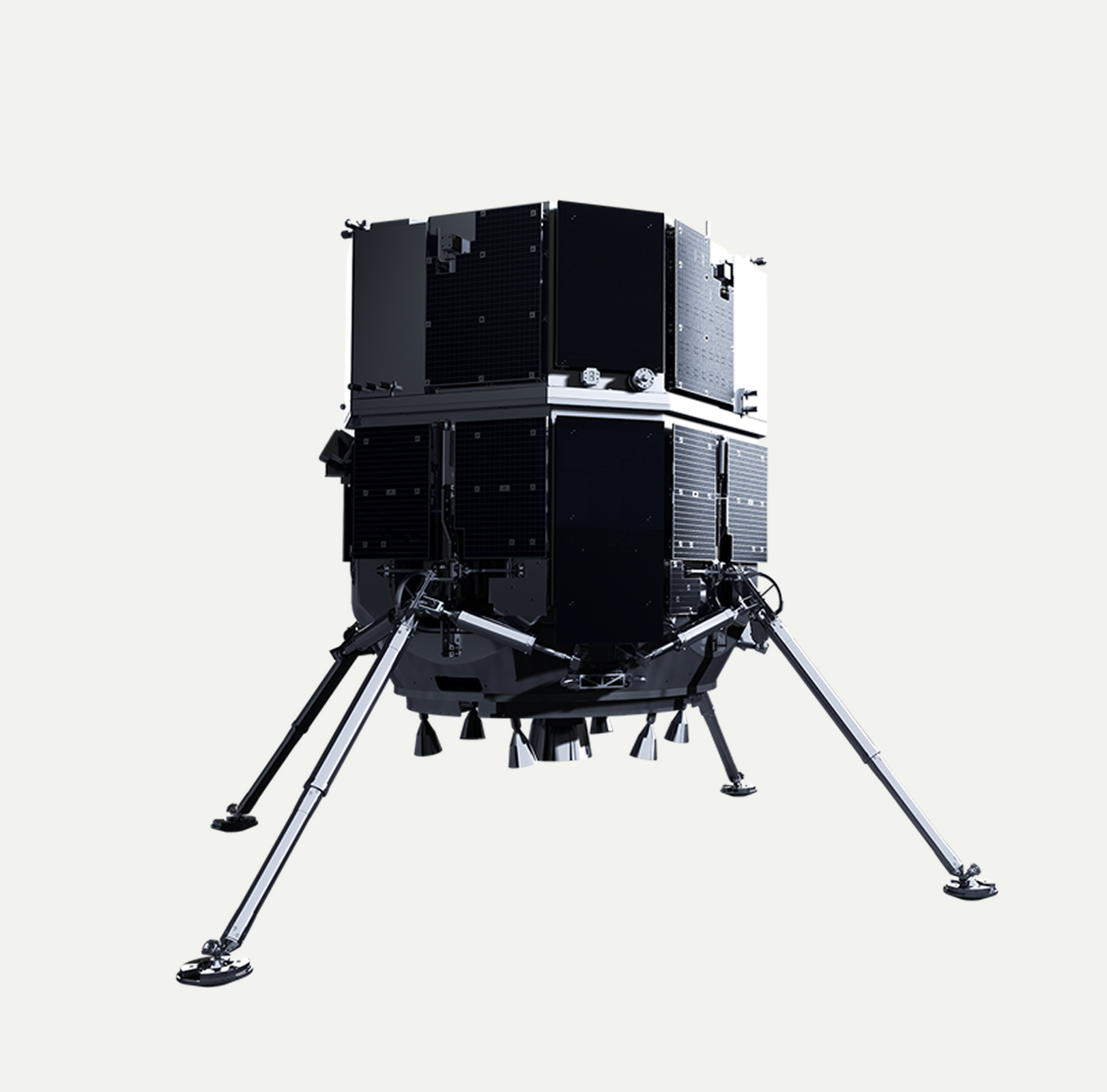
Hakuto-R M2
failed Japanese private lunar landing mission
Moon Impact Probe
lunar probe released by Chandrayaan-1 lunar remote sensing orbiter
Emirates Lunar Mission
lunar mission by the United Arab Emirates