Category
page 1Speciation
.jpg)
speciation
Speciation is the evolutionary process by which populations evolve to become distinct species. The biologist Orator F. Cook coined the term in 1906 for cladogenesis, the splitting of lineages, as opposed to anagenesis, phyletic evolution within lineages. Charles Darwin was the first to describe the role of natural selection in speciation in his 1859 book On the Origin of Species. He also identified sexual selection as a likely mechanism, but found it problematic.
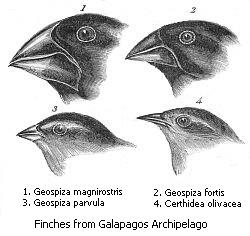
adaptive radiation
evolutionary radiation to fill many ecological niches

monotypic taxon
taxonomic group which contains only one immediately subordinate taxon (according to the referenced point of view)

polyploidy
thumb|This image shows haploid (single), diploid (double), triploid (triple), and tetraploid (quadruple) sets of chromosomes. Triploid and tetraploid chromosomes are examples of polyploidy.
allopatric speciation
type of speciation caused by geographic isolation between populations
race
informal rank in the taxonomic hierarchy, below the level of subspecies

serotype
thumb|right|300px|Two serotypes 1a and 1b with antigens 2a and 2b on surface, which are recognized by two distinct [[antibodies, 3a and 3b, respectively]]
Anagenesis
Anagenesis is the gradual evolution of a species that continues to exist as an interbreeding population. This contrasts with cladogenesis, which occurs when branching or splitting occurs, leading to two or more lineages and resulting in separate species. Anagenesis does not always lead to the formation of a new species from an ancestral species. When speciation does occur as different lineages branch off and cease to interbreed, a core group may continue to be defined as the original species. The evolution of this group, without extinction or species selection, is anagenesis.
punctuated equilibrium
theory in evolutionary biology
species aggregate
informal grouping of taxa
sympatric speciation
process through which new species evolve from a single ancestral species while inhabiting the same geographic region
Transmutation of species
19th-century evolutionary ideas for the altering of one species into another that preceded Charles Darwin's theory of natural selection
saltation
mutational change from one generation to the next
parapatric speciation
speciation within a population where subpopulations are reproductively isolated
superspecies
REDIRECT Species complex#Species flock
cryptic species complex
group of closely related organisms with low morphological diversity but high genetic diversity
peripatric speciation
speciation in which a new species is formed from an isolated smaller peripheral population
hybrid speciation
form of speciation where hybridization between two different species leads to a new species, reproductively isolated from the parent species
oceanic dispersal
type of biological dispersal
wallace effect
process of speciation where natural selection increases the reproductive isolation between two populations of species
koinophilia
thumb|300px|This Leucism|leucistic Indian peacock, Pavo cristatus, is unlikely to find a mate and reproduce in a natural setting due to its unusual coloration. However, its striking colour is appreciated by humans, and may be included in artificial [[selective breeding to produce more individuals with the leucistic phenotype.]]

Bateson-Dobzhansky-Muller Model
model of the evolution of genetic incompatibility
paleopolyploidy
right|thumb|280px|Overview of paleopolyploidy process.
Many higher eukaryotes were paleopolyploids at some point during their evolutionary history.
Ecological speciation
form of speciation from isolation
genetic isolate
Population of organisms that has little genetic mixing with other organisms of the same species
hybrid zone
population genetics term
history of speciation
Wikimedia history article
cospeciation
thumb|upright=1.3|Cospeciation and host-parasite associations. From top to bottom:
Cospeciation: host and parasite speciate concurrently
Host switching: speciation as parasite switches hosts and evolves in reproductive isolation
Independent speciation: parasite speciates on same host, reasons unrelated to host
Extinction: parasite goes extinct on host
Missing the boat: host speciates but parasite does not end up reproductively isolated
Cospeciation is a form of coevolution in which the speciation of one species dictates speciation of another species and is most commonly studied in host-parasit