File:Darwin's_finches.jpeg · Wikimedia Commons · See Wikimedia Commons
adaptive radiation
Sign in to saveAlso known as radiation
evolutionary radiation to fill many ecological niches
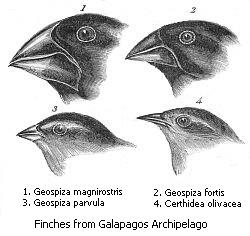
Adaptive radiation is when a single ancestral species evolves into many different species that each fill different ecological niches—for example, Darwin's finches developing different beak shapes to eat different foods. It matters because it helps explain how life becomes incredibly diverse and how organisms become specialized to thrive in particular environments.
AI-generated from the Wikipedia summary — may contain errors.
Wikidata facts
- Subclass of
- biological process
Show 1 more fact
- Commons category
- Adaptive radiation
via Wikidata · CC0
~25 min read
Encyclopedic overview
Four of the 14 finch species found in the Galápagos Archipelago, which are thought to have evolved via an adaptive radiation that diversified their beak shapes, enabling them to exploit different food sources.
In evolutionary biology, adaptive radiation is a process in which organisms diversify rapidly from an ancestral species into a multitude of new forms, particularly when a change in the environment makes new resources available, alters biotic interactions or opens new environmental niches. Starting with a single ancestor, this process results in the speciation and phenotypic adaptation of an array of species exhibiting different morphological and physiological traits. The prototypical example of adaptive radiation is finch speciation on the Galapagos ("Darwin's finches"), but examples are known from around the world.
Excerpted from Wikipedia’s “adaptive radiation” article, available under the CC BY-SA 4.0 licence.