Category
page 1Spring (season)

spring
one of the Earth's four temperate seasons, occurring between winter and summer; one of the 8 Sámi seasons
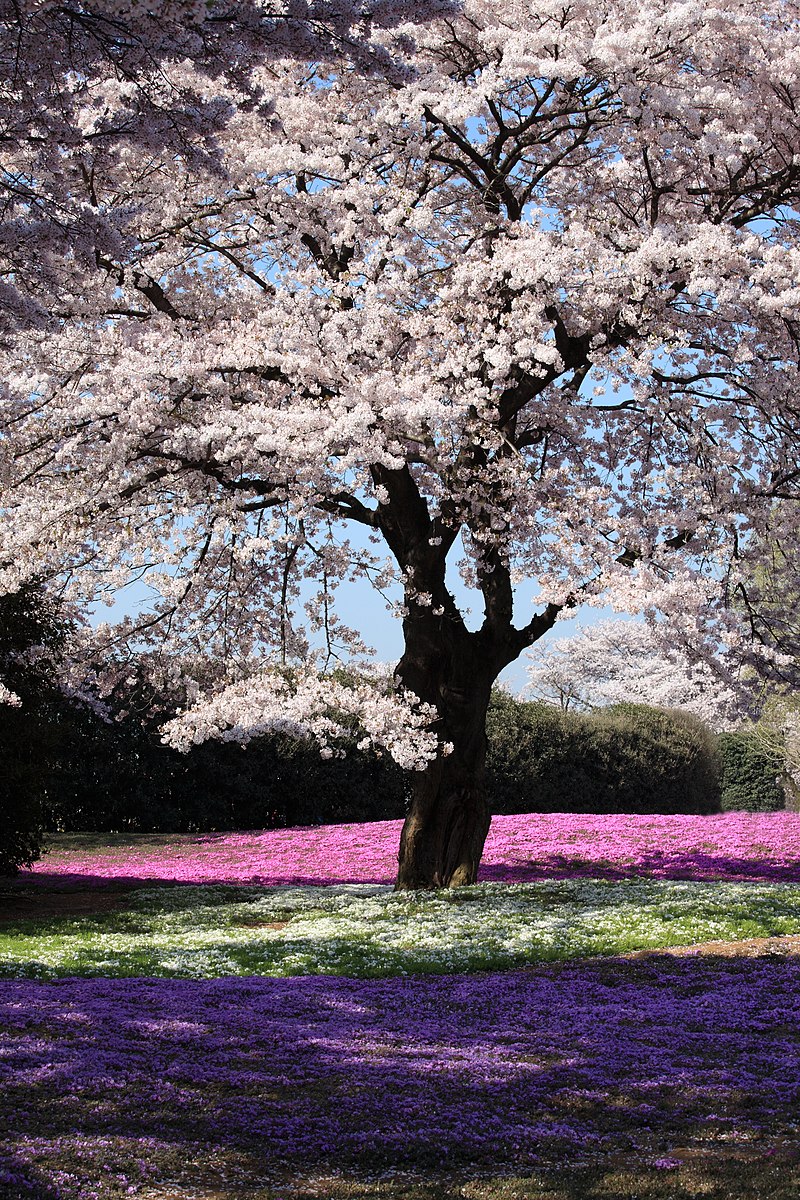
cherry blossom
blossom of the cherry tree

Proserpina
Proserpina ( ; ) or Proserpine ( ) is an ancient Roman goddess whose iconography, functions and myths are virtually identical to those of the Greek Persephone. Proserpina replaced or was combined with the ancient Roman fertility goddess Libera, whose principal cult was housed in a temple atop Rome's Aventine Hill, which she shared with the grain-goddess Ceres and the wine god Liber (Liber Pater).
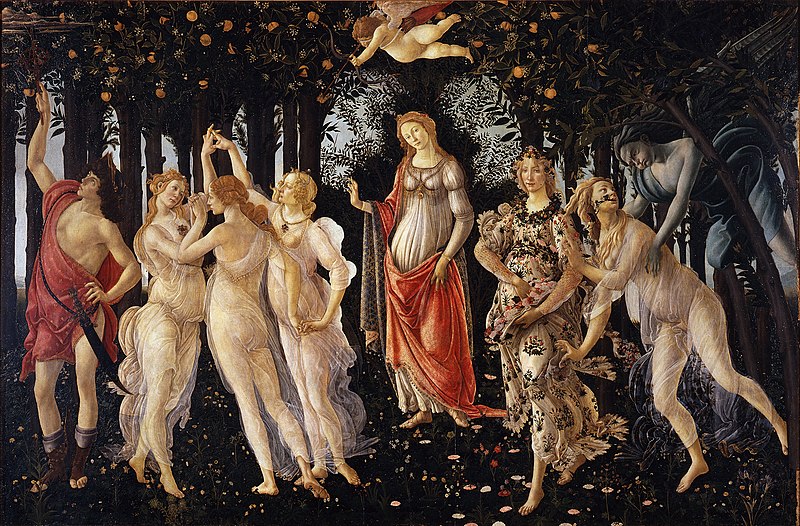
Primavera
painting by Sandro Botticelli
Asian Dust
meteorological phenomenon
spring break
a recess in early spring at universities and schools in various countries around the world
Lichun
The traditional Chinese calendar divides a year into 24 solar terms. The first one is known as '''''' () in Chinese, in Japanese, in Korean, and in Vietnamese. It begins when the Sun reaches the celestial longitude of 315° and ends when it reaches the longitude of 330°. It more often refers in particular to the day when the Sun is exactly at the celestial longitude of 315°. In the Gregorian calendar, it usually begins around February 4 and ends around February 18 (February 19 East Asia time). It is also the beginning of a sexagenary cycle.

fiddlehead fern
thumb|upright=1.2|Fiddlehead ferns
thumb|A chicken dish including fiddleheads
thumb|Fiddleheads growing
thumb
thumb|Fiddlehead sculpture at the Saint John Arts Centre by sculptor Jim Boyd in Saint John, New Brunswick, Canada
Qingming
fifth solar term of traditional East Asian calendars
Yushui
second solar term of traditional East Asian calendars
Jingzhe
Jīngzhé () is the 3rd of the 24 solar terms (節氣) in the traditional Chinese calendars. It begins when the Sun reaches the celestial longitude of 345° and ends when it reaches the longitude of 360°. More often, it refers to the day when the Sun is exactly at a celestial longitude of 345°. In the Gregorian calendar, it usually begins around March 5 and ends around March 20.
Chunfen
The traditional Chinese calendar divides a year into 24 solar terms. Chūnfēn, Shunbun, Chunbun, or Xuân phân is the 4th solar term. It begins when the Sun reaches the celestial longitude of 0° and ends when it reaches the longitude of 15°. In the Gregorian calendar, it usually begins around 20 March and ends around 4 April (5 April East Asia time). It more often refers in particular to the day when the Sun is exactly at the celestial longitude of 0°.
Guyu
The traditional Chinese lunisolar calendar divide a year into 24 solar terms. Gǔyǔ, Kokuu, Gogu, or Cốc vũ is the 6th solar term. It begins when the Sun reaches the celestial longitude of 30° and ends when it reaches the longitude of 45°. It more often refers in particular to the day when the Sun is exactly at the celestial longitude of 30°. In the Gregorian calendar, it usually begins around April 20 and ends around May 5.
desert bloom
climatic phenomenon

Ataegina
thumb|200px|Ataegina. Marble, 210x93x72 cm, by the artist Pedro Roque Hidalgo, 2008. Museum of Marble, Vila Viçosa, Portugal
Ataegina (; ) was a goddess worshipped by the ancient Iberians, Lusitanians, and Celtiberians of the Iberian Peninsula. She is believed by some to have been a goddess of the underworld or the night, or of the spring season.
Ūsiņš
thumb|Sun Bearer Ūsiņš, by Jēkabs Bīne, 1934
Ūsiņš () is a deity in Latvian mythology, the god of light and spring, symbol of fertility, guardian of horses and bees.
Beaivi
thumb|250px|Beivve Sami Solar symbol|Sun symbol
thumb|250px|Sami Shamanism|Shaman [[drum found in Nærøysund Municipality, Norway]]
Vasanta
Name of Indian season.
Rana Niejta
goddess in Sami mythology