Category
page 1Superasterids

Caryophyllales
Caryophyllales ( ) is a diverse and heterogeneous order of flowering plants with well-known members including cacti, carnations, beets, quinoa, spinach, amaranths, pigfaces and ice plants, oraches and saltbushes, goosefoots, sundews, Venus flytrap, tropical pitcher plants, Malabar spinach, bougainvilleas, four o'clock flowers, buckwheat, knotweeds, rhubarb, sorrels, purslanes, jojoba, and tamarisks. Many members are succulent, having fleshy stems or leaves.

Asterids
Asterids are a large clade (monophyletic group) of flowering plants, composed of 17 orders and more than 80,000 species, about a third of the total flowering plant species. The asterids are divided into the unranked clades lamiids (8 orders) and campanulids (7 orders), and the single orders Cornales and Ericales. Well-known asterids include dogwoods and hydrangeas (order Cornales), tea, blueberries, cranberries, kiwifruit, Brazil nuts, argan, sapote, and azaleas (order Ericales), sunflowers, lettuce, common daisy, yacon, carrots, celery, parsley, parsnips, ginseng, ivies, holly, honeysuckle, e

Santalales
The Santalales are an order of flowering plants of eudicots. Well-known members of the Santalales include sandalwoods and the many species of mistletoes. The order has a cosmopolitan distribution, but is heavily concentrated in tropical and subtropical regions. It derives its name from its type genus, Santalum (sandalwood).
Berberidopsidales
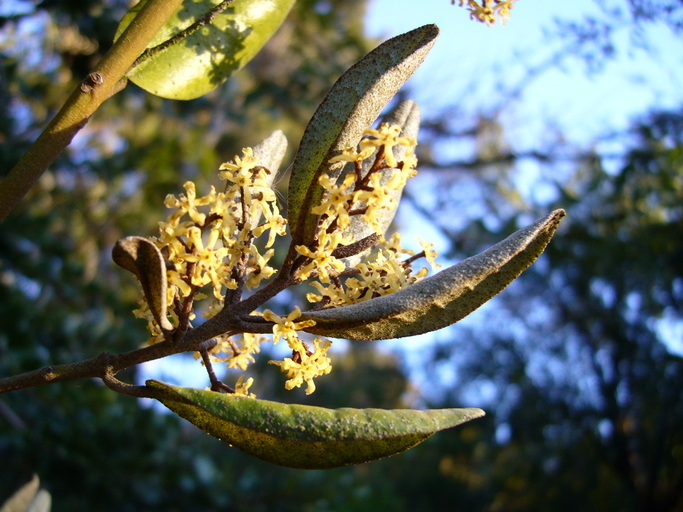
Berberidopsidales is an order of Southern Hemisphere woody flowering plants. The name is newly accepted in the APG III system of plant taxonomy. APG II system, of 2003, mentions the possibility of recognizing the order, as comprising the families Berberidopsidaceae and Aextoxicaceae. However, APG II left the families unplaced as to order, assigning them to the clade core eudicots. The APG III system of 2009 formally recognized the order.