Category
page 1Supramolecular chemistry

ionic bond
chemical bond involving electron transfer
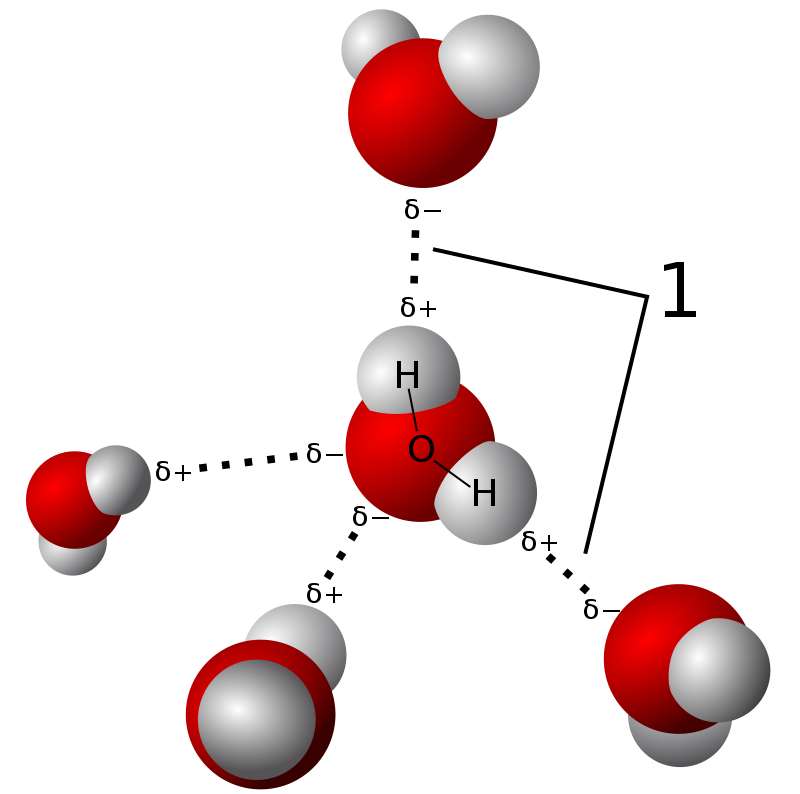
hydrogen bond
form of association between an electronegative atom and a hydrogen atom attached to a second, relatively electronegative atom

micelles
thumb|250px|right|Cross-section view of the structures that can be formed by phospholipids in aqueous solutions (unlike this illustration, micelles are usually formed by single-chain lipids, since it is difficult to fit two chains into this shape)
thumb|250px|right|Scheme of a micelle formed by phospholipids in an [[aqueous solution]]

supramolecular chemistry
domain of chemistry beyond that of molecules that focuses on the chemical systems made up of a discrete number of assembled molecular subunits or components
molecular machine
term in molecular nanotechnology
intercalation
reversible insertion of an ion into a material with layered structure

dendrimer
thumb|Dendrimer and dendron
Dendrimers are highly ordered, branched polymeric molecules. Synonymous terms for dendrimer include arborols and cascade molecules. Typically, dendrimers are symmetric about the core, and often adopt a spherical three-dimensional morphology. The word dendron is also encountered frequently. A dendron usually contains a single chemically addressable group called the focal point or core. The difference between dendrons and dendrimers is illustrated in the top figure, but the terms are typically encountered interchangeably.
Hydrophobic effect
aggregation of non-polar molecules in aqueous solutions

catenanes
thumbnail|230px|Crystal structure of a catenane with a cyclobis(paraquat-p-phenylene)|cyclobis(paraquat-p-phenylene) [[macrocycle reported by Stoddart and coworkers. ]]

cryptand
[[File:Cryptate of potassium cation.jpg|thumbnail|Structure of [[2.2.2-Cryptand|[2.2.2]cryptand]] encapsulating a potassium cation (purple). At crystalline state, obtained with an X-ray diffraction.]]
[[File:Cryptand.svg|thumb|class=skin-invert-image|[2.2.2]Cryptand]]
stacking
attractive, noncovalent interactions between aromatic rings

rotaxane
thumb|Graphical representation of a rotaxane
thumb|Structure of a rotaxane that has a cyclobis(paraquat-p-phenylene)|cyclobis(paraquat-p-phenylene) [[macrocycle.]]
noncovalent bonding
differs from a covalent bond in that it does not involve the sharing of electrons, but rather involves more dispersed variations of electromagnetic interactions between molecules or within a molecule
olympiadane
Olympiadane is a mechanically interlocked molecule composed of five interlocking macrocycles that resembles the Olympic rings. The molecule is a linear pentacatenane or a [5]catenane. It was synthesized and named by Fraser Stoddart and coworkers in 1994. The molecule was designed without any practical use in mind, although other catenanes may have possible application to the construction of a molecular computer.

cucurbituril
[[Image:Models of cucurbiturils.jpg|thumbnail|400px|Computer models of CB[5], CB[6], and CB[7]. Top row is the view into the cavity and the bottom is the side view]]
endohedral fullerene
class of chemical compounds
Host-guest chemistry
supramolecular structures held together other than by covalent bonds
molecular switch
molecule with ability to reversibly switch states
molecular knots
class of chemical compounds
molecular self-assembly
movement of molecules into a defined arrangement without outside influence
supermolecule
REDIRECT Supramolecular chemistry#History
Self-assembled monolayer
organised layer of amphiphilic molecules
foldamer
thumbnail|250px|Crystal structure of a foldamer reported in .
thumb|Dynamic view of an alpha-beta foldamer
mechanically interlocked molecular architectures
molecules or ions that are connected as a consequence of their topology

supramolecular assembly
complex of molecules held together by noncovalent bonds

molecular sensor
class of chemical compounds
molecular Borromean rings
class of chemical compounds
molecular logic gate
molecule that performs a logical operation
Intercalation
Insertion of molecules between DNA
Graphite intercalation compound
class of compounds
Carcerand
thumbnail|250px|Crystal structure of a nitrobenzene bound within a hemicarcerand reported by Donald J. Cram|Cram and coworkers in Chem. Commun., 1997, 1303-1304.
topology
concept in chemistry
Molecular tweezers
molecules which bind other molecules
folding
physico-chemical process by which a molecule configures itself into its normal conformation without any external agent
molecular imprinting
technique in polymer chemistry