Category
page 1Syphilis
%20on%20the%20surface%20of%20a%20tongue-CDC.jpg)
syphilis
Syphilis () is a sexually transmitted infection caused by the bacterium Treponema pallidum subspecies pallidum. The signs and symptoms depend on the stage it presents: primary, secondary, latent or tertiary. The primary stage classically presents with a single chancre (a firm, painless, non-itchy skin ulceration usually between 1 cm and 2 cm in diameter), though there may be multiple sores. In secondary syphilis, a diffuse rash occurs, which frequently involves the palms of the hands and soles of the feet. There may also be sores in the mouth or vagina. Latent syphilis has no symptom
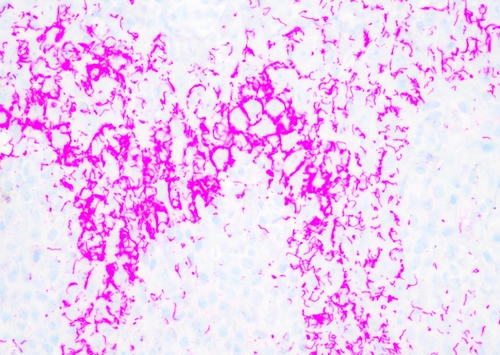
Treponema pallidum
species

yaws
Yaws is a tropical infection of the skin, bones, and joints caused by the spirochete bacterium Treponema pallidum pertenue. The disease begins with a round, hard swelling of the skin, in diameter. The center may break open and form an ulcer. This initial skin lesion typically heals after 3–6 months. After weeks to years, joints and bones may become painful, fatigue may develop, and new skin lesions may appear. The skin of the palms of the hands and the soles of the feet may become thick and break open. The bones (especially those of the nose) may become misshapen. After 5 years or more, large

arsphenamine
thumb|right|300px|The structure of arsphenamine has been proposed to be akin to azobenzene (A). Salvarsan is now assumed to be a mixture of the trimer (B) and the pentamer (C).
Tuskegee Syphilis Experiment
1932—1972 human experiment in Alabama, USA

neurosyphilis
Neurosyphilis is the infection of the central nervous system by Treponema pallidum, the bacterium that causes the sexually transmitted infection syphilis. In the era of modern antibiotics, the majority of neurosyphilis cases have been reported in HIV-infected patients.
congenital syphilis
syphilis that results in a multisystem infection in the fetus via the placenta
Wassermann test
antibody test for syphilis
pinta disease
Human disease
tabes dorsalis
slow degeneration (specifically, demyelination) of the neural tracts primarily in the dorsal columns (posterior columns) of the spinal cord (the portion closest to the back of the body) and dorsal roots

chancre
thumb|Chancres on the face and hand. Up-left: upper lip, Up-right: lower lip, Bottom-right: right upper eyelid, Bottom-right: thumb.
thumb|right|Chancre on the underside of the penis
A chancre ( ) is a painless genital ulcer most commonly formed during the primary stage of syphilis. This infectious lesion forms around 21 days after the initial exposure to Treponema pallidum, the gram-negative spirochaete bacterium causing syphilis, but can range from 10 to 90 days. Without treatment it may persist for two to six weeks before healing. Chancres transmit syphilis through direct physical contact.
Guatemala syphilis experiment
human experimentation conducted in Guatemala
gummatous syphilis
tertiary syphilis that is characterized by granulomatous lesions, called gummas, which are characterized by a center of necrotic tissue with a rubbery texture. They form in the liver, bones, and testes but may affect any organ
bejel
Human disease
Progressive paralysis
severe neuropsychiatric disorder, classified as an organic mental disorder and is caused by late-stage syphilis and the chronic meningoencephalitis and cerebral atrophy that are associated with this late stage of the disease when left untreated
Venereal Disease Research Laboratory test
blood test for syphilis that was developed by the eponymous lab
saddle nose
condition characterized by a loss of height of the nose, because of the collapse of the bridge
Hutchinson's teeth
clinical sign of congenital syphilis
FTA-ABS
treponemal test for syphilis
Arcispedale di San Giacomo degli Incurabili (Rome)
hospital
Hutchinson's triad
three clinical signs indicative of congenital syphilis

history of syphilis
aspect of history
Treponema pallidum particle agglutination assay
assay used for detection and titration of antibodies against the causative agent of syphilis
saber shin
sharp anterior bowing, or convexity, of the tibia