Category
page 1Tai peoples

Zhuang people
Tai-speaking ethnic group of Southern China

Thai people
ethnic group

Ayutthaya Kingdom
1350–1767 Siamese kingdom in Southeast Asia

Lao people
ethnic group

Lan Xang
unified kingdom from 1354 to 1707, one of the largest kingdoms in Southeast Asia

Nanyue
Nanyue (, , ) was an ancient kingdom founded in 204 BC by the Chinese general Zhao Tuo, whose family (known in Vietnamese as the Triệu dynasty) continued to rule until 111 BC. Nanyue's geographical expanse covered the modern Chinese subdivisions of Guangdong, Guangxi, Hainan, Hong Kong, Macau, southern Fujian and central to northern Vietnam. Zhao Tuo, then Commander of Nanhai Commandery of the Qin dynasty, established Nanyue in 204 BC after the collapse of the Qin dynasty. At first, it consisted of the commanderies of Nanhai, Guilin, and Xiang.
Shan people
Southeast Asian ethnic group
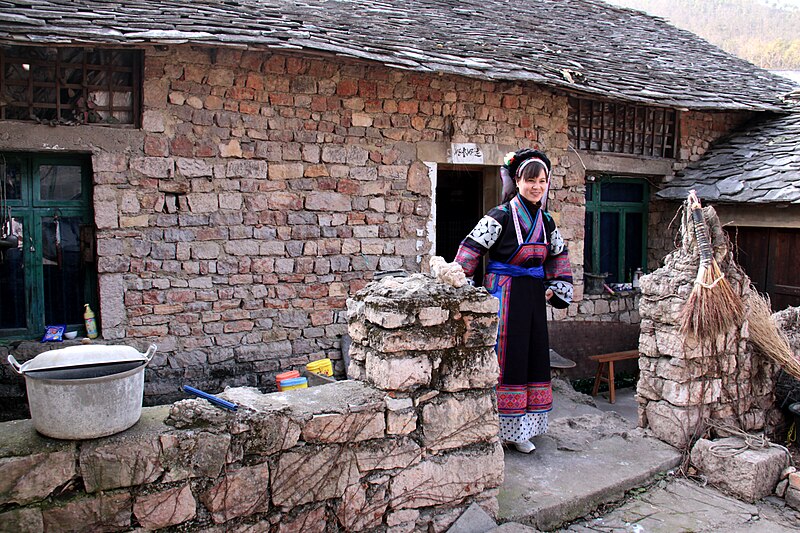
Bouyei people
ethnic group

Dai people
ethnic group of Asia

Sukhothai Kingdom
early kingdom in the area around the city Sukhothai, in north central Thailand
Dali Kingdom
former kingdom, situated roughly in modern Yunnan province, China, from 937 to 1254
.svg)
Kingdom of Nanzhao
Nanzhao (), also spelled Nanchao (, Yi language: ꂷꏂꌅ, Mashynzy), was a dynastic kingdom that flourished in what is now southwestern China and northern Southeast Asia during the 8th and 9th centuries, during the mid/late Tang dynasty. It was centered on present-day Yunnan in China, with its capitals in modern-day Dali City. The kingdom was officially called Dameng (大蒙) from 738 to 859 AD, Dali (大禮) from 859 to 877 and Dafengmin (大封民) from 877 to 902.
Tai peoples
ethnic group
Ahom Kingdom
former kingdom that was centred in the Brahmaputra Valley in Assam, India
Lanna
Indianized state centered in present-day Northern Thailand from the 13th to 18th centuries
Thonburi Kingdom
former country
Rattanakosin Kingdom
fourth traditional centre of power in the history of Thailand (1782 to 24 June 1932)
Yue
1st-millennium BC state in eastern China
Dvaravati kingdom
Dvaravati refers to a cultural and political network of early historic polities that flourished in the present-day central Thailand from approximately the 6th to the 11th century; however, archaeological evidence suggests that the cultural developments associated with Dvaravati began several centuries earlier, often described as a Proto-Dvaravati phase. It is tentatively regarded as a successor to the polity known in Chinese sources as Lang-chia or Lang-ya-hsiu. Chinese Buddhist accounts from the mid-7th century describe a Buddhist kingdom called To-lo-po-ti, located west of Isanapura (Cambodi
Ahom people
ethnic group
Kingdom of Luang Phrabang
former country
Kingdom of Champasak
former country

Baiyue
The Baiyue, Hundred Yue, or simply Yue, were various ethnic groups who inhabited the regions of southern China and northern Vietnam during the 1st millennium BC and 1st millennium AD. They were known for their short hair, body tattoos, fine swords, and naval prowess.

Haripuñjaya
Haripuñjaya (Central and Northern Thai: , also spelled Haribhuñjaya) was a ancient Mon kingdom in what is now Northern Thailand, existing from the 7th or 8th to 13th century CE. Its capital was at Lamphun, which at the time was also called Haripuñjaya. In 1292 the city was besieged and captured by Mangrai of the Tai kingdom of Lan Na.
Kingdom of Vientiane
former country

Tarun Gogoi
former Chief Minister of the state of Assam in India (1936-2020)
Southern Han
one of the Ten Kingdoms of 10th-century China, centered on Guangdong Province
French Protectorate of Laos
former country
Âu Lạc
former country
Tay people
ethnic group
Lu people
Ethnic group

Minyue
The location of Minyue kingdom before the conquest of the Han dynasty|thumb
Minyue (; Pinyin: Mǐnyuè, Mínyuè) was an ancient kingdom in what is now the Fujian province in southern China. It was a contemporary of the Han dynasty, and was later annexed by the Han empire as the dynasty expanded southward. The kingdom existed approximately from 306 BC to 110 BC.
Nùng people
ethnic group in Vietnam
Lavo Kingdom
historical country
%20-%20%E0%B8%97%E0%B8%B5%E0%B9%88%E0%B8%A7%E0%B9%88%E0%B8%B2%E0%B8%81%E0%B8%B2%E0%B8%A3%E0%B8%AD%E0%B8%B3%E0%B9%80%E0%B8%A0%E0%B8%AD%E0%B9%80%E0%B8%A1%E0%B8%B7%E0%B8%AD%E0%B8%87%E0%B8%AD%E0%B9%88%E0%B8%B2%E0%B8%87%E0%B8%97%E0%B8%AD%E0%B8%87.jpg)
mueang
thumb|Capital districts of provinces of Thailand|provinces in Thailand are referred to as "mueang district". Pictured here is the office of Mueang Ang Thong district, i.e., the capital district of Ang Thong.
thumb|The ethnic Tai Nuea language|Tai Nuea name of [[Mangshi (pictured) in Yunnan, China is Mueang Khon]]
Mong Mao
shan state and Tusi chiefdom (abolished 1604)
Lingnan
Lingnan (; ) is a geographic area referring to the lands in the south of the Nanling Mountains. The region covers the modern Chinese subdivisions of Guangdong, Guangxi, Hainan, Hong Kong & Macau and Northern Vietnam.
Northern Thai people
Tai ethnic group
Tusi
'''''' (; 'headmen, chieftains') were hereditary tribal leaders recognized as imperial officials by the Yuan, Ming, and Qing dynasties of China, and the Later Lê and Nguyễn dynasties of Vietnam. They ruled certain ethnic minorities in central China, western China, southwestern China, and the Indochinese peninsula nominally on behalf of the central government. As succession to the Tusi position was hereditary, these regimes effectively formed numerous autonomous petty dynasties under the suzerainty of the central court. This arrangement is known as the Tusi System or the Native Chieftain System
Kra
Kra–Dai branch of south China and north Vietnam
Muang Phuan
former country
Isan people
Thai citizens of Lao ethnicity
Shan States
historic (1885-1948) name for Minor Kingdoms (analogous to Princely state of British India) ruled by Saopha (similar to Thai royal title Chao Fa Prince/Princess) in areas of today's Burma, China, Laos and Northern Thailand from c.1215 to c.1959
Sip Song Chau Tai
"Twelve Provinces of the Dai" Chinese
Chiang Hung
Shan state under Burma and China

Nakhon Si Thammarat Kingdom
former nation in present-day Thailand

Tai Dam people
ethnic group in Asia
Lạc Việt
ancient conglomeration of Baiyue tribes
Tai Nua people
ethnic group
Thái people
collective term for various Tai ethnic groups in Vietnam
White Tai
ethnic group

Muang Sua
former name of Luang Prabang, Laos
Âu Việt
Baiyue tribe
Dong'ou Kingdom
'''Dong'ou (), also known as Ouyue''' (), was an ancient kingdom in modern Wenzhou and Taizhou, Zhejiang Province, China. The realm of Dong'ou was given to Zou Yao by Emperor Gaozu of Han in 192 BC. During the Han campaigns against Minyue in 138 BC, the king of Dong'ou no longer wished to live in his realm after the incident, having submitted himself in an prostrating gesture, which was indicative of his final acquiescence as a mere supplicant to have him and his people's eventual fates to be absorbed into the Han empire. After Zou Yushan's unsuccessful uprising against General Yang Pu's consp
Tai Daeng people
ethnic group
Phuan people
Thai ethnic group
Khamyang people
tribal group found primarily in Tinsukia district of Assam
Khorat Thai
ethnic group
Ngoenyang
thumb|, built by the King Lao Kao Kaeo Ma Mueang
Saek people
ethnic group