Category
page 1Taoist texts
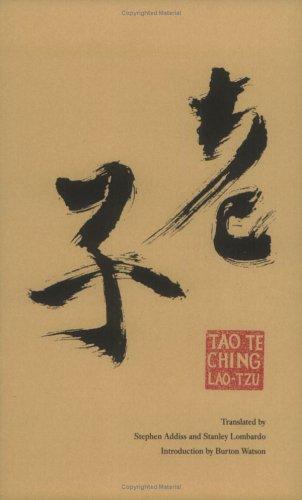
Tao Te Ching
Chinese classic text

Zhuangzi
Chinese Taoist text

Liezi
thumb|Calligraphy of a segment of the "Yang Zhu" ("Yang-chu") chapter - Kojima Soshin
The Liezi () is a Taoist text attributed to Lie Yukou, a c. 5th century BC Hundred Schools of Thought philosopher. Although there were references to Lie's Liezi from the 3rd and 2nd centuries BC, a number of Chinese and Western scholars believe that the content of the current text was compiled around the 4th century CE by Zhang Zhan.
Huainanzi
The Huainanzi is an ancient philosophical and governmental Chinese text made up of essays from scholarly debates held at the court of Liu An, Prince of Huainan, before 139 BCE. Compiled as a compendium for an enlightened sovereign and his court, the work attempts to define the conditions for a perfect socio-political order, derived mainly from a perfect (or enlightened) ruler. With a notable Zhuangzi 'Taoist' influence, alongside Chinese folk theories of yin and yang and Wu Xing, the Huainanzi draws on Taoist, Legalist, Confucian, and Mohist concepts. But it subverts the latter three in favor
Huangdi Neijing
Han dynasty medical treatise
Investiture of the Gods
16th-century Chinese novel
Daozang
The Daozang () is a large canon of Taoist writings, consisting of around 1,500 texts that were seen as continuing traditions first embodied by the Daodejing, Zhuangzi, and Liezi. The canon was assembled by monks in an attempt to bring together these disparate yet consonant teachings, and it included commentaries and expositions from various masters on material found in the aforementioned core texts of Taoism. The anthology consisted of three divisions (known as grottoes) based on what were seen at that time in Southern China as Taoism's primary focuses: meditation, ritual, and exorcism. These

Guanzi
ancient Chinese political and philosophical text

Baopuzi
thumb|Laojun rushan fu "Lord Laozi|Lao's amulet for entering mountains" from Baopuzi Inner Chapter 17
Baopuzi () is a literary work written by Ge Hong (AD 283–343), (), a scholar during the turbulent Jin dynasty.
Cantong qi
earliest book on Taoist alchemy in China

Taiping Jing
thumb|200px|Daozang edition of Taipingjing
Taipingjing ("Scriptures of the Great Peace") is the name of several different Taoist texts. At least two works were known by this title:
Huangdi Yinfujing
8th century CE Daoist scripture associated with astrology and internal alchemy
Wenzi
The Wenzi () is a Daoist classic allegedly written by a disciple of Laozi. The text was widely read and highly revered in the centuries following its creation, and even canonized as Tongxuan zhenjing () in the year 742 CE. However, soon afterwards scholars started questioning its authenticity and dismissing it as a forgery that was created between the Han dynasty and the Tang dynasty. The text's fate changed in 1973, when archeologists excavated a 55 BCE tomb and discovered remnants of a Wenzi copied on bamboo strips, which offer us a glimpse of what the text looked like prior to its drastic r
Huahujing
The Huahujing (also romanized as Hua Hu Ching) is a Taoist work, traditionally attributed to Laozi. No extant versions exist today apart from quotations in a partial manuscript discovered in the Mogao Caves, Dunhuang, in China.
Travels to the West of Qiu Chang Chun
literary work

Yunji Qiqian
anthology of the Taoist Canon compiled in 1029 by Zhang Junfang

Heguanzi
The Heguanzi (鶡冠子, or Master Pheasant Cap) is a circa 3rd century BCE syncretic collection of writings from the Chinese Hundred Schools of Thought, particularly the schools of Huang-Lao, Daoism, Legalism, and the Military. Assumed a forgery in later Imperial China, discovery of the 2nd-century BCE Han dynasty Mawangdui Silk Texts lead to renewed studies into its textual history and philosophical significance. The previously unknown Huang-Lao Silk Manuscripts have many passages similar and identical with the Heguanzi,
Mingxin baojian
14th-century Chinese book
The Secret of the Golden Flower
classic Taoist text
The World Inside a Pillow
Tang dynasty story by Shen Jiji
Treatise On the Response of the Tao
Taoist book by Li Ying-Chang
Shenxian zhuan
biography of Taoist deities and xian
The Foolish Old Man Removes the Mountain
Chinese parable
Zhengao
The Zhengao (真誥, Declarations of the Perfected) written in 499 CE is the Shangqing Daoist patriarch Tao Hongjing's comprehensive collection of poetry and prose from the original "Shangqing revelations", which were supposedly given to the mystic Yang Xi by a group of Daoist zhenren Perfected Ones from 364 to 370. This classic text has long been famous both as a foundational text of religious Daoism and as a brilliant exemplar of medieval Chinese poetry.
Wuzhen pian
1075 Daoist text on internal alchemy by Zhang Boduan
Liexian Zhuan
biography of Taoist immortals
Qingjing Jing
Taoist text traditionally ascribed to the Divine Laozi (Laojun)
The Governor of Nanke
short story by Li Gongzuo

Book of Burial
4th- or 5th-century Taoist text by Guo Pu
Xiang'er
The '''''Xiang'er''' () is a commentary to the Daodejing'' that is best known for being one of the earliest surviving texts from the Way of the Celestial Master variant of Daoism. The meaning of the title is debated, but can be translated as 'thinking of you'.
Huangdi Sijing
Chinese manuscripts
Xishengjing
The Xishengjing () is a late 5th century CE Taoist text with provenance at the Louguan 樓觀 "Tiered Abbey" of The Northern Celestial Masters. According to Daoist tradition, Louguan (the eastern terminus of the ancient Silk Road, west of the capital Chang'an) was near where the legendary Laozi 老子 transmitted the Tao Te Ching to the Guardian of the Pass Yin Xi 尹喜. The Xishengjing allegedly records the Taoist principles that Laozi taught Yin Xi before he departed west to India. thumb|upright|Yin Xi, from a Ming dynasty edition [[Liexian Zhuan]]

Neijing Tu
diagram in Daoism
Holy Emperor Guan's True Scripture to Awaken the World
taoist classic work
Huashu
The (), or The Book of Transformations, is a 930 CE Daoist classic about "internal alchemy", psychological subjectivity, and spiritual transformation. In the description of Poul Andersen,
The is a unique philosophical work of the period of the Five Dynasties, which syncretizes elements of Taoist, Buddhist, and Confucian thought, and which has been noted in recent times for its scientific observations (for instance regarding optics and acoustics) and for its unusual emphasis on epistemological considerations. Its influence during the Song and subsequent dynasties was substantial, both within Ta
Shizi
4th-century BCE Syncretic philosophy text
Return to the Field
poem written by Zhang Heng
Minxian Baojuan
Baojuan (宝卷 bǎojuàn), literally precious scrolls, are a genre of prosimetric texts (texts written in an alternation of prose and verse) of a religious or mystical nature, produced within the context of Chinese folk religion and individual Chinese folk religious sects. They are often written in vernacular Chinese and recount the mythology surrounding a deity or a hero, or constitute the theological and philosophical scriptures of organized folk sects. Baojuan is a type of performative text or storytelling found in China that emphasizes worship of ancient deities from Buddho-Daoist sects often r
Chifeng sui
Chinese medical compendium by Zhou Lüjing