Category
page 1Taxa described in 1802

Papilionidae
family of insects

Syrphidae
Hoverflies, also called flower flies or syrphids, make up the insect family Syrphidae. As their common name suggests, they are often seen hovering or nectaring at flowers; the adults of many species feed mainly on nectar and pollen, while the larvae (maggots) eat a wide range of foods. In some species, the larvae are saprotrophs, specifically detritivores, eating decaying plant and animal matter in the soil or in ponds and streams. In other species, the larvae are insectivores, preying on aphids, thrips, and other plant-sucking insects.

Ichneumonidae
The Ichneumonidae, also known as ichneumon wasps, ichneumonid wasps, ichneumonids, or Darwin wasps, are a family of parasitoid wasps of the insect order Hymenoptera. They are one of the most diverse groups within the Hymenoptera with roughly 25,000 species described . However, this likely represents less than a quarter of their true richness as reliable estimates are lacking, along with much of the most basic knowledge about their ecology, distribution, and evolution. It is estimated that there are more species in this family than there are species of birds and mammals combined. Ichneumonid wa

Botrychium
Botrychium is a genus of ferns, seedless vascular plants in the family Ophioglossaceae. Botrychium species are known as moonworts. They are small, with fleshy roots, and reproduce by spores shed into the air. One part of the leaf, the trophophore, is sterile and fernlike; the other, the sporophore, is fertile and carries the clusters of sporangia or spore cases. Some species only occasionally emerge above ground and gain most of their nourishment from an association with mycorrhizal fungi.

Sauria
Sauria is the clade of diapsids containing the most recent common ancestor of Archosauria (which includes crocodilians and birds) and Lepidosauria (which includes squamates and the tuatara), and all its descendants. Since most molecular phylogenies recover turtles as more closely related to archosaurs than to lepidosaurs as part of Archelosauria, Sauria can be considered the crown group of diapsids, or reptiles in general. Depending on the systematics, Sauria includes all modern reptiles or most of them (including birds, a type of archosaur) as well as various extinct groups.

Danaus
genus of brush-footed butterflies
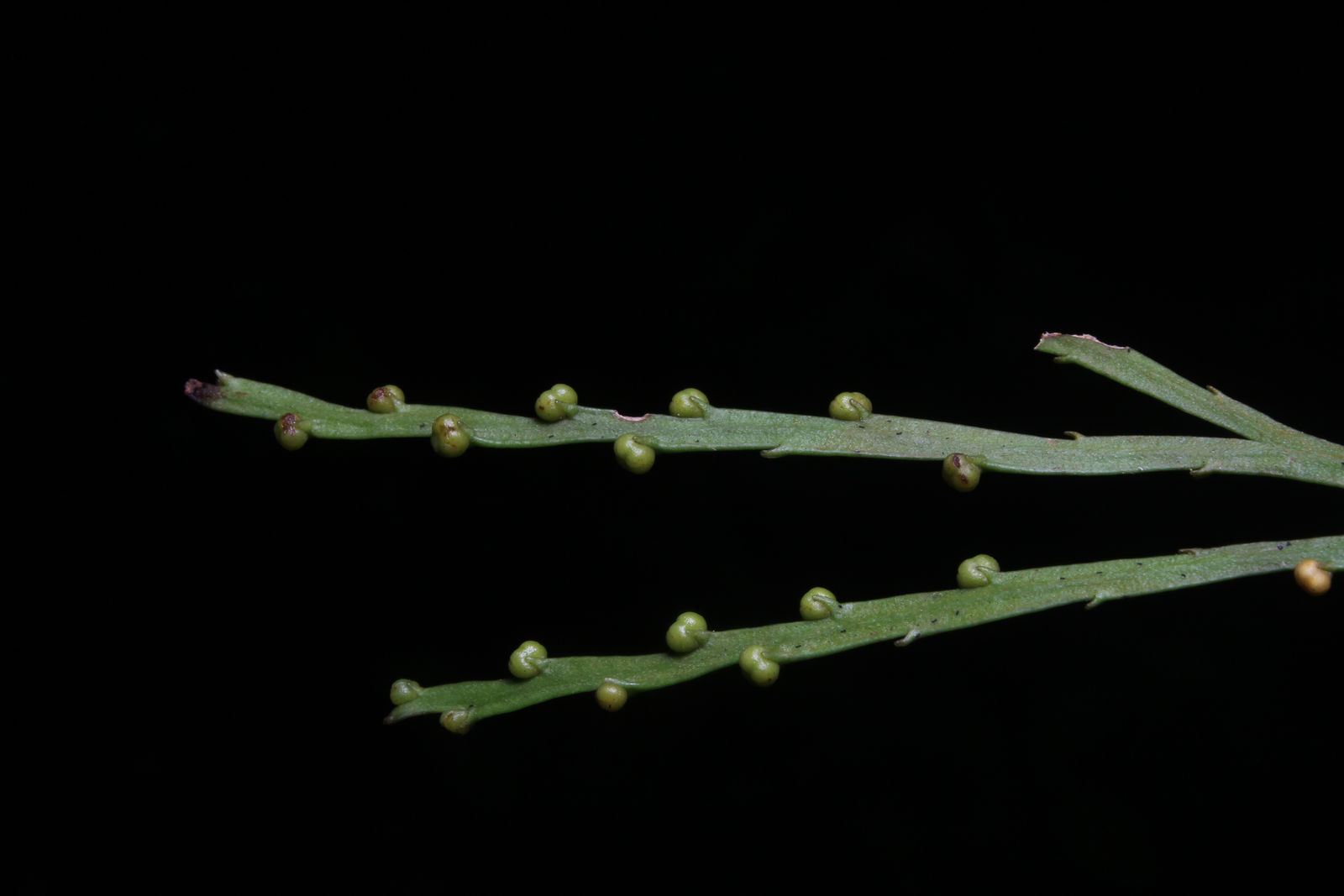
Psilotum
Psilotum is a genus of fern-like vascular plants. It is one of two genera in the family Psilotaceae commonly known as whisk ferns, the other being Tmesipteris. Plants in these two genera were once thought to be descended from the earliest surviving vascular plants, but more recent phylogenies place them as basal ferns, as a sister group to Ophioglossales. They lack true roots, and leaves are very reduced, the stems being the organs containing photosynthetic and conducting tissue. There are only two species in Psilotum and a hybrid between the two. They differ from those in Tmesipteris in havin

Olearia
Olearia, most commonly known as daisy-bush, is a genus of flowering plants belonging to the family Asteraceae, the largest of the flowering plant families in the world. Olearia are found in Australia, New Guinea and New Zealand. The genus includes herbaceous plants, shrubs and small trees. The latter are unusual among the Asteraceae and are called tree daisies in New Zealand. All bear the familiar daisy-like composite flowerheads in white, pink, mauve or purple.
Caraboidea
REDIRECT Adephaga
Category:Beetle superfamilies
Category:Taxa named by Pierre André Latreille
Category:Taxa described in 1802
Mellininae
Mellinidae is a small family of wasps, comprising 17 described species in two genera. These wasps are found in the Nearctic, Neotropical, Indomalayan and Palaearctic realms. This group has traditionally been treated as a subfamily within Crabronidae (Mellininae), but recent phylogenomic studies have shown it to be a distinct family.
Trogulus
thumb|Trogulus torosus, showing flattened and elongated body shape
Trogulus is a genus of Opiliones (also known as harvestmen) in the family Trogulidae. Harvestmen in the genus have large, elongated and flattened bodies (prosoma and opisthosoma) and a two-segmented tarsus segment on leg II, which distinguishes them from other genera in the family Trogulidae. The legs tend to be short compared to most harvestmen. External morphology tends to be very uniform across species in the genus, making differentiation of species difficult. Species occur in a range of habitats, but are most common in fore