Category
page 1Taxa described in 1952

Xenungulata
Xenungulata ("strange ungulates") is an order of extinct and primitive South American hoofed mammals that lived from the Late Paleocene to Early Eocene (Itaboraian to Casamayoran in the SALMA classification). Fossils of the order are known from deposits in Brazil, Argentina, Peru, and Colombia. The best known member of this enigmatic order is the genus Carodnia, a tapir-like and -sized animal with a gait similar to living African elephants.
Cephise
Cephise is a Neotropical genus of skipper butterflies of the subfamily Eudaminae, within which it is placed in subtribe Cephisina.
Salatis
Salatis is a Neotropical genus of spread-winged skippers in the family Hesperiidae, in which they are placed to tribe Phocidini.
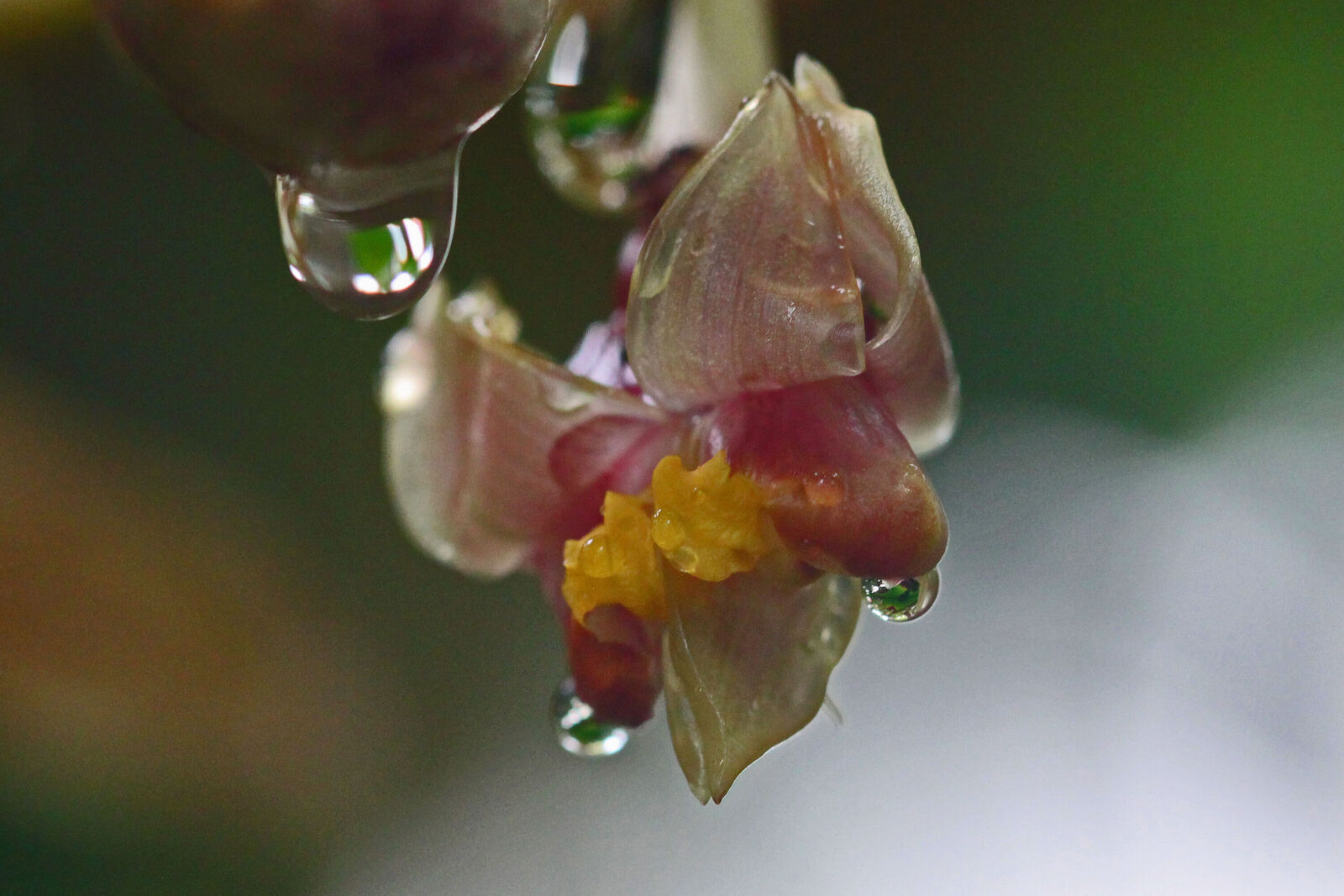
Megaphrynium
Megaphrynium is a genus of plants native to tropical Africa.
Ridens
Ridens is a genus of Neotropical butterflies in the family Hesperiidae (Eudaminae).
Descolea
Descolea is a genus of fungi in the family Bolbitiaceae. Described by mycologist Rolf Singer in 1952, the widespread genus contains about 15 species. It was formerly placed in the family Cortinariaceae because of its limoniform basidiospores and its ectomycorrhizal lifestyle. A 2013 molecular phylogenetics study by Tóth et al. found it to be closely related to the genus Pholiotina The genus Pseudodescolea, erected for the single Descolea-like species Pseudodescolea lepiotiformis, was formerly considered distinct until a 1990 study found it to be a synonym of Descolea antarctica.
Mycoleptodonoides
Mycoleptodonoides is a genus of tooth fungi in the family Meruliaceae. The genus was circumscribed by M.I. Nikolajeva in 1952 with M. vassiljevae, described from Ussuri, Russia, as the type species. This fungus, known only from the type locality and northern China, is little known. The more widely distributed M. aitchisonii is found in habitats ranging from subtropical to boreal. The generic name combines the name Mycoleptodon and the Greek root -oides, meaning "resembling".
Venada
Venada is a genus of skippers in the family Hesperiidae.
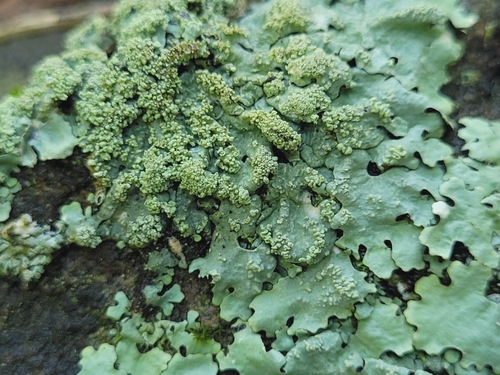
Myelochroa
Myelochroa is a genus of foliose lichens in the family Parmeliaceae. They are commonly known as axil-bristle lichens. It was created in 1987 to contain species formerly placed in genus Parmelina that had a yellow-orange medulla due to the presence of secalonic acids. Characteristics of the genus include tightly attached thalli with narrow lobes, cilia on the axils, and a rhizinate black lower surface. Chemical characteristics are the production of zeorin and related triterpenoids in the medulla. Myelochroa contains about 30 species, most of which grow on bark. The genus has centres of distribu
Delouagapia
Delouagapia is a genus of land snails belonging to the family Rhytididae. Both members of the genus are endemic to New Zealand, with D. cordelia found in forested areas of Northland, and D. tasmani in Manawatāwhi / Three Kings Islands.
Saltia
Saltia is a genus of moths of the family Noctuidae, endemic to the high mountains of East Africa.
Lasioloma
Lasioloma is a genus of lichenized fungi in the family Ectolechiaceae. The genus was circumscribed by the Swedish lichenologist Rolf Santesson in 1952, with Lasioloma arachnoideum assigned as the type species. Found predominantly in tropical rainforests, genus Lasioloma contains both foliicolous (leaf-dwelling) and corticolous (bark-dwelling) species. The foliicolous species are distinguished by their woolly prothallus (initial growth stage), a thallus that ranges from dispersed to continuous, and a hairy margin (the edge of the spore-producing structure). In contrast, corticolous species typi