Category
page 1Taxa described in 1970
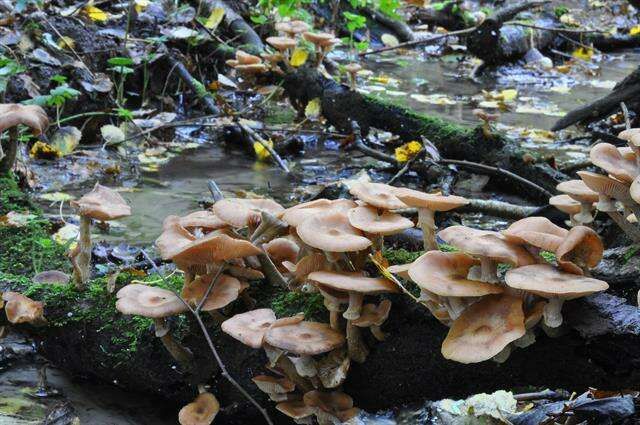
Physalacriaceae
The Physalacriaceae are a family of fungi in the order Agaricales. Species in the family have a widespread distribution, ranging from the Arctic, (Rhizomarasmius), to the tropics, e.g. Gloiocephala, and from marine sites (Mycaureola) and fresh waters (Gloiocephala) to semiarid forests (Xerula).
Acanthocnemidae
REDIRECT Acanthocnemus
Diplomitoporus
Diplomitoporus is a genus of fungi in the family Polyporaceae. The Dictionary of the Fungi (10th edition, 2008) estimated the widespread genus to contain 11 species; since then, the genus has grown with the additional of several newly described species, and some transfers from other genera. Diplomitoporus has been described as a wastebasket taxon, containing "species that share common macroscopic and microscopic characteristics, but are not necessarily related."
Candelabrochaete
Candelabrochaete is a genus of crust fungi in the family Phanerochaetaceae.
Mycocaliciaceae
The Mycocaliciaceae are a family of fungi in the order Mycocaliciales, comprising seven genera and approximately 90 species. Originally proposed in 1970 by Alexander Schmidt, the family is characterised by immersed thalli, stalked brown or black ascomata (fruiting bodies), and small cylindrical asci that release without forming a . Molecular phylogenetic studies have placed Mycocaliciaceae within the class Eurotiomycetes and led to the inclusion of taxa formerly classified in the Sphinctrinaceae. The family has a fossil record dating back at least 50 million years, with several specimens disco
Acanthochaetetidae
Acanthochaetetidae is a family of sponges belonging to the order Clionaida. It is largely extinct, but contains two extant genera, each of which are represented by single extant species.
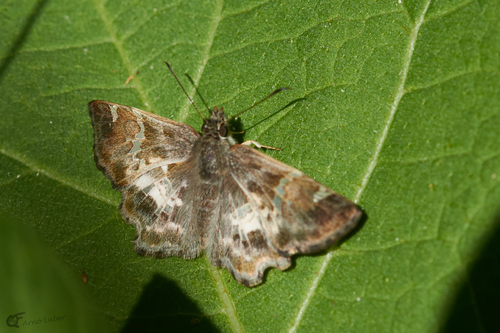
Zobera
Zobera is a genus of skippers in the family Hesperiidae.
Sabaconidae
REDIRECT Sabacon
Rhotanella
Rhotanella is a small genus of planthoppers from the family Derbidae, tribe Rhotanini, with 8 species. The species are found in the Philippines, Indonesia, New Guinea, the Solomon Islands and southern China. The adult hoppers are between 4–6 mm long from head to the tip of the wings. They can be recognized by the shape and venation of their forewings which have a broad base and 5 very wide costal cells. Especially the first (basal) costal cell is very broad and has a width of about one quarter to one third of the width of the whole wing. The ridges on the sides of the face meet in front o
Phaeocalicium
Phaeocalicium is a genus of fungi in the family Mycocaliciaceae. The genus was circumscribed in 1970 by German lichenologist Alexander Schmidt, with Phaeocalicium praecedens assigned as the type species.
Domiporta
Domiporta is a genus of sea snails, marine gastropod mollusks in the family Mitridae. First described in 1970 by Walter Oliver Cernohorsky, the genus is typically found in shallow to bathypelagic waters in the Indo-Pacific. Domiporta can be identified due to their distinctive radula.
Orceolina
Orceolina is a small genus of lichen-forming fungi in the family Trapeliaceae. Established in 1970 as a replacement name for an earlier genus that was already used for flowering plants, Orceolina comprises just two species that form orange to deep red crusty patches on sun-exposed rocks. These lichens are found exclusively on the windswept subantarctic islands of the southern Indian Ocean, where they grow from sea level to alpine ridges on basaltic and granitic surfaces.
Plurisperma dalbergiae
Plurisperma is a genus of fungi in the family Verrucariaceae; according to the 2007 Outline of Ascomycota, the placement in this family is uncertain. A monotypic genus, it contains the single species Plurisperma dalbergiae. The family Verrucariaceae is somewhat toxic to mammals due to the presence of vulpinic acid.
Trinimontius
Trinimontius is a monotypic genus of harvestman (a member of the order Opiliones) belonging to the family Cosmetidae. Its sole accepted species is Trinimontius darlingtoni. The only known species is from Cuba.