Category
page 1Taxa described in 1984
Rhizocarpaceae
Rhizocarpaceae is a family of lichen-forming fungi; together with the family Sporastatiaceae it constitutes the order Rhizocarpales in the Ascomycota, class Lecanoromycetes. These lichens are primarily rock-dwellers that form thin, paint-like crusts tightly attached to stone surfaces, though some species grow as small scales or radiating rosettes. The family includes five genera found mainly in cool to cold regions around the world, where they colonize exposed siliceous and basic rocks in sunny locations. Most species reproduce through small black disc-shaped fruiting bodies that sit flush wit
Didymostigma
Didymostigma is a genus of flowering plants belonging to the family Gesneriaceae. It includes two species native to southeastern China and Hainan.
Tephromelataceae
The Tephromelataceae are a family of lichenized fungi in the order Lecanorales. The family was circumscribed by Austrian lichenologist Josef Hafellner in 1984. Tephromelataceae comprises the genera Tephromela, Calvitimela, Mycoblastus and Violella, which together constitute a well-supported monophyletic group.
Catillariaceae
The Catillariaceae are a family of crustose lichens in the order Lecanorales. Species of this family have a widespread distribution, especially in temperate areas. The family contains five genera and about 130 species, most of which form crusty growths tightly attached to rocks, bark, or soil.
Wolfiporia
Wolfiporia is a genus of fungi in the family Polyporaceae. The genus was circumscribed by Leif Ryvarden and Robert Lee Gilbertson in 1984 to contain the type species Wolfiporia cocos (now known as Wolfiporia extensa) and W. dilatohypha. The genus is named in honor of mycologist Frederick Adolph Wolf, who was the first to officially describe the type species.
Mycoblastaceae
REDIRECT Tephromelataceae
Fuscideaceae
Fuscideaceae is a family of fungi that form symbiotic relationships with algae to create lichens. These lichens typically have a crust-like appearance and are found worldwide, though they are most common in temperate regions. The family includes four genera and about 45 species, which primarily grow on tree bark, rocks, or occasionally on wood or leaves. Fuscideaceae lichens are characterised by their reproductive structures, cup-like formations called apothecia, which can vary in colour from red to dark brown or black. The family has undergone several changes in its classification over the ye
Sarrameanaceae
Sarrameanaceae is a family of lichen-forming fungi in the monotypic order Sarrameanales. The family was established in 1984 by Josef Hafellner and contains three genera. These lichens form crust-like growths that often produce powdery reproductive structures for spreading to new locations. They have brown to black fruiting bodies and show remarkable diversity in ascospore shapes, with some species coiling their spores in tight spirals within their reproductive structures.
Megaspora
Megaspora is a genus of lichen-forming fungi in the family Megasporaceae. It contains four species of crustose lichens that typically grow on soil, bryophytes (mosses and liverworts), or plant litter on chalky .
Topelia
Topelia is a genus of fungi within the family Stictidaceae.
Lobothallia
Lobothallia is a genus of lichen-forming fungi in the family Megasporaceae. Dark brown to black apothecia may be sunken into the surface of the thallus, as indicated in the common name puffed sunken-disk lichen. Originally described as a subgenus of Aspicilia in 1984, Lobothallia was elevated to full genus status in 1991 based on distinctive features including peripheral and small, thin-walled ascospores. The genus was established to clarify a group of rock-dwelling lichens that had previously been classified across several different genera.
Adelolecia
Adelolecia is a genus of crustose lichens in the family Lecanoraceae. These rock-dwelling lichens form thin crusts made up of small angular patches, typically reaching about 12 cm across with distinctive black, round fruiting bodies that sit directly on the surface. The genus includes four species found in mountainous and arctic regions, where they grow on various types of rock and are distinguished by chemical compounds (lichen products) that produce colourful diagnostic reactions when tested with laboratory solutions.
Bellemerea
Bellemerea is a genus of saxicolous (rock-dwelling) crustose lichens in the family Lecideaceae. These lichens form tough, crusty patches on hard rock surfaces, often appearing as a mosaic of small angular blocks in colours ranging from white and grey to brown. The genus includes nine species found primarily in mountainous and polar regions where they help colonize bare rock surfaces in harsh environments.
Natronobacterium
Natronobacterium is a genus of archaeans in the family the Natrialbaceae. A member of the domain Archaea, it is both an extreme halophile and alkaliphile, thriving at an optimum saline concentration of 20% and optimum pH of 10.
Megalaria
Megalaria is a genus of lichen-forming fungi in the family Ramalinaceae. It contains 46 species of crustose lichens, the majority of which grow on bark. The genus was established in 1984 and has since grown to include species from diverse regions ranging from subantarctic islands to tropical forests. Most Megalaria species are recognised by their large, black fruiting bodies that sit directly on the lichen's surface, along with their thick-walled ascospores that are divided by a single internal partition. The genus primarily colonises tree bark in moist, shaded habitats, though some species al
Clauzadea
Clauzadea is a genus of lichen-forming fungi in the family Lecideaceae. The genus contains four species. These lichens grow almost exclusively on limestone and other calcium-rich rocks, often living mostly hidden within the upper layers of the stone with only a faint grey or brown film visible on the surface. They produce small, initially reddish-brown fruiting bodies that darken to black and may sit flush with the rock surface or be sunken so deeply that they leave neat pits when they weather away.
Natronococcus
Natronococcus is a genus of archaeans in the family the Natrialbaceae.
Antipodia
Antipodia is a genus of skipper butterflies in the family Hesperiidae.
Haematommataceae
REDIRECT Haematomma
Vietnamellidae
Vietnamellidae is a family of ephemerelloid mayflies. It contains a single extant genus, Vietnamella, with several species native to India, Southeast Asia, and China. A fossil genus Burmella is known from the Burmese amber of Myanmar, dating to the mid-Cretaceous around 100 million years ago.
Sanblasia
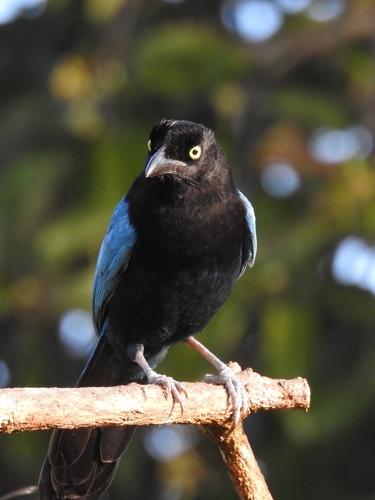
Sanblasia is a monotypic genus of plants. At present, the only species recognized is Sanblasia dressleri L.Andersson, endemic to Panama.
Clauzadeana
Clauzadeana is a genus of lichen-forming fungi in the family Lecanoraceae. The genus was circumscribed in 1984 by Claude Roux, with the crustose species C. instratula assigned as the type.
Eiglera
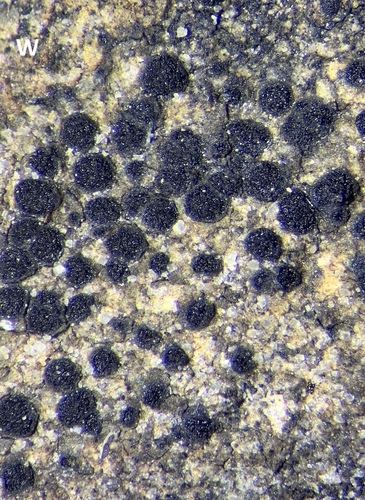
Eiglera is a small genus of rock-dwelling crustose lichens belonging to the monotypic family Eigleraceae. Eiglera species are found in Europe and Northern America.
Scoliciosporaceae
Scoliciosporaceae is a family of lichen-forming fungi in the order Lecanorales. It contains two genera, the monotypic Umushamyces, and the type genus Scoliciosporum. The family was circumscribed by lichenologist Josef Hafellner in 1984.
Cladidium
Cladidium is a genus of two species of lichen in the family Lecanoraceae. Cladidium was circumscribed by Josef Hafellner in 1984 with C. thamnitis assigned as the type species. C. bolanderi was added to the genus in 1989.
Xenolecia
Xenolecia is a genus of saxicolous (rock-dwelling) and crustose lichens in the family Lecideaceae. It has two species: X. cataractarum, and the type species, X. spadicomma. The genus was circumscribed by German lichenologist Hannes Hertel in 1987 to contain the type, a lichen known at that time only from the type locality on Wellington Island, Chile. Its range has since been expanded to include the Falkland Islands and northern Patagonia. X. cataractarum, found in Campbell Island, New Zealand was added to the genus in 2017.
Poeltinula
Poeltinula is a small genus of lichen-forming fungi in the family Rhizocarpaceae. It comprises three species of crustose lichens that grow on limestone. The genus was established in 1984 by the lichenologist Josef Hafellner and is characterized by its inconspicuous, paint-like growth that often goes unnoticed until the distinctive black fruiting bodies appear. These lichens are recognized by their dark spores that turn bright red when treated with ammonia solution and their fruiting bodies that turn crimson when tested with potassium hydroxide solution.
Romjularia
Romjularia is a fungal genus in the family Lecideaceae, containing the single species Romjularia lurida, a saxicolous and terricolous (rock- and ground-dwelling) squamulose lichen.