Category
page 1Taxa described in 2007
Exobasidiomycetes
The Exobasidiomycetes are a class of fungi sometimes associated with the abnormal outgrowths of plant tissues known as galls. The class includes Exobasidium camelliae Shirai, the camellia leaf gall and Exobasidium vaccinii Erikss, the leaf and flower gall.

Baeomycetales
The Baeomycetales are an order of mostly lichen-forming fungi in the subclass Ostropomycetidae, in the class Lecanoromycetes. It contains 8 families, 33 genera and about 170 species. As a result of molecular phylogenetics research published in the late 2010s, several orders were folded into the Baeomycetales, resulting in a substantial increase in the number of taxa.
Umbilicariales
The Umbilicariales are an order of lichenized fungi in the subclass Umbilicariomycetidae, class Lecanoromycetes. It contains five families: Elixiaceae, Fuscideaceae, Ophioparmaceae, Ropalosporaceae, and Umbilicariaceae. Umbilicariales was proposed as a new order in 2007, while the subclass Umbilicariomycetidae was proposed in 2013.
Lecanoromycetidae
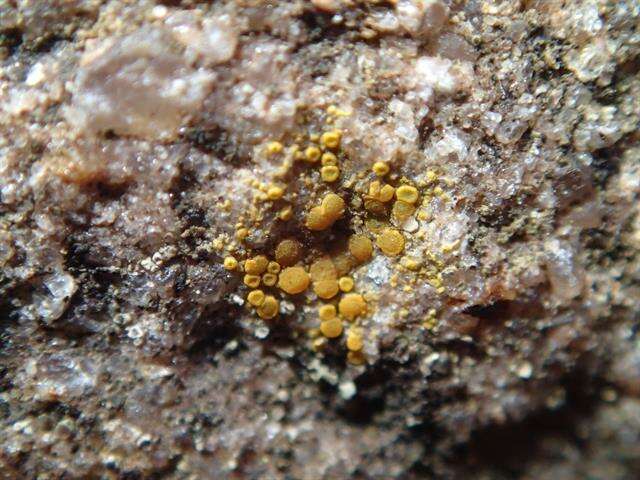
The Lecanoromycetidae are a subclass of fungi in the class Lecanoromycetes. This subclass contains seven orders.
Haloquadratum
Haloquadratum (common abbreviation: Hqr.) is a genus of archaean, belonging to the family Haloferacaceae. The first species to be identified in this group, Haloquadratum walsbyi, is unusual in that its cells are shaped like square, flat boxes.
Anomoloma
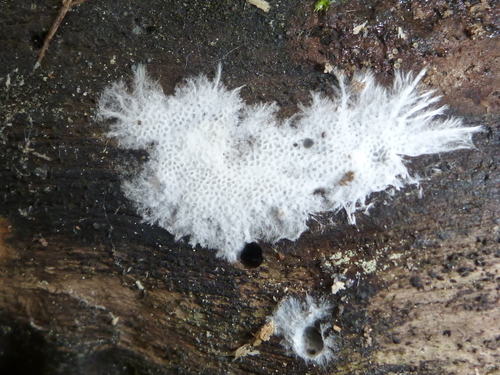
Anomoloma is a genus of crust fungi in the family Amylocorticiaceae. It was circumscribed by mycologists Tuomo Niemelä and Karl-Henrik Larsson in 2007. The generic name is derived from the Greek anomos, meaning "lawless", referring to the irregular rhizomorphic outline, and loma, meaning "margin" or "edge."
Corticiales
The Corticiales are an order of fungi in the class Agaricomycetes. The order is composed of corticioid fungi. Species within the order are generally saprotrophic, most of them wood-rotters, but several are parasitic on grasses or lichens. Plant pathogens of economic importance include Erythricium salmonicolor, Laetisaria fuciformis, Waitea circinata, Waitea oryzae, and Waitea zeae.
Candelariales
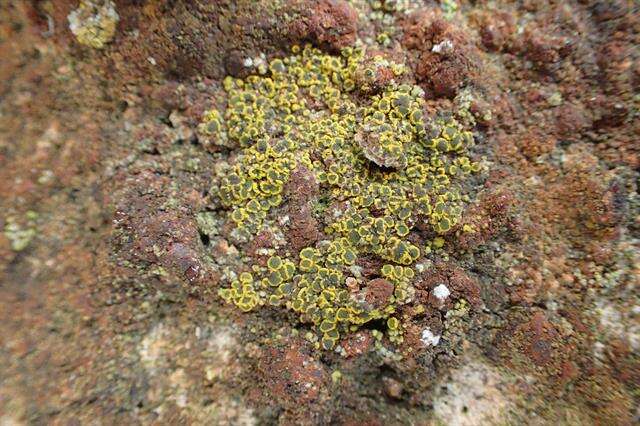
The Candelariales are an order of fungi in the monotypic class Candelariomycetes. It contains the families Candelariaceae and Pycnoraceae. The order was circumscribed by Jolanta Miadlikowska, François Lutzoni, and Helge Thorsten Lumbsch as part of a comprehensive phylogenetic classification of the kingdom Fungi published in 2007. The class Candelariomycetes was proposed in 2018 by Hermann Voglmayr and Walter Jaklitsch.

Monilophyta
REDIRECT Fern
Massalongiaceae
Massalongiaceae is a small family of lichen-forming fungi in the order Peltigerales. It has three genera and seven species.

Exhalimolobos
Exhalimolobos is a genus of flowering plants belonging to the family Brassicaceae.

Lepistella ocula
Lepistella is a genus of fungus in the family Tricholomataceae. It is a monotypic genus, containing the single species Lepistella ocula, found in Central America and reported as new to science in 2007.
Frantisekia
Frantisekia is a genus of wood-decay fungi in the family Steccherinaceae.
Geminorhabdus
Geminorhabdus is a genus of clown beetle in the subfamily Histerinae. The genus has been found throughout Southeast Africa.
Burgella
Burgella is a genus of fungi in the family Clavulinaceae. The genus is monotypic, containing the single species Burgella flavoparmeliae, described in 2007.
Brunneocorticium
Brunneocorticium is a genus of fungi which following DNA analysis has been placed in the family Omphalotaceae. The genus, described in 2007, contains two corticioid species and one species (B. corynecarpon) which does not seem to have any fruiting body.
Aptrootia
Aptrootia is a genus of fungi in the family Trypetheliaceae. It has four species. The genus was circumscribed by Robert Lücking and Harrie Sipman in 2007, with Aptrootia terricola assigned as the type species. This species, originally described by Dutch mycologist André Aptroot as a species of Thelenella, is known from Papua New Guinea and Costa Rica. Later molecular work showed that the species did not belong in Thelenella (Aptroot himself had expressed doubt about this generic placement), but rather, in the Trypetheliaceae, with a sister taxon relationship to a branch including Bathelium and
Gallaicolichen pacificus
Gallaicolichen is a fungal genus that contains the single species Gallaicolichen pacificus, a foliicolous (leaf-dwelling) lichen. Originally discovered in Hawaii in 2007, G. pacificus has since been found in various locations across the Pacific, including Australia, New Caledonia, Vanuatu, the Philippines, and Japan. The lichen forms small, pale greenish-yellow to yellowish-grey patches on leaves, typically in mid-altitude forests and along forest edges. G. pacificus is notable for its unique reproductive structures called , which produce disc-shaped propagules (peltidia) for asexual repr
Scutelliformis
Scutelliformis is a genus of rust fungi in the family Phragmidiaceae. The genus is monotypic, containing the single species Scutelliformis bicornus.
Septotrapelia
Septotrapelia is a genus of lichen-forming fungi in the family Ectolechiaceae. It comprises four species. Species in this genus form tiny, scale-like crusts on rocks and are distinguished by their chocolate-brown fruiting discs with pale margins and unusually large ascospores divided into three segments. These small, bluish-grey lichens grow primarily on volcanic boulders and weathered stone in tropical and subtropical regions, from Costa Rica and the Galápagos to Thailand and South Korea. The genus was established in 2007 after DNA studies showed that certain species with this distinctive spo
Sneathiella
Sneathiella is a halotolerant, aerobic and chemoheterotrophic genus of bacteria from the family of Sneathiellaceae.
Pachyphysis
Pachyphysis is a fungal genus in the family Lecideaceae. It is a monotypic genus, containing the single species Pachyphysis ozarkana, a lichen. It is a crust-forming lichen that grows on limestone and dolomite rocks in open, sunny habitats, and is often inconspicuous because its main body develops within the rock surface rather than on top of it. The species has a restricted range in the eastern and central United States, centred on the Ozarks, and is associated with landscapes that were not covered by ice sheets during the last ice age.
Notopappus
Notopappus is a genus of flowering plants in the family Asteraceae. It includes five species native to southern South America.
Haloplanus
Haloplanus is a genus of archaeans in the family Halobacteriaceae.
Atraporiella
Atraporiella is a monotypic fungal genus in the family Steccherinaceae. It contains the crust fungus Atraporiella neotropica, known only from Belize.