Category
page 1Taxa named by Asa Gray
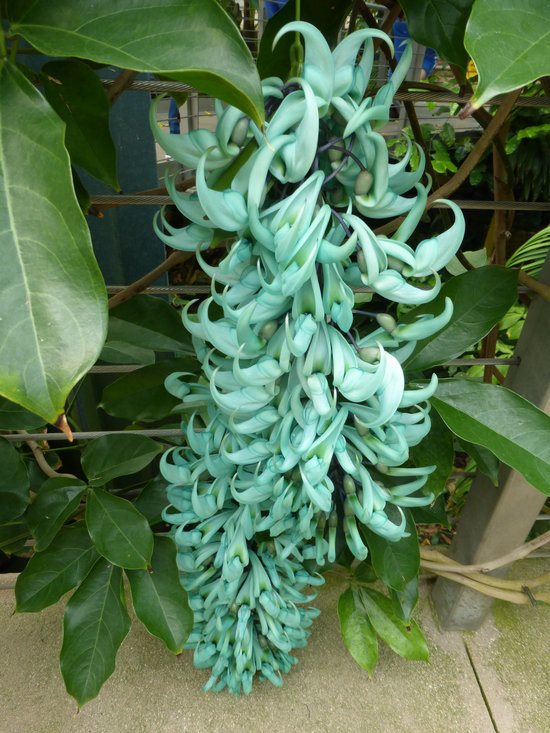
Strongylodon macrobotrys
species of plant

Acacia koa
species of plant
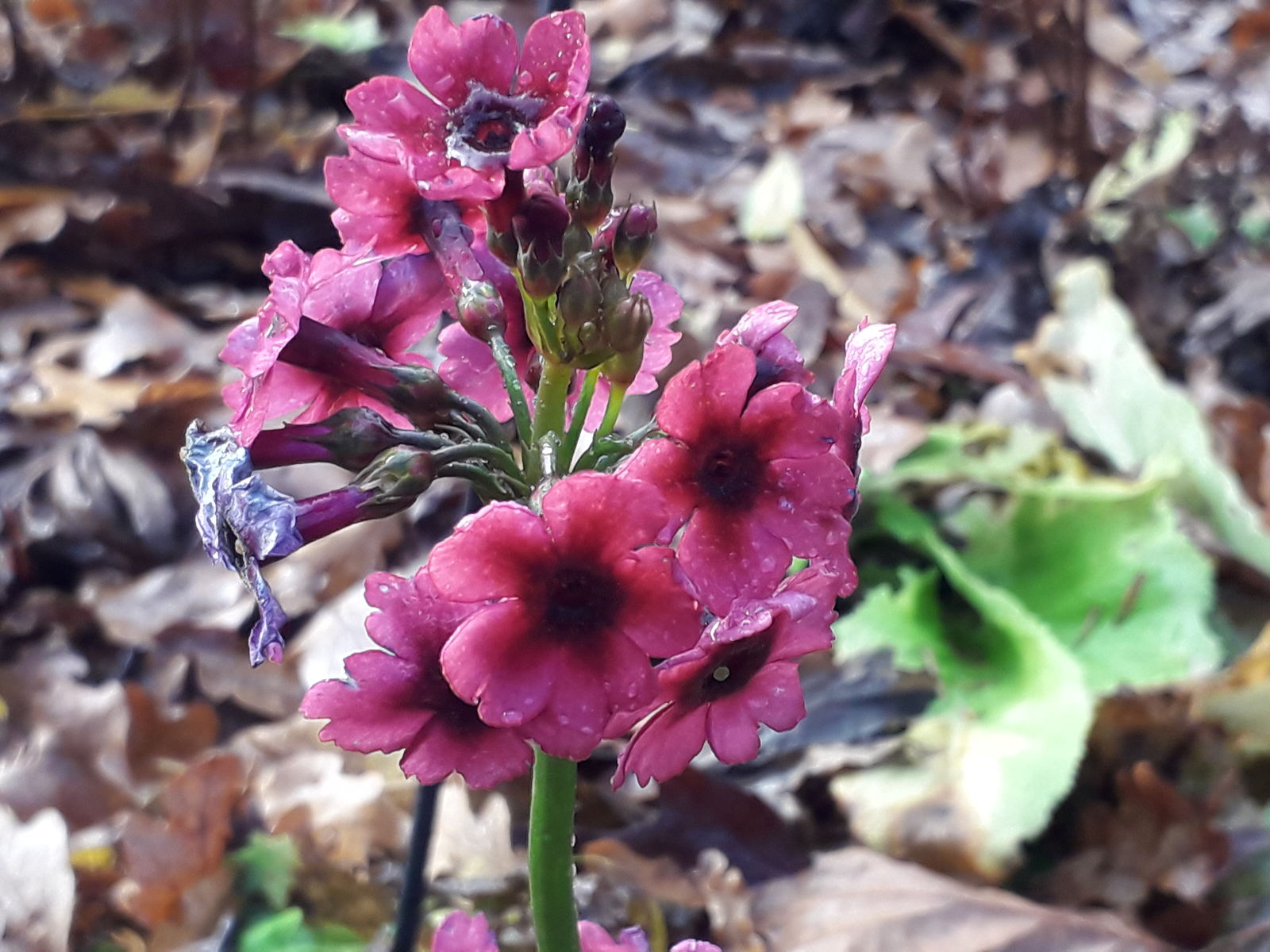
Primula japonica
species of plant
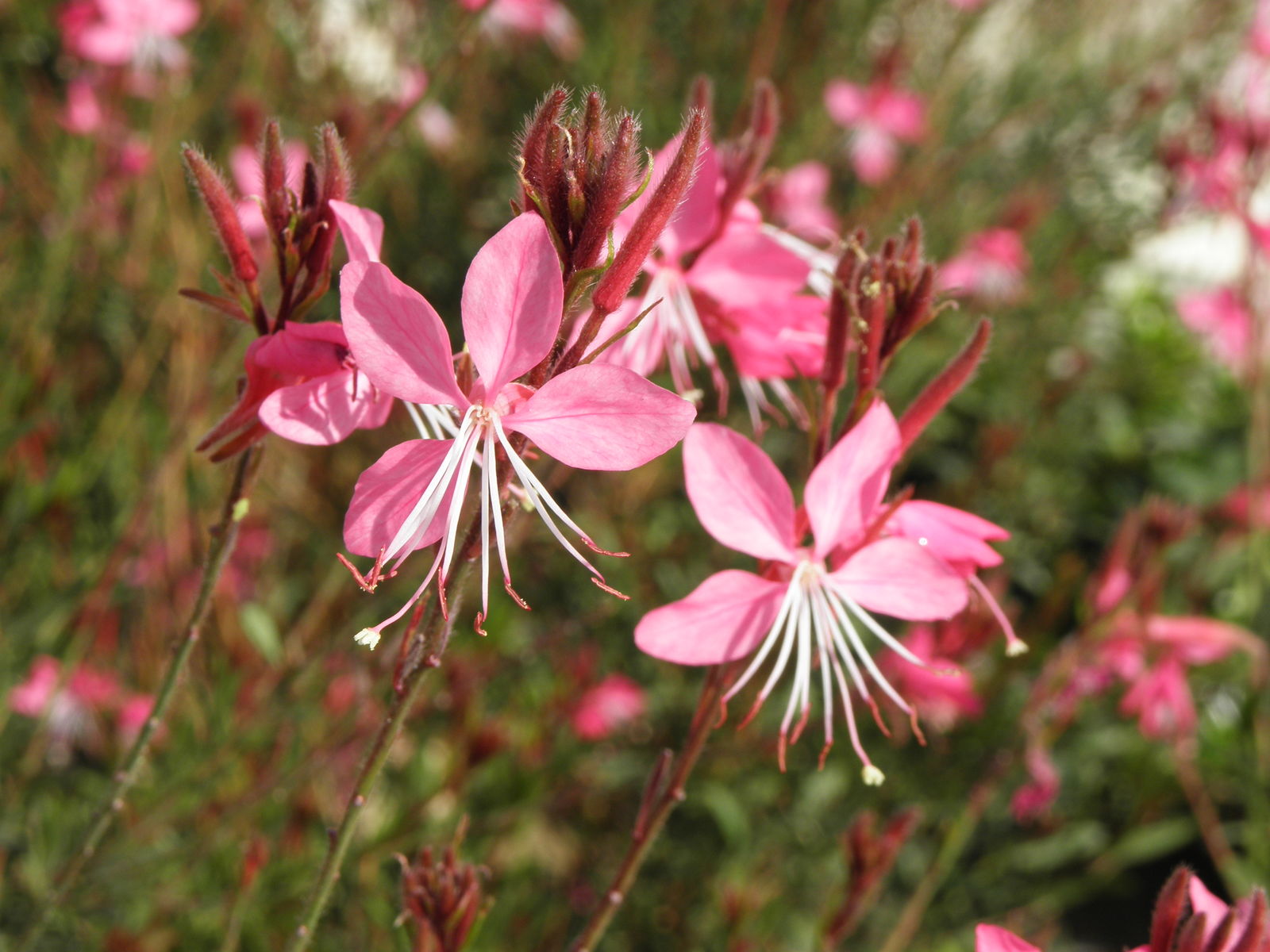
Oenothera lindheimeri
species of plant
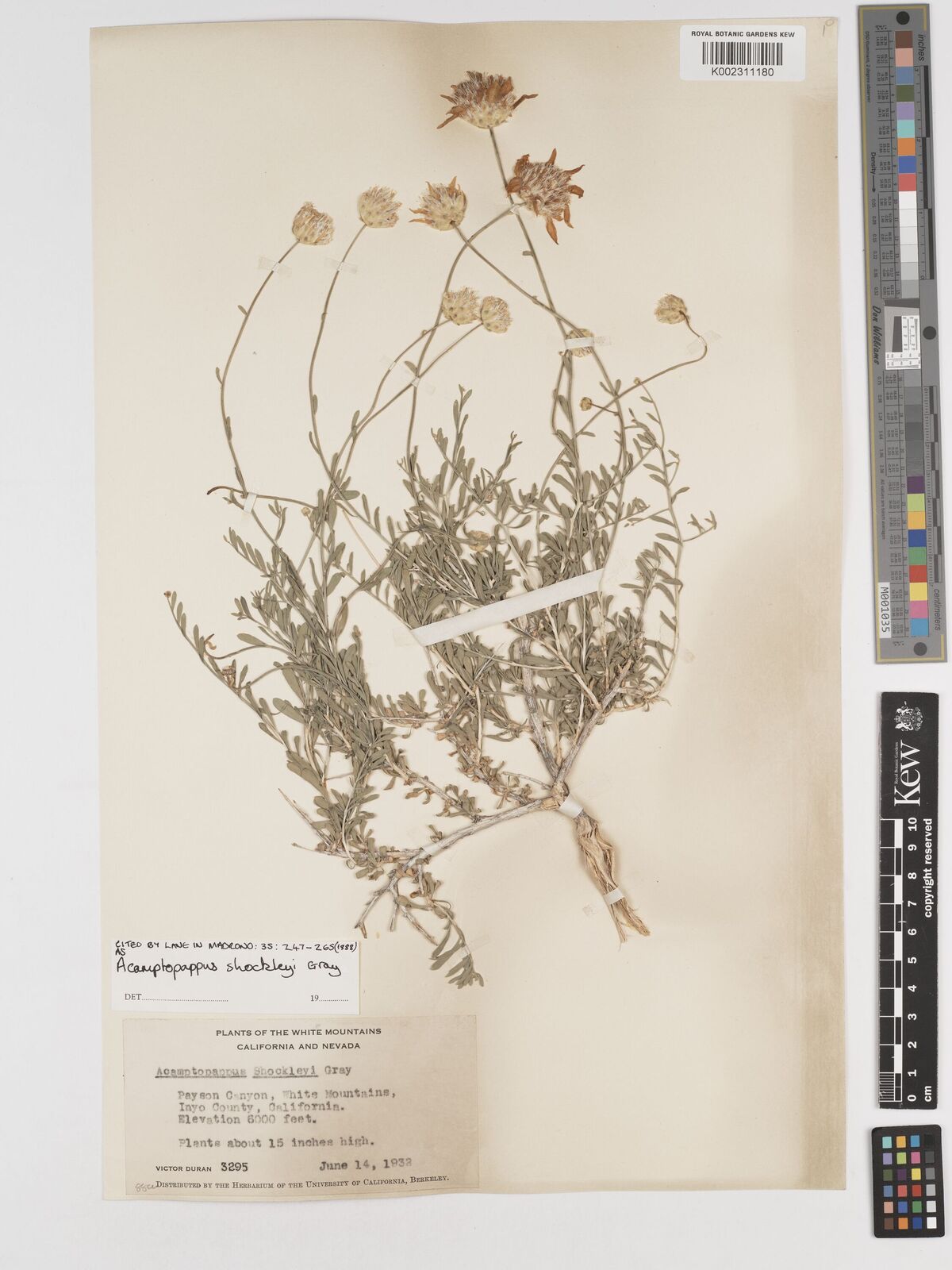
Acamptopappus
Acamptopappus is a genus of flowering plants in the family Asteraceae described as a genus in 1873.

Brome fescue
species of plant
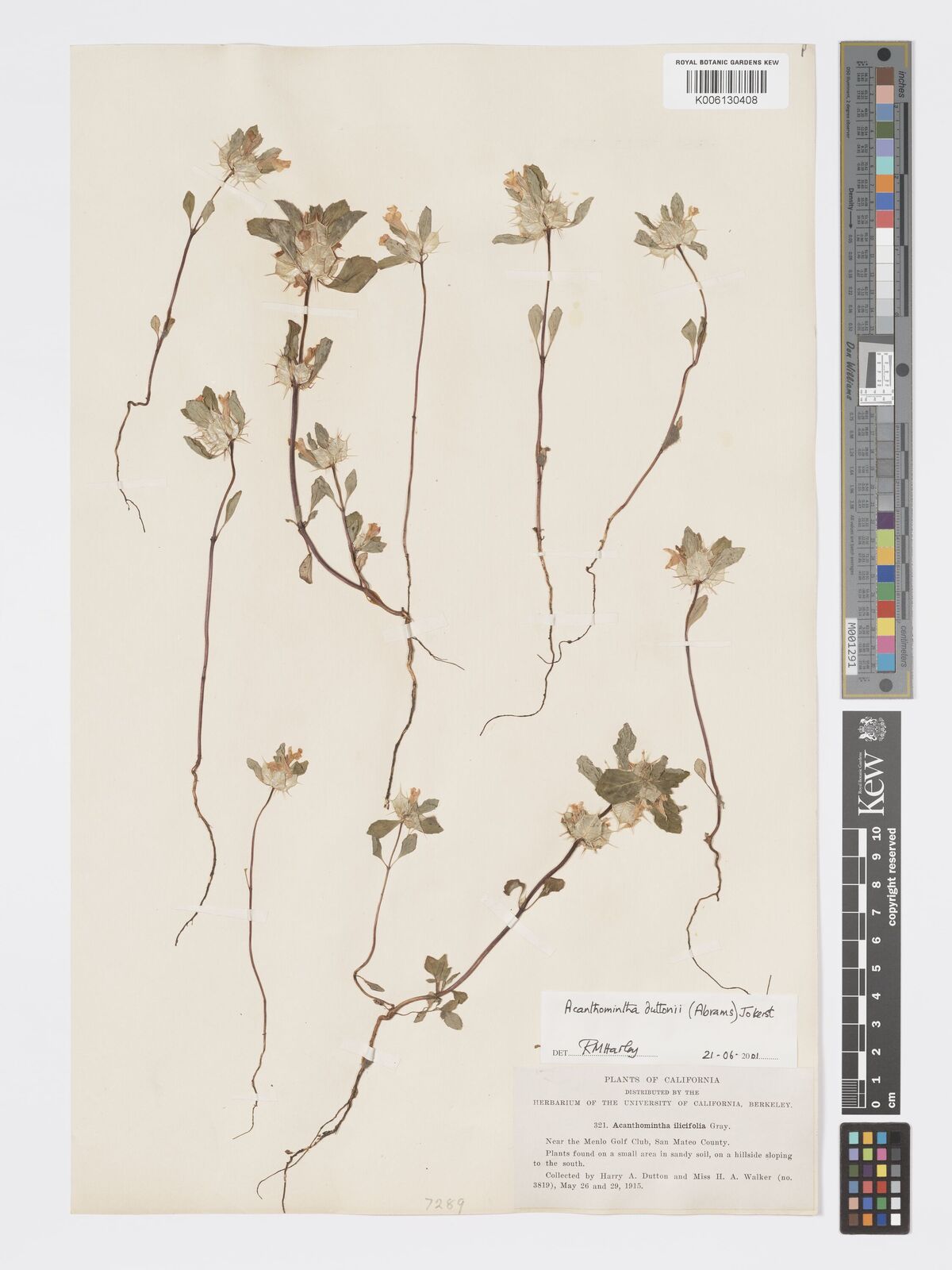
Acanthomintha
Acanthomintha is a genus of the mint family, Lamiaceae. The genus Acanthomintha is commonly referred to as thornmint or thorn-mint. There are four species within this genus, including the endangered species Acanthomintha duttonii. All four thornmints are native to the California Floristic Province. The origin of the genus name is from the identical Greek word meaning thornmint.

Toxicodendron diversilobum
species of poisonous plant
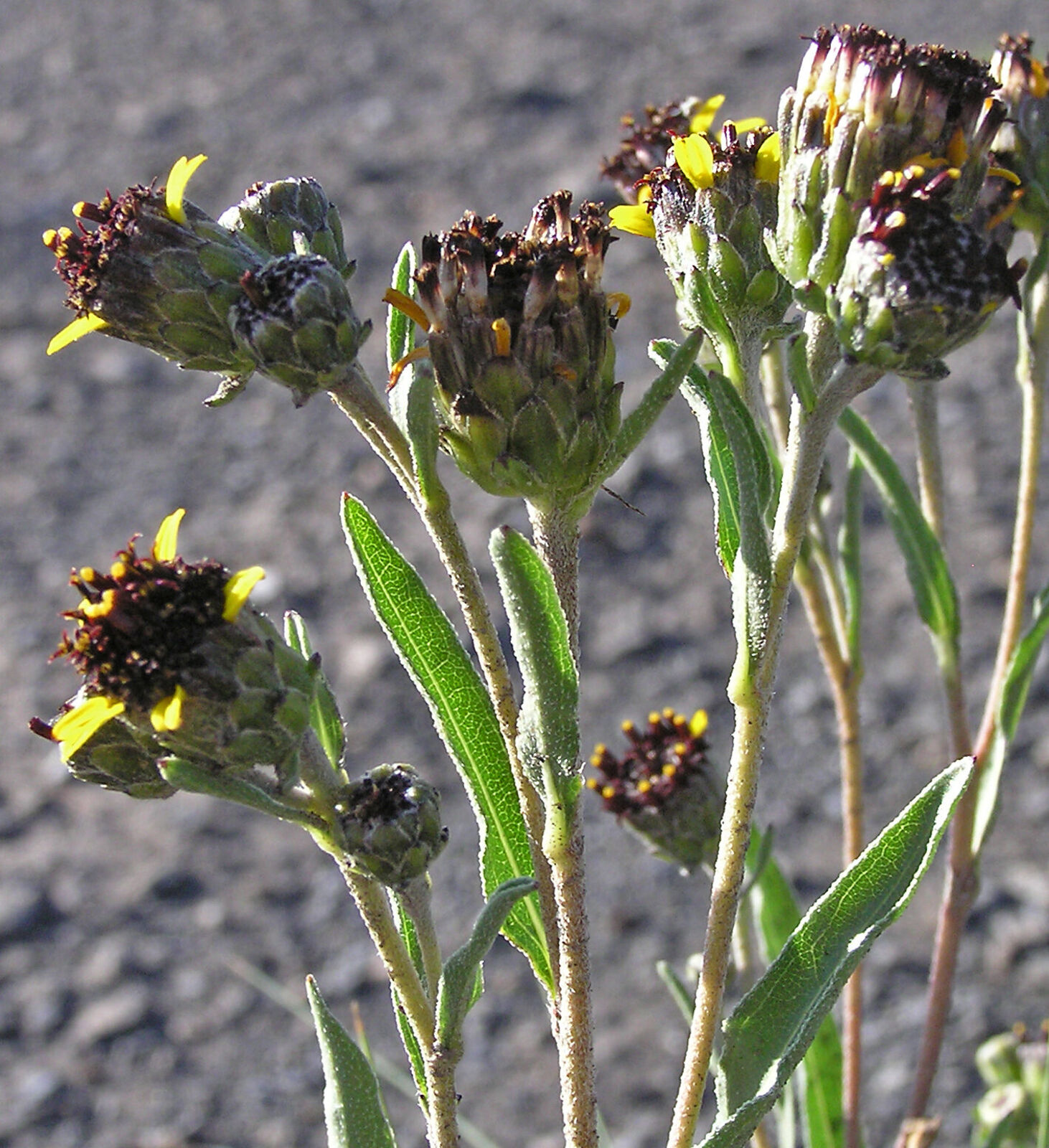
Helianthella
Helianthella, the little sunflower, is a genus of North American plants in the family Asteraceae.

Salvia clevelandii
species of plant
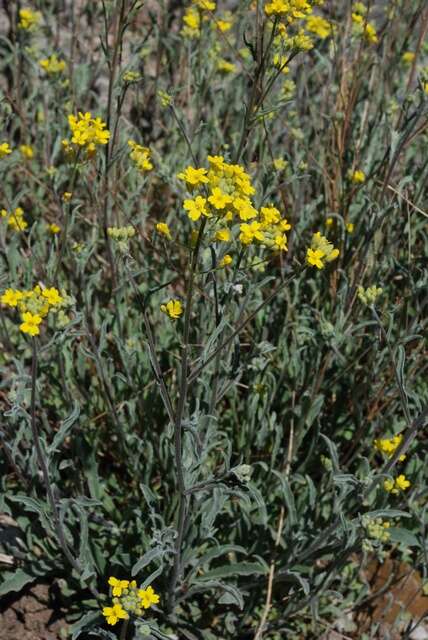
Physaria
Physaria is a genus of flowering plants in the family Brassicaceae. Many species are known generally as twinpods, bladderpods, or lesquerella. They are native to the Americas, with many species endemic to western North America. They are densely hairy annual and perennial herbs often growing prostrate or decumbent, along the ground in patches or clumps. They bear inflorescences of bright yellow flowers. The fruit is often notched deeply, dividing into twin sections, giving the genus its common name.
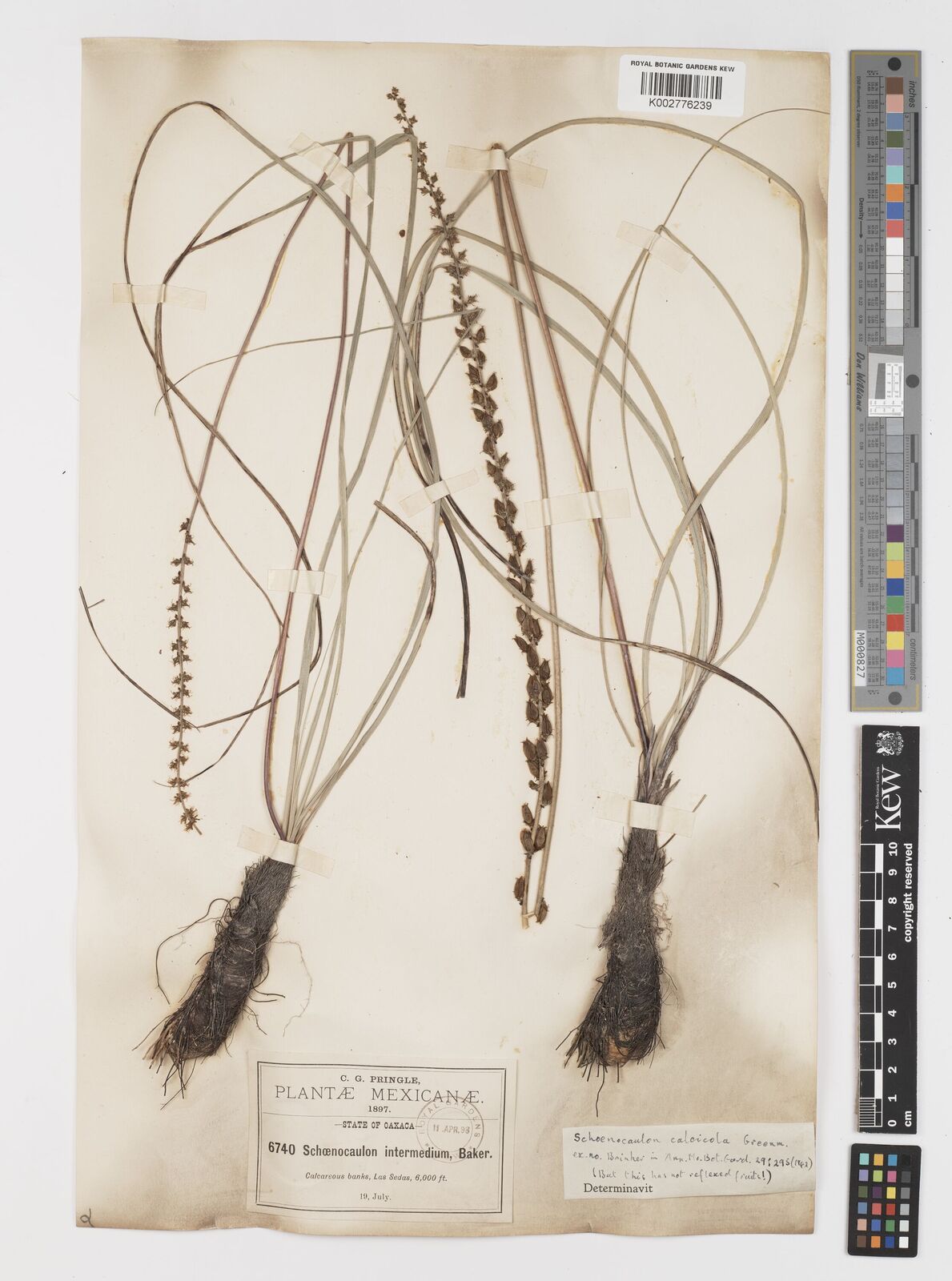
Schoenocaulon
Schoenocaulon is a North American genus of perennial herbaceous flowering plants, ranging from the southern United States to Peru. It is a member of the Melanthiaceae, according to the APG III classification system, and is placed in the tribe Melanthieae. Unlike other genera in the tribe, the flowers are arranged in a spike; depending on the species the flower stalks for each flower are either very short or completely absent. Feathershank is a common name, the medicinally used S. officinale is called Sabadilla (pronunciation: /sab-uh-dil-uh/, IPA: /ˌsæb əˈdɪl ə/).

Phacelia campanularia
species of plant

Prunus fasciculata
species of plant
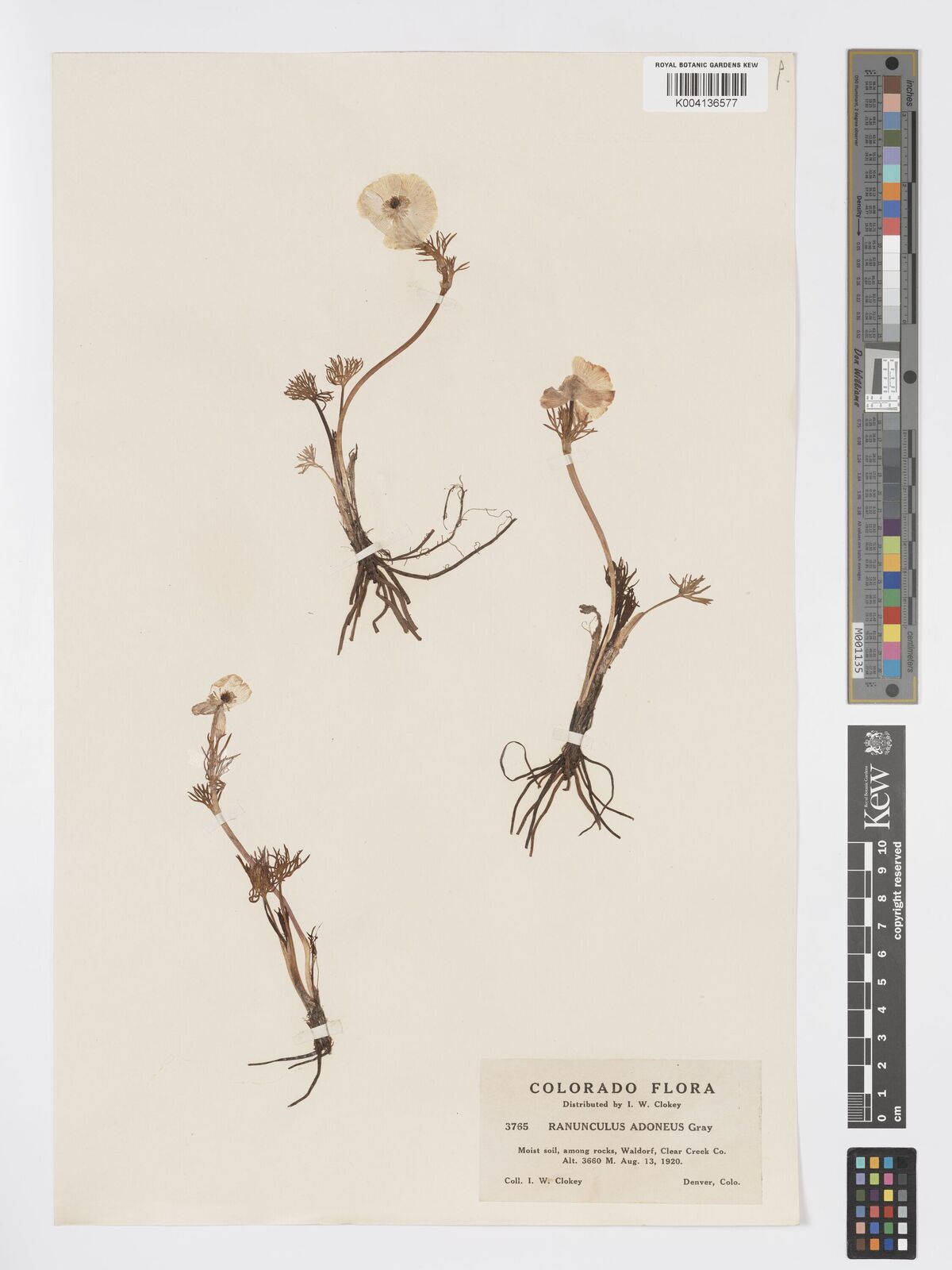
Ranunculus adoneus
species of plant
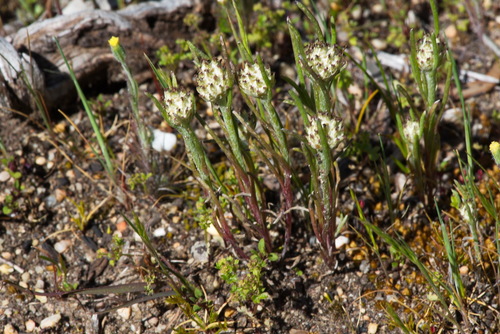
Blennospora
Blennospora is a genus of flowering plants in the aster family, Asteraceae. There are three species, all endemic to Australia. The genus was first described by Asa Gray in 1851, with the generic name from the Greek, βλέννη (mucus), and σπόρων (seed) "allud(ing) to the cellular pellicle of the achaenium becoming gelatinous when moistened, as in Cephalosoriis phyllocepkalus, but even more strikingly. This pellicle consists of a close coating of linear or subclavate diaphanous cells, compactly arranged with their long diameter perpendicular to the smooth brown pericarp: on the application of wate
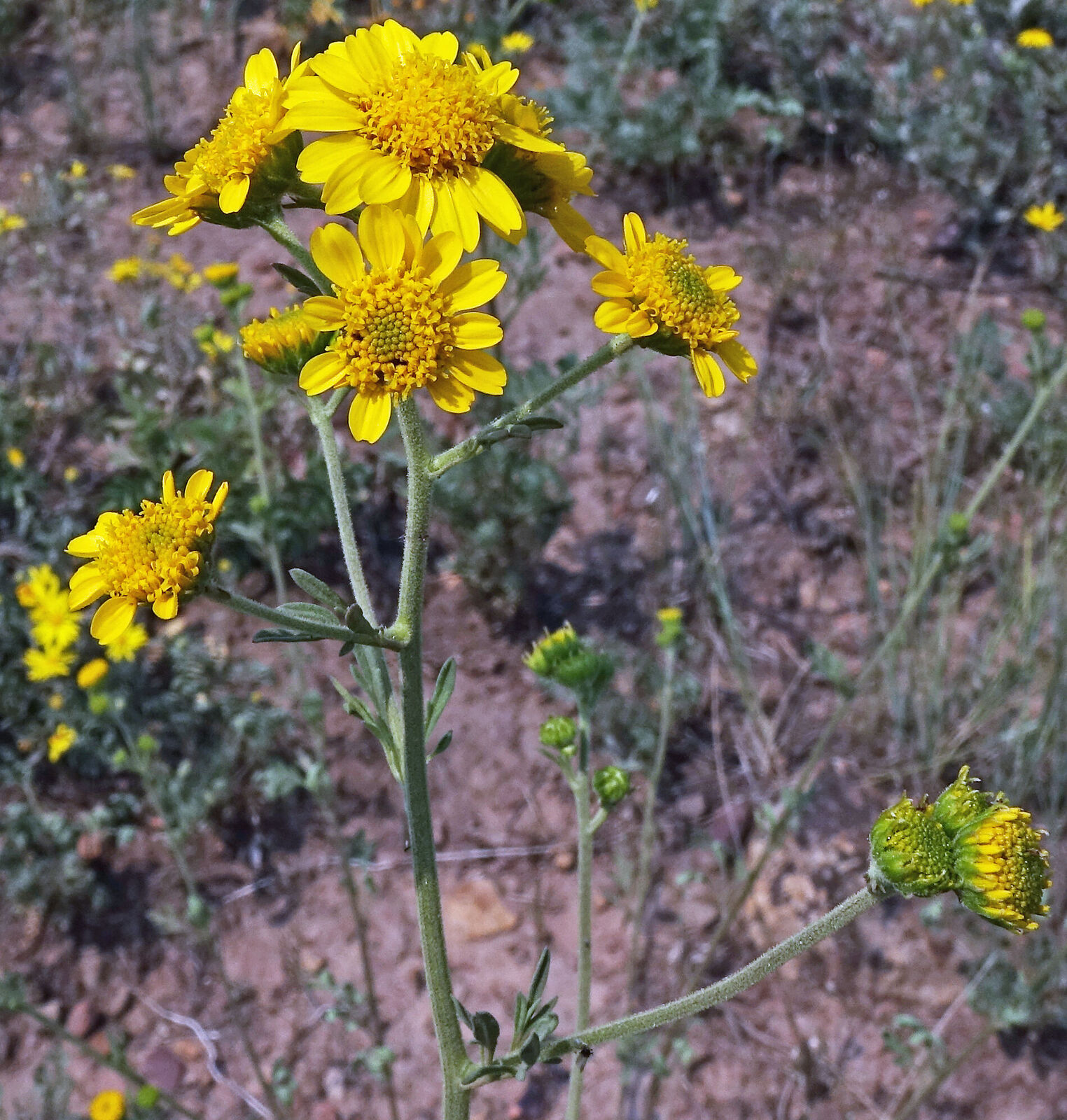
Hymenothrix
Hymenothrix is a small genus of North American flowering plants in the daisy family known as thimbleheads. They are native to the southwestern United States and northern Mexico.

Shortia
Shortia is a small genus of subshrubs or perennial herbs in the family Diapensiaceae. There are five species, four in Asia and one in the Appalachian Mountains of eastern North America. They are found in mountainous areas, generally from elevation. All have restricted ranges and are generally considered rare. Three of the species, S. galacifolia, S. soldanelloides, and S. uniflora are often cultivated. The genus was by Asa Gray named after botanist Charles Wilkins Short. In Gray's diary entry for April 8, 1839, he named the genus after Charles Wilkins Short because the plant was native to Amer

Monoptilon
Monoptilon (desertstar) is a small genus of annual plants in the tribe Astereae within the family Asteraceae.

Conradina
Conradina is a genus of flowering plants in the mint family, Lamiaceae. Its common name is false rosemary, or rarely, short leaf rosemary. There are 7 species of Conradina, all native to the southeastern United States. Conradina verticillata grows on the Cumberland Plateau in Kentucky and Tennessee. The other five grow mainly in Florida. All of the species are closely related and there is some doubt about whether they are all separate. Most species occupy xeric habitats with well-drained soils composed of white sand. The genus Conradina was established by Asa Gray in 1870. It was named for the
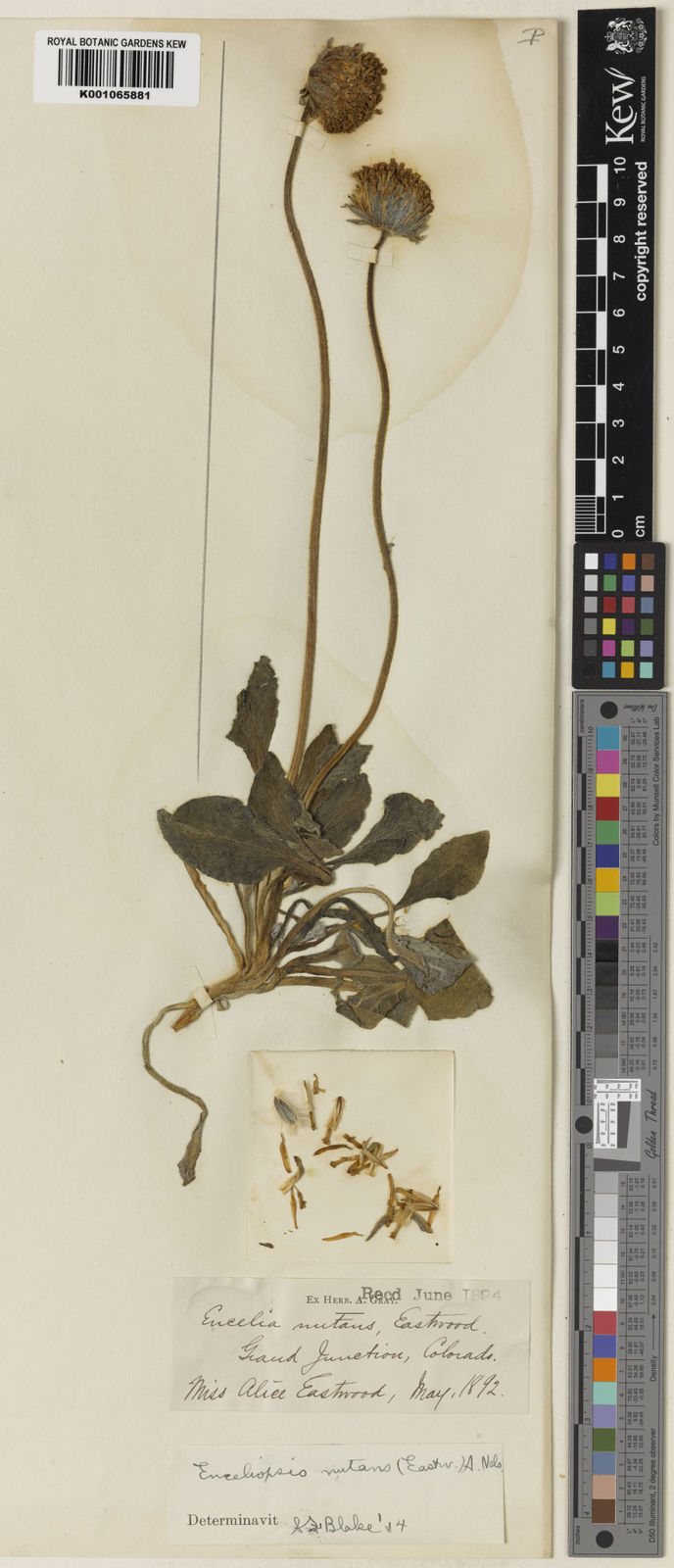
Enceliopsis
Enceliopsis is a small genus of flowering plants in the family Asteraceae. They are sometimes called sunrays. They are similar to the daisylike plants in the related genus Encelia. These three shrubs are native to the western United States and Canada.
.jpg)
Amianthium muscitoxicum
Amianthium is a genus of perennial monocot plants found in eastern North America. The genus contains only one species, known as Amianthium muscitoxicum. Its common names include "fly poison" and "stagger grass". The species name muscitoxicum comes from a direct Latin translation of "fly poison": muscae = flies, toxicum = poison. The entire plant is poisonous to an array of species, including humans, and the bulb is particularly toxic. A. muscitoxicum was first recorded by Thomas Walter in his work Flora Caroliniana in 1788.
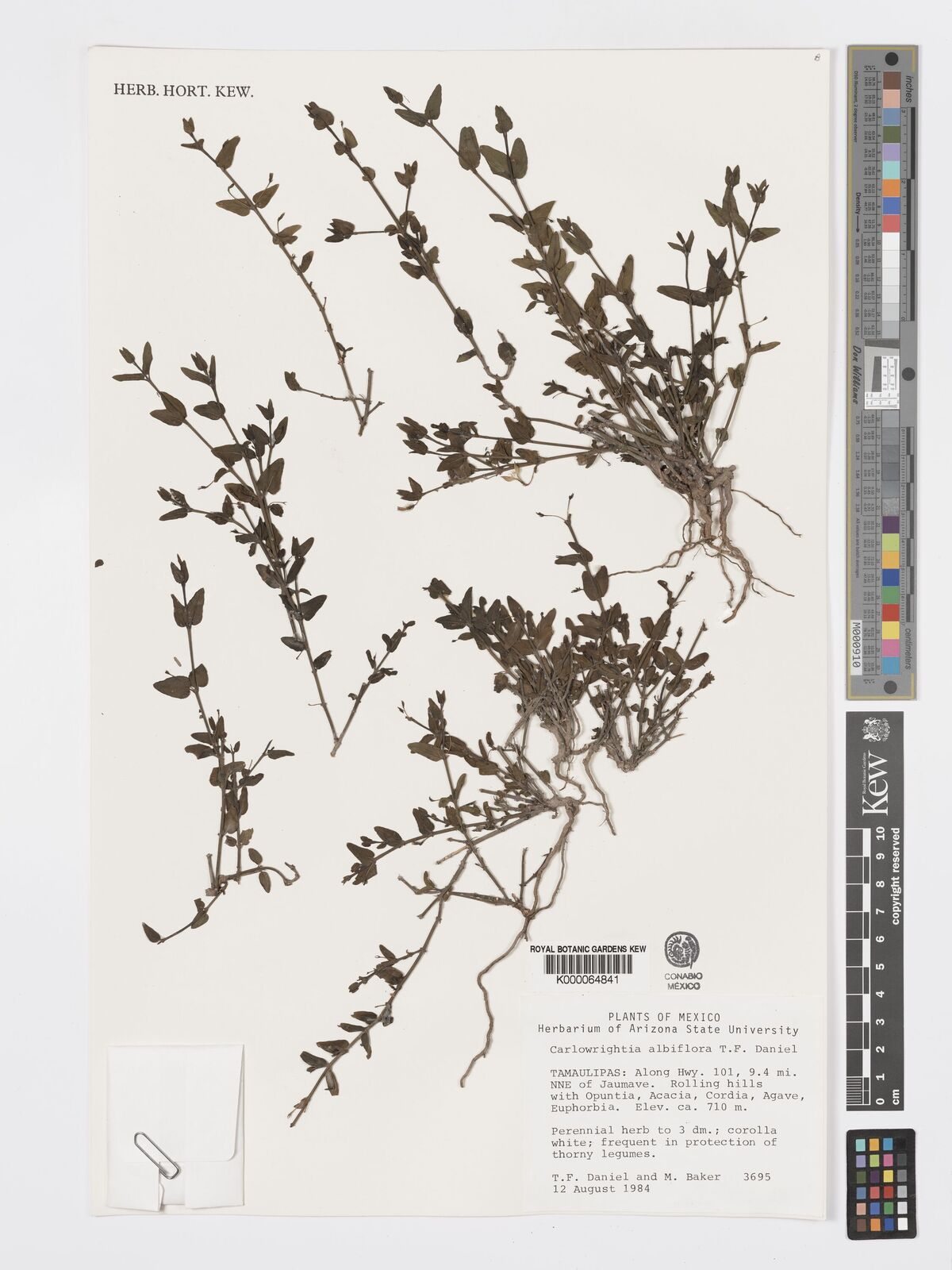
Carlowrightia
Carlowrightia is a genus of flowering plants in the bear's breeches family, Acanthaceae. Members of the genus, commonly known as wrightworts, are mainly small shrubs bearing inflorescences of lily-like flowers. They are native to the Americas, ranging from the southwestern United States through Mexico and Central America, and in Ecuador. Many species are native to western North America. The genus was named for the American botanist Charles Wright.

Tolmiea
Tolmiea is a genus of flowering plants in the saxifrage family containing two species native to northwestern North America. The genus was formerly considered to be monotypic until diploid populations were split off as T. diplomenziesii from the tetraploid populations of T. menziesii.

Aquilegia chrysantha
North American species of columbine

Geraea
Geraea is a genus of the family Asteraceae from the southwestern United States and northwestern Mexico, commonly called the desert sunflower.

Lindheimera
Lindheimera is a genus of flowering plants in the tribe Heliantheae within the family Asteraceae found in North America. The genus is named for German-American botanist Ferdinand Lindheimer, 1801–1879.
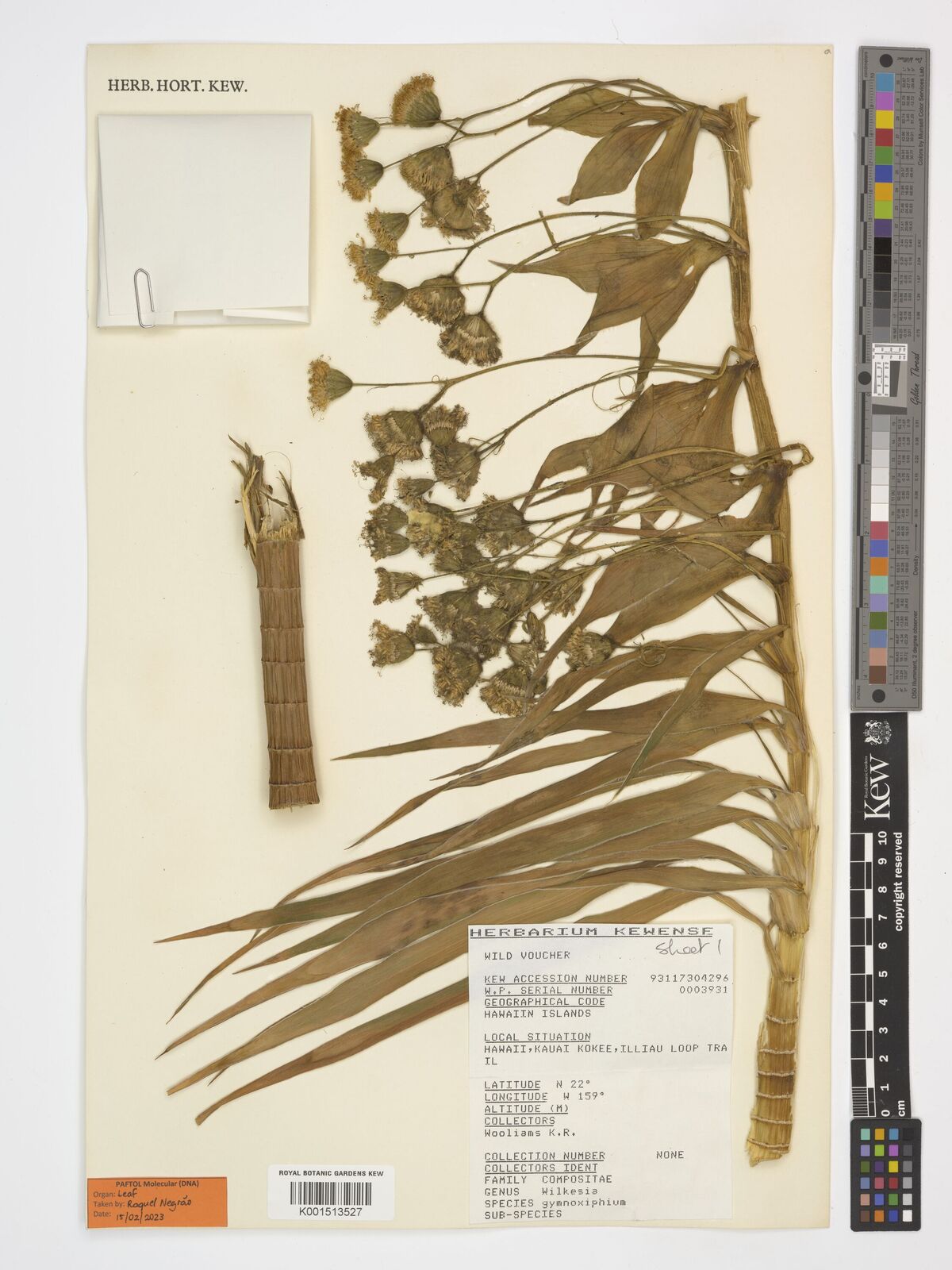
Wilkesia
Wilkesia is a genus of Hawaiian plants in the tribe Madieae within the family Asteraceae. It contains two perennials, both of which are endemic to the island of Kauai in Hawaii. Wilkesia is one of the three genera that make up the silversword alliance and is named after Captain Charles Wilkes.

Stenanthium
Stenanthium is a North American genus of flowering plants in the tribe Melanthieae of the family Melanthiaceae.
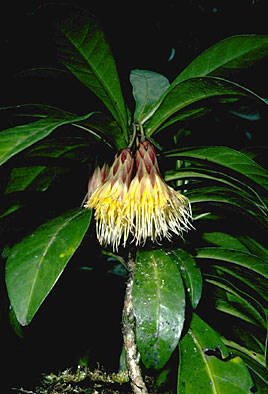
Hesperomannia
Hesperomannia (island-aster) is a genus of flowering plant in the family Asteraceae.
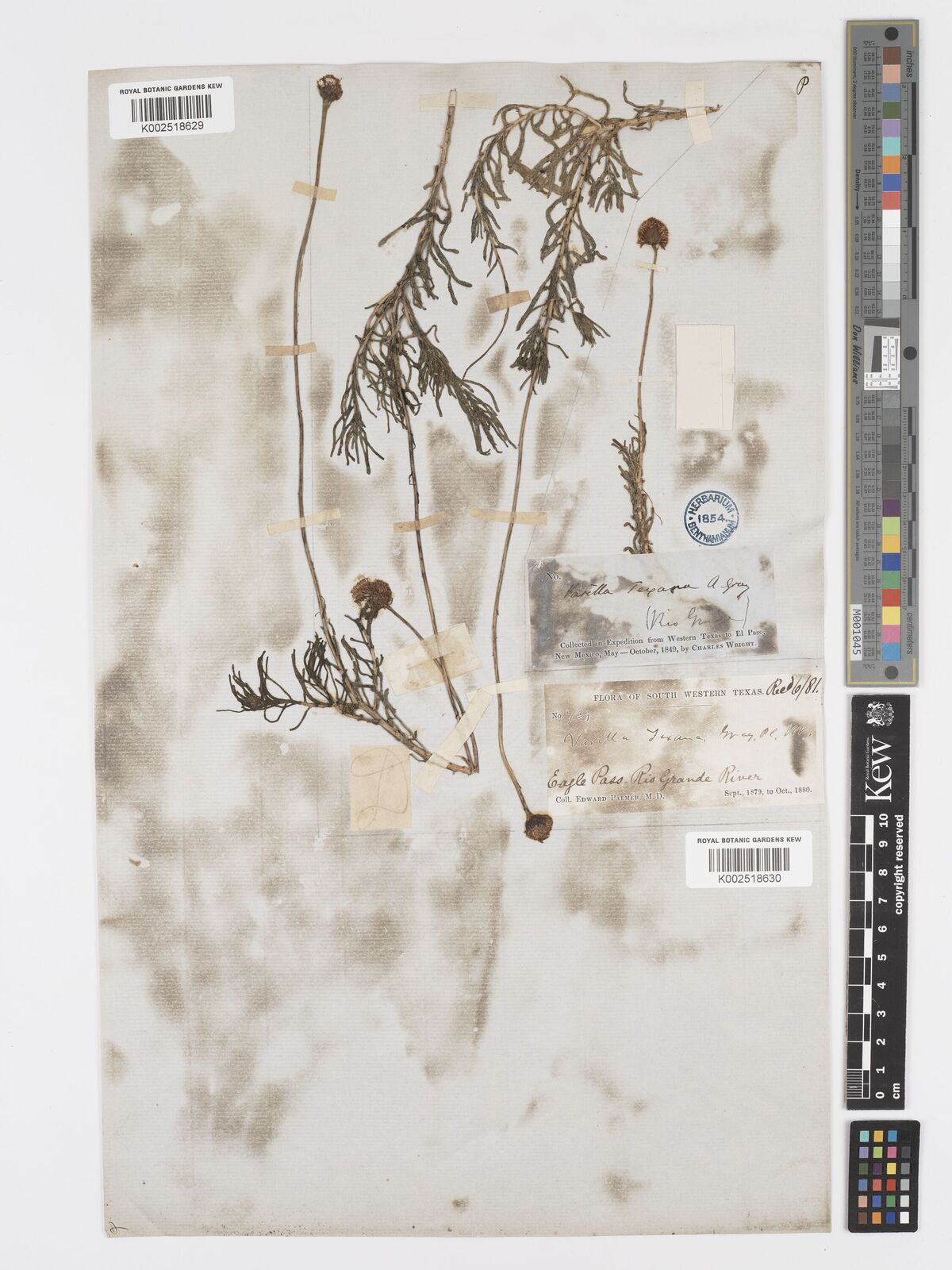
Varilla
genus of plants

Lycium fremontii
species of plant

Salvia arizonica
species of plant

Mortonia
genus of plants

Cercis occidentalis
species of plant
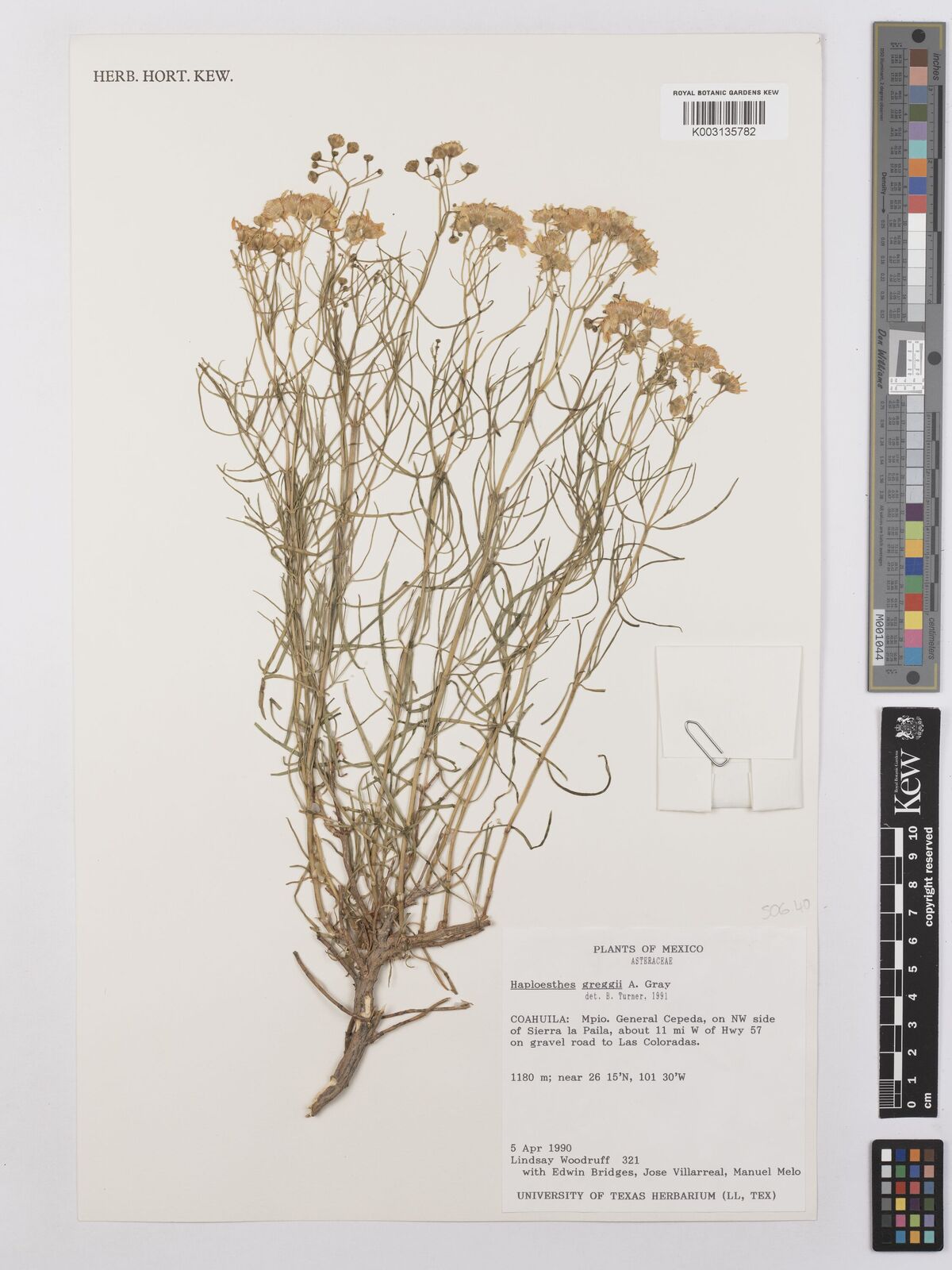
Haploesthes
Haploesthes is a North American genus of flowering plants in the family Asteraceae. It grows in Mexico and in the southwestern United States. They are perennial herbs or subshrubs with yellow flower heads.

Calycoseris
Calycoseris is a small genus of two species of annual desert wildflowers in the family Asteraceae, native to western North America in the southwestern United States and Northwestern Mexico. They are characterized by the tack-shaped gland hairs on their upper stems and bracts, the trait which gives them the common name tackstem. The two species of tackstem are the yellow tackstem, Calycoseris parryi and the white tackstem, Calycoseris wrightii.
left|thumb|200px|Yellow tack-stem|Yellow tackstem
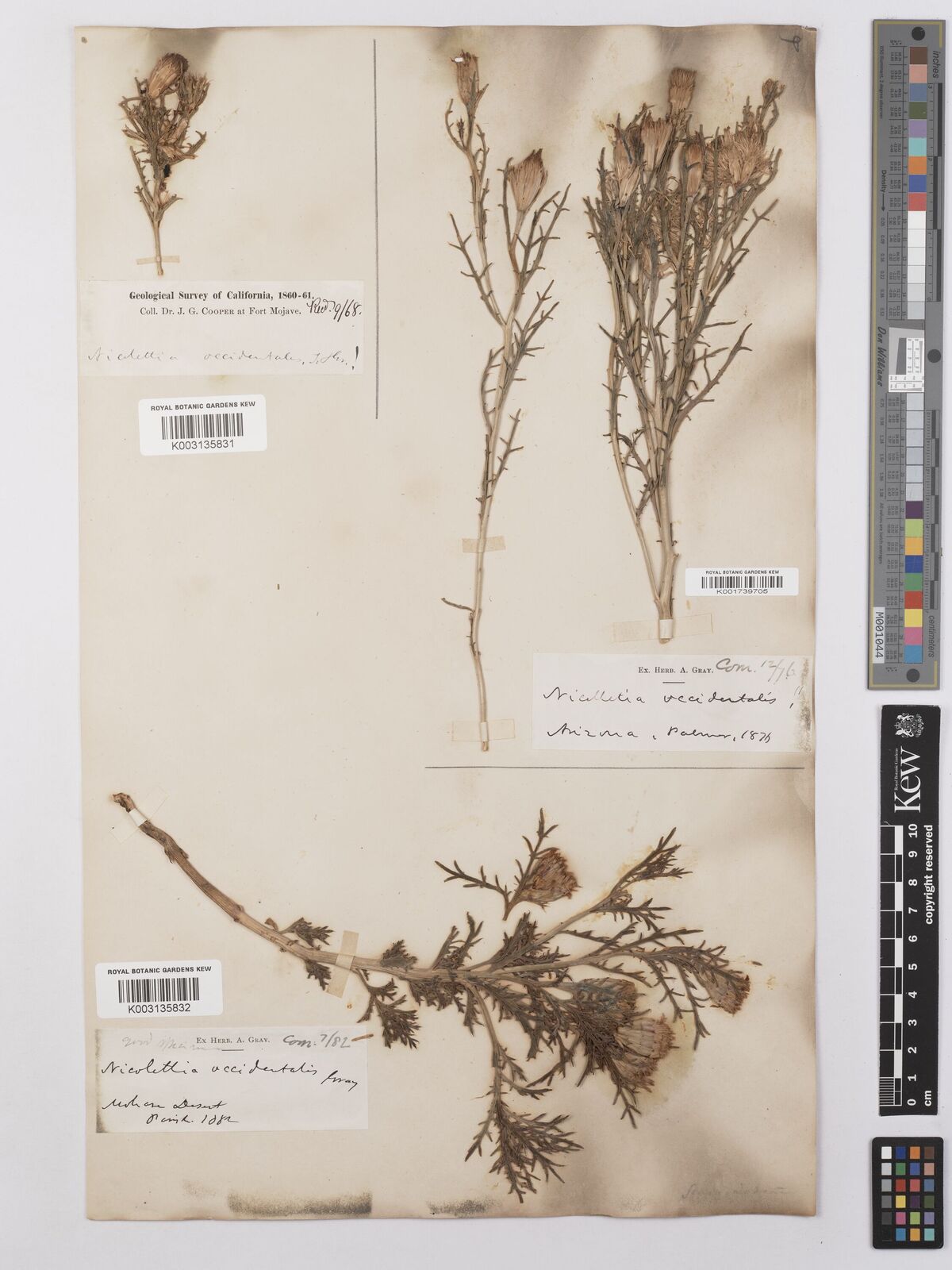
Nicolletia
Nicolletia, common name hole-in-the-sand plant, is a small genus of flowering plants in tribe Tageteae within the family Asteraceae.
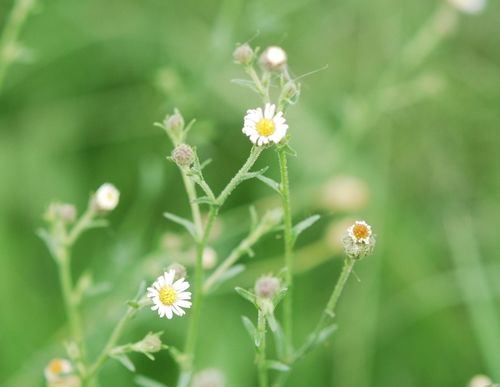
Psilactis
Psilactis is a genus of North American and South American plants in the tribe Astereae within the family Asteraceae which are known by the common name tansyaster. There are six species within the genus.
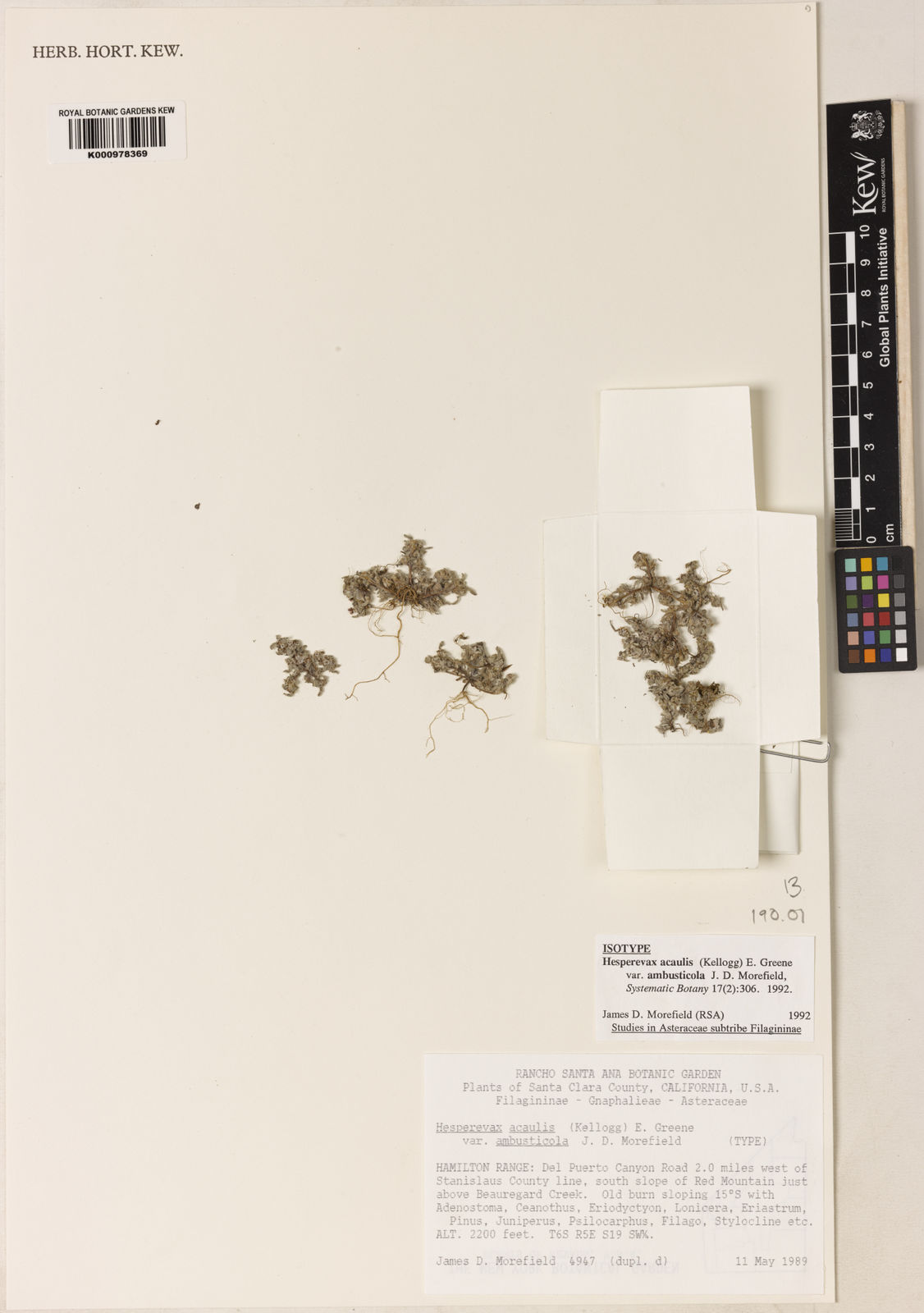
Hesperevax
Hesperevax is a small genus of flowering plants in the tribe Gnaphalieae of the family Asteraceae.
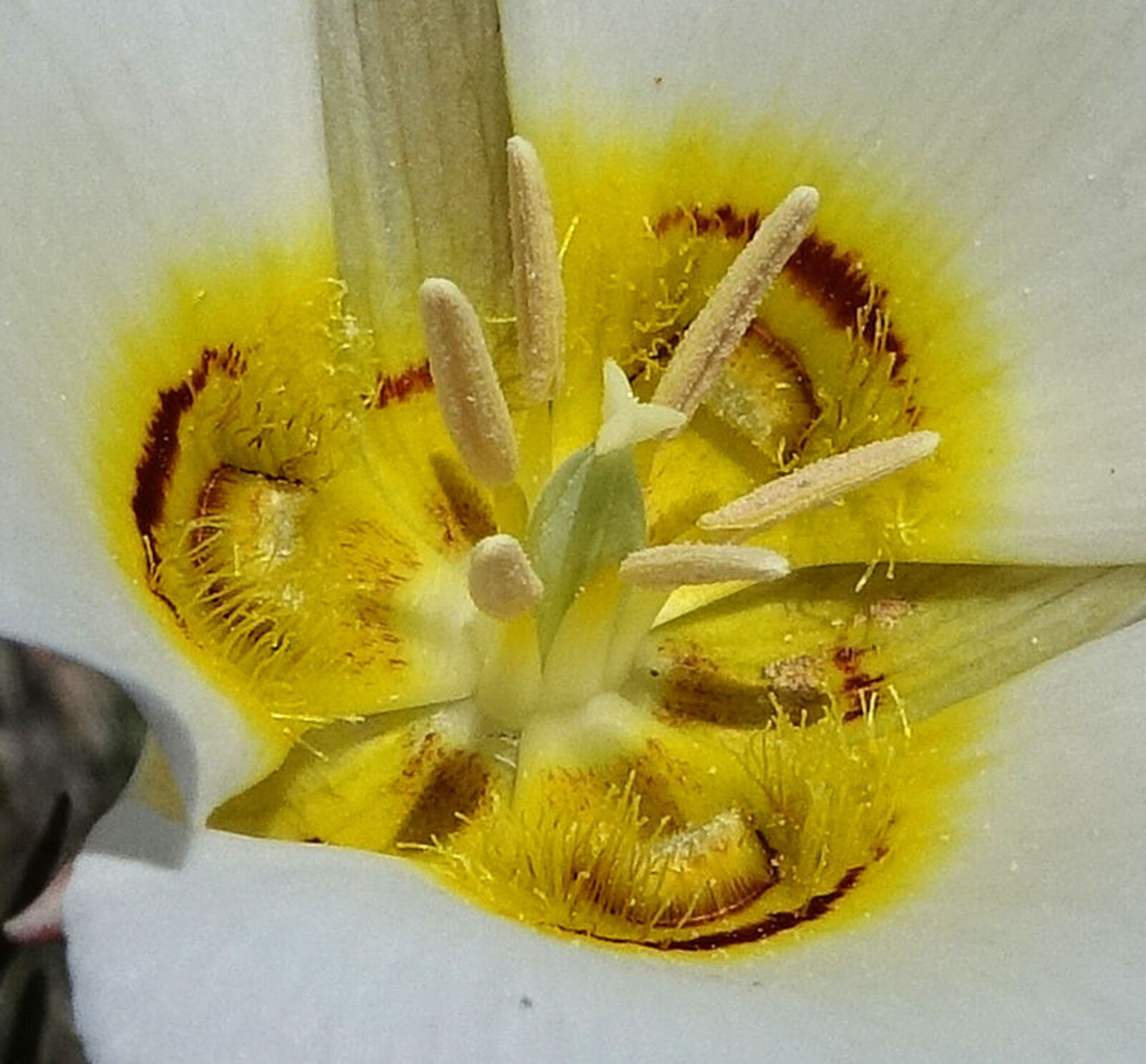
Calochortus nuttallii
species of plant
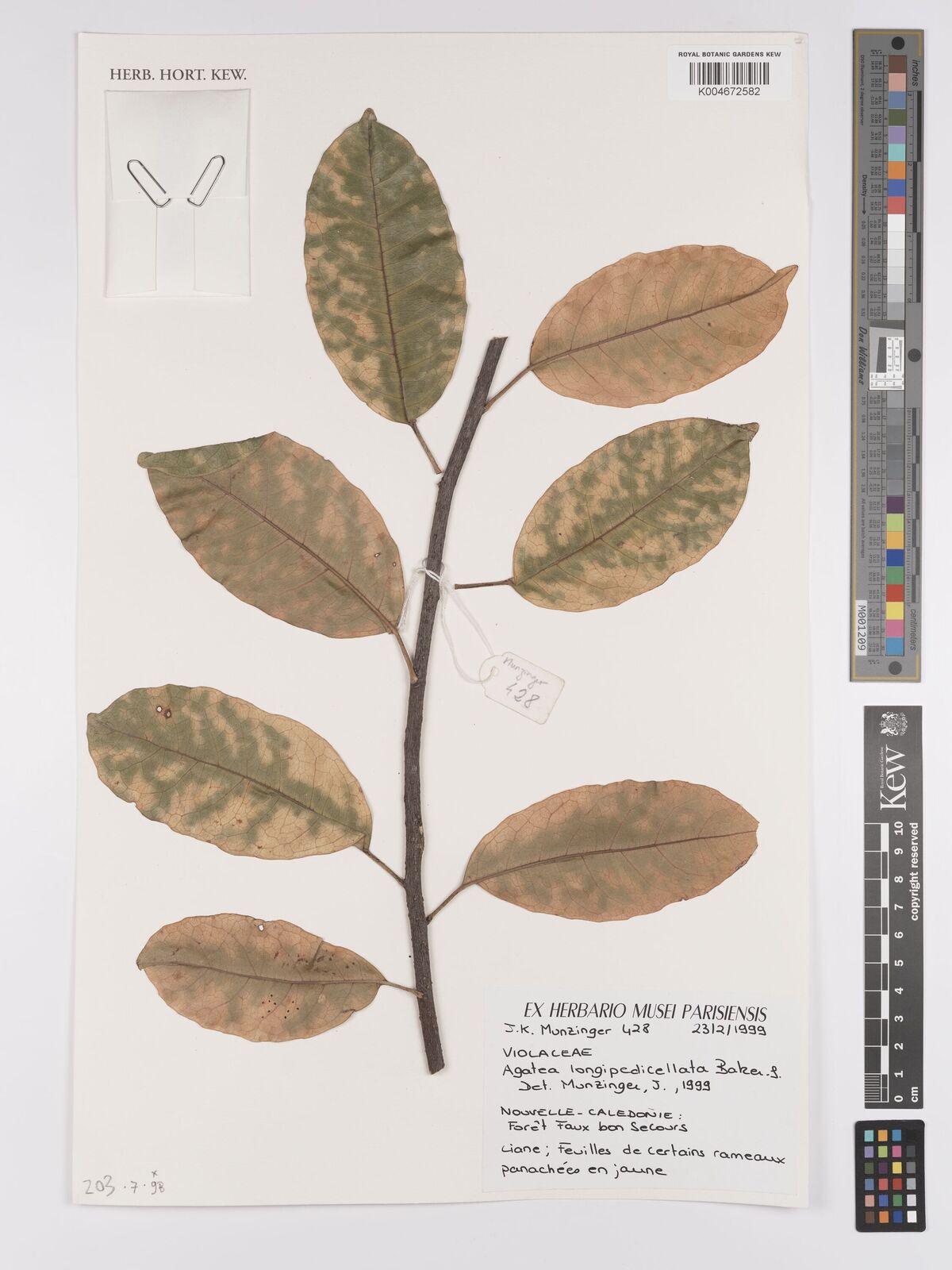
Agatea
Agatea is a genus of flowering plants in the violet family Violaceae, with seven accepted species, found in New Guinea and New Caledonia.
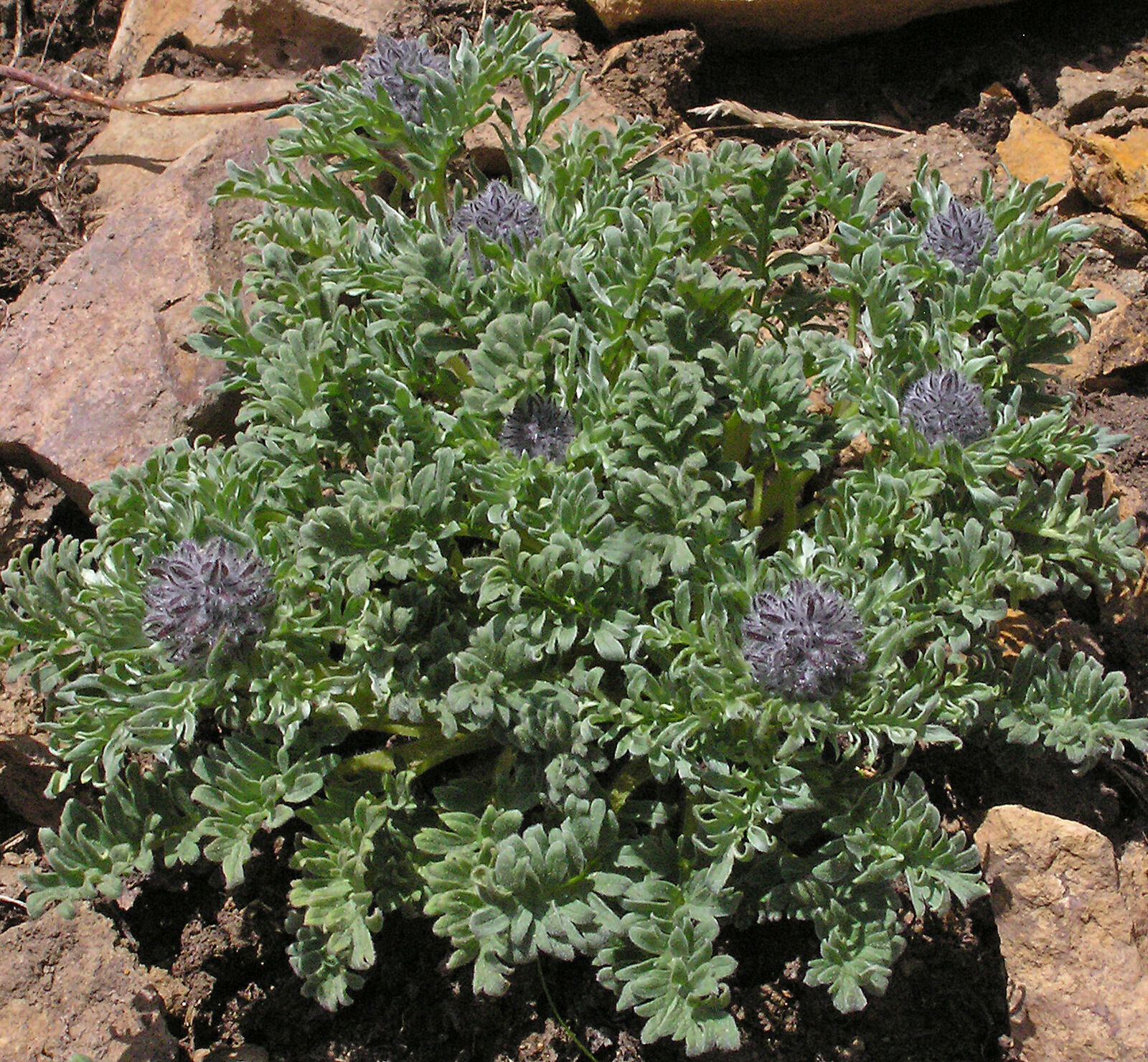
Phacelia sericea
species of plant

Carex aestivalis
species of plant
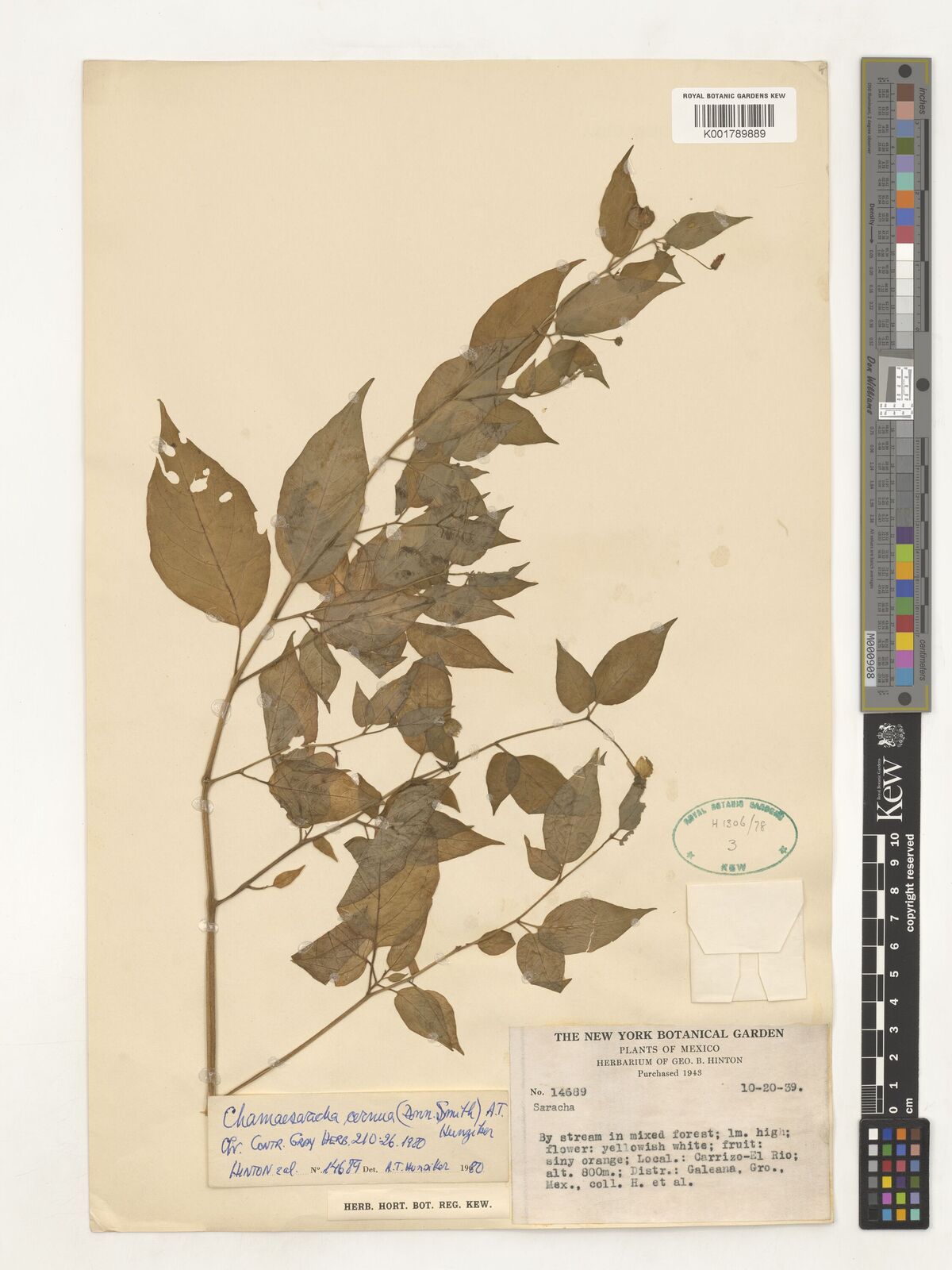
Chamaesaracha
Chamaesaracha is a genus of perennial herbs in the nightshade family which are known commonly as five eyes. There are around nine species of five eyes, and they are native to the southwestern and western United States and parts of Mexico. These are hairy plants growing low to the ground and covered in crinkly dull green leaves. The flowers are star-shaped to wheel-shaped and their dried remnants can be found around the fruits, which are spherical berries filled with flat, kidney-shaped seeds.
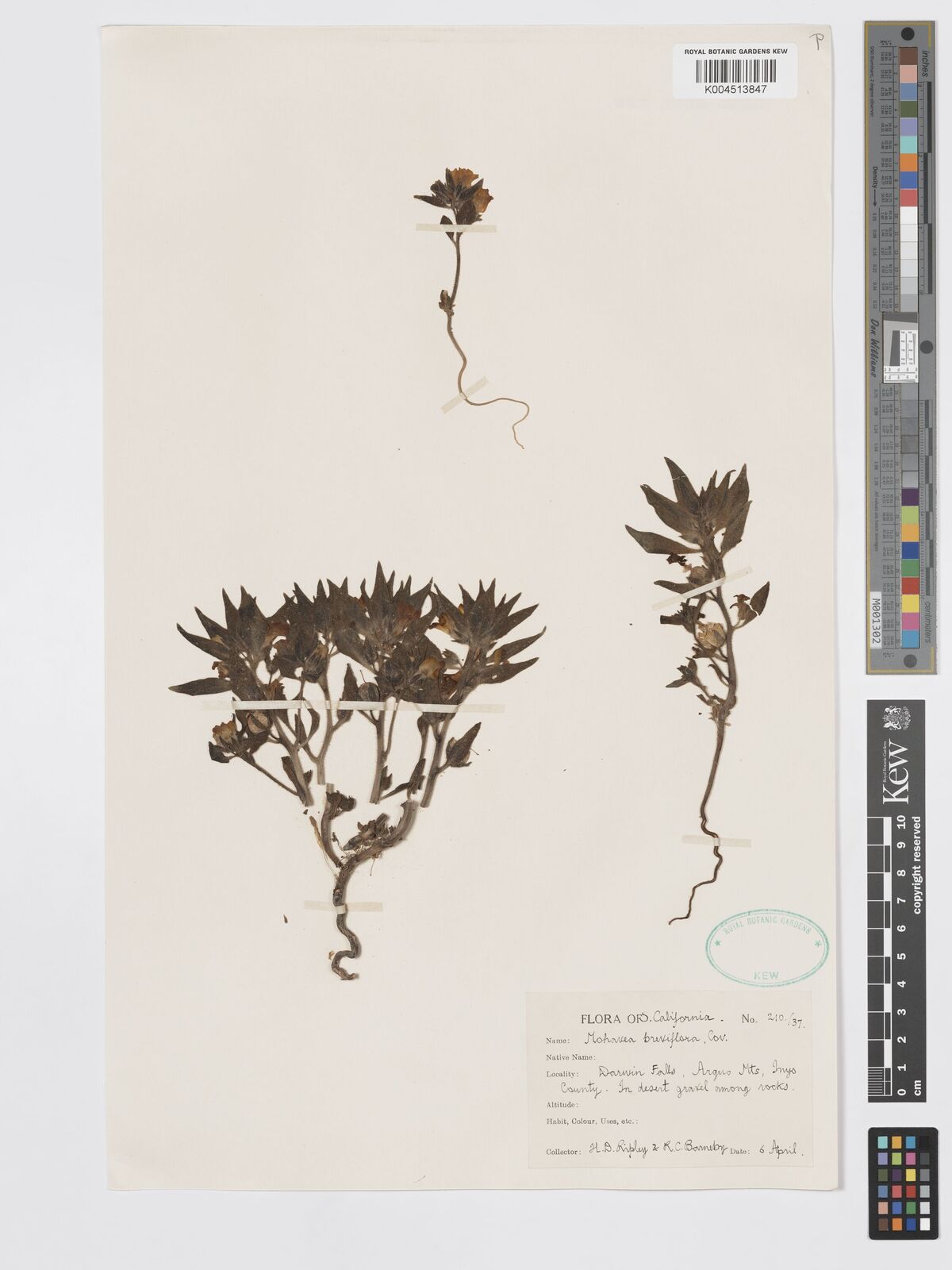
Mohavea
Mohavea is a plant genus consisting of two species native to the deserts of the southwestern United States and northern Mexico. This genus is often included in the closely related snapdragon genus Antirrhinum.
Trichocoronis
Trichocoronis is a genus of North American aquatic plants in the tribe Eupatorieae within the family Asteraceae. Bugheal is a common name for plants in this genus.

Metrosideros collina
species of plant
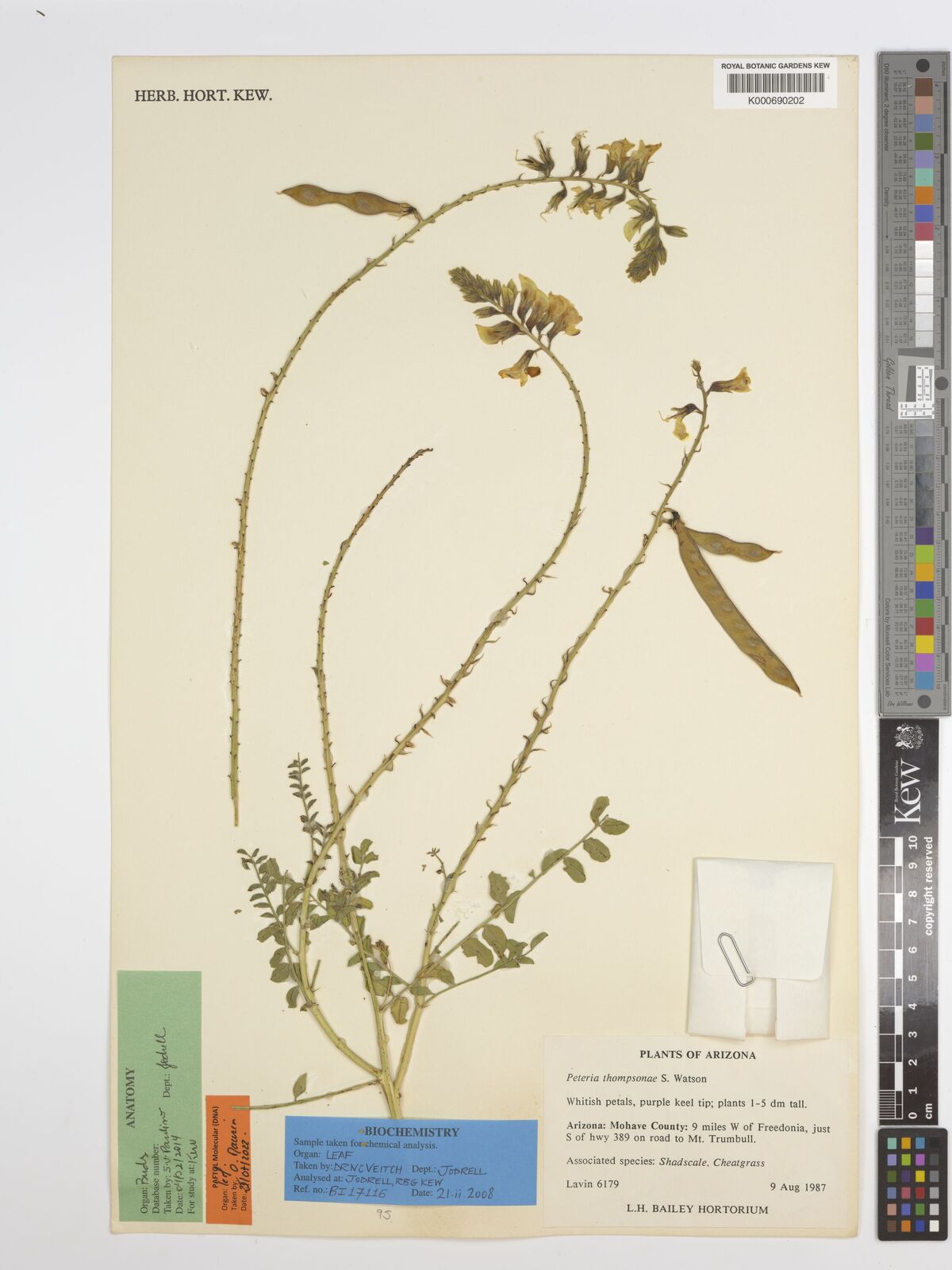
Peteria
Peteria is a genus of flowering plants in the legume family, Fabaceae. It belongs to the subfamily Faboideae. It is native to USA and Mexico.
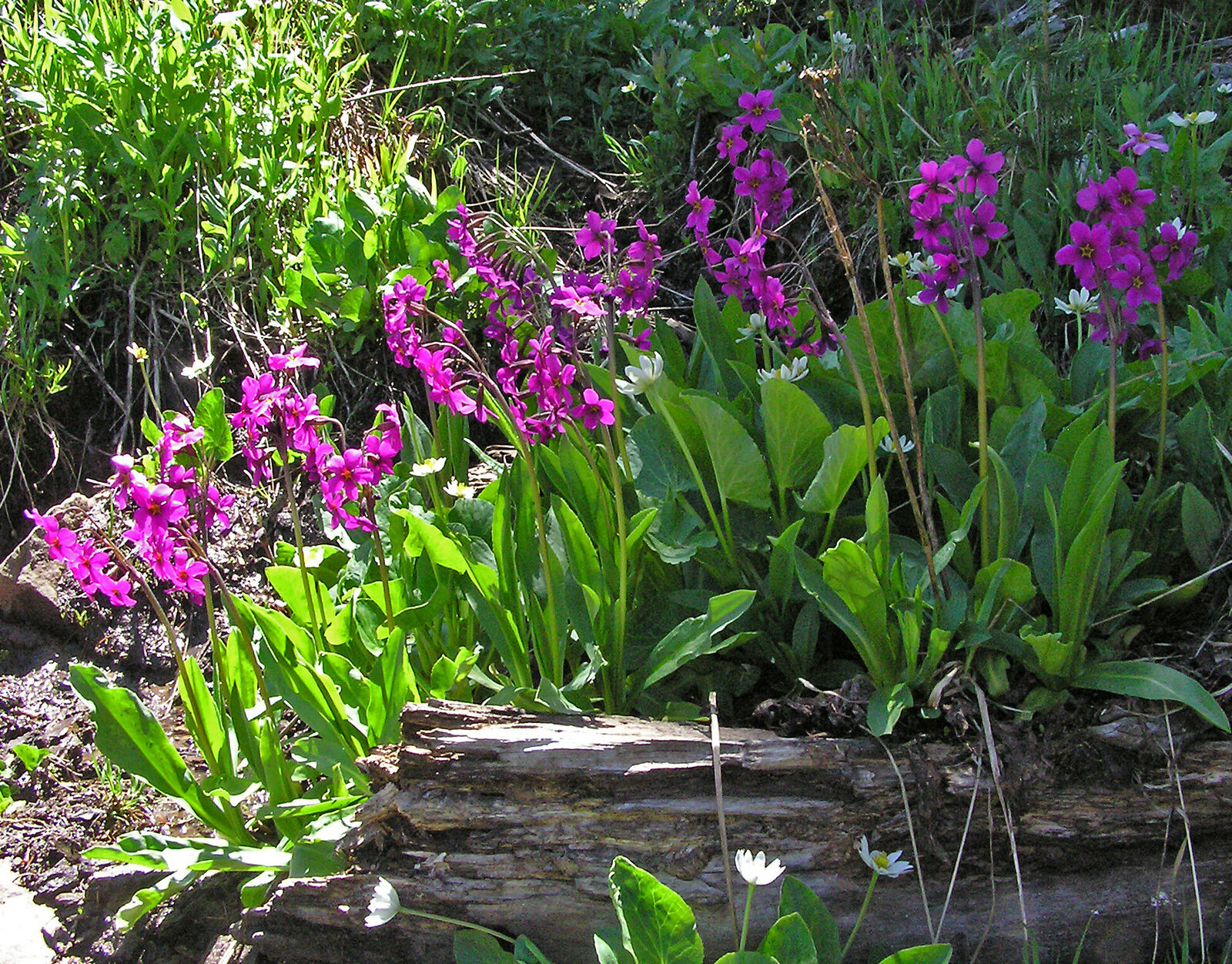
Primula parryi
species of plant

Astragalus californicus
species of plant
Acacia richii
species of plant
Encelia farinosa
species of plant

Rhododendron vaseyi
species of plant
Ambrosia dumosa
species of plant
Acaena exigua
species of plant

Acanthomintha ilicifolia
species of plant
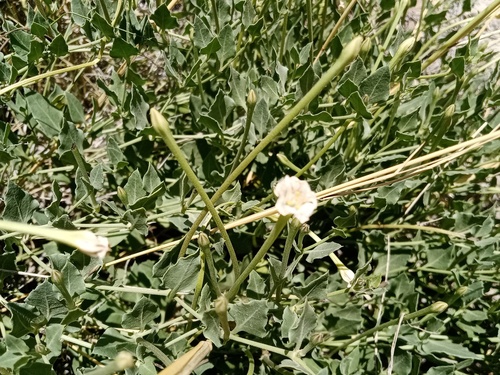
Acleisanthes
Acleisanthes is a genus of flowering plants in the Bougainvillea family, Nyctaginaceae. There are currently 16 species. The generic name is derived from the Greek words ακλειοτος (akleistos), meaning "not closed", and ανθος (anthos), meaning "flower". Plants of this genus are known commonly as trumpets due to the elongated, open-ended shape of their flowers. These are arid-adapted perennials with thick taproots which are usually compact and low to the ground or slightly ascending. An individual plant may have cleistogamous (unopening and self-pollinating) flowers as well as opening flowers whi
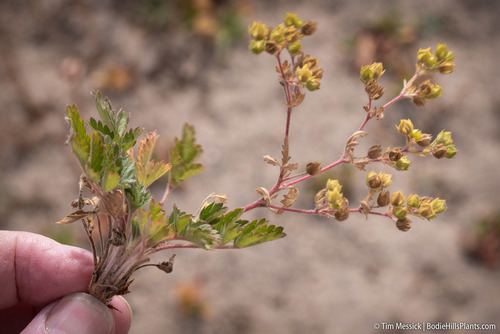
Potentilla rivalis
species of plant
Callirhoe involucrata
species of plant