Category
page 14Taxa named by Edward Drinker Cope
Dendrobatoidea
The Dendrobatoidea are a superfamily of frogs. This group is found in the Neotropics and has the largest diversity of alkaloids among all amphibians. These alkaloids show up in the skin by one of three ways: de novo biosynthesis, direct sequestration, or metabolic transformation.
Dissorophus
Dissorophus (DI-soh-ROH-fus) (meaning "double roof" for two layers of armor) is an extinct genus of temnospondyl amphibian that lived during the Early Permian Period about 273 million years ago. Its fossils have been found in Texas and in Oklahoma in North America. Its heavy armor and robust build indicate Dissorophus was active on land, similar to other members of the clade Dissorophidae that are known from the Late Carboniferous to the Early Permian periods. Dissorphus is distinguished by its small body size, disproportionately large head and short trunk.

Leiocephalus raviceps
species of reptile
Taphrosaurus
Taphrosaurus is an extinct genus of plesiosaur.
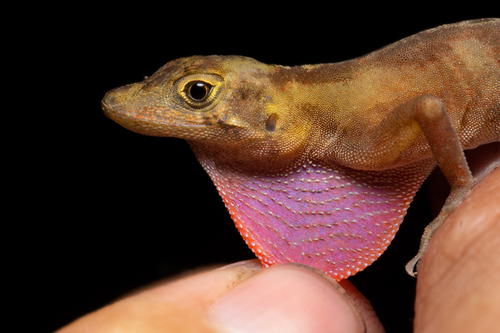
Anolis cymbops
species of reptile
Zatomus
Zatomus is an extinct genus of pseudosuchian from the Late Triassic. Fossil remains have been found in North Carolina, United States. It is classified as a rauisuchian, a type of large carnivorous thecodontian archosaur.
Xenodontinae
Xenodontinae is a subfamily of snakes in the family Colubridae.
Mylagaulus
Mylagaulus is an extinct genus of rodents in the family Mylagaulidae. Mylagaulus lived in the Americas during the middle to late Miocene.
Hypertragulus
Hypertragulus is an extinct genus of hypertragulid ruminant endemic to North America. It lived from the Late Eocene to the Middle Miocene, living , existing for approximately .
Anolis sulcifrons
species of reptile
Tuditanus
Tuditanus is an extinct genus of tuditanid microsaur from the Carboniferous, ~ 306 Ma ago. It was of small size, reaching a length of about 24 cm.
Pletholax
Pletholax (Keeled Legless Lizard) is a legless lizard occurring in Western Australia.
Osteolepididae
Osteolepididae is a family of primitive, fish-like tetrapodomorphs (the clade that contains modern tetrapods and their extinct relatives) that lived during the Devonian period. The family is generally thought to be paraphyletic, with the traits that characterise the family being widely distributed among basal tetrapodomorphs and other osteichthyans. Some of the genera historically placed in Osteolepididae have more recently been assigned to the family Megalichthyidae, which appears to be a monophyletic group.
Uronautes
Uronautes is an extinct genus of rhomaleosaurid plesiosaur from the Late Cretaceous Fox Hills Formation of the United States. The type species is U. cetiformis.
Diplocaulidae
The Diplocaulidae ("double cauls") is an extinct family of "nectridean" tetrapodomorphs that arose during the Late Carboniferous and died out in the Late Permian. They are distinguished by the presence of strange, horn-like protrusions jutting out from the rear of their skulls; in some genera said protrusions gave their heads an almost boomerang-like outline.
thumb|left|Diploceraspis burkei
Lampropeltis polyzona
species of reptile
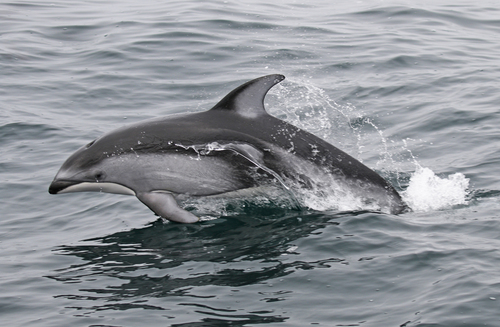
Sagmatias
Sagmatias was a genus of dolphins, defined in 1866 by Edward Drinker Cope with Peale's dolphin as type species, described as Sagmatias amblodon.
It has been proposed to resurrect the genus to include four species of oceanic dolphins currently classified in the genus Lagenorhynchus. Mitochondrial DNA studies have indicated that Pacific white-sided dolphin, Peale's dolphin, dusky dolphin and hourglass dolphin are more closely related to dolphins in the Lissodelphininae subfamily, than to the two other members of the genus: Atlantic white-sided dolphin and white-beaked dolphin. This phylogenetic
Brachydectes
Brachydectes is an extinct genus of lysorophian tetrapods that lived from the Late Carboniferous to the Early Permian. It had a very small head and long body, B. elongatus had long skull (averagely ) and pre-sacral length up to (averagely ), while B. newberryi, which have proportionally larger skull than B. elongatus, for specimen with skull roof had estimated total length of , while the largest skull exceeds .
Aspidoscelis septemvittata
species of reptile
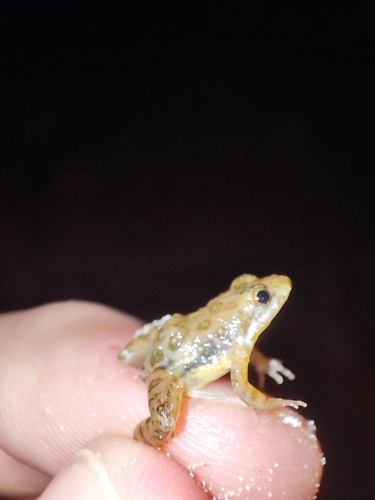
Pseudopaludicola ameghini
species of amphibian
Didymictis
Didymictis ("double weasel") is an extinct genus of placental mammals from the extinct subfamily Didymictinae within the extinct family Viverravidae, that lived in North America and Europe from the Late Paleocene to Middle Eocene.

Loxopholis
Loxopholis is a genus of lizards in the family Gymnophthalmidae. The genus is endemic to South America.
Myledaphus
Myledaphus is an extinct genus of guitarfish. It currently contains four valid species found in North America (M. bipartitus, M. pustulosus), South America (M. araucanus), and Central Asia (M. tritus). It is confirmed to have lived during the Late Cretaceous, with possible occurrences in the Paleocene and early Eocene. While the genus is mostly known from teeth, two partial skeletons of M. bipartitus have been found in the Dinosaur Park Formation of Alberta.

Anolis cyanopleurus
species of reptile
Loxocemus
Loxocemus bicolor, the sole member of the monotypic family Loxocemidae and commonly known as the Mexican python, Mexican burrowing python and Mexican burrowing snake, is a species of python-like snake found in Mexico and Central America. No subspecies are currently recognized. Analyses of DNA show that Loxocemus is most closely related to the true pythons and the sunbeam snakes.
thumb|At 9th Island Reptiles, a reptile store in Las Vegas.
Hemipsalodon
Hemipsalodon ("half-scissor tooth") is an extinct genus of hyainailourid hyaenodonts from the subfamily Hyainailourinae that lived in North America during the middle to late Eocene. H. grandis was the largest hyaenodont found in North America, weighing .
Baphetoidea
Baphetoidea is a superfamily of stem-tetrapods. It includes the family Baphetidae and several more basal genera such as Eucritta and Spathicephalus (which has been given its own family Spathicephalidae). The superfamily has also been called Loxommatoidea, but this name is a junior synonym of Baphetoidea.
Siphateles
Siphateles is a genus of fish belonging to the family Leuciscidae, native to the Western United States. They were formerly placed in the genus Gila.
Tuditanidae
Tuditanidae is an extinct family of microsaurian tetrapods. Fossils have been found from Nova Scotia, Ohio, and the Czech Republic and are Late Carboniferous in age.
Bolosaurus
Bolosaurus (from Ancient Greek bolos, "lump" + sauros: lizard]) is an extinct genus of bolosaurid reptile from the Cisuralian epoch (middle Sakmarian to early Kungurian stages) of North Asia and North America (Red Beds of Texas and Oklahoma).
Boodontinae
Boodontinae is a subfamily of colubrid snakes.
Claorhynchus
Claorhynchus (meaning "broken beak", as it is based on broken bones from the snout region) is a dubious genus of cerapodan dinosaur with a confusing history behind it. It has been considered to be both a hadrosaurid and a ceratopsid, sometimes the same as Triceratops, with two different assignments as to discovery formation and location, and what bones make up its type remains.
Geagras
genus of reptiles
Palaeoctonus
Palaeoctonus is an extinct genus of archosaur (possibly phytosaur) known only from isolated teeth. The name is derived from Greek (palaios meaning "ancient", -ktonos meaning "killer"). The genus is believed to have flourished during the Upper (Late) Triassic period.
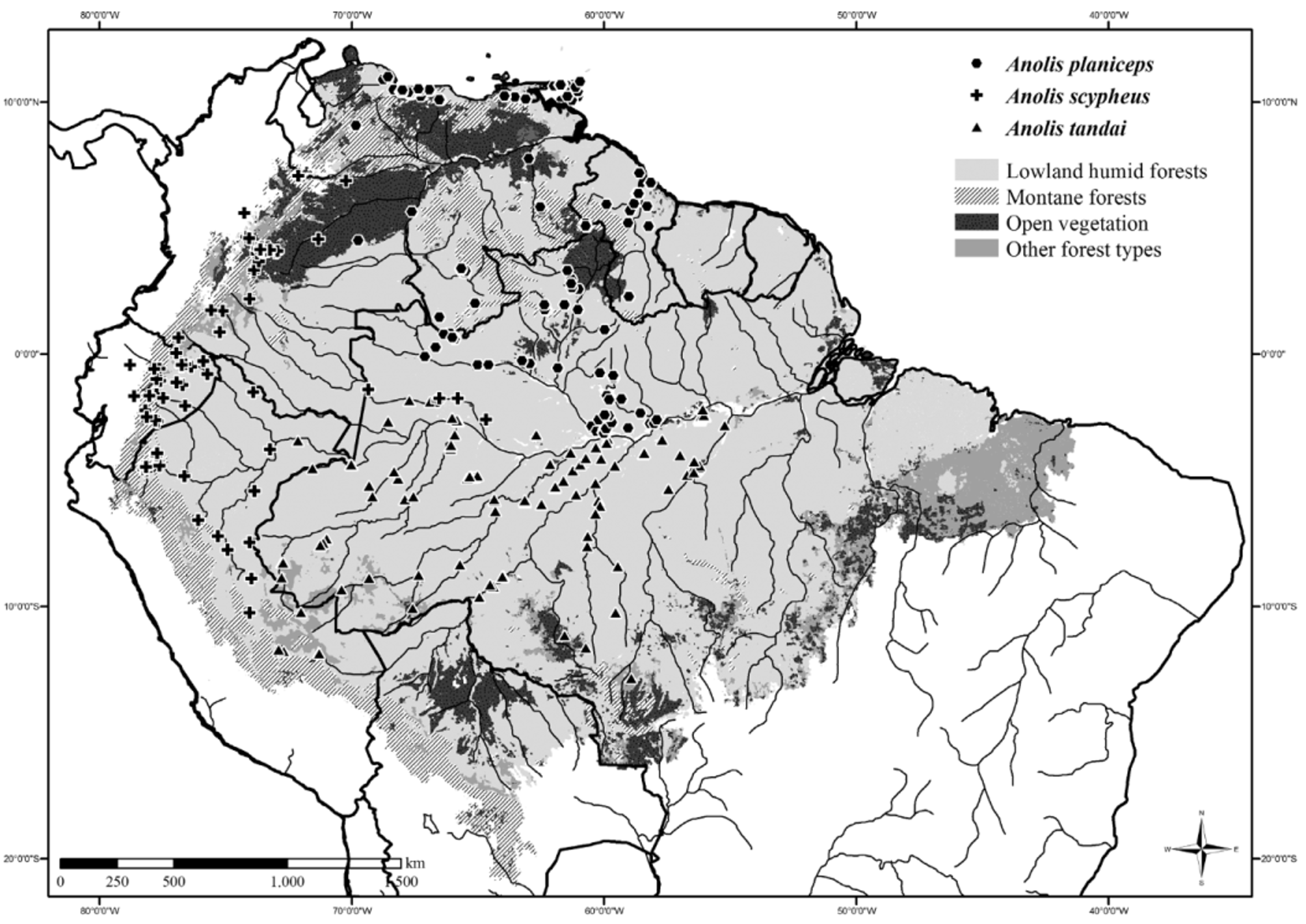
Anolis scypheus
species of reptile
Tetheopsis
Tetheopsis is an extinct genus of dinocerates from Eocene North America. The name of the genus derives from the Greek "tethe" (meaning "grandmother") and "opsis" (meaning "appearance"). Tetheopsis has only been found in the Washakie Basin, with all specimens being found on or near Haystack Mountain.
Peltosaurus
Peltosaurus is an extinct genus of anguid lizard from North America that lived from the Eocene to the Miocene. Peltosaurus belongs to the anguid subfamily Glyptosaurinae. The type species Peltosaurus granulosus was named in 1873 by American paleontologist Edward Drinker Cope. Many additional species have been named, but most have been reassigned to different genera. For example, Peltosaurus piger, named in 1928, was reclassified as Odaxosaurus piger, and P. jepseni, named in 1942 from the Paleocene of Wyoming, but was later reclassified as Proxestops jepseni. In 1955 a new species, Peltosaurus
Pelycodus
Pelycodus (from Ancient Greek πέλυξ (pélux), “bowl” + ὀδούς (odoús), “tooth”) is an extinct genus of adapiform primate that lived during the early Eocene (Wasatchian) period in Europe and North America, particularly Wyoming and New Mexico. It is very closely related to Cantius and may even be its subgenus. It may also have given rise to the Middle Eocene Uintan primate Hesperolemur, although this is controversial. From mass estimates based on the first molar, the two species, P. jarrovii and P. danielsae, weighed 4.5 kg and 6.3 kg respectively and were frugivores with an arboreal, qu
Mioplosus
Mioplosus is an extinct genus of lates perches that lived from the early to middle Eocene (about 56 to 33.9 million years ago). Five species of the genus has been described, Mioplosus labracoides is found in the Green River Formation Lagerstätte.
Saurodontidae
REDIRECT Ichthyodectiformes
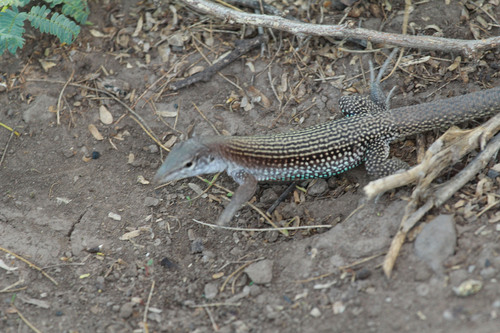
Pholidoscelis chrysolaemus
species of reptile
Cricotus
thumb|left|A skeleton of Cricotus crassidens (specimen AMNH 4550)
thumb|left|Detail of the skull and limbs of AMNH 4550
thumb|left|Illustration of the skull and ventral scutes of Cricotus heteroclitus by Edward Drinker Cope.
Ornithotarsus
Ornithotarsus () is a genus of hadrosaurid ornithopod dinosaurs that lived in North America during the Late Cretaceous Period in what is now the Merchantville Formation about 84 million to 78 million years ago.
Symmorium
left|thumb|Tooth assigned to Symmorium
Symmorium is an extinct symmoriiform cartilaginous fish from the Devonian and Carboniferous of the United States (Illinois) and Russia. The type species, Symmorium reniforme, was named by Edward Drinker Cope in 1893, with other species assigned to the genus having since been reclassified into other genera such as Petalodus. Symmorium bears close similarity in size and appearance to Stethacanthus but lacks the "spine-brush complex" in place of the first dorsal fin. Some paleontologists think that the two forms represented the males and females of related s
Paraphimophis
Paraphimophis is a genus of snake in the family Colubridae that contains the sole species Paraphimophis rusticus. It is commonly known as the Culebra.
Oligobunis
Oligobunis is an extinct genus of mustelids, which existed during the Miocene epoch.
Adelphicos visoninum
species of reptile
Asineops
Asineops is an enigmatic genus of extinct freshwater ray-finned fish from the Eocene. It is the only member of the family Asineopidae and contains a single species, A. squamifrons, from the famous Green River Formation of Colorado, Wyoming, and Utah. It was described by Edward Drinker Cope in 1870. The name comes from the Greek for "donkey-faced".
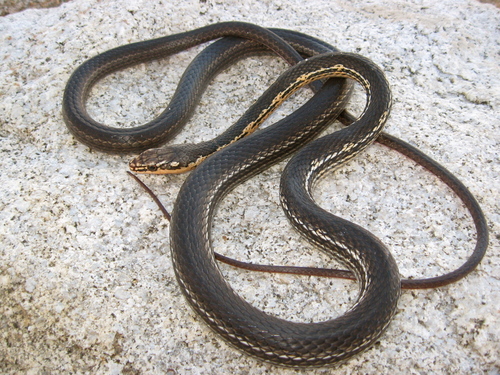
Masticophis aurigulus
species of reptile
Loxopholis rugiceps
species of reptile
Orconectes inermis
species of crustacean
Enhydrocyon
Enhydrocyon is an extinct genus of bone crushing canid which inhabited North America during the Oligocene and Early Miocene, 30.8—20.4 Ma, existing for approximately .
Isodectes
Isodectes is an extinct genus of dvinosaurian temnospondyl within the family Eobrachyopidae. The genus Saurerpeton, named in 1909, is considered to be a junior synonym of Isodectes.
Hypsiboas palliatus
species of Amphibia
Phlegethontiidae
Phlegethontiidae is a family of extinct aistopod tetrapodomorphs including the genera Phlegethontia and Sillerpeton.
Sympholis
Sympholis is a genus of snake in the family Colubridae that contains the sole species Sympholis lippiens. It is commonly known as the Mexican short-tail snake.
Achaenodon
Achaenodon is an extinct artiodactyl mammal belonging to the family Helohyidae. It lived in the mid-late Eocene (about 43-39 million years ago) and its fossil remains have been found in North America.
Acrodonta
subclade of lizards
Pholidoscelis taeniurus
species of reptile
Crossopholis
Crossopholis is an extinct paddlefish known from the early Eocene (Ypresian) of North America, approximately 52 million years ago. It is a close relative of the contemporary American paddlefish, though it is thought to have been a fish-eater like the Chinese paddlefish rather than a filter feeder.