Category
page 1Taxa named by Eugène Simon

Pisauridae
family of spider

Argiope
genus of arachnids

Clubionidae
family of arachnids
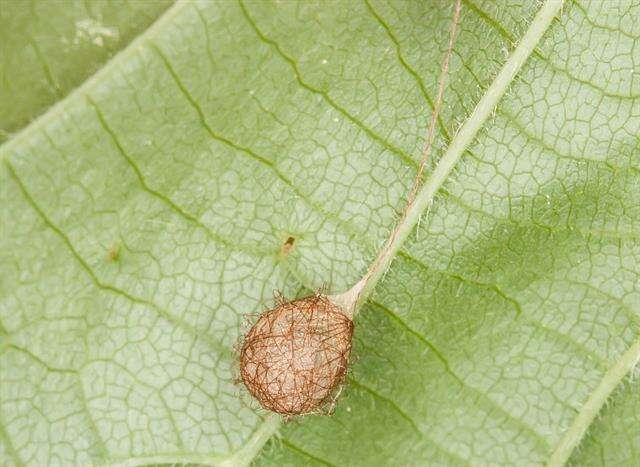
Mimetidae
family of spiders
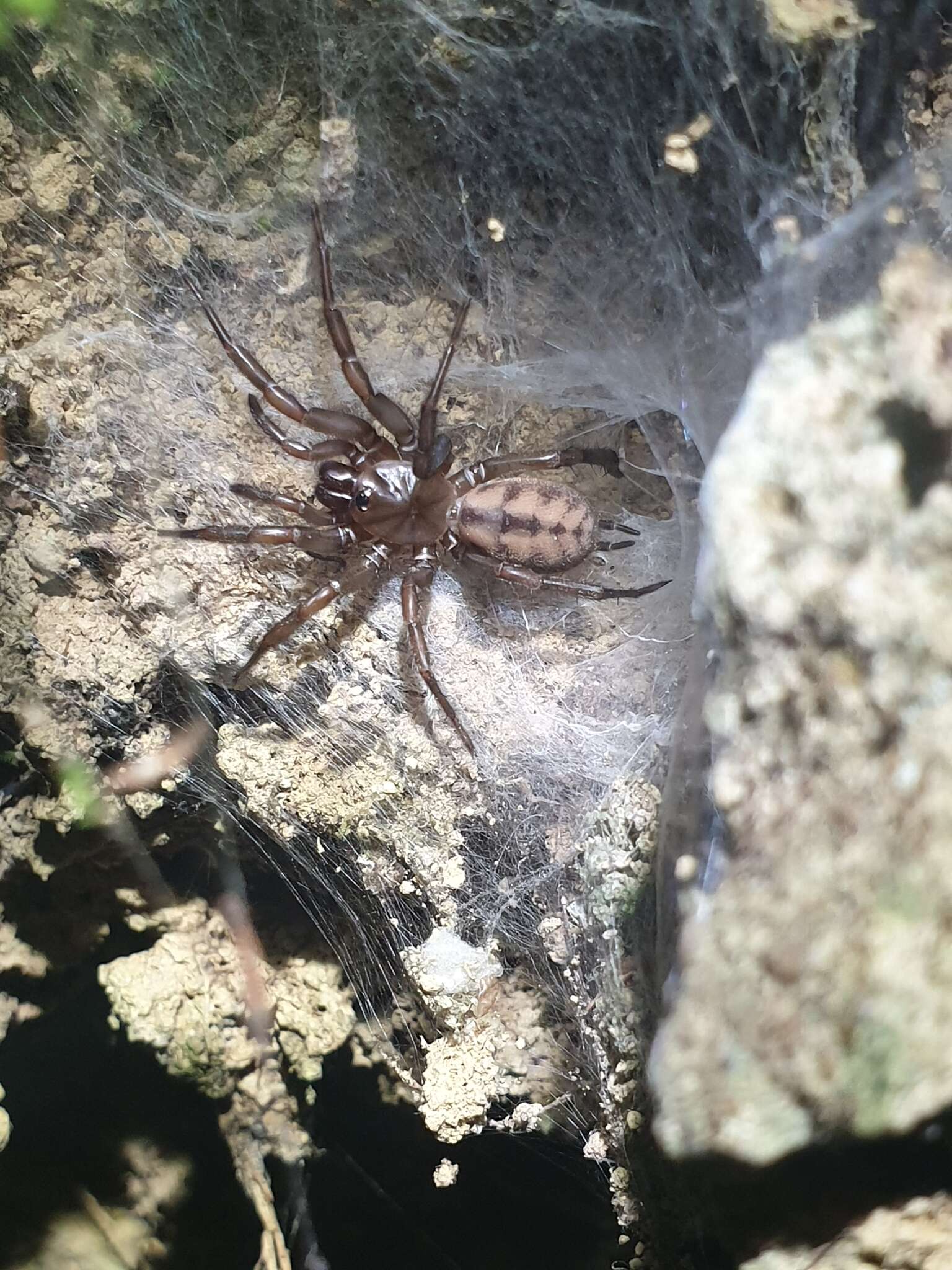
Hexathelidae
Hexathelidae is a family of mygalomorph spiders. It is one of a number of families and genera of spiders known as tunnelweb or funnel-web spiders. In 2018, the family was substantially reduced in size by genera being moved to three separate families: Atracidae, Macrothelidae and Porrhothelidae.
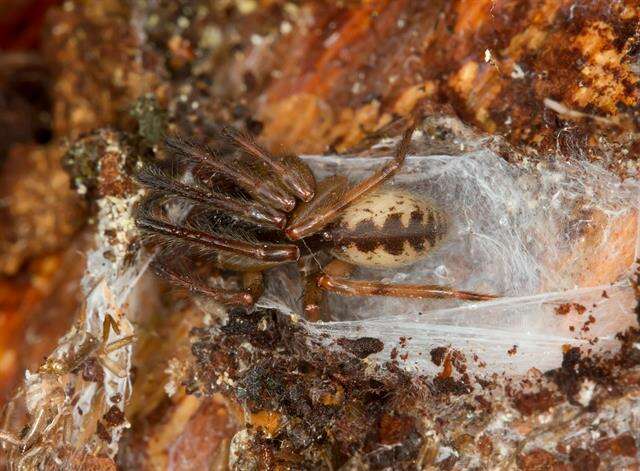
Segestriidae
spider family
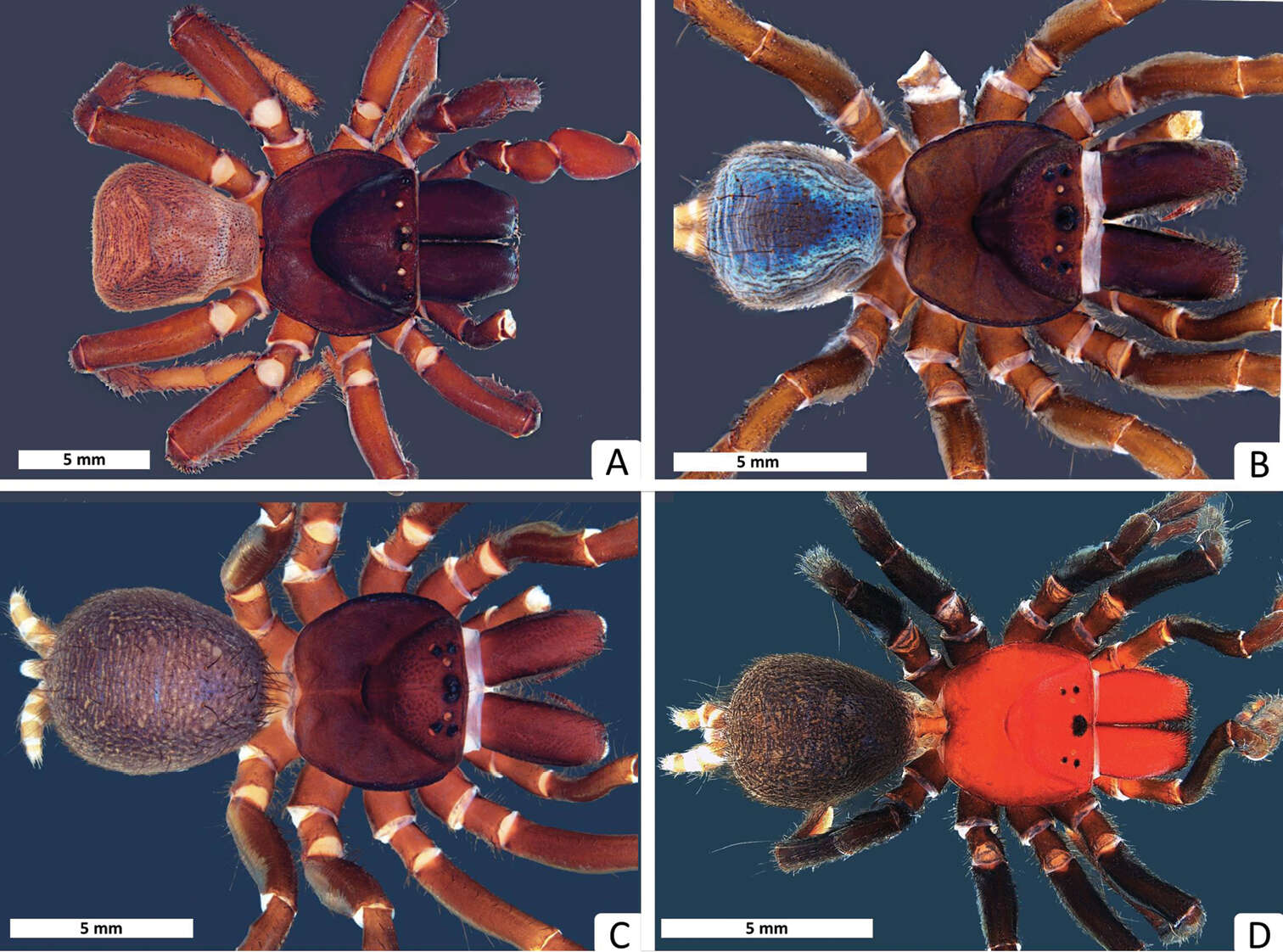
Actinopodidae
Actinopodidae is a family of mygalomorph spiders found in mainland Australia and South America usually in open forest. Species are most common in Queensland, Australia. It includes mouse spiders (Missulena species), whose bites, though rare, are considered medically significant and potentially dangerous.

Miturgidae
Miturgidae is a family of araneomorph spiders that includes about 200 species in 33 genera worldwide.

Nemesiidae
Nemesiidae is a family of mygalomorph spiders first described by Eugène Simon in 1889, and raised to family status in 1985. Before becoming its own family, it was considered part of "Dipluridae". The family is sometimes referred to as wishbone spiders due to the shape of their burrows.
Nesticidae
family of spiders

Dipluridae
The family Dipluridae, known as curtain-web spiders (or confusingly as funnel-web tarantulas, a name shared with other distantly related families) are a group of spiders in the infraorder Mygalomorphae, that have two pairs of booklungs, and chelicerae (fangs) that move up and down in a stabbing motion. A number of genera, including that of the Sydney funnel-web spider (Atrax), used to be classified in this family but have now been moved to Atracidae.
Anapidae
Anapidae is a family of rather small spiders with 233 described extant species in 59 genera. It includes the former family Micropholcommatidae as the subfamily Micropholcommatinae, and the former family Holarchaeidae. Most species are less than long.

Oonopidae
Oonopidae, also known as goblin spiders, is a family of spiders consisting of almost 2,000 described species in 115 genera worldwide, with total species diversity estimated at 2000 to 2500 species. The type genus of the family is Oonops Keyserling, 1835.
Haplophaedia
Haplophaedia is a small genus of hummingbirds, which – together with the members of the genus Eriocnemis – are known as pufflegs. They are found at low levels in humid forest, woodland and shrub at altitudes of in the Andes of Bolivia, Peru, Ecuador, and Colombia. All species have a straight black bill, a coppery-green plumage, and a slightly forked dark blue tail. The leg-puffs are white in the greenish and hoary pufflegs, and buff-tinged in the buff-thighed puffleg.

Liocranidae
Liocranidae is a family of araneomorph spiders first described by Eugène Simon in 1897. They are one of several groups called "sac spiders".
Selenopidae
Selenopidae, also called wall crab spiders, wall spiders and flatties, is a family of nocturnal, free-ranging, araneomorph spiders first described by Eugène Simon in 1897. It contains over 281 species in nine genera, of which Selenops is the most well-known.

Brachypelma
Brachypelma is a genus of spiders in the family Theraphosidae (tarantulas). They may have bodies up to long with legs of similar or greater lengths. Some species have brightly colored legs, with red or orange marks and rings.
Plectreuridae
Plectreuridae, also called plectreurid spiders, is a small spider family confined to the Southwestern United States, Mexico, and the Caribbean. Only two living genera are known—the nominate genus Plectreurys and Kibramoa.
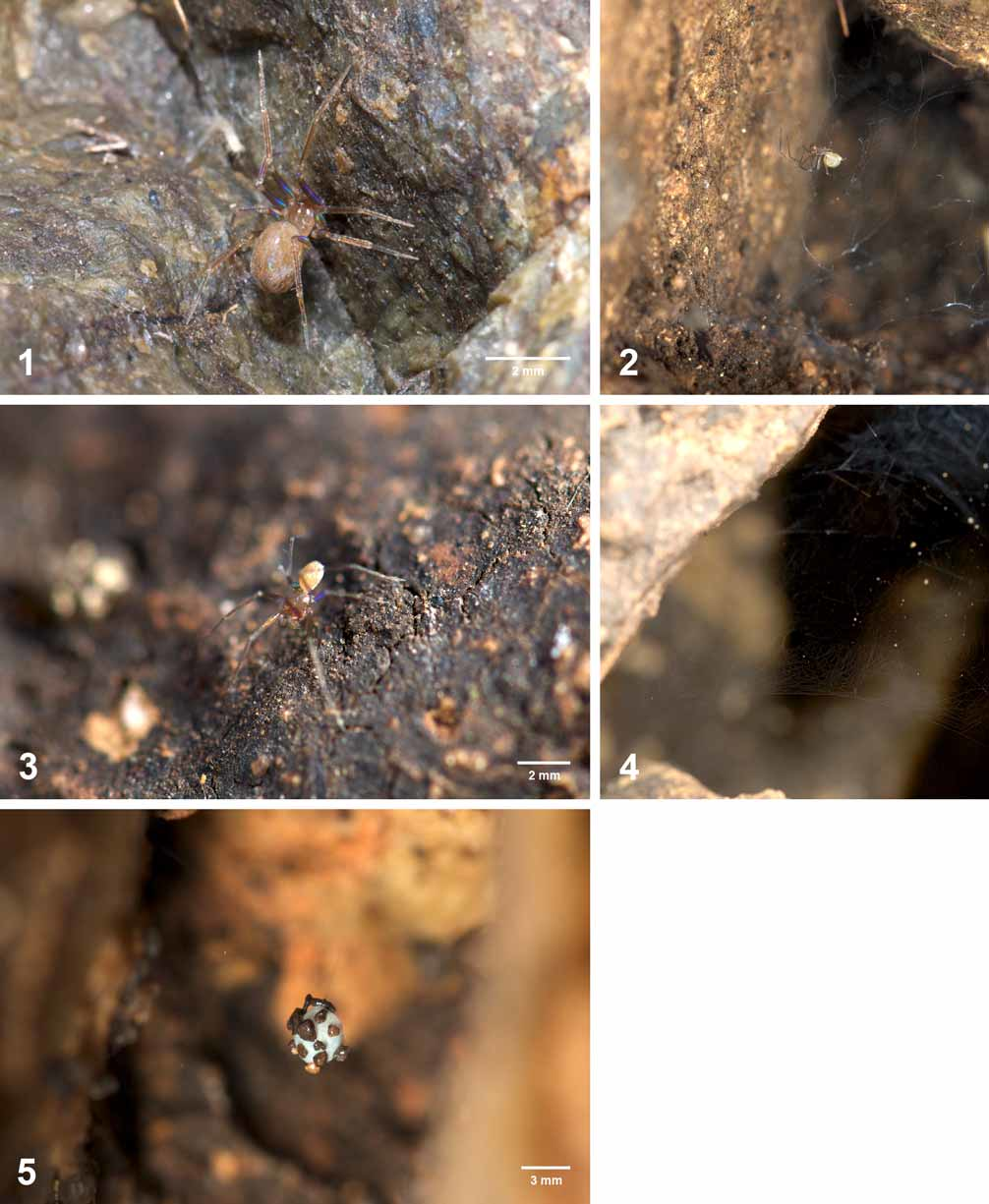
Leptonetidae
Leptonetidae is a family of small spiders adapted to live in dark and moist places such as caves. The family is relatively primitive having diverged around the Middle Jurassic period. They were first described by Eugène Simon in 1890.

Idiopidae
Idiopidae, also known as armored or spiny trapdoor spiders, is a family of mygalomorph spiders first described by Eugène Simon in 1889.
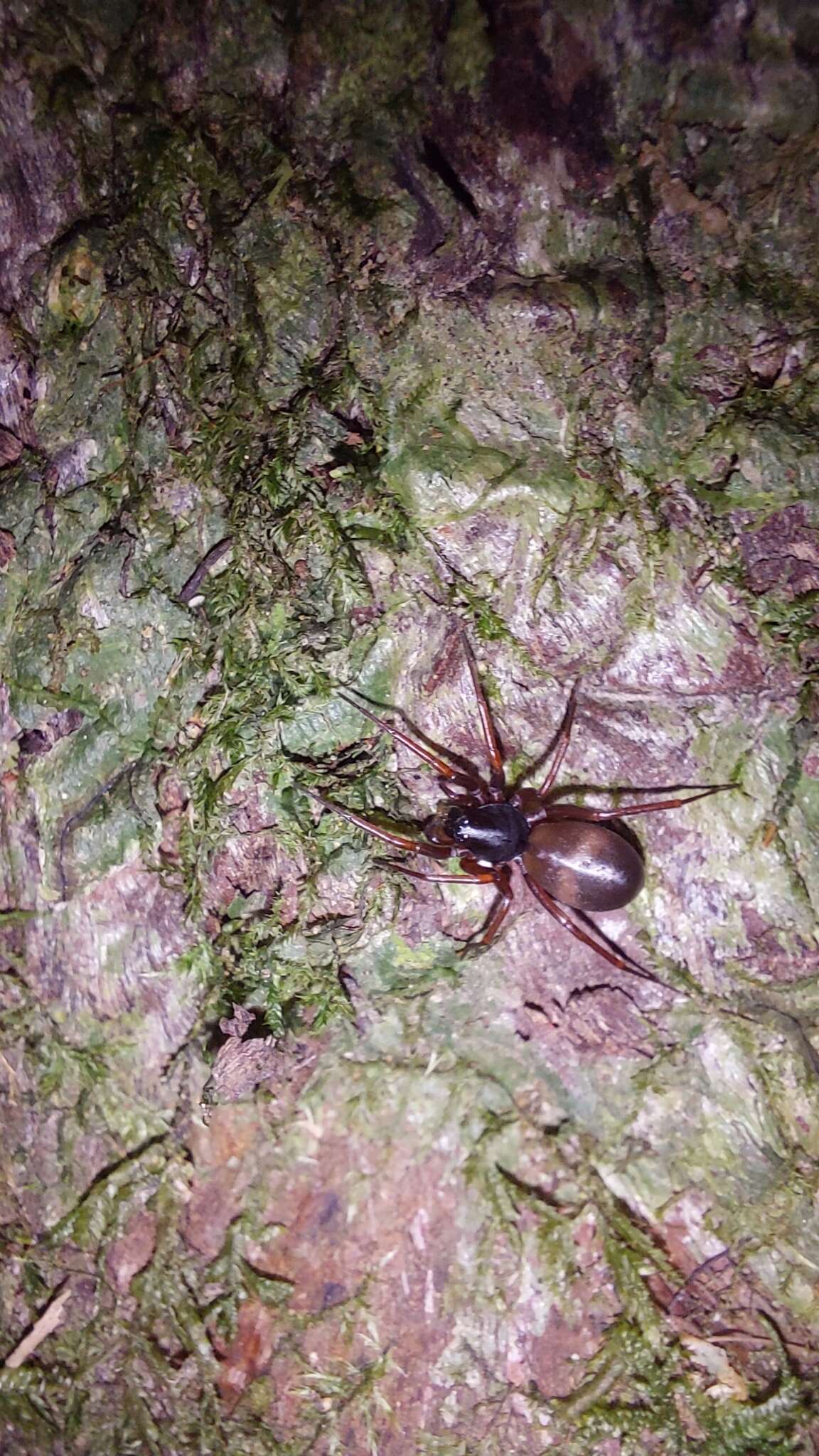
Lamponidae
Lamponidae is a family of spiders first described by Eugène Simon in 1893. It contains about 200 described species in 23 genera, most of which are endemic to Australia, with the genus Centrocalia endemic to New Caledonia, and two Lampona species (L. cylindrata, L. murina) also occurring in New Zealand where they are commonly known as 'white-tailed spiders'. Lampona papua is endemic to New Guinea, where two otherwise Australian species (Centrothele mutica, Lamponova wau) also occur.
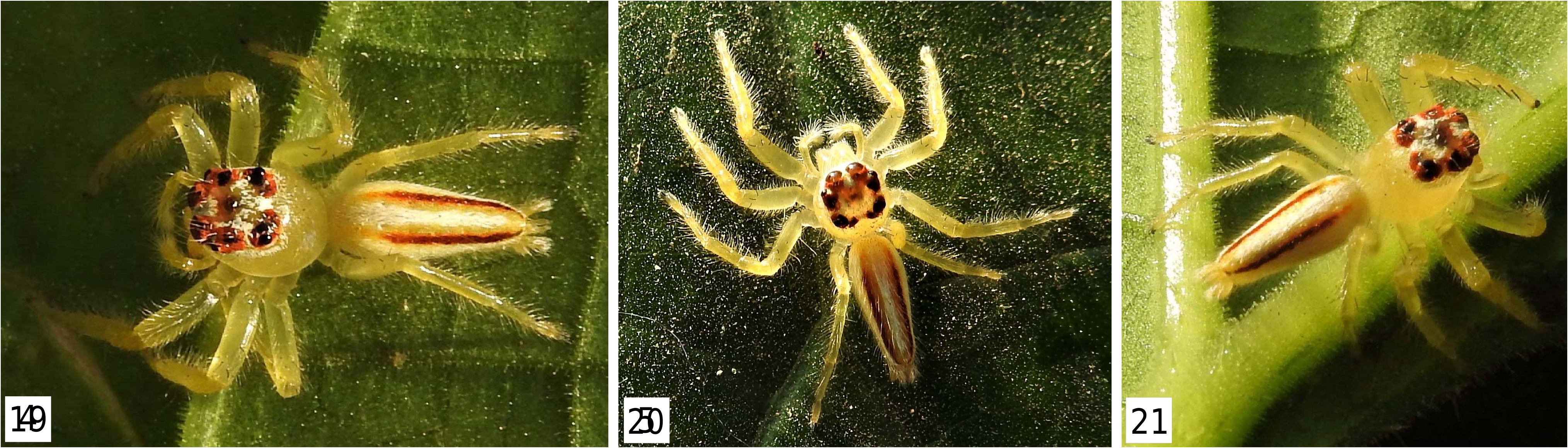
Telamonia dimidiata
species of arachnid
Alopecosa
Alopecosa is a spider genus in the family Lycosidae (wolf spiders), with about 160 species. They have a largely Eurasian distribution, although some species are found in North Africa and North America.
Entelegynae
The Entelegynae or entelegynes are a subgroup of araneomorph spiders, the largest of the two main groups into which the araneomorphs were traditionally divided. Females have a genital plate (epigynum) and a "flow through" fertilization system; males have complex palpal bulbs. Molecular phylogenetic studies have supported the monophyly of Entelegynae (whereas the other traditional subgroup, the Haplogynae, has been shown not to be monophyletic).

ray spider
family of arachnids
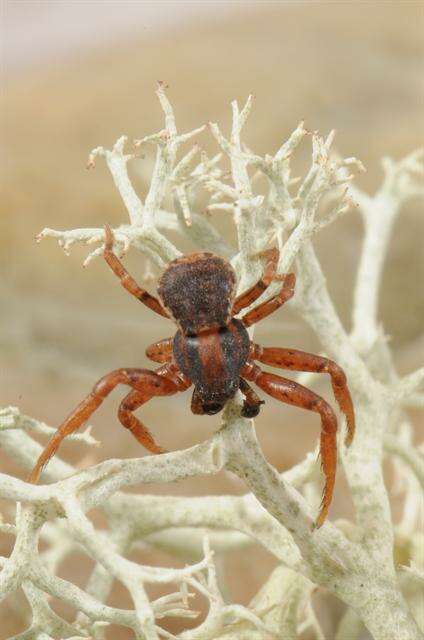
Ozyptila
Ozyptila is a genus of crab spiders that was first described by Eugène Louis Simon in 1864. It has been misspelled as "Oxyptila" in multiple accounts.

Neoscona
Neoscona, known as spotted orb-weavers and barn spiders, is a genus of orb-weaver spiders (Araneidae) with more than 100 described species. It was erected by Eugène Simon in 1895 to separate these from other araneids in the now obsolete genus Epeira.
Aelurillus
Aelurillus is a genus of spiders in the family Salticidae (jumping spiders).
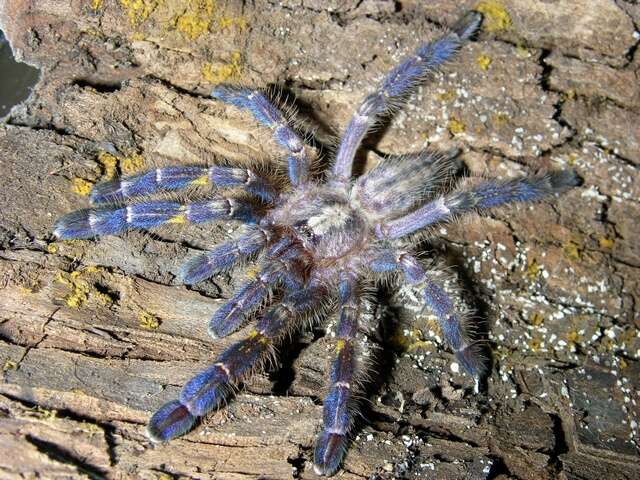
Poecilotheria
Poecilotheria is a genus of tarantulas native to India and Sri Lanka. It was first described by Eugène Louis Simon in 1885. They are arboreal tarantulas, commonly known as ornamental tarantulas, known for their vivid color patterns, fast movement, and potent venom compared to other tarantulas. all species are protected under CITES.
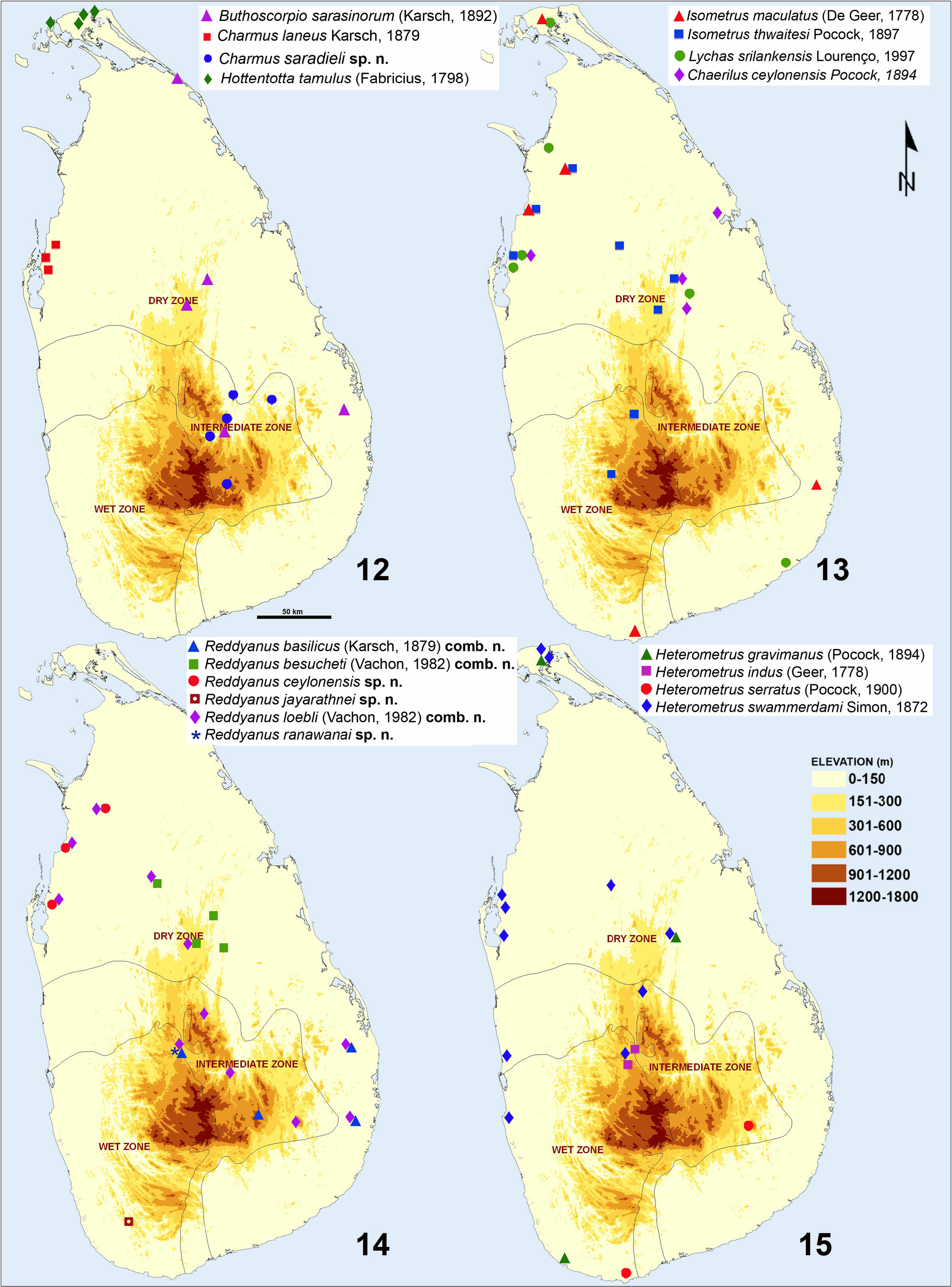
Heterometrus swammerdami
species of scorpions
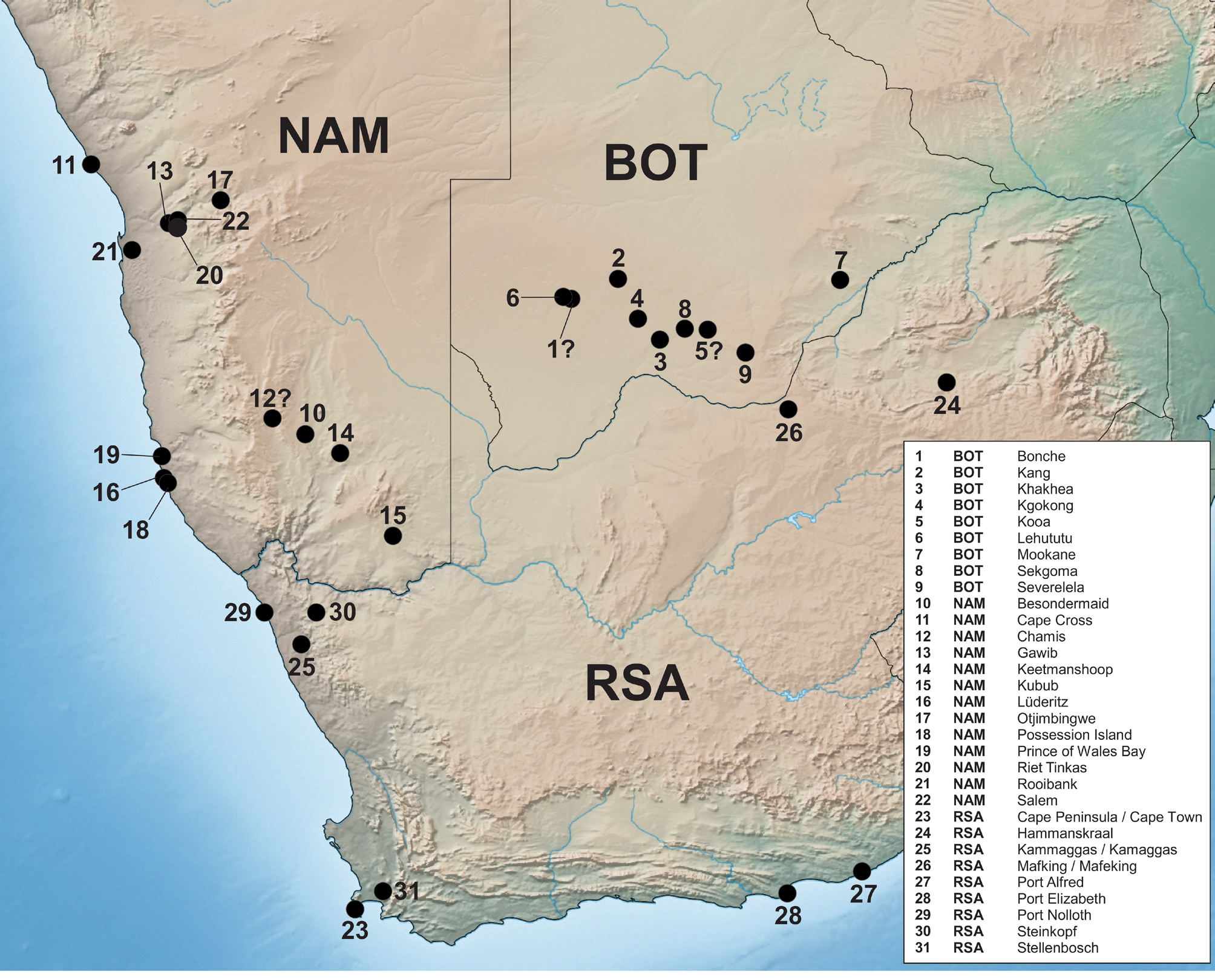
Cyrtaucheniidae
family of spiders
Caponiidae
Caponiidae is a family of ecribellate haplogyne spiders that are unusual in a number of ways. They differ from other spiders in lacking book lungs and having the posterior median spinnerets anteriorly displaced to form a transverse row with the anterior lateral spinnerets. Most species have only two eyes, which is also unusual among spiders. A few species of Caponiidae variously have four, six or eight eyes. In some species the number of eyes will increase when the spiderling changes its skin as it grows towards adulthood.
Evarcha
Evarcha is a genus of spiders in the family Salticidae (jumping spiders) with 85 species (and one recognized subspecies) distributed across the world.
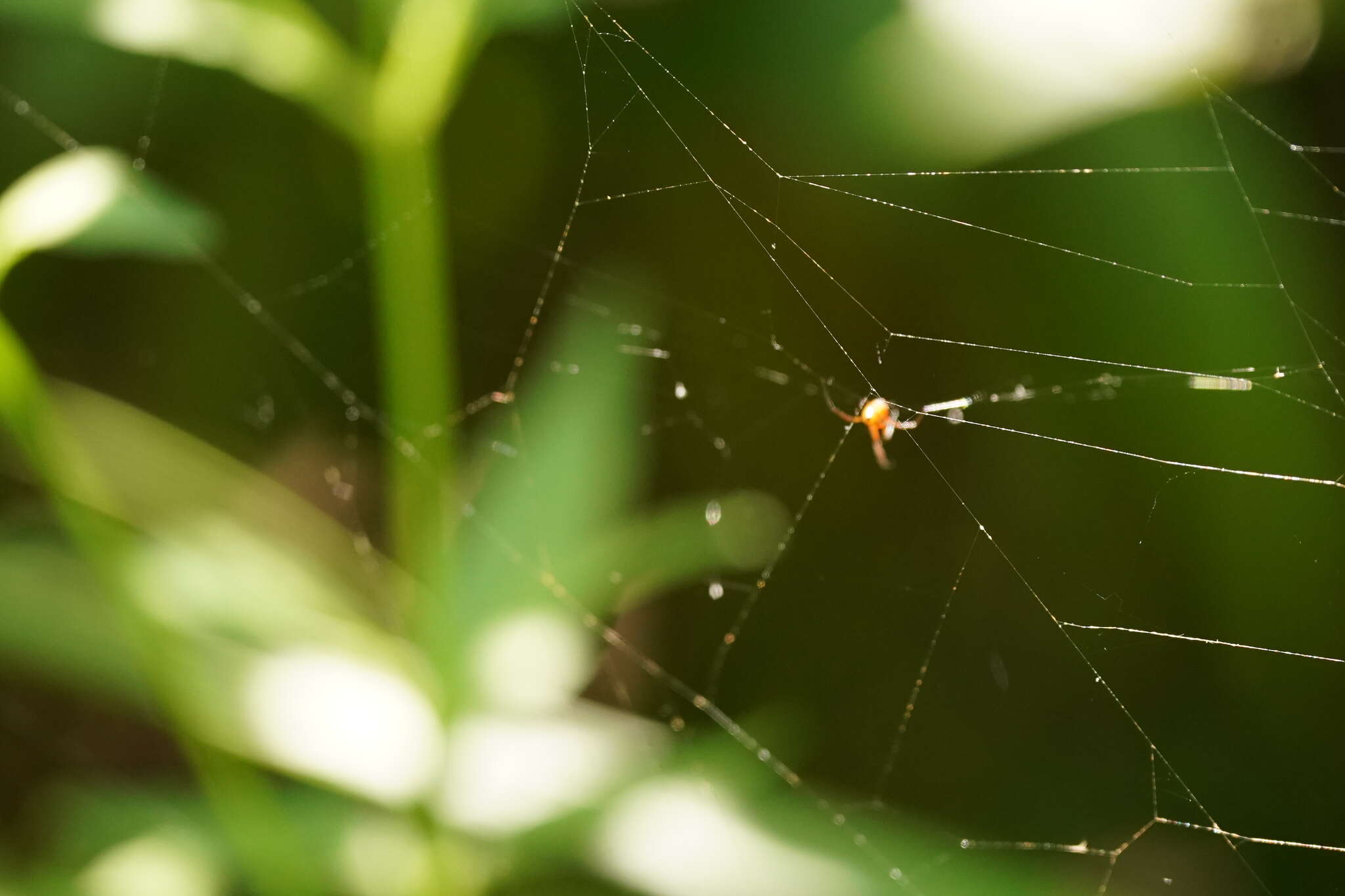
Argyrodes
Argyrodes, also called dewdrop spiders, is a genus of comb-footed spiders that was first described by Eugène Louis Simon in 1864. They occur worldwide, and are best known for their kleptoparasitism. They can spin their own webs, but tend to invade and reside in their hosts' webs. This relationship can be commensal or even mutual if the dewdrop spider feeds on small trapped insects that are not eaten by the host. Some species can even prey upon the host.
Grammostola
Grammostola is a genus of South American tarantulas that was first described in text by Eugène Louis Simon in 1892. These medium- to large-sized spiders are native to tropical South America, and are usually brown in color, with pinkish or orangish-red hairs. The very docile Chilean rose tarantula (Grammostola rosea) is popular as a beginner's spider among tarantula enthusiasts.
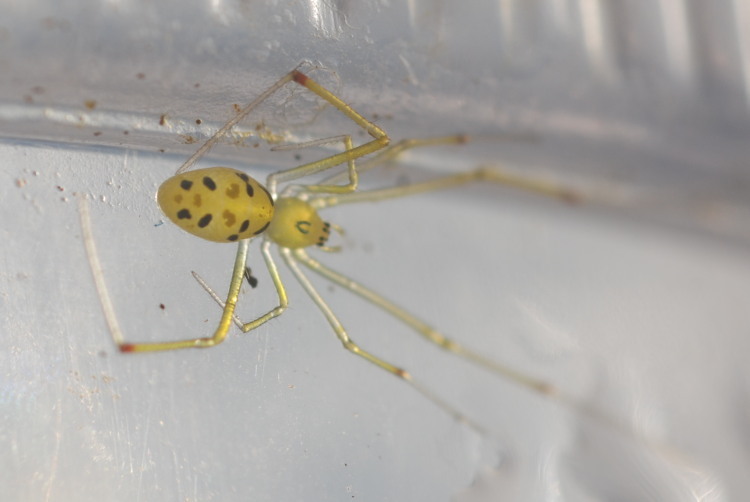
Theridion grallator
species of arachnid

Nicodamidae
Nicodamidae is a family of araneomorph spiders with twenty-seven species in seven genera. They are small to medium-sized spiders found near the ground of eucalypt forest in small sheet webs. The species of this family are only present in Australia and Papua New Guinea. In most cases the cephalothorax and legs are uniformly red and the abdomen black, for which these species are sometimes called the "red and black spiders".

Aptostichus
Aptostichus is a genus of North American mygalomorph spiders in the family Euctenizidae, and was first described by Eugène Simon in 1891. They are found predominantly in southern California, United States.

Migidae
Migidae, also known as tree trapdoor spiders, is a family of spiders with about 100 species in eleven genera.

Hogna
Hogna is a genus of wolf spiders with more than 200 described species. It is found on all continents except Antarctica.

Trechaleidae
Trechaleidae (tre-kah-LEE-ih-dee) is a family of araneomorph spiders first described by Eugène Simon in 1890. It includes about 140 described species in 18 genera, mostly in the New World tropics.
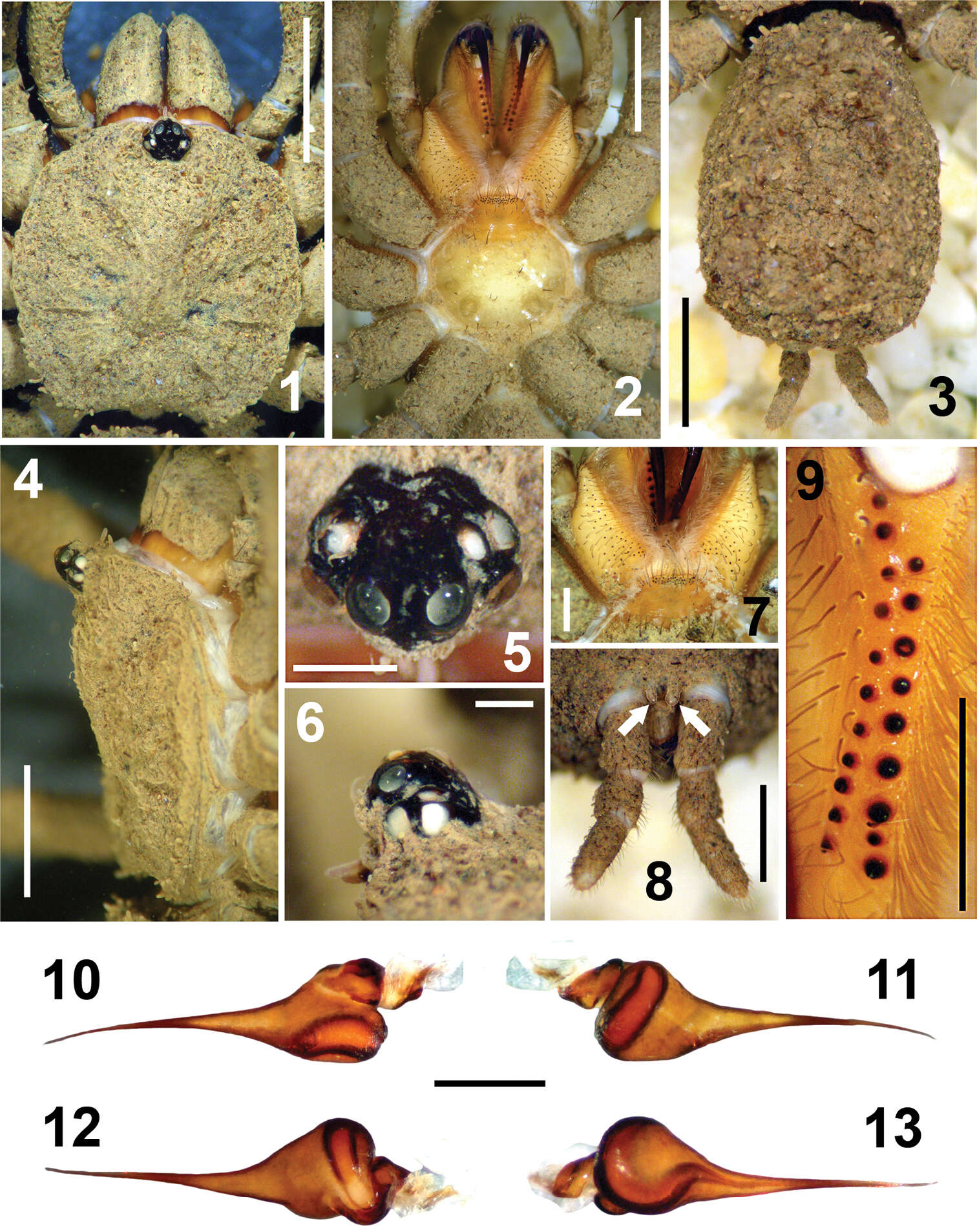
Paratropididae
Paratropididae, also known as bald-legged spiders, is a small family of mygalomorph spiders first described by Eugène Simon in 1889. They are more closely related to tarantulas and allies, than to most other 'true' spiders (araneomorphs).

Pisaura
Pisaura is a genus of Eurasian spiders in the family Pisauridae.

Cycloctenidae
Cycloctenidae is a family of spiders first described by Eugène Simon in 1898.

Mecysmaucheniidae
Mecysmaucheniidae is a family of araneomorph spiders first described by Eugène Simon in 1895. Most genera occur in South America (Chile and Argentina), with two genera endemic to New Zealand.
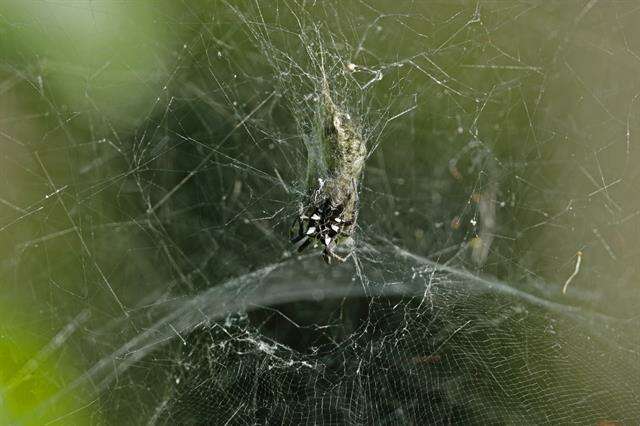
Cyrtophora
Cyrtophora, the tent-web spiders, is a genus of orb-weaver spiders first described by Eugène Simon in 1895. Although they are in the "orb weaver" family, they do not build orb webs. Their tent-like, highly complex non-sticky web is sometimes considered a precursor of the simplified orb web. These webs are aligned horizontally, with a network of supporting threads above them. These spiders often live in colonies. Females have a body length of mostly about long. Some members, including Cyrtophora cicatrosa, exhibit the ability to change colour rapidly.

Psechridae
Psechridae is a family of araneomorph spiders with about 60 species in two genera. These are among the biggest cribellate spiders with body lengths up to and funnel webs more than in diameter.
Cithaeronidae
Cithaeronidae is a small family of araneomorph spiders first described by Simon in 1893 Female Cithaeron are about long, males about .
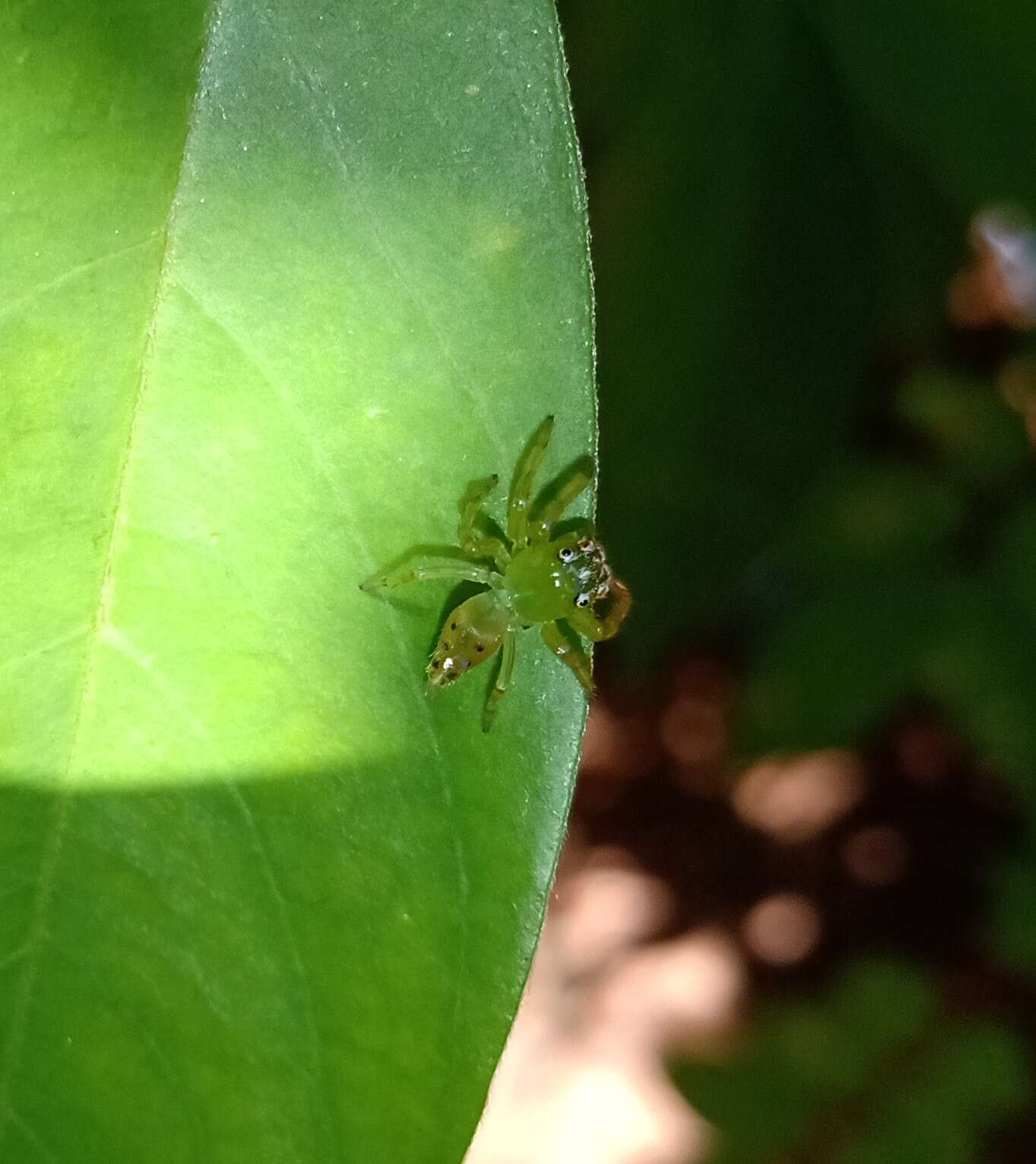
Acragas
genus of arachnids

Tetragnatha montana
species of arachnid
%20with%20female%20katydid%20prey%20(Tettigoniidae%20sp.).jpg)
Cupiennius
thumb|C. getazi with female katydid prey (Tettigoniidae sp.), Panama
Cupiennius, known by the common name bromeliad spiders or as the often confused name banana spiders, is a genus of araneomorph spiders in the family Trechaleidae, named by Eugène Simon in 1891. They are found from Mexico to northwestern South America, and on some Caribbean islands. Unlike the dangerously venomous Phoneutria, bites from these spiders typically have only minor effects on humans, and have been compared to a bee sting.

Heriaeus
Heriaeus is a genus of crab spiders that was first described by Eugène Louis Simon in 1875.

Larinia
Larinia is a genus of orb-weaver spiders first described by Eugène Simon in 1874.
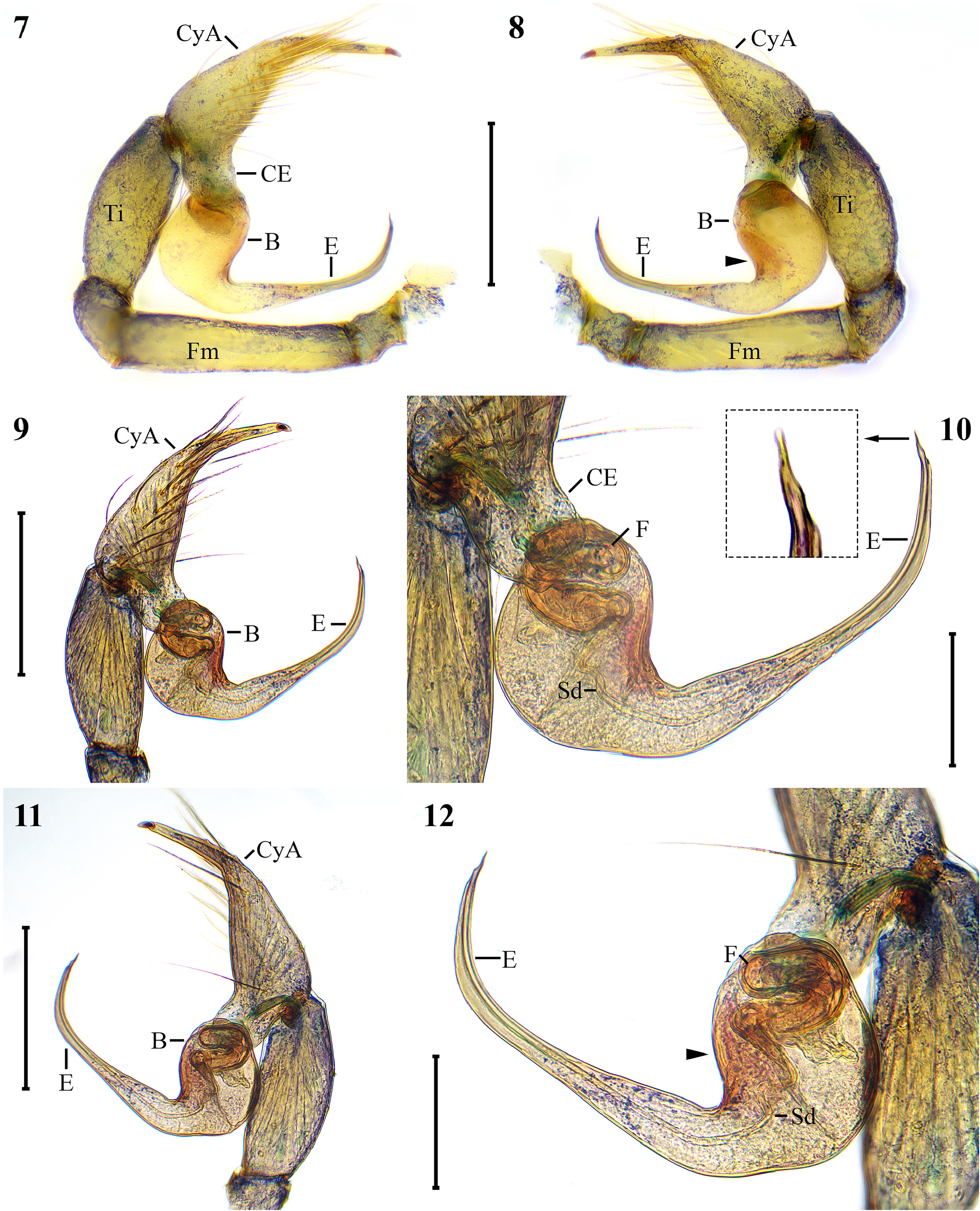
Ochyrocera
Ochyrocera is a genus of midget ground weavers that was first described by Eugène Louis Simon in 1892.

Tiso
genus of arachnids
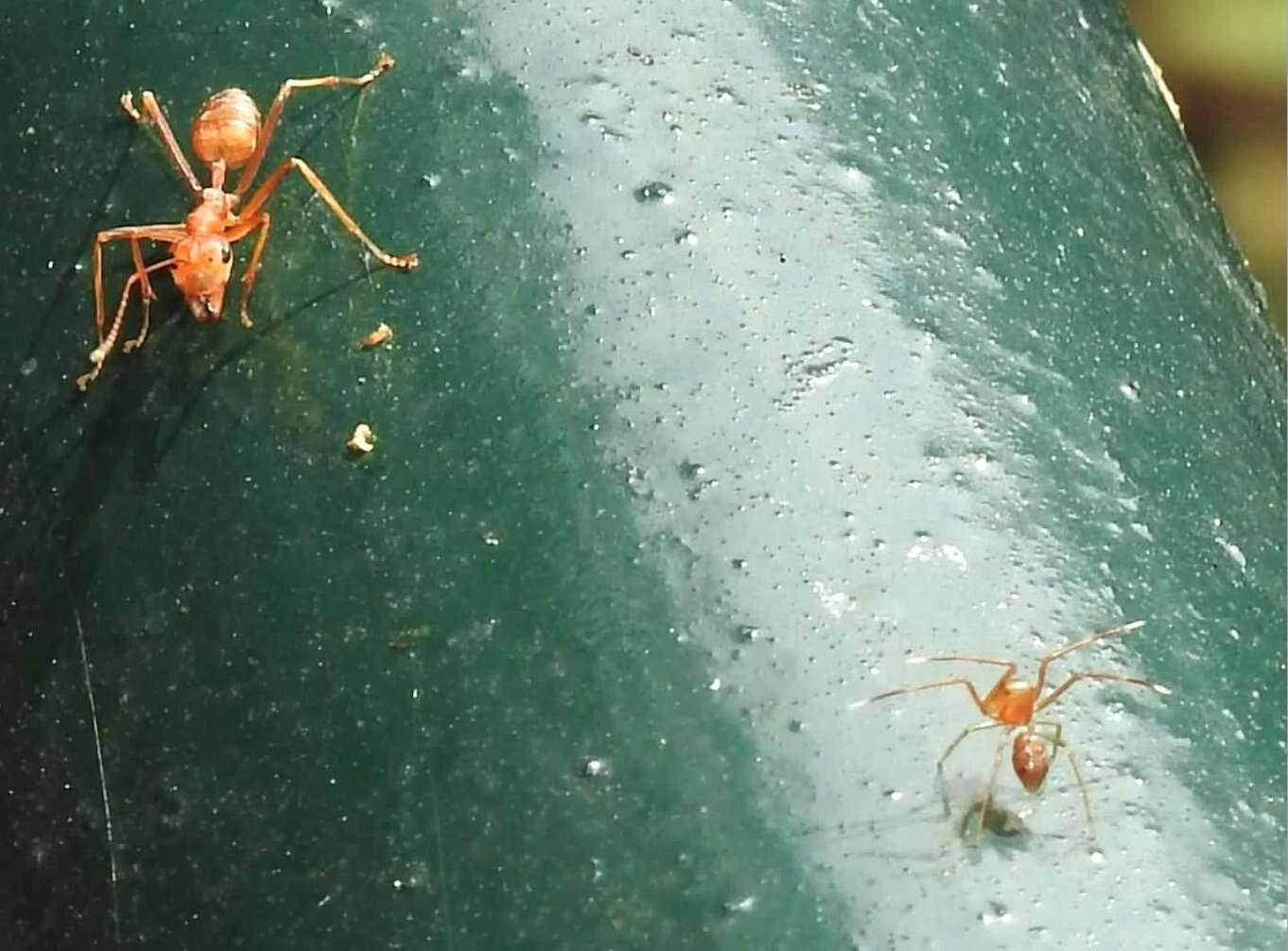
Amyciaea
Amyciaea is a genus of ant mimicking crab spiders that was first described by Eugène Louis Simon in 1885.

Cosmophasis
Cosmophasis is a genus of spiders in the family Salticidae (jumping spiders). They are predominantly Southeast Asian, while some species occur in Africa and Australia. Although most species more or less mimic ants, there are also colorful species that follow a different strategy.

Arachnura melanura
species of arachnid
Cyatholipidae
Cyatholipidae is a family of spiders first described by Eugène Simon in 1894. Most live in moist montane forest, though several species, including Scharffia rossi, live in dry savannah regions. They occur in Africa, including Madagascar, New Zealand and Australia, and one species (Pokennips dentipes) in Jamaica. Most members of this family hang beneath sheet webs. Fossil species occur in the Eocene aged Bitterfield and Baltic Ambers, suggesting a wider geographic distribution in the past.

Menemerus
Menemerus is a genus of jumping spiders that was first described by Eugène Louis Simon in 1868. They are long, flattened in shape, and very hairy, usually with brown and grayish hairs. Most species have white edges on the thorax. The abdomen is often oval, or sometimes elongated or rounded.