Category
page 1Taxa named by Franz Oberwinkler
Pucciniomycotina
Pucciniomycotina is a subdivision of fungus within the division Basidiomycota. The group was known as Urediniomycetes until 2006, when it was elevated from a class to a subdivision and named after the largest order in the group, Pucciniales.
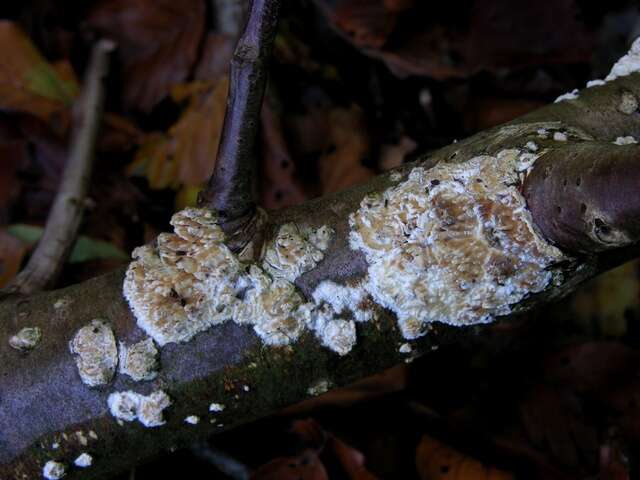
Hymenochaetales
The Hymenochaetales are an order of fungi in the class Agaricomycetes. The order in its current sense is based on molecular research and not on any unifying morphological characteristics. According to one 2008 estimate, the Hymenochaetales contain around 600 species worldwide, mostly corticioid fungi and poroid fungi, but also including several clavarioid fungi and agarics. Species of economic importance include wood decay fungi in the genera Phellinus and Inonotus sensu lato, some of which may cause losses in forestry. Therapeutic properties are claimed for Inonotus obliquus ("chaga") and Phe
Thelephorales
The Thelephorales are an order of fungi in the class Agaricomycetes. The order includes corticioid and hydnoid fungi, together with a few polypores and clavarioid species. Most fungi within the Thelephorales are ectomycorrhizal. None is of any great economic importance, though Sarcodon imbricatus is edible and commercially marketed, whilst several species have been used for craft dyeing.
Microbotryomycetes
The Microbotryomycetes are a class of fungi in the subdivision Pucciniomycotina of the Basidiomycota. The class currently contains eight orders, plus three additional, unassigned families (Chrysozymaceae, Colacogloeaceae, and Mycogloiocolacaceae), plus seven additional, unassigned genera (Oberwinklerozyma, Pseudohyphozyma, Reniforma, Spencerozyma, Trigonosporomyces, Vonarxula, and Yunzhangia). Many species are known only from their yeast states. Species with hyphal states typically produce auricularioid (laterally septate) basidia and are often parasitic on other fungi or plants. Several speci

Mixia osmundae
The Mixiomycetes are a class of fungi in the Pucciniomycotina subdivision of the Basidiomycota. The class contains a single order, the Mixiales, which in turn contains a single family, the Mixiaceae that circumscribes the monotypic genus Mixia. Only one species has been described to date, Mixia osmundae; this species was originally named Taphrina osmundae by Japanese mycologist Toji Nishida in 1911. It is characterized by having multinucleate hyphae, and by producing multiple spores on sporogenous cells.
Cystobasidiomycetes
The Cystobasidiomycetes are a class of fungi in the subdivision Pucciniomycotina of the Basidiomycota. Most species are known from their yeast states; hyphal states, when present, produce auricularioid (laterally septate) basidia and are frequently (possibly always) parasites of other fungi. The class contains five orders (Buckleyzymales, Cystobasidiales, Erythrobasidiales, Naohideales, and Sakaguchiales) as well as two families (Microsporomycetaceae and Symmetrosporaceae) and one genus (Queiroziella) of uncertain disposition. An additional order, Cyphobasidiales, has been proposed to accommod
Cryptomycocolacaceae
The Cryptomycocolacomycetes are a class of fungi in the Pucciniomycotina subdivision of the Basidiomycota. The class contains a single order, the Cryptomycocolacales, which in turn contains the single family Cryptomycocolacaceae. The family has two monotypic genera.
Urocystidales
The Urocystidales are an order of fungi within the class Ustilaginomycetes. The order contains 6 families and about 400 genera. They are a sister order to Ustilaginales.

Xenasmataceae
The Xenasmataceae are a family of crust fungi in the order Polyporales. The family was circumscribed in 1966 by German mycologist Franz Oberwinkler with Xenasma as the type genus. , Index Fungorum accepts 28 species in the family. Xenasmataceae fungi grow as saprobes on fallen wood and are known primarily from temperate areas.
Stephanosporaceae
The Stephanosporaceae are a family of fungi in the order Agaricales. Species in the family are gasteroid or corticioid, growing on the ground or on rotting wood or plant debris.
Atractiellomycetes
The Atractiellomycetes are class of fungi in the Pucciniomycotina subdivision of the Basidiomycota. The class consists of a single order, the Atractiellales, which contains 3 families, 10 genera, and 58 species.

Microbotryales
The Microbotryales are an order of fungi in the Microbotryomycetes class of the Basidiomycota. The order contains 2 families, 9 genera, and 114 species. The order was circumscribed in 1997.
Tilletiales
The Tilletiales are an order of smut fungi in the class Exobasidiomycetes. It is a monotypic order, consisting of a single family, the Tilletiaceae, which contains seven genera. The roughly 150 species in the Tilletiales all infect hosts of the grass family, except for species of Erratomyces, which occur on legumes.
Acanthobasidium
Acanthobasidium is a genus of fungi in the Stereaceae family. The genus, which contains three species found in Europe, was circumscribed by mycologist Franz Oberwinkler in 1966.
Georgefischeriales
The Georgefischeriales are an order of smut fungi in the class Exobasidiomycetes. The order consists of four families, the Eballistraceae, the Georgefischeriaceae, the Gjaerumiaceae, and the Tilletiariaceae.
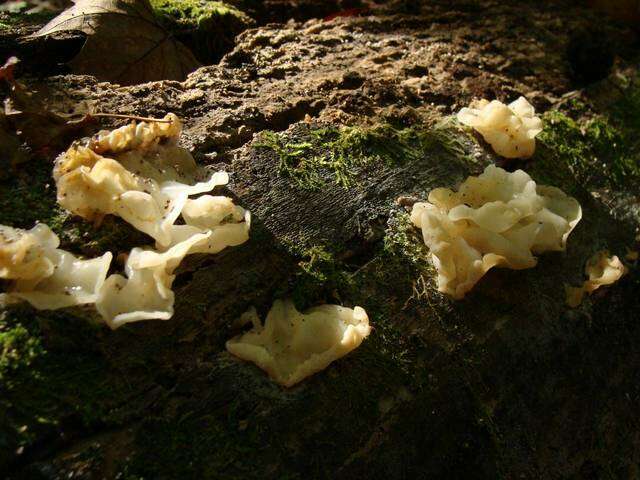
Sebacinaceae
The Sebacinaceae are a family of fungi in the order Sebacinales. Species produce basidiocarps (fruit bodies} that are gelatinous or cartilaginous and variously corticioid, clavarioid, bracket-like, or jelly-like. Microscopically, all have septate basidia and hyphae lacking clamp connections. Many but not all species are mycorrhizal, forming associations with a wide range of plants.
Doassansiales
The Doassansiales are an order of fungi in the class Exobasidiomycetes. The order consist of three families: the Doassansiaceae, the Melaniellaceae, and the Rhamphosporaceae (which is a monotypic family with a monotypic genus, with one species; Rhamphospora nymphaeae ).
Agaricostilbales
The Agaricostilbales are an order of fungi in the class Agaricostilbomycetes. The order consists of six families and 15 genera.
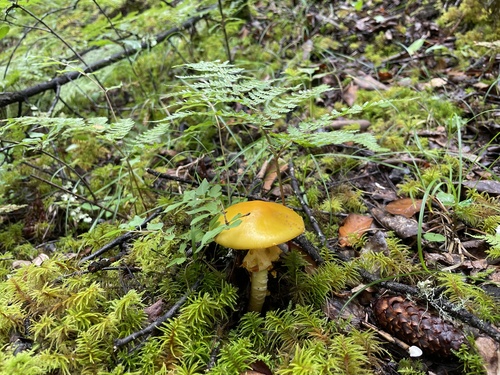
Amanita altipes
species of fungus
Agaricostilbaceae
The Agaricostilbaceae are a family of fungi in the order Agaricostilbales. Basidiocarps (fruitbodies), where known, are stalked and capitate and produce spores on basidia that are laterally septate. Most species are known only from their yeast states. The family contains two genera (Agaricostilbum being a synonym of Sterigmatomyces).
Amyloxenasma
Amyloxenasma is a genus of corticioid fungi in the family Amylocorticiaceae. The widely distributed genus contains six species.
Classiculomycetes
The Classiculomycetes are a class of fungi in the Pucciniomycotina subdivision of the Basidiomycota. The class contains a single order, the Classiculales, which in turn contains the single family Classiculaceae. The family contains two monotypic genera.
Helicobasidiales
The Helicobasidiales are an order of fungi in the subdivision Pucciniomycotina. The order is currently monotypic, containing the single family Helicobasidiaceae which itself is monotypic, containing the single genus Helicobasidium. The anamorphic genus Tuberculina is a synonym of Helicobasidium, but species are not currently integrated in the latter genus.
Chionosphaeraceae
The Chionosphaeraceae are a family of fungi in the order Agaricostilbales. The family contains six genera. Some species form small, stilboid (pin-shaped) fruitbodies. Others are known only from their yeast states.
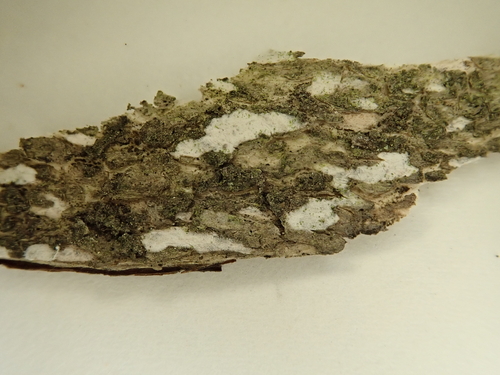
Tubulicium
Tubulicium is a genus of fungi in the family Hydnodontaceae. The genus has a widespread distribution, and contains seven species.
Georgefischeriaceae
The Georgefischeriaceae are a family of smut fungi in the Basidiomycota, class Exobasidiomycetes. Species in the family have a widespread distribution in both warm temperate areas and Old World tropical regions.
Litschauerella
Litschauerella is a genus of corticioid fungi in the family Hydnodontaceae. The widely distributed genus contains four species. The genus was described by German mycologist Franz Oberwinkler in 1965. The name commemorates Austrian mycologist Viktor Litschauer (1879–1939).
Ustilentylomataceae
Ustilentylomataceae is a family of Basidiomycota fungi in the order Microbotryales. It contains 3 genera.
Occultifur
Occultifur is a genus of fungi in the family Cystobasidiaceae. Species are parasites of other fungi and, microscopically, have auricularioid (laterally septate) basidia and basidiospores that germinate by yeast cells. Several species are currently only known from their yeast states. The genus is distributed worldwide.
Xenosperma
Xenosperma is a genus of corticioid fungi in the order Polyporales. Circumscribed by German mycologist Franz Oberwinkler in 1966, the widespread genus contains four species.
Aurantiosporium
Aurantiosporium is a genus of fungi found in the family Microbotryaceae. It contains 5 species.
Colacogloea
Colacogloea is a genus of fungi belonging to the class Microbotryomycetes. Most species in the genus are known only from their yeast states. Where known, basidiocarps (fruit bodies) have auricularioid (laterally septate) basidia and occur as parasites on or in the fruit bodies of other fungi.
Heterorepetobasidium
Heterorepetobasidium is a genus of fungi of uncertain familial placement (incertae sedis) in the order Auriculariales. The genus is widespread, especially in tropical regions, and contains two Taiwanese species, H. ellipsoideum and H. subglobosum.
Phragmoxenidiaceae
The Phragmoxenidiaceae are a family of fungi in the order Tremellales. Only a single species from central and northern Europe is known, Phragmoxenidium mycophilum.
Carcinomycetaceae
The Carcinomycetaceae are a family of fungi in the order Tremellales. The family currently contains a single genus. Some species produce filamentous sexual states with basidia and are parasites of other fungi. Some, however, are only known from their yeast states.
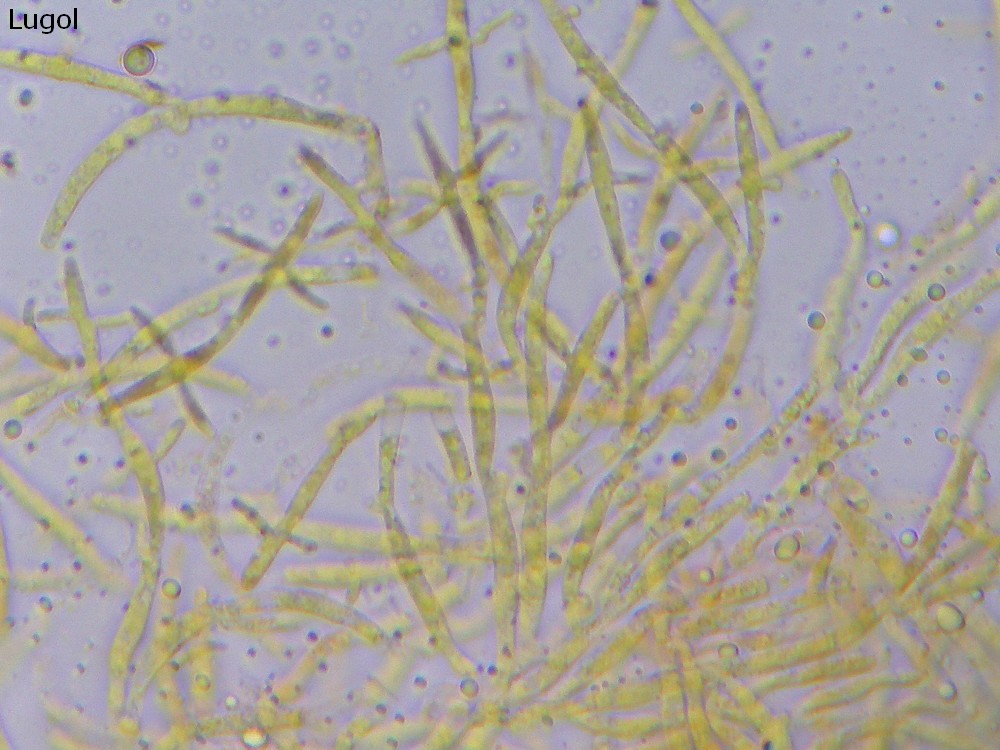
Cruciger lignatilis
species of fungus
Sphaerobasidium
Sphaerobasidium is a genus of corticioid fungi in the family Hydnodontaceae. The widely distributed genus contains four species.
Eballistra
The Eballistraceae are a family of smut fungi in the Basidiomycota, class Exobasidiomycetes. This is a monotypic family, containing the single genus Eballistra, species of which have a widespread distribution in tropical regions.
Eballistraceae
REDIRECT Eballistra
Trimorphomyces
Trimorphomyces is a genus of fungi in the family Trimorphomycetaceae. The genus currently contains two species. The type species is a parasite of another fungus in the genus Arthrinium, forming small gelatinous basidiocarps (fruit bodies) containing distinctive twinned conidia.
Tetragoniomycetaceae
The Tetragoniomycetaceae are a family of fungi in the order Trichosporonales. The family currently contains four genera. Several species are only known from their yeast states.
Basidiopycnis
Basidiopycnis is a fungal genus in the family Hoehnelomycetaceae. The genus is monotypic, containing the single species Basidiopycnis hyalina. The species forms minute pycnidial basidiocarps (fruit bodies) in bark beetle tunnels. Teleomorphs produce auricularioid (laterally septate) basidia, whilst anamorphs produce asexual conidia. Basidiopycnis hyalina was described from Germany and is also known from Italy and Switzerland. Anamorphic fruit bodies collected in Canada were given the name Basidiopycnides albertensis, but are currently considered conspecific with the European species.
Amanita orientifulva
species of fungus
Volvocisporium
Volvocisporiaceae is a fungal family in the class Exobasidiomycetes. The family contains the single genus Volvocisporium, which in turn contains the single species Volvocisporium triumfetticola, found on the leaves of Triumfetta rhomboidea in India.
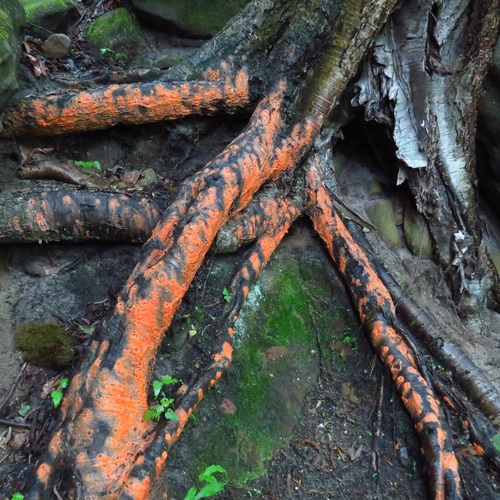
Cystofilobasidium
Cystofilobasidium is a genus of fungi in the family Cystofilobasidiaceae. Species occur as yeasts, but produce filamentous sexual states that form dikaryote teliospores, from which the unicellular basidia (if present) are formed. The hyphae usually have dolipore septa without a parenthesome, and their cell walls contain xylose. The genus currently contains nine species worldwide.
Gjaerumiaceae
REDIRECT Gjaerumia