Category
page 1Taxa named by Samuel Frederick Gray

Persicaria maculosa
species of plant

Suillus
Suillus is a genus of basidiomycete fungi in the family Suillaceae and order Boletales. Species in the genus are associated with trees in the pine family (Pinaceae), and are mostly distributed in temperate locations in the Northern Hemisphere, although some species have been introduced to the Southern Hemisphere.

Auriscalpium vulgare
species of fungus

Albatrellus
Albatrellus is a genus of 19 species of mushroom-producing fungi in the family Albatrellaceae. Species are common in northern temperate forests, producing medium to large fleshy fruit bodies of various colors.

Auriscalpium
Auriscalpium is a genus of mushroom-forming fungi typifying the family Auriscalpiaceae.
Cerrena
Cerrena is a genus of poroid fungi in the family Polyporaceae. The genus was circumscribed by Samuel Frederick Gray in 1821. Gray's type species, Cerrena cinerea, is now known as C. unicolor.
%20J.%20Erikss%20201034.jpg)
Steccherinum
Steccherinum is a widely distributed genus of toothed crust fungi in the family Steccherinaceae.
Grifola
Grifola is a genus of fungi in the family Meripilaceae, which includes some edible fungi such as Grifola frondosa, commonly known as hen-of-the-woods (or maitake in Japan); not to be confused with Laetiporus sulphureus, known among English speakers as chicken of the woods. The genus was circumscribed by Samuel Frederick Gray in 1821.
Coltricia
Coltricia is a genus of fungi in the family Hymenochaetaceae. It was circumscribed by Samuel Frederick Gray in 1821. In 2022, it was combined with the genus Coltriciella.
Cucurbitaria
Cucurbitaria is a genus of pyrenomycetous fungi in the family Cucurbitariaceae. The genus was circumscribed by Samuel Frederick Gray in 1821.
Calycina
genus of fungi
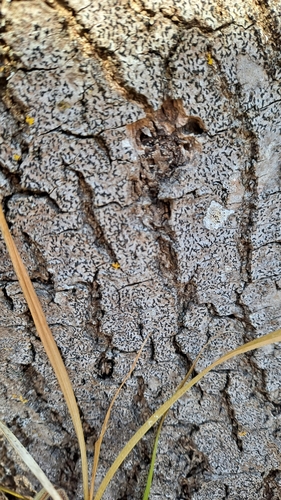
Alyxoria
Alyxoria is a genus of lichen-forming fungi in the family Lecanographaceae. The genus has a cosmopolitan distribution. These lichens are often so inconspicuous that they appear as little more than faint cracks or weathered patches on tree bark and rock surfaces, making them easily overlooked in the field. The genus includes about 20 species that reproduce through distinctive elongated slits containing spores, and can also spread asexually through tiny flask-shaped structures that release microscopic propagules.