Category
page 1Taxa named by Tamerlan Thorell

Amblypygi
Amblypygi is an order of arachnids also known as whip-spiders or tailless whip-scorpions, not to be confused with whip-scorpions or vinegaroons that belong to the related order Uropygi. The name "amblypygid" means "blunt tail", a reference to a lack of the flagellum that is otherwise seen in whip-scorpions. Amblypygids possess no silk glands or venom. They rarely bite if threatened but can grab fingers with their pedipalps, resulting in thorn-like puncture-injuries.

Uropygi
Uropygi is an arachnid order comprising invertebrates commonly known as whip scorpions or vinegaroons (also spelled vinegarroons and vinegarones). They are often called uropygids. The name "whip scorpion" refers to their resemblance to true scorpions and possession of a whiplike tail, and "vinegaroon" refers to their ability when attacked to discharge an offensive, vinegar-smelling liquid, which contains acetic acid. The order may also be called Thelyphonida. Both names, Uropygi and Thelyphonida, may be used either in a narrow sense for the order of whip scorpions, or in a broad sense which in

redback spider
species of arachnid
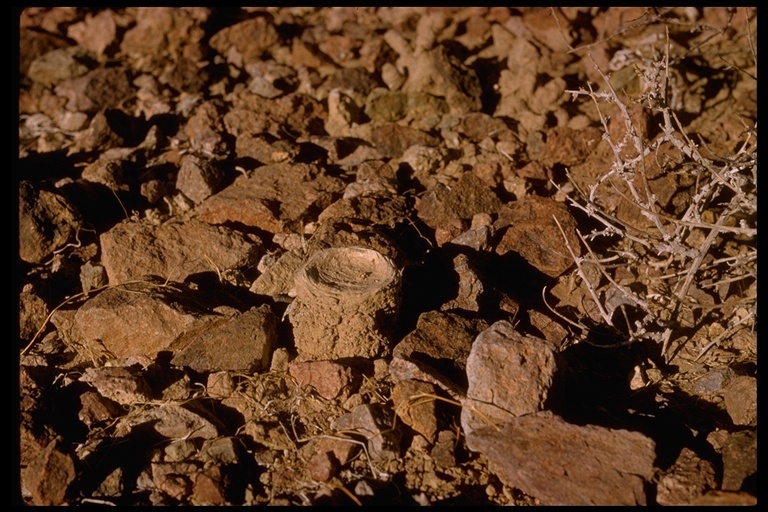
Ctenizidae
Ctenizidae ( ) is a small family of mygalomorph spiders that construct burrows with a cork-like trapdoor made of soil, vegetation, and silk. They may be called trapdoor spiders, as are other, similar species, such as those of the families Liphistiidae, Barychelidae, and Cyrtaucheniidae, and some species in the Idiopidae and Nemesiidae. The name comes from the distinctive behavior of the spiders to construct trapdoors, and ambush prey from beneath them.

Philodromidae
Philodromidae, also known as philodromid crab spiders and running crab spiders, is a family of araneomorph spiders first described by Tord Tamerlan Teodor Thorell in 1870 (then known as subfamily Philodrominae within Thomisidae). It contains over 500 species in about thirty genera.
Uloboridae
Uloboridae is a family of non-venomous spiders, known as cribellate orb weavers or hackled orb weavers. Their lack of venom glands is a secondarily evolved trait. Instead, they wrap their prey thoroughly in silk, cover it in regurgitated digestive enzymes, and then ingest the liquified body.
Amaurobiidae
Amaurobiidae is a family of three-clawed cribellate or ecribellate spiders found in crevices and hollows or under stones where they build retreats, and are often collected in pitfall traps. Unlidded burrows are sometimes quite obvious in crusty, loamy soil. They are difficult to distinguish from related spiders in other families, especially Agelenidae and Desidae. Their intra- and interfamilial relationships have been contentious.
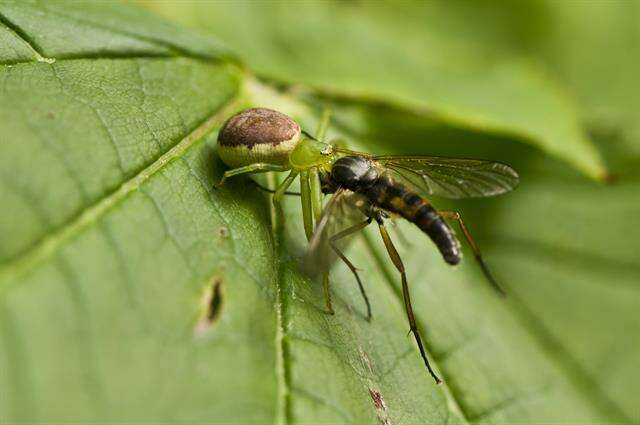
Diaea
Diaea is a genus of crab spiders first described by Tamerlan Thorell in 1869. Most species are found in specific locations except for D. livens, which occurs in the United States and D. dorsata, which has a palearctic distribution. Adults are to and tend to hide in and around vegetation, especially flowers, where their color allows them to blend in to their surroundings.

Palpimanidae
Palpimanidae, also known as palp-footed spiders, is a family of araneomorph spiders first described by Tamerlan Thorell in 1890. They are widely distributed throughout the tropical and subtropical regions of the world, the Mediterranean and one in Uzbekistan, but not Australia. They are not common and there is a high degree of endemism.

Steatoda nobilis
spider in the genus Steatoda
Stenochilidae
Stenochilidae is a family of southeast Asian araneomorph spiders that produce ecribellate silk. First described by Tamerlan Thorell in 1873, it now contains thirteen described species in two genera.
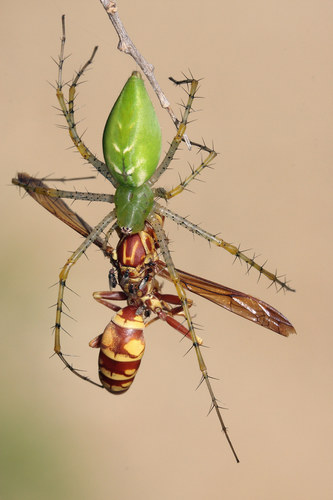
Peucetia
Peucetia is a genus of lynx spiders that is found worldwide.

Argiope anasuja
species of arachnid
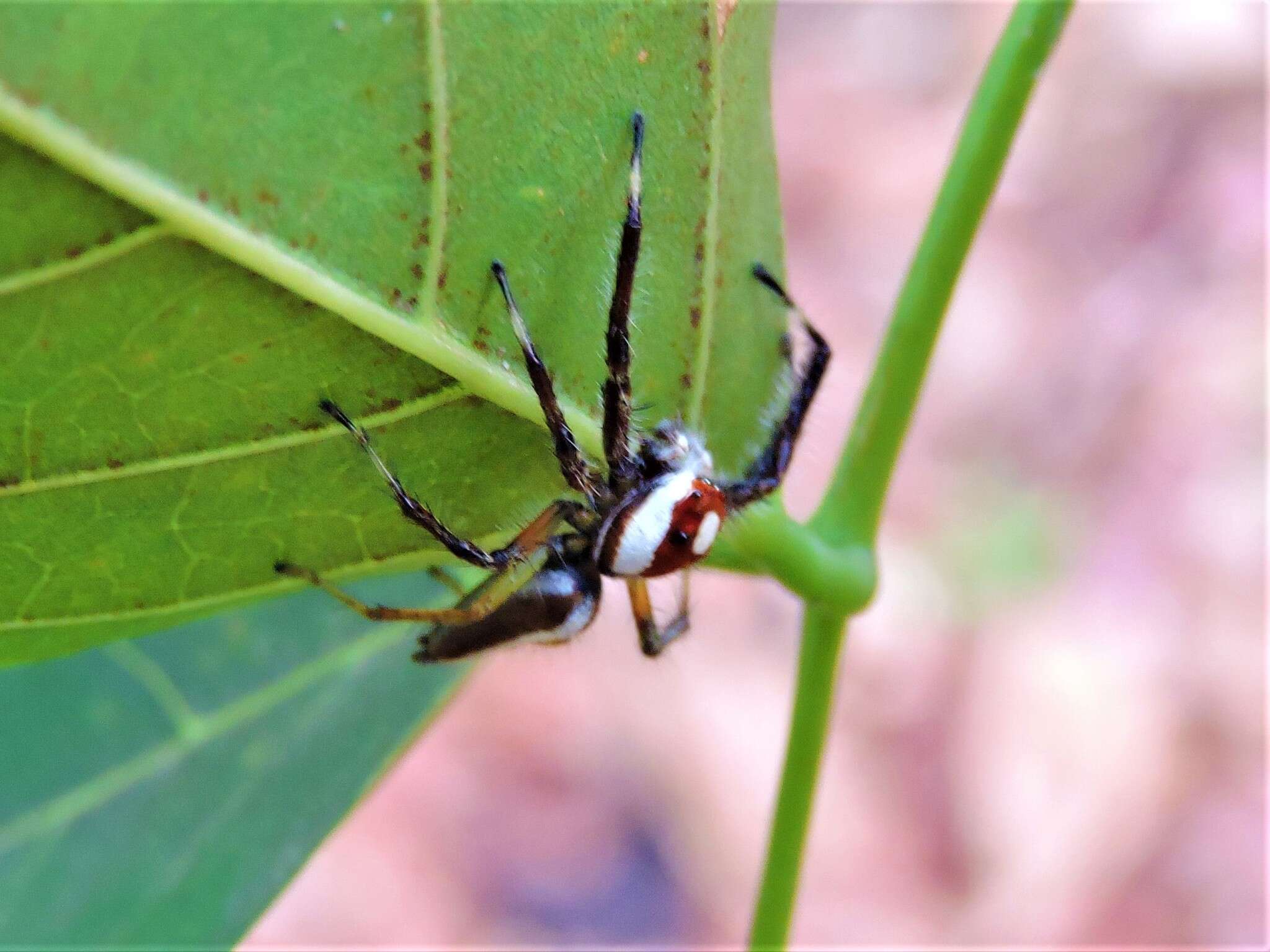
Telamonia
Telamonia is a genus of jumping spiders that was first described by Tamerlan Thorell in 1887. They are colorful spiders, with patterns that vary considerably between sexes and species. Two longitudinal stripes along the abdomen are common, and the carapace is often colored. They have a slender opisthosoma and long legs.
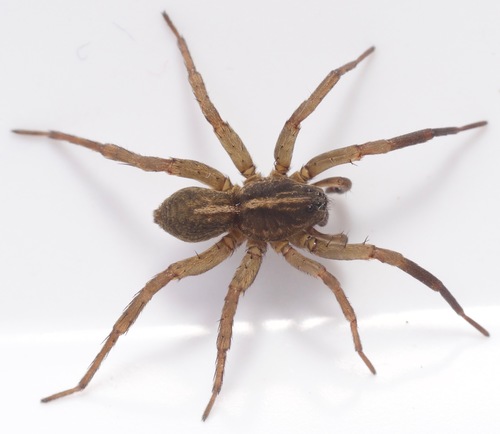
Trochosa terricola
species of arachnid

Argiope pulchella
species of arachnid

Euscorpius
Euscorpius is a genus of scorpions, commonly called small wood-scorpions. It presently contains at least 90 species and is the type genus of the family Euscorpiidae – long included in the Chactidae – and the subfamily Euscorpiinae.

Agorius
Agorius is a genus of spiders in the family Salticidae (jumping spiders). The genera Agorius and Synagelides (and perhaps Pseudosynagelides) are separated as a genus group, sometimes called subfamily Agoriinae but more recently downranked to tribe Agoriini of the Salticoida clade in subfamily Salticinae.

Araneus nordmanni
species of arachnid

Portia labiata
species of arachnid

Phaeacius
Ariamnes
genus of arachnids

Caerostris
thumb|left|Front view of C. sexcuspidata
Phrynidae
Phrynidae is a family of amblypygid arachnida arthropods also known as whip spiders and tailless whip scorpions. Phrynidae species are found in tropical and subtropical regions in North and South America. Some species are subterranean; all are nocturnal. At least some species of Phrynidae hold territories that they defend from other individuals.

Carrhotus
Carrhotus is a genus of jumping spiders that was first described by Tamerlan Thorell in 1891. The name is derived from the Greek Κάῤῥωτος.
Badumna
Badumna is a genus of intertidal spiders that was first described by Tamerlan Thorell in 1890. They are harmless spiders that can be found around human structures and buildings. The most well-known species is B. insignis, also known as the "black house spider" or "black window spider".
Rhene
Rhene is a spider genus of the family Salticidae (jumping spiders) whose species mostly live in tropical and subtropical regions worldwide.

Argiope caesarea
species of arachnid
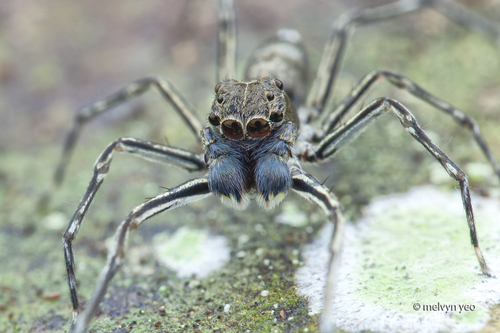
Spartaeus
Spartaeus is a genus of Asian jumping spiders that was first described by Tamerlan Thorell in 1891. These spiders build large sheet webs on tree trunks to capture prey, mostly moths. When walking, they wave their palps and legs in an unusual way.
Arctic wolf spider
species of arachnid
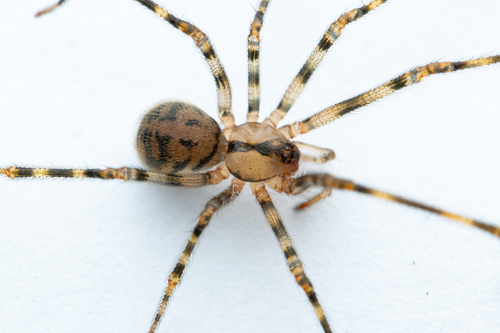
Nesticus
Nesticus is a genus of American and Eurasian scaffold web spiders first described by Tamerlan Thorell in 1869.
Brettus
Brettus is a genus of jumping spiders. Its six described species are found in southern Asia from India to China and Sulawesi, with a single species endemic to Madagascar.
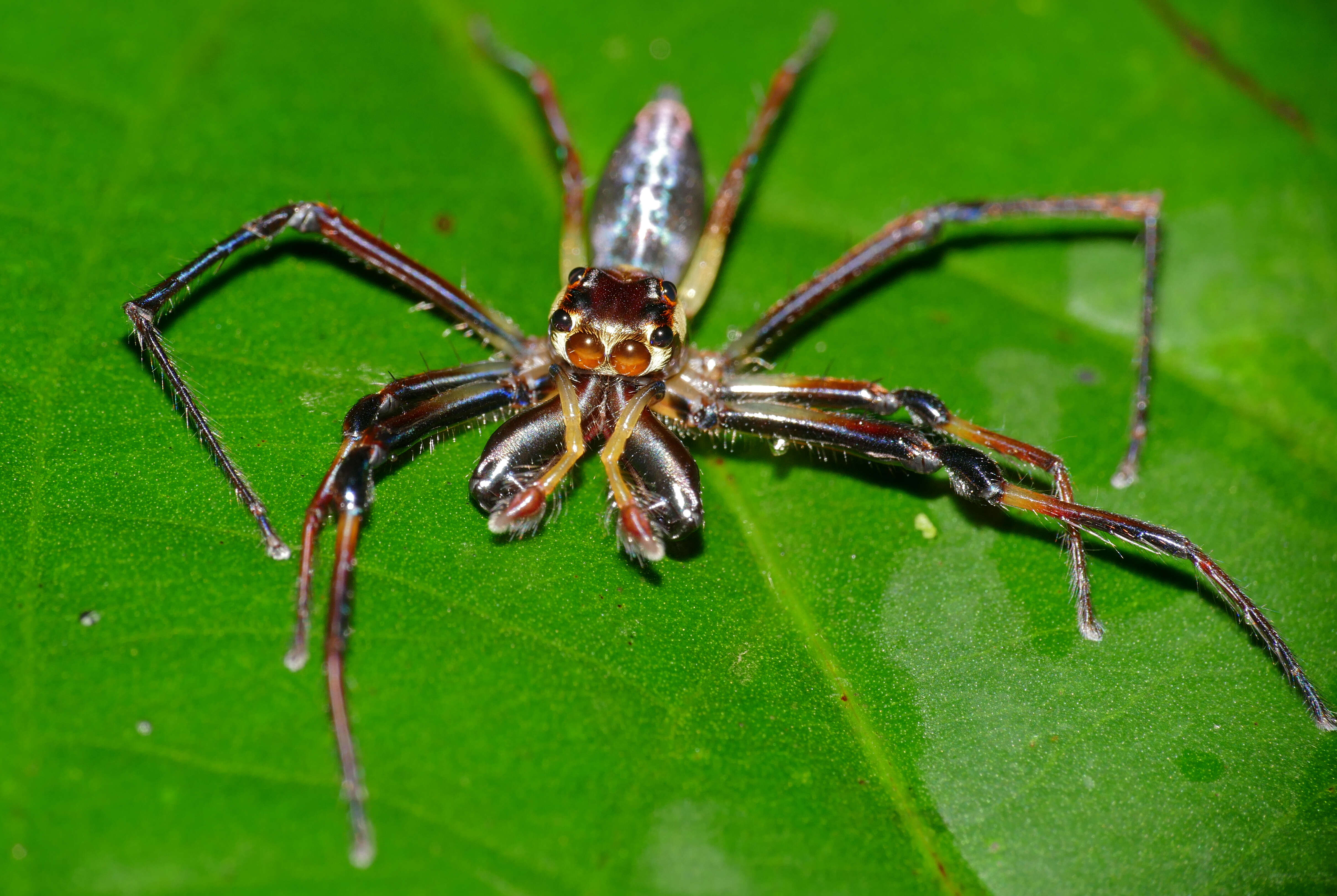
Bathippus
Bathippus is a genus of jumping spiders.
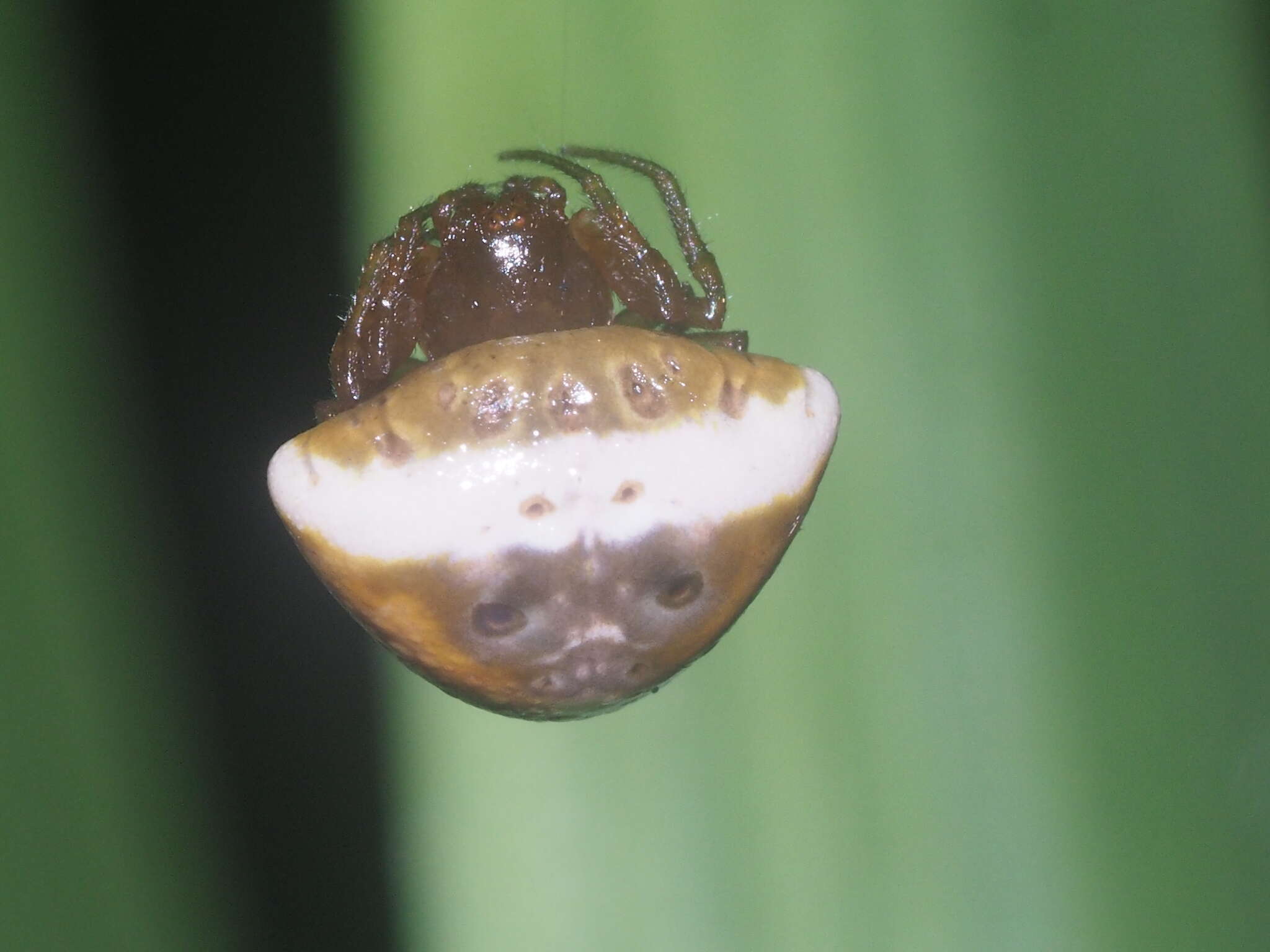
Cyrtarachne
Cyrtarachne is a genus of orb-weaver spiders first described by Tamerlan Thorell in 1868.
Colyttus
Colyttus is a genus of Asian jumping spiders that was first described by Tamerlan Thorell in 1891. C. lehtinen is named in honor of Finnish arachnologist Pekka T. Lehtinen.
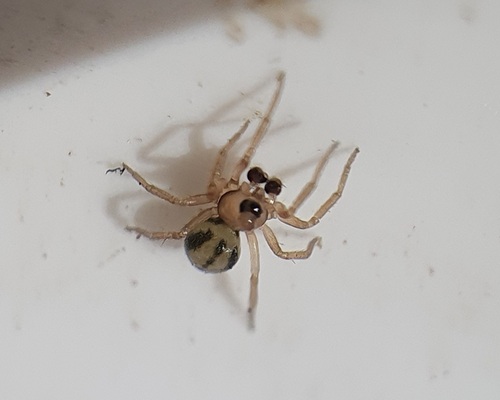
Minicia
Minicia is a genus of dwarf spiders that was first described by Tamerlan Thorell in 1875.
Dipoena
Dipoena is a genus of tangle-web spiders that was first described by Tamerlan Thorell in 1869.
Celaenia
Celaenia is a genus of South Pacific orb-weaver spiders first described by Tamerlan Thorell in 1868.
Diolenius
Diolenius is a genus of jumping spiders that was first described by Tamerlan Thorell in 1870.
%20(20738152751).jpg)
Phrynarachne
Phrynarachne is a genus of crab spiders first described by Tamerlan Thorell in 1869.
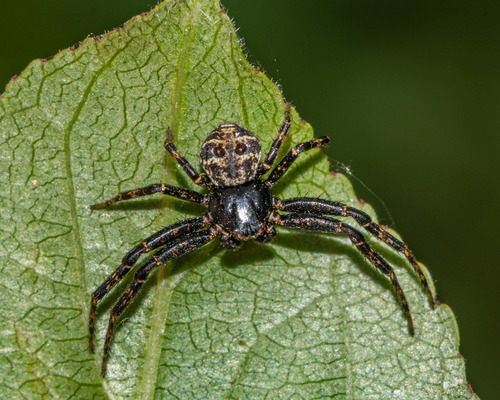
Coriarachne
Coriarachne is a genus of crab spiders that was first described by Tamerlan Thorell in 1870. Over half of described species have been synonymized or moved to similar genera, including Bassaniana, Bassaniodes, and Pycnaxis.
Cercidia
Cercidia is a genus of orb-weaver spiders (family Araneidae). , it contained only three species.

Pardosa agricola
species of arachnid

Herennia
Herennia is a genus of spiders in the family Nephilidae, found from India to northern Australia. While two species have been known since the 19th century, nine new species were described in 2005. Spiders in this genus are sometimes called coin spiders.
Ummidia
Ummidia is a genus of mygalomorph spiders in the family Halonoproctidae, and was first described by Tamerlan Thorell in 1875.

Latrodectus elegans
species of arachnid
Epocilla
Epocilla is a genus of jumping spiders that was first described by Tamerlan Thorell in 1887. The name comes from (Epocillus), a soldier of Alexander the Great.
Venonia
Venonia is a genus of spiders in the family Lycosidae. It was first described in 1894 by Thorell. , it contains 16 species.
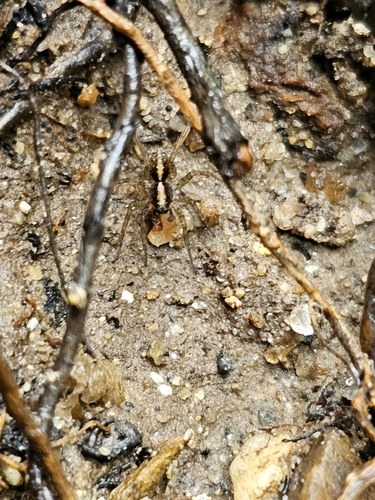
Artoria
Artoria is a genus of spiders in the family Lycosidae. It was first described in 1877 by Tamerlan Thorell, and the type species is Artoria parvula. In 1960, Roewer erected the genera Artoriella and Trabeola. However, in 2002, Volker Framenau reviewed Artoria and synonymised both these genera with Artoria.
Bindax
Bindax is a genus of jumping spiders that was first described by Tamerlan Thorell in 1892. it contains only two species, found only on the Solomon Islands and Sulawesi: B. chalcocephalus and B. oscitans. The name is derived from Βίνδαξ, according to Thorell, a masculine name.
Titanoeca
Titanoeca is a genus of spiders in the family Titanoecidae.
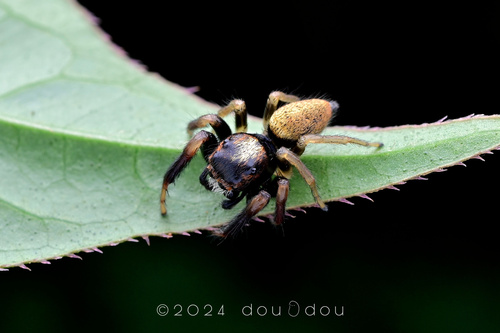
Dexippus
spider genus
Lipocrea
Lipocrea is a genus of orb-weaver spiders first described by Tamerlan Thorell in 1878.

Otacilia
Otacilia is a genus of araneomorph spiders in the family Phrurolithidae, first described by Tamerlan Thorell in 1897.
Viciria
Viciria is a genus of jumping spiders that was first described by Tamerlan Thorell in 1877.
Omoedus
Omoedus is a genus of jumping spiders (family Salticidae).
Myrmarachne clavigera
species of arachnid
Passiena
Passiena is a genus of spiders in the family Lycosidae with six described species from Africa and Asia. It was first described in 1890 by Thorell.

Telamonia festiva
species of arachnid

Cheiracanthium elegans
species of arachnid