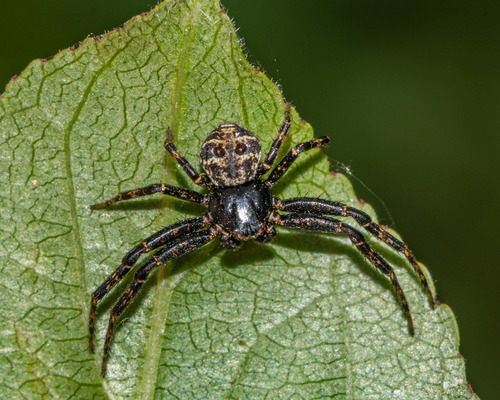
(c) bob15noble, some rights reserved (CC BY-NC), uploaded by bob15noble · cc-by-nc
Coriarachne
Sign in to saveCoriarachne is a genus of crab spiders that was first described by Tamerlan Thorell in 1870. Over half of described species have been synonymized or moved to similar genera, including Bassaniana, Bassaniodes, and Pycnaxis.
Species
Multicolored Bark Crab Spider
GENUS
- KingdomAnimalia
- PhylumArthropoda
- ClassArachnida
- OrderAraneae
- FamilyThomisidae
Coriarachne is een geslacht van spinnen uit de familie van de Thomisidae (krabspinnen). Soorten Coriarachne brunneipes Banks, 1893 Coriarachne depressa (C. L. Koch, 1837) (Platte krabspin) Coriarachne fulvipes (Karsch, 1879) Coriarachne melancholica Simon, 1880 Coriarachne nigrostriata Simon, 1886
via GBIF
Museum specimens
- Specimen records
- 26
- Family
- Thomisidae
- Collections
- INHS, UAM, MCZ, UNIVERSITY OF ALBERTA MUSEUMS (UAM), NAUF, CASC
- Recorded in
- United States, Canada, Ned. Nw. Guinea
Wikidata facts
- Instance of
- taxon
- Parent taxon
- Thomisidae
- Image
- Coriarachne depressa2.jpg
Show 5 more facts
- taxon name
- Coriarachne
- taxon rank
- genus
- Commons category
- Coriarachne
- topic's main category
- Category:Coriarachne
- taxon author citation
- Thorell, 1870
Sources (1)
via Wikidata · CC0
~2 min read
Encyclopedic overview
4 sectionsContents
- Species
- See also
- References
- Further reading
Coriarachne is a genus of crab spiders that was first described by Tamerlan Thorell in 1870. Over half of described species have been synonymized or moved to similar genera, including Bassaniana, Bassaniodes, and Pycnaxis.
They are found in boreal and temperate regions almost exclusively on tree bark, wooden fence posts and similar areas where they can take advantage of their natural camouflage. They are rather slow-moving and robust, with the crab-like appearance characteristic of the subfamily Thomisinae. Similar to others in its subfamily, they will wait to ambush their prey rather than actively pursuing it. Often these spiders will congregate under loose bark, leaf litter, or similar situations to spend the winter either in the adult or penultimate stage.
Excerpted from Wikipedia’s “Coriarachne” article, available under the CC BY-SA 4.0 licence.